

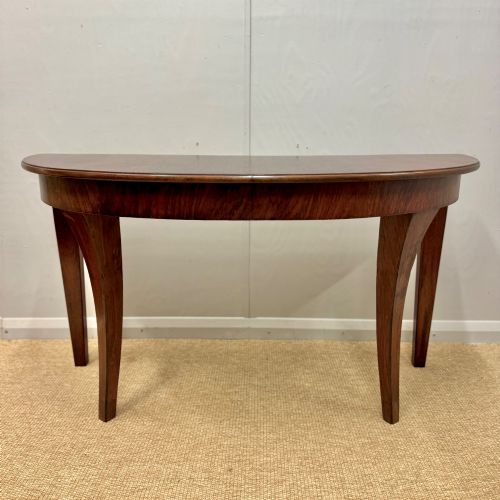
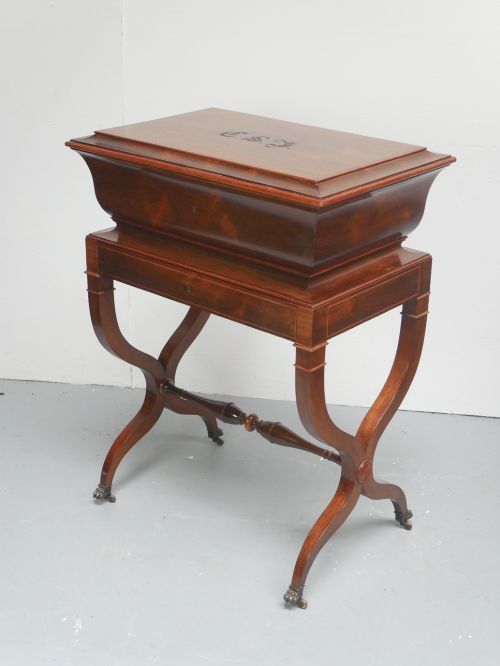


Curved Dark Wood Table
These curved dark wood table examples span centuries of cabinet-making, offering graceful lines in mahogany, rosewood, and hardwood for practical daily placement.
Curved Dark Wood Table
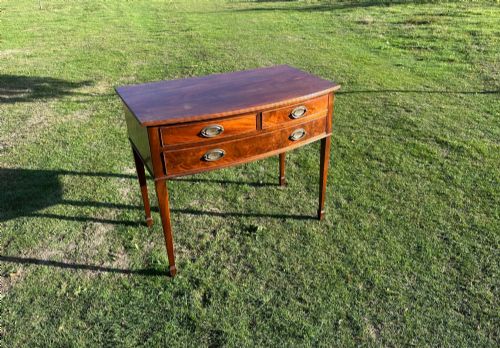
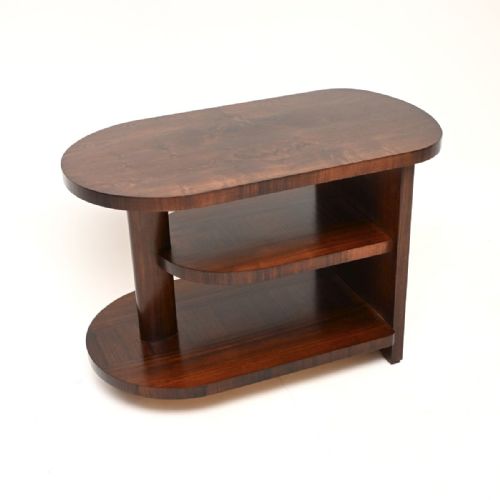
A curved dark wood table covers forms as varied as kidney-shaped desks, bowfront sideboards, console tables, and opium tables. When searching for a curved dark wood table, buyers encounter pieces originating from the Georgian, Regency, Victorian, and Edwardian eras, alongside Art Deco and Chinese traditional periods.
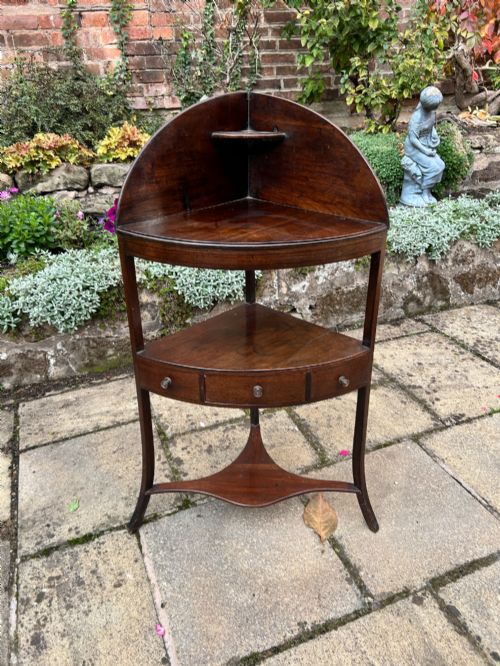
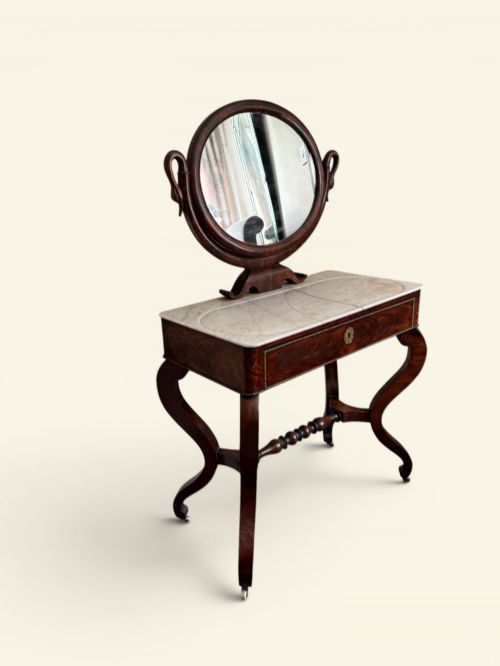
The selection ranges from intimate bedside cabinets and corner washstands to substantial pedestal desks and dressing tables. Rosewood and mahogany dominate the offerings, frequently accompanied by brass fittings and marble tops.
Materials and construction
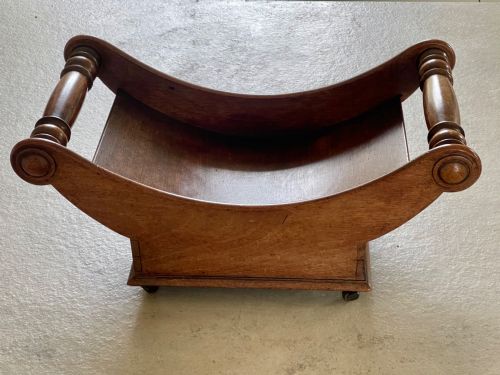
Cabinet-makers utilised dense timbers like mahogany, rosewood, elm, and hardwood, often shaping them into bowed fronts, concave legs, and kidney contours using steam-bending or careful sawing. Brass hardware and marble slabs appear as integral components on desks, dressing tables, and console tables.
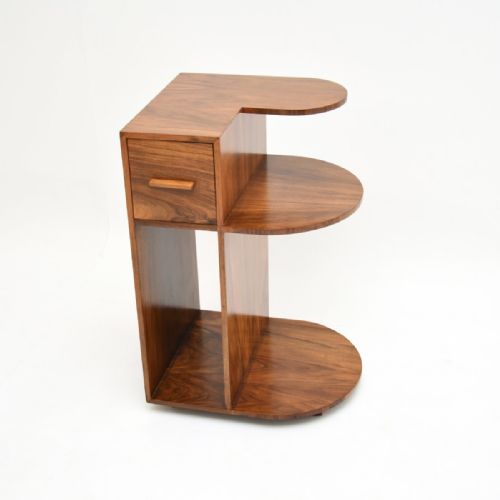
Surfaces display distinct grains, ranging from figured walnut to polished rosewood, finished to accentuate the natural warmth of the dark wood.
Curved Dark Wood Table Retail Price Guide 2026
Typical asking prices for curved dark wood table among the pieces listed under this phrase on Sellingantiques today, from the lower quarter to the upper quarter. They describe what is for sale here now, not the wider market.
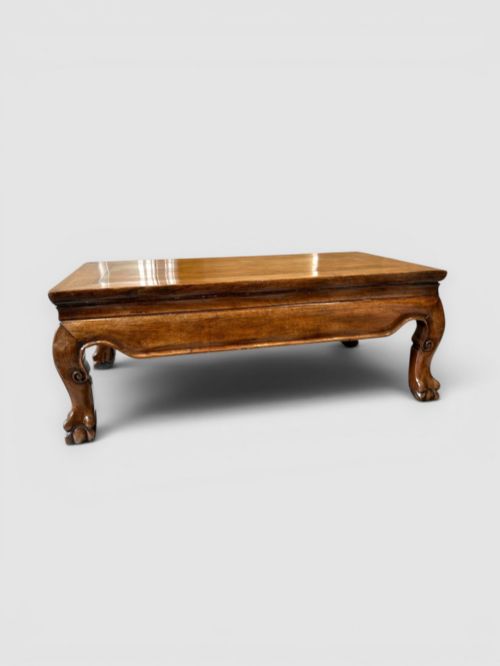
Some low tables began life supporting opium pipes before finding new careers holding cups of tea.
Distinctions in quality
Quality rests in the precision of the curved joints, the depth of the timber's grain, and the integrity of the original brass mounts or marble inserts. Superior examples maintain structural firmness in their bowed frames and delicate legs without relying on modern reinforcements.
The refinement of the carving, the matching of wood veneers on kidney-shaped tops, and the retention of original period finishes separate standard utility pieces from finer salon and writing tables.
Lesage·Fischel·Thonet
The Curved Dark Wood Table Glossary
- Kidney-shaped
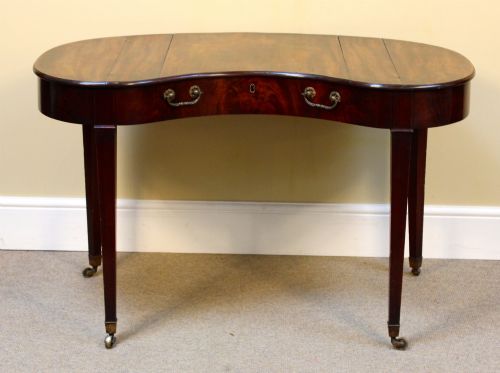
- Describing a tabletop or desk curved inwards on one side to resemble a kidney bean. This form appears frequently in writing desks and side tables from the Victorian and Edwardian periods.
- Bowfront
- A convex front curve projecting outward on a cabinet, sideboard, or table. This shape softens rectilinear room layouts.
- Concave
- A surface or edge curving inward like the inside of a bowl. It appears on console table legs and nightstand profiles.
- Pembroke table
- A small drop-leaf table with hinged flaps on two opposite sides. They often feature slender legs and a single drawer.
- Opium table
- A low rectangular or square table originating from China, used traditionally for resting or dining while seated on low platforms. They are frequently rendered in hardwood.
Curved Dark Wood Table: Frequently Asked Questions
What rooms suit a curved dark wood table?
These tables adapt well to hallways, living rooms, and studies where softened corners improve traffic flow and visual space. Kidney-shaped desks and console tables fit snugly against walls or function as freestanding centrepieces.
Smaller variants like bedside cabinets and occasional tables bring dark wood tones and curved silhouettes into compact areas without dominating the floor plan.
How do I care for rosewood and mahogany surfaces?
Maintain polished hardwood surfaces by dusting regularly with a soft, dry cloth and avoiding excessive moisture or direct sunlight. Periodic application of appropriate wax preserves the depth of the dark grain.
Keep marble-topped tables clear of acidic liquids that might etch the stone surface, wiping spills promptly with a damp cloth.
Are these tables sturdy enough for daily work?
Desks and writing tables from the Georgian and Victorian periods were built for rigorous daily clerical use. Their robust hardwood frames support modern writing tasks securely.
Lighter occasional and side tables serve best for lamps and decorative objects rather than heavy weights.
How can I tell a Victorian table from a Georgian one?
Georgian pieces often display restrained classical proportions and solid mahogany construction with simpler joinery. Victorian examples frequently incorporate more elaborate veneers, kidney curves, and rosewood finishes.
Examining the underside, drawer linings, and secondary woods helps clarify the period of manufacture.