

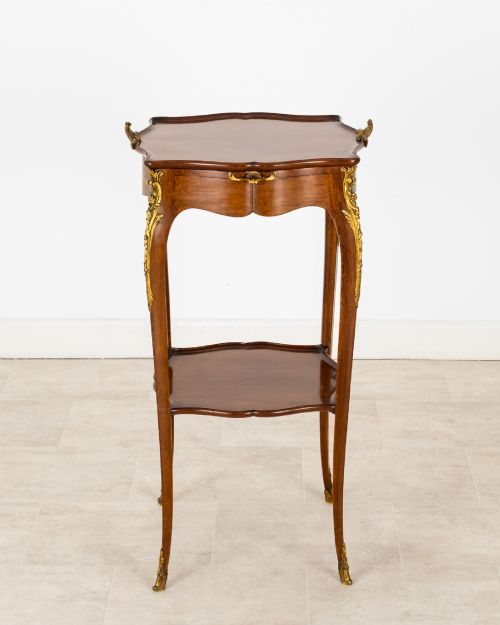
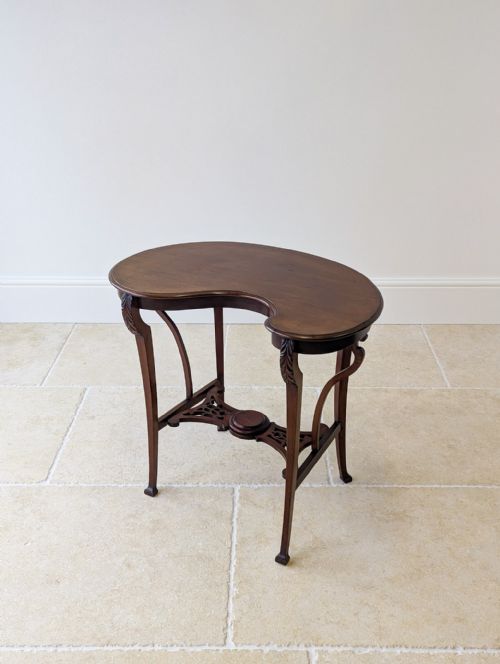
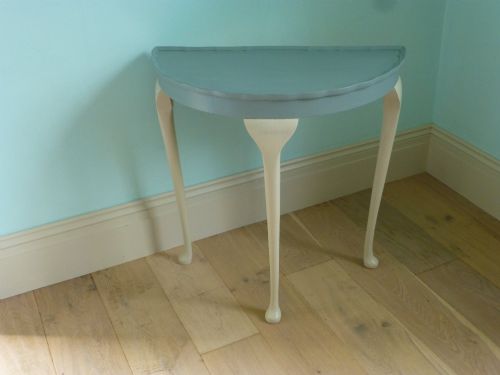


Curved Accent Table
A curved accent table brings fluid lines and practical surface area to a room, uniting utility with distinctive period character.
Curved Accent Table
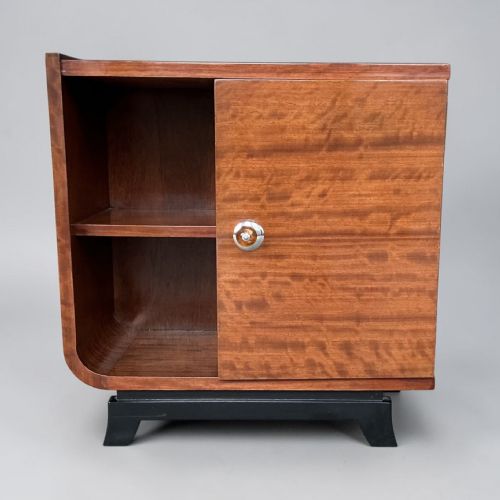
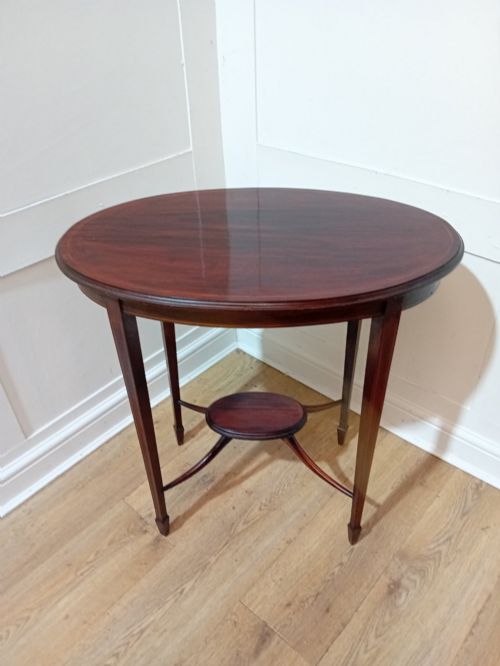
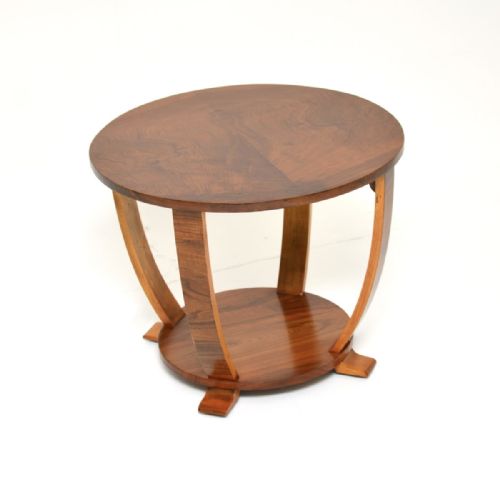
A curved accent table encompasses a variety of smaller furniture forms defined by rounded perimeters, kidney shapes, or demi-lune profiles. Buyers seeking a curved accent table will frequently encounter pieces originating from the Art Deco era and the Edwardian period.
The selection ranges from occasional and coffee tables to console tables and side cabinets designed to fit snugly against walls or beside seating. These items serve functional roles as lamp tables or display surfaces while introducing soft geometries into an interior space.
Origins span English cabinetmaking traditions, French ateliers, and continental production involving bentwood or specialised veneers. The assortment bridges nineteenth-century revival styles and twentieth-century modernist designs.
Materials and construction methods
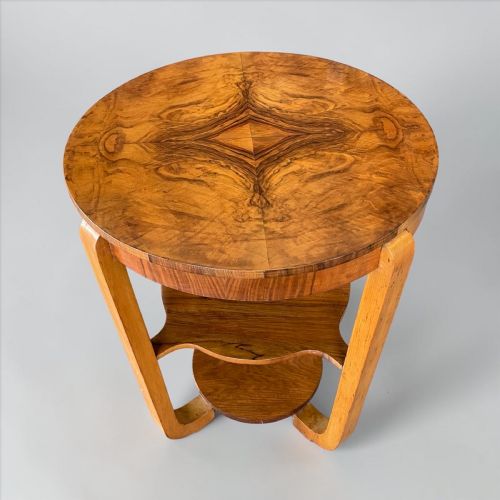
Cabinetmakers utilised hardwoods such as mahogany, oak, and walnut, frequently applying figured veneers like burr walnut, satinwood, or birds eye maple to curved surfaces. Ebonised wood and applied brass accents provide contrast and structural definition.
Curved forms were achieved through steam bending or meticulous lamination of timber, particularly evident in bentwood and Art Deco pieces. Inlaid stringing, ormolu mounts, and painted finishes complete the surface ornamentation of specific examples.
The inventory spans the Georgian period through the Edwardian era and into Art Deco production of the 1930s.
Evaluating distinction in manufacture
Quality rests upon the precision of the timber selection, particularly in the alignment and matching of figured veneer grains across curved tops and aprons. Superior examples demonstrate expert mastery in shaping solid hardwoods or bending timber without compromising structural integrity.
Refinement shows in the subtlety of joinery, the crispness of any inlay or ormolu mounting, and the integration of secondary woods used in the interior framework. Greater sophistication of design distinguishes standard utility items from exhibition-grade or attributed pieces.
François Linke·Gilbert Rohde·Fischel·Thonet
The Curved Accent Table Glossary
- Demi-lune
- Half-moon shape denoting tables designed to stand flat against a wall. This profile is frequently utilised in console and hall tables.
- Kidney shape
- An asymmetrical curved form resembling a kidney bean, popular in Edwardian and French occasional tables. It provides an ergonomic curve for the user.
- Ormolu
- Gilded bronze mounts applied to furniture for decorative effect. It appears frequently on French nineteenth-century pieces.
- Satinwood
- A luminous yellowish timber used for veneers and inlay work. It is characteristic of Sheraton Revival furniture.
- Bentwood
- Wood heated with steam to render it pliable for bending into curved shapes. This technique defines specific Art Nouveau and modernist tables.
Curved Accent Table: Frequently Asked Questions
What defines a curved accent table?
A curved accent table is a small occasional, coffee, or console table featuring rounded edges, kidney shapes, or demi-lune silhouettes. These pieces are designed to soften room layouts while providing functional surface space.
They appear across multiple periods, ranging from nineteenth-century revival styles to twentieth-century Art Deco designs.
Where should I place a curved table?
Demi-lune and console versions sit flush against walls in hallways or living rooms, while kidney and occasional tables function effectively beside seating. Their curved profiles allow them to navigate tight corners and open up walking routes.
They serve practical purposes as lamp tables, display surfaces, or bedside stands.
How do I identify Art Deco tables?
Art Deco tables often feature geometric simplicity combined with luxurious materials such as birds eye maple, blonde oak, or figured walnut. Ebonised details and streamlined silhouettes distinguish them from earlier revival pieces.
Construction from this period frequently emphasises the natural grain of the wood over applied ornamentation.
What is Sheraton Revival furniture?
Sheraton Revival furniture draws inspiration from eighteenth-century neoclassical designs, typically executed in mahogany or satinwood. These pieces often incorporate delicate inlaid stringing and painted decoration.
They represent a nineteenth-century taste for lighter, more refined domestic furnishings.