



Curule Tables
Curule tables bring classical X-frame forms into domestic spaces, offering sturdy occasional surfaces and seating rooted in ancient design.
Curule Tables
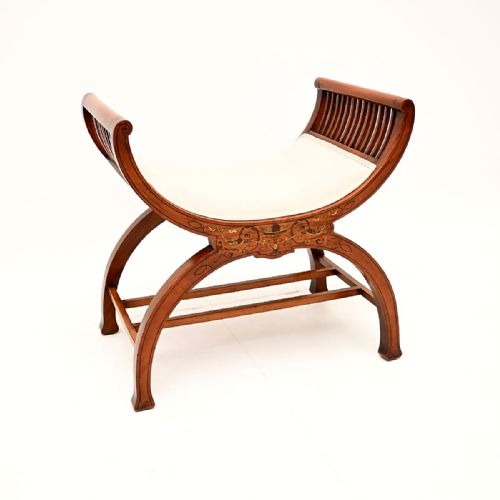
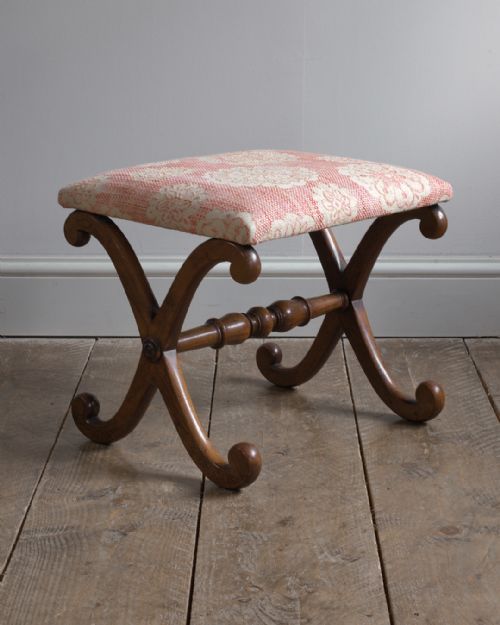
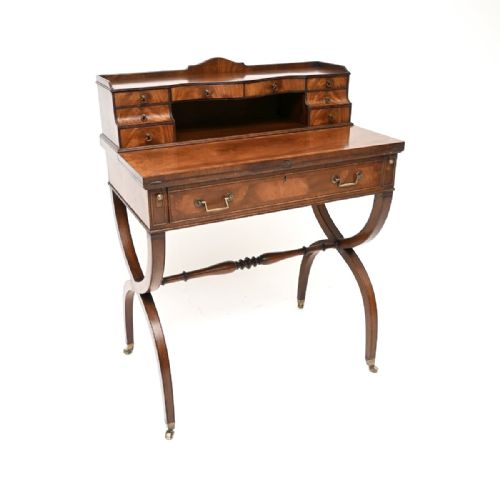
Curule tables and their close relatives draw directly on X-frame architecture, manifesting primarily as dressing stools, occasional tables, and low stands across this selection. Pieces span the nineteenth and early twentieth centuries, capturing periods from Victorian and Edwardian reigns through to the 1930s.
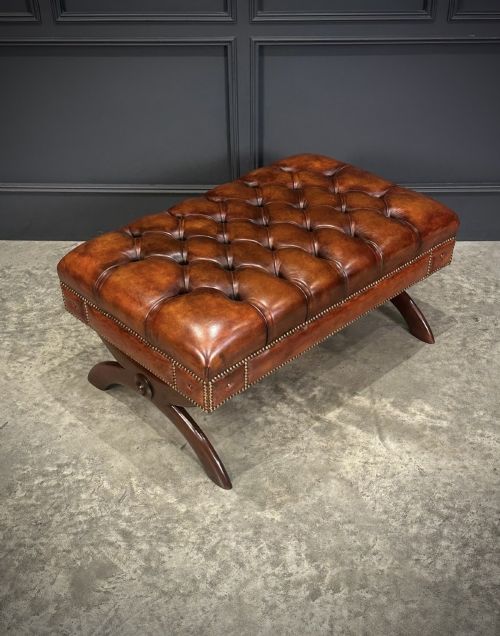
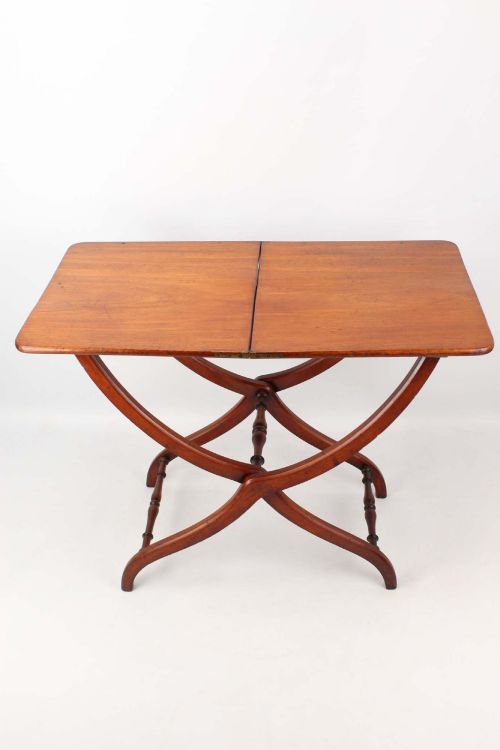
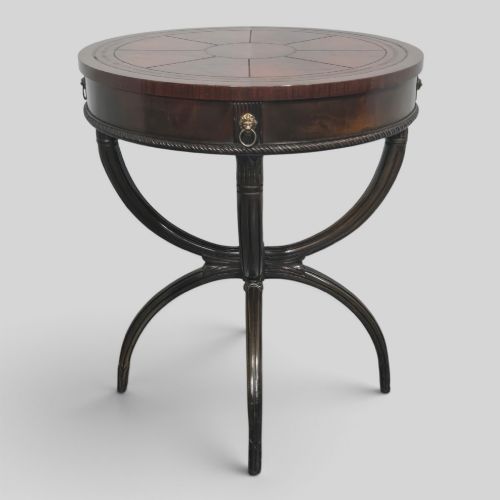
The forms on this page range from occasional centre tables and coffin stand side tables to buttoned leather footstools and piano stools. Makers adapted the characteristic cross-frame geometry for diverse household uses while maintaining the distinct intersecting leg supports.
Materials and construction
Cabinetmakers utilised dense timbers such as mahogany, rosewood, satinwood, and yew wood, frequently employing veneer work like oyster veneer alongside solid framing. Brass fittings and hand-dyed buttoned leather upholstery appear on seating variants, adding tactile contrast to the wooden X-frames.
Joinery focuses on the rigid intersection of the cross-frame supports, ensuring structural stability under tabletops or upholstered seats. Inlays and polished timber surfaces highlight the natural grain of the wood without relying on excessive ornamentation.
Curule Tables Retail Price Guide 2026
Typical asking prices for curule tables among the pieces listed under this phrase on Sellingantiques today, from the lower quarter to the upper quarter. They describe what is for sale here now, not the wider market.
Assessing quality
Quality rests in the precision of the cross-frame joints and the selection of timber figures, where figured mahogany, satinwood, or oyster veneers elevate a piece above standard utility items. The integration of brass elements and the execution of inlay work demonstrate the maker's attention to detail.
Proportion and stance dictate visual success, distinguishing balanced domestic furniture from heavier provincial adaptations. The handling of secondary materials, such as hand-dyed leather upholstery, further separates standard production from finer examples.
The Curule Tables Glossary
- Curule
- A form of ancient Roman magistrate seat featuring intersecting curved legs that inspired later X-frame furniture designs. This structural silhouette defines the category across centuries of revival styles.
- X-Frame
- A structural support system formed by two intersecting members shaped like an X. It provides both rigid load-bearing strength and distinct visual symmetry.
- Oyster Veneer
- Thin slices of branch wood cut transversely to produce small, circular patterns resembling oyster shells. This decorative technique appears on select tabletop surfaces.
- Satinwood
- A durable, yellowish timber prized for its smooth grain and reflective lustre. Cabinetmakers used it extensively for banding, inlay, and decorative veneer work.
- Coaching Table
- A folding or collapsible stand traditionally designed for portability. These pieces feature hinged X-frames that allow the table to pack flat when not in use.
Curule Tables: Frequently Asked Questions
What are curule tables used for?
These pieces function primarily as occasional tables, side surfaces, and low seating options like dressing stools within domestic rooms. Their compact footprint makes them versatile for placing beside armchairs or against walls.
Historically, the X-frame design provided portable strength, evolving into refined furniture for holding small objects, books, or serving as piano and dressing stools.
How do I date a curule table?
Dating relies on identifying timber choices, secondary woods, and stylistic revival markers corresponding to Victorian, Edwardian, or early twentieth-century manufacturing methods. Examining the construction of the X-frame joints reveals period-specific woodworking techniques.
Labels, brass hardware styles, and upholstery foundations also provide reliable clues for narrowing down the decade of production.
Are these tables sturdy enough for daily use?
The intersecting X-frame construction inherently distributes weight efficiently, making these tables and stools structurally robust for everyday household placement. Proper timber joinery ensures stability under normal loads.
Care should be taken with veneered surfaces and antique leather tops to protect against moisture and heavy impacts during routine daily life.
What is the difference between a stool and a table here?
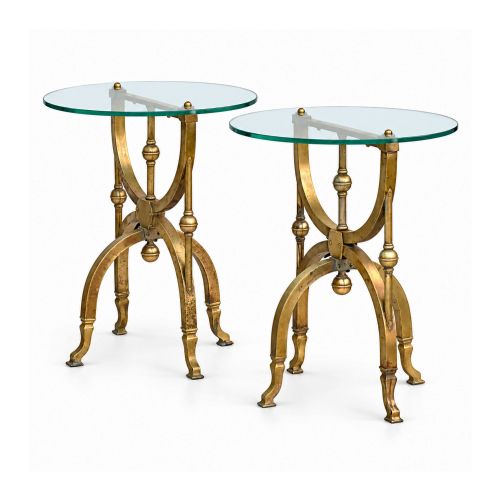
While both share the fundamental X-frame architecture, stools feature upholstered or leather tops designed for sitting, whereas tables provide rigid wooden, glass, or veneered surfaces for display.
Some folding variants, such as coaching tables, bridge the boundary by offering collapsible wooden tops suited for occasional utility use rather than seating.