
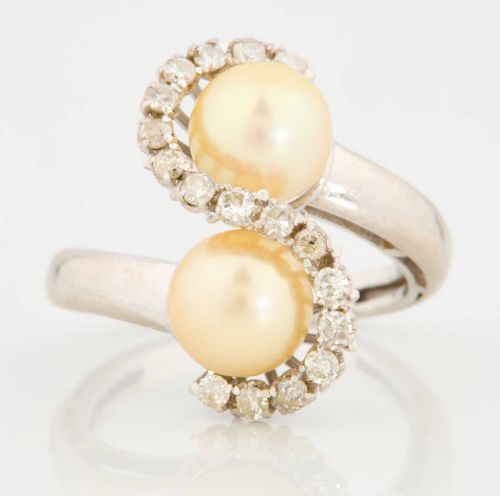


Cultured Pearl Ring
A cultured pearl ring brings together luminous organic nacre and precious metals across several defining decades of design.
Cultured Pearl Ring
A cultured pearl ring centres on an organic gem grown with human intervention, set within precious metal bands that reflect changing tastes through the twentieth century. These pieces range from delicate Edwardian cluster designs to bold mid-century cocktail rings and geometric Art Deco creations.
The selections span distinct periods including the Edwardian era, the 1930s, the 1950s, and the 1960s. Buyers encounter diverse forms such as multi-stone arrangements, toi et moi configurations, and prominent cocktail styles.
Metal choices vary significantly across these periods, pairing the pearls with yellow gold, white gold, or platinum. Supplementary gemstones like diamonds, jade, and turquoise frequently accompany the central pearl.
Materials and construction
Diamonds are frequently flush-set or claw-set alongside the pearls, utilising old-cut stones in Edwardian examples and brilliant cuts in later mid-century pieces. The combination of durable precious metals secures the delicate nacre of the pearl against daily wear.
Some Edwardian makers paired luminous pearls with bright turquoise, creating tiny, cheerful landscapes of blue and white on the hand.
Judging the quality
Quality rests on the lustre and surface smoothness of the pearl, alongside the precision of the surrounding metalwork and stone setting. Finer examples display clean nacre with deep orient and secure, balanced claw or bezel work.
The integration of secondary gems like diamonds dictates the upper tier of the range. Heavier metal weights, such as substantial 18ct gold or platinum mountings, distinguish superior craftsmanship from lighter production.
Mikimoto
The Cultured Pearl Ring Glossary
- Cultured pearl
- A pearl formed inside a mollusc after human intervention introduces an irritant or nucleus. This process yields spheres comparable in appearance to natural pearls.
- Toi et moi
- A ring style featuring two main stones positioned side by side, symbolising two souls intertwined. This French term translates to you and me.
- Cluster ring
- A ring design featuring a central stone encircled by a group of smaller gemstones. This layout maximises visual impact and light reflection.
- Old-cut diamond
- A diamond cut by hand before modern machinery, characterised by a small table, high crown, and open culet. These stones catch candlelight effectively.
- Nacre
- The organic-inorganic composite material produced by molluscs inside their shells. It forms the lustrous outer coating of pearls.
Cultured Pearl Ring: Frequently Asked Questions
How do I date a cultured pearl ring?
Dating relies on the structural style of the setting and the choice of precious metals. Edwardian pieces often employ yellow gold and intricate wirework, while Art Deco designs favour geometric platinum settings.
Mid-century and later 1950s or 1960s rings introduce white gold and bolder cocktail silhouettes. Examining the cut of any accompanying diamonds also helps narrow the period.
Are pearls fragile for everyday wear?
Pearls have a lower hardness rating than gemstones like diamonds and require careful handling. Cosmetics, perfumes, and household chemicals can damage the organic nacre over time.
Putting the ring on last and wiping it gently with a soft cloth after wearing helps preserve the surface. Storing the piece away from harder jewellery prevents scratching.
What metals are used in these rings?
The listings show a prominent use of 18ct yellow gold and 18ct white gold across Edwardian and mid-century examples. Platinum appears frequently in the Art Deco pieces.
These metals provide the necessary structural strength to hold both pearls and accent stones like diamonds or jade securely.
What is a cocktail ring?
A cocktail ring is a large, statement piece designed to draw attention during evening social gatherings. These rings often feature a prominent central pearl flanked by diamonds or coloured stones.
Originating in the mid-twentieth century, they prioritise bold visual presence and sculptural forms over understated daily wear.