



Pearl Diamond Band
These pearl diamond band pieces combine lustrous pearls with sparkling diamonds across Edwardian, Victorian, and mid-century rings.
Pearl Diamond Band
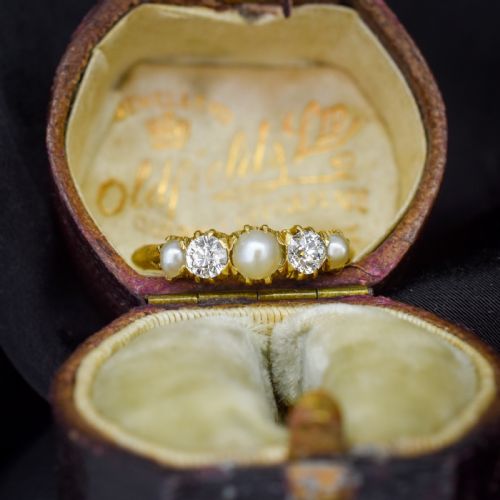
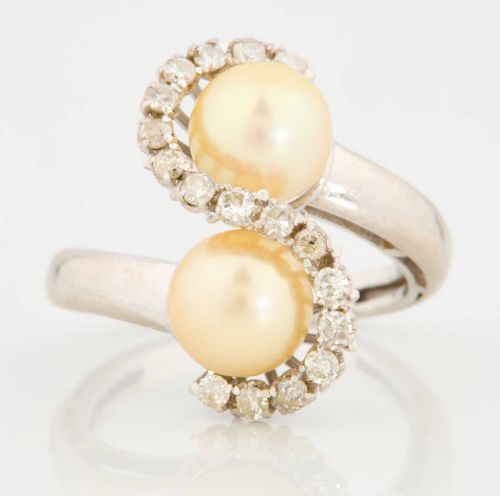
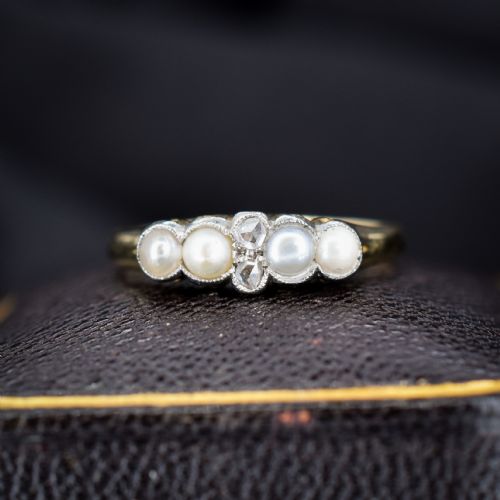
A pearl diamond band brings together two classic gemstones in ring and cocktail ring forms, spanning periods from Victorian and Edwardian times through to the mid-century. You will frequently encounter Edwardian designs alongside Victorian and later 1950 or 1960 examples.
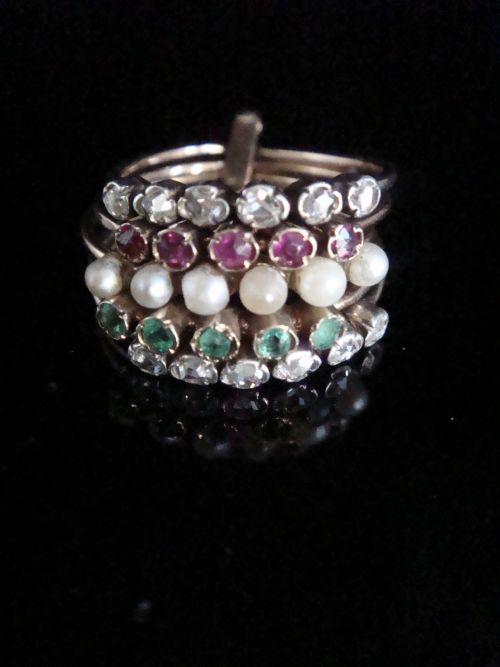
The configurations range from five-stone and trilogy arrangements to cluster rings, crossover styles, and harem stacking bands. Many pieces incorporate additional gems such as ruby, turquoise, emerald, and blue enamel alongside the central pearls and diamonds.
Materials and construction methods
Craftsmen built these rings using gold and platinum, specifically working in 18ct yellow gold, 18ct white gold, 18ct rose gold, and platinum-set mounts. Silver also appears in combination with gold on specific Edwardian multi-gem rings.
The settings feature hand-cut stones including old-cut diamonds, rose-cut diamonds, and natural or blister pearls alongside cultured pearls. Metalwork techniques encompass intricate swirling bands, cluster arrangements, and multi-tier stacking structures.
Several rings tuck secret rubies and emeralds between pearls and diamonds, proving Victorians loved hidden gemstone surprises just as much as we do.
Evaluating quality and craftsmanship
Quality rests in the harmony of the metalwork and the matching of the stones, where finely balanced proportions elevate a piece above simpler production. The crispness of the chasing in gold and platinum mounts distinguishes superior examples from standard work.
The integration of natural or cultured pearls with old-cut or rose-cut diamonds demands precise setting to secure the softer organic gems alongside harder stones. A well-executed piece maintains structural integrity while highlighting the natural lustre of the pearls.
The Pearl Diamond Band Glossary
- Old-cut diamond
- A vintage diamond facet style characterised by a small table and high crown, hand-shaped before modern machine precision.
- Rose-cut diamond
- A gemstone cut featuring a domed top with triangular facets and a flat base, popular in earlier periods.
- Blister pearl
- A pearl formed attached to the inner shell of the mollusc rather than within the tissue, creating a distinctive domed shape.
- Harem ring
- A multi-band ring designed to sit together on the finger, often incorporating mixed gemstones and multiple precious metals.
- Trilogy ring
- A ring set with three primary stones, traditionally representing the past, present, and future.
Pearl Diamond Band: Frequently Asked Questions
How do I date a pearl diamond band?
Dating relies upon stylistic markers such as Edwardian filigree or Victorian cluster settings, combined with the types of gold or platinum used in the mount.
Examining the cut of the diamonds, such as old-cut or rose-cut stones, provides further clues regarding the era of manufacture.
Are these bands suitable for daily wear?
Many of these rings serve as dress or cocktail pieces, requiring care due to the delicate nature of pearls set alongside diamonds.
Precious metals like platinum and 18ct gold offer durability, but pearls require protection from harsh chemicals and impacts.
What is the difference between natural and cultured pearls here?
Natural pearls formed without human intervention inside wild molluscs, whereas cultured pearls started their growth with human assistance.
Both varieties appear across different historical periods within these listings, each offering distinct organic lustre.
What metals are most common in these rings?
Yellow gold and white gold predominate, particularly in 18ct purity, alongside platinum and occasional combinations involving silver.
Victorian and Edwardian pieces frequently utilise yellow and rose gold, while later mid-century designs favour white gold and platinum.