


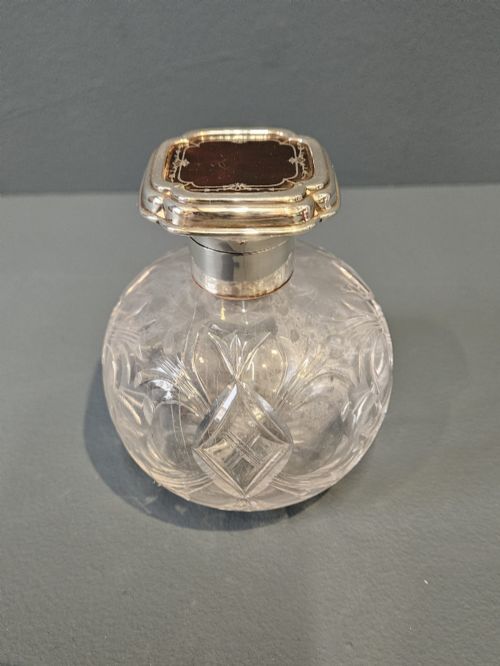
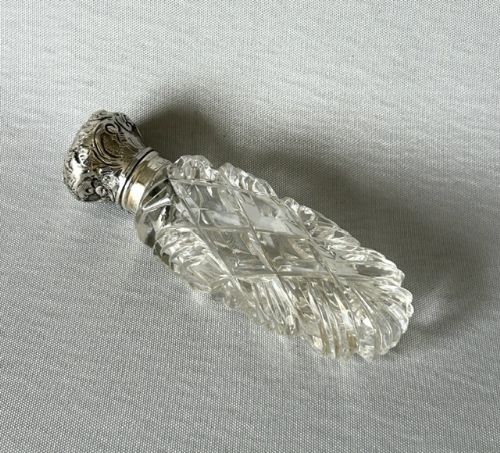
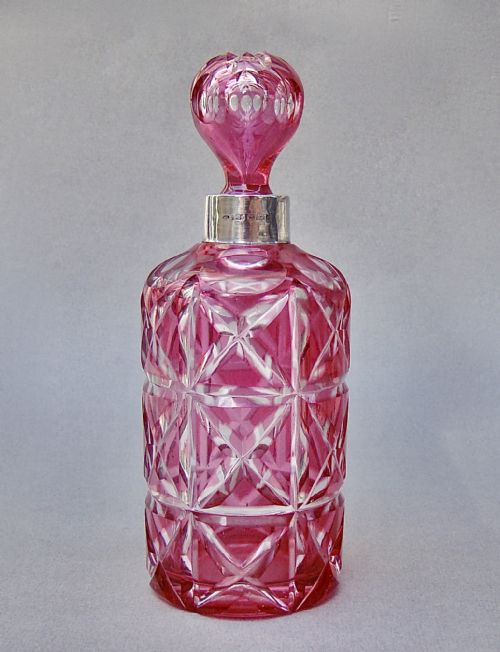


Crystal Scent Flask
A crystal scent flask brings tactile weight and historic charm to a dressing table, holding precious liquids in cut glass and precious metals.
Crystal Scent Flask
A crystal scent flask is a portable vessel designed to contain perfume, cologne, or smelling salts, typically combining a glass body with a secure metal or organic lid. When you search for a crystal scent flask, you encounter diverse forms ranging from Victorian pocket companions to modernist dressing table displays.
The most common examples on this page unite cut glass bodies with sterling silver mounts, spanning periods from the late nineteenth century through the Art Deco era of the 1930s. Alongside British and European silver-topped glass, the selection includes Chinese rock crystal and moulded glass pieces by notable designers.
These vessels served both practical and decorative functions in daily life, often fitted with hinged or screw caps to prevent evaporation. Collectors find both compact gentleman's cologne bottles and elaborate ladies' perfume containers featuring enamel, tortoiseshell, or coloured glass overlays.
Materials and construction
Makers shaped the bodies of these flasks from heavy lead crystal or coloured glass, utilising cutting, moulding, and overlay techniques to achieve faceted patterns and rich hues like cranberry, ruby, and green. Craftsmen then mounted these glass reservoirs with sterling silver, silver gilt, or enamel collars and hinged lids.
Specialist techniques defined the luxury end of production, such as the guilloché enamel work seen on French pieces and the intricate openwork carving found on Chinese rock crystal snuff bottles. Silver elements frequently bore hallmarks indicating the maker, assay office, and year of creation.
Crystal Scent Flask Retail Price Guide 2026
Typical asking prices for crystal scent flask among the pieces listed under this phrase on Sellingantiques today, from the lower quarter to the upper quarter. They describe what is for sale here now, not the wider market.
Materials recorded across the selection include cut glass, sterling silver, tortoiseshell, guilloché enamel, and rock crystal.
Factors of distinction
Quality in a crystal scent flask rests on the clarity and depth of the glass cutting, the weight of the crystal, and the integrity of the precious metal mounts. Sharp, clean facets catch the light directly, whilst heavy glass bodies provide a reassuring balance in the hand.
The presence of distinguished makers, fully legible hallmarks, and undamaged decorative details such as guilloché enamel or tortoiseshell insets elevate a piece. The precision with which the silver lid seals the glass neck marks the distinction between standard utilitarian production and fine atelier work.
Harold Bushell & Co·Karl Palda·Rene Lalique·Barnsley & Co·S Morden & Co
The Crystal Scent Flask Glossary
- Cut glass
- Glassware shaped and patterned by grinding and polishing wheels, creating sharp facets that refract light. This technique provides the textural brilliance characteristic of many Victorian scent containers.
- Guilloché enamel
- A decorative technique where a precise geometric pattern is engraved into metal beneath a translucent layer of enamel. It appears frequently on early twentieth-century vanity items.
- Sterling silver
- An alloy of silver containing 92.5 percent pure silver and 7.5 percent other metals, typically copper. This standard metal forms the lids, collars, and mounts on British scent bottles.
- Rock crystal
- A transparent, colourless variety of quartz used in high-end carving and luxury objects. Artisans carved these solid mineral blocks into detailed miniature flasks.
- Silver gilt
- Silver that has been coated with a thin layer of gold on its surface. This treatment offers the rich appearance of solid gold while utilising a silver base.
Crystal Scent Flask: Frequently Asked Questions
How do I date a crystal scent flask?
Dating relies primarily on the style of the glass cutting, the silhouette of the bottle, and any accompanying silver hallmarks. Assay marks on the metal mounts provide exact years and cities of manufacture.
Stylistic shifts, such as the transition from ornate Victorian flourishes to geometric Art Deco lines, help narrow down pieces lacking clear stamps.
Were these bottles meant for travel?
Many smaller nineteenth and early twentieth-century examples served as pocket companions for daily refreshment or smelling salts. Secure screw caps and lockable mechanisms prevented spills during transit.
Larger vessels remained stationary on dressing tables as part of matching vanity sets.
How should I clean the inside of an antique scent bottle?
Residue from historic perfumes can sometimes be gently loosened using warm water and specialised bottle brushes without harsh chemicals. Care must be taken to protect exterior elements like enamel, tortoiseshell, or silver mounts from moisture.
Many collectors prefer to leave dry internal residue undisturbed to preserve the original interior surface.