

Crystal Pendant Light Fitting
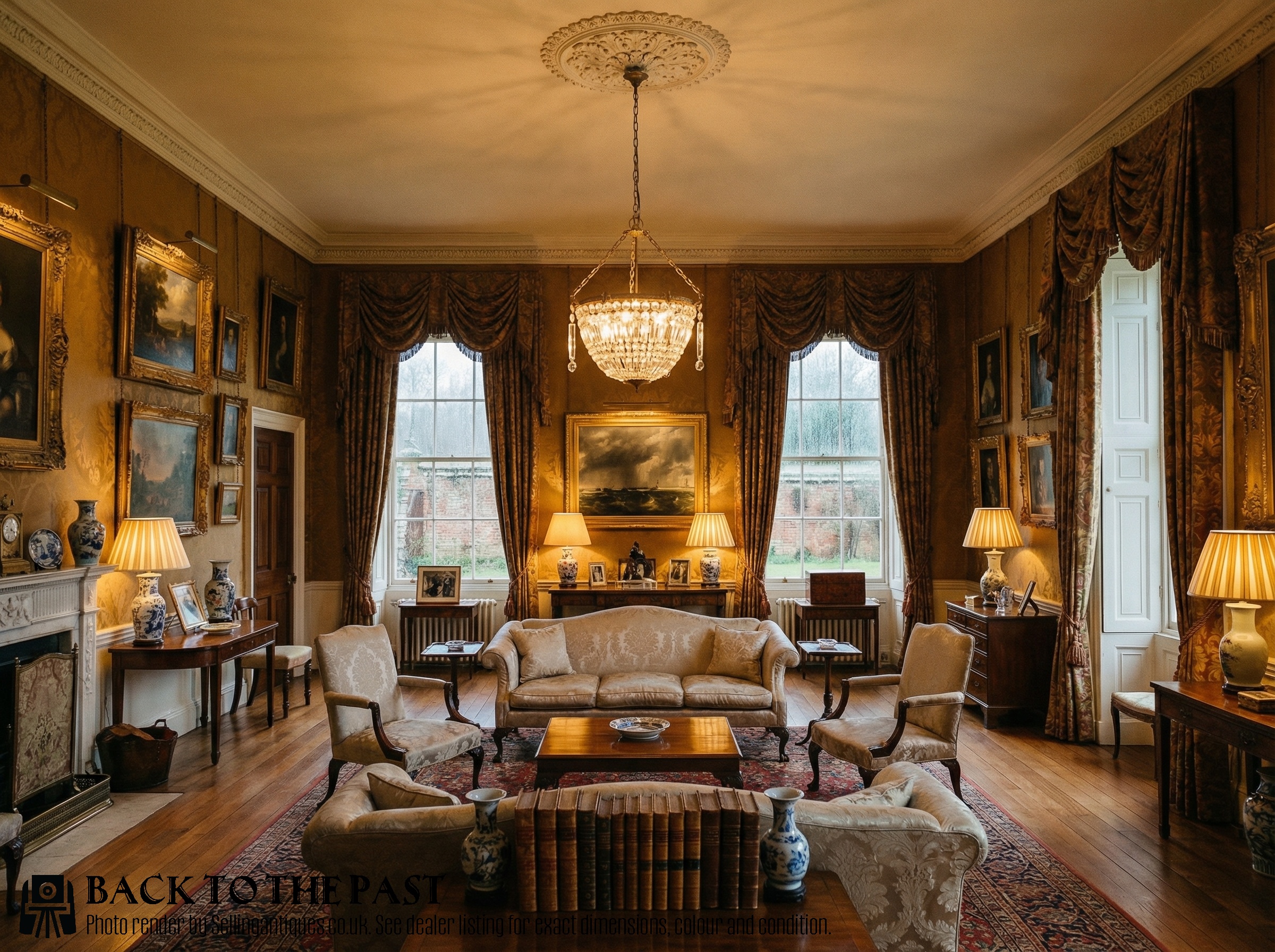
A crystal pendant light fitting brings concentrated illumination and faceted brilliance into a room, drawing the eye upwards through suspended glass work.
Crystal Pendant Light Fitting
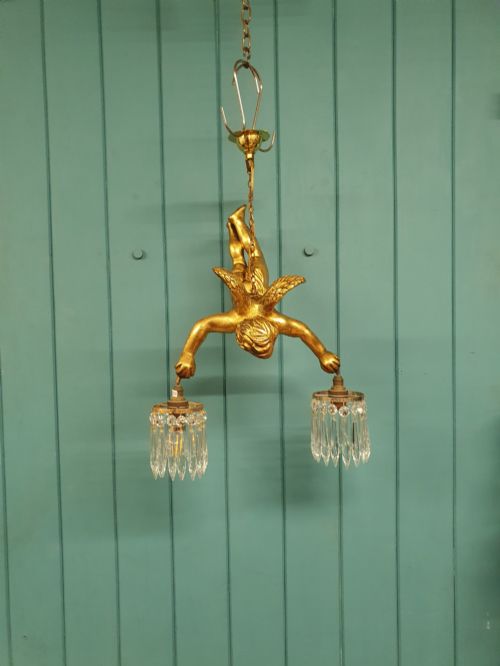
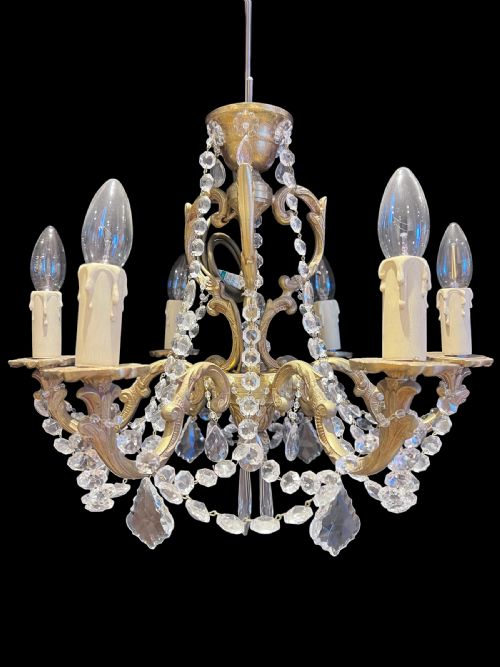
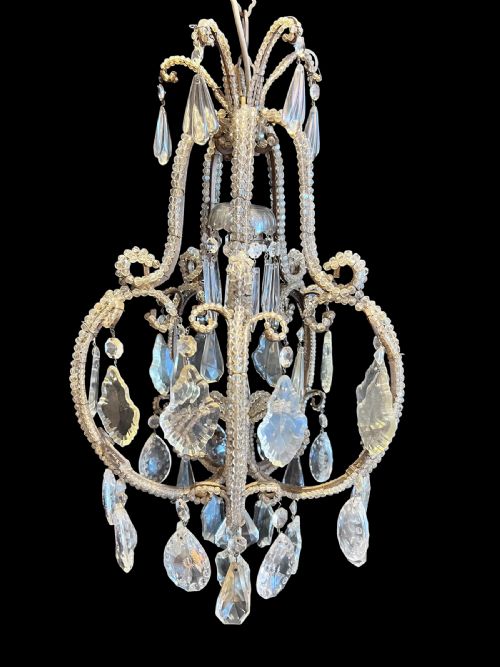
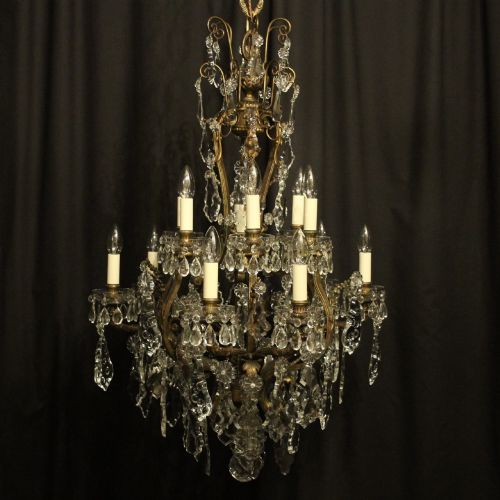
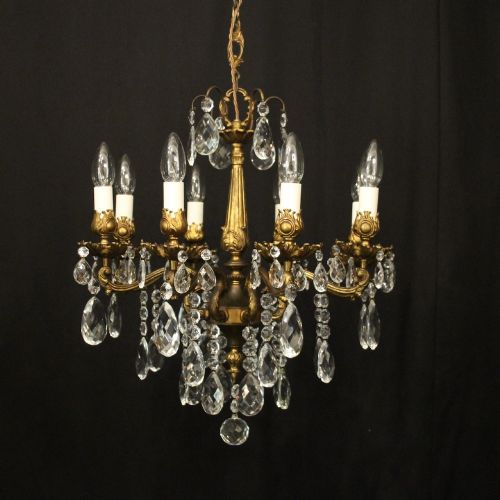
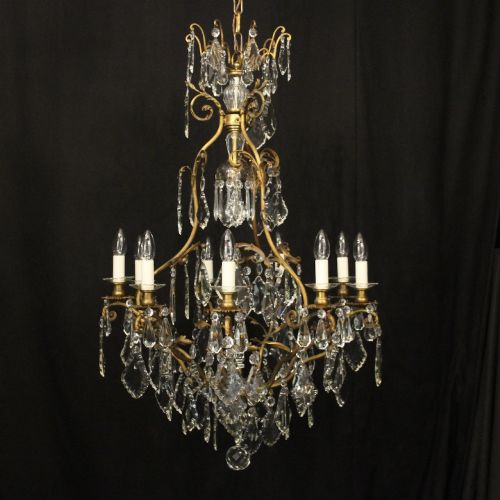
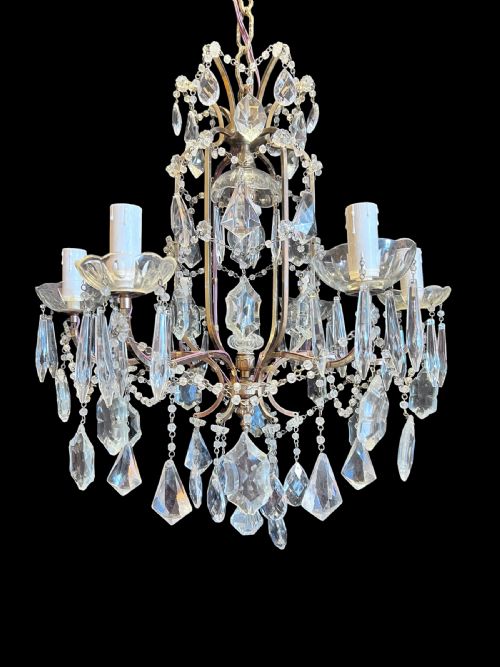
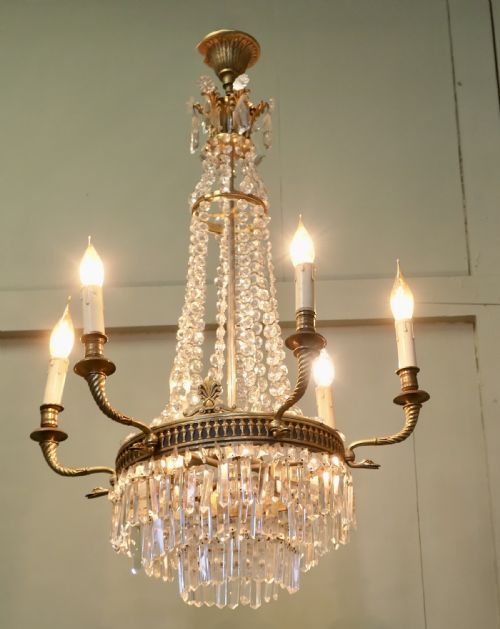
A crystal pendant light fitting encompasses hanging illumination pieces defined by glass drop ornaments and metal frames, originating predominantly from the late nineteenth century through to the 1930s. Buyers encountering these fixtures will frequently find French Empire styles, Italian Rococo revivals, and Edwardian designs featuring multiple candle arms or single suspended lights.
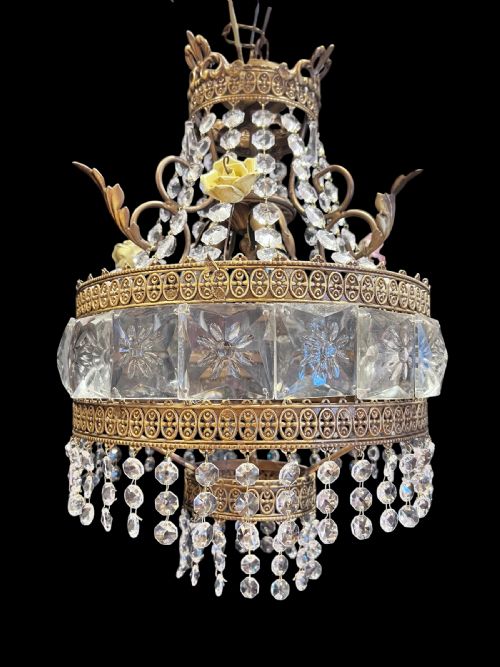
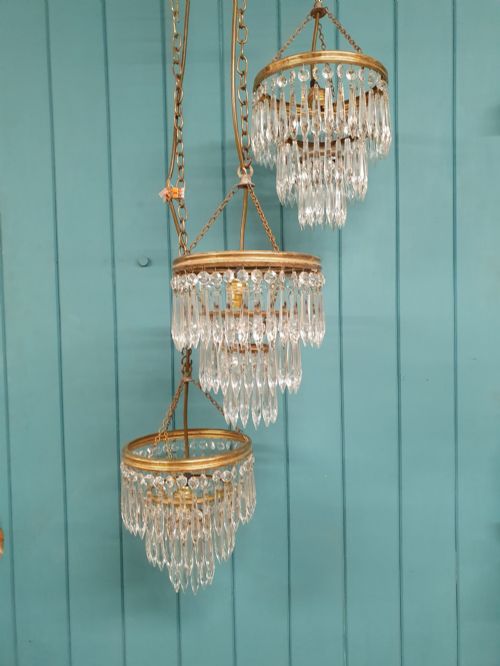
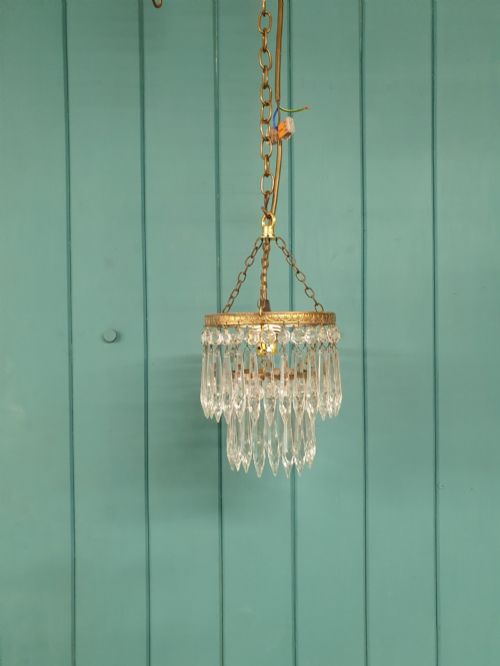
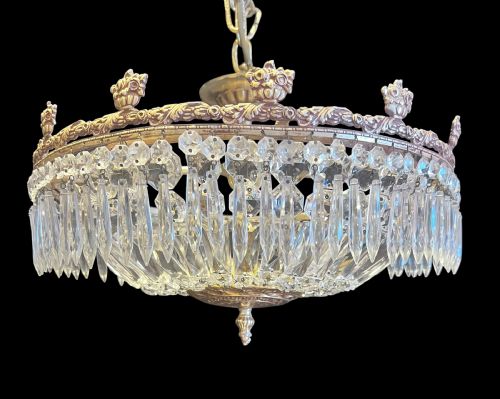
The selection includes complex multi-light arrangements alongside smaller domestic forms such as spike chandeliers, dome tops, and plafonieres. These pieces originate from continental workshops and British domestic contexts alike, spanning periods from the 1890s to the 1930s.
How they were made
Frameworks rely on cast metals including brass, bronze, gilt metal, and toleware, shaped to hold the weight of suspended glass elements. Artisans secured these structures with pins and wire to connect arms, crowns, and banding.
Prisms, beads, and drops utilise cut glass and crystal, shaped through cutting and polishing techniques to refract light. Coloured crystals, porcelain flowers, and amber teardrops occasionally supplement clear glass components.
Materials across the listings include cut glass, crystal glass, brass, gilt bronze, gilt metal, and toleware.
What varies in quality
The refinement of the metalwork separates baseline production from superior examples, visible in the depth of chasing on bronze or the crispness of casting in brass frames. High-grade mountings integrate balanced arm configurations with secure structural fixings.
Crystal quality determines the refractive performance of each pendant light fitting, depending on the purity of the glass and the precision of the facet cutting. Dense, clear crystal produces sharper light dispersal than softer moulded glass alternatives.
The Crystal Pendant Light Fitting Glossary
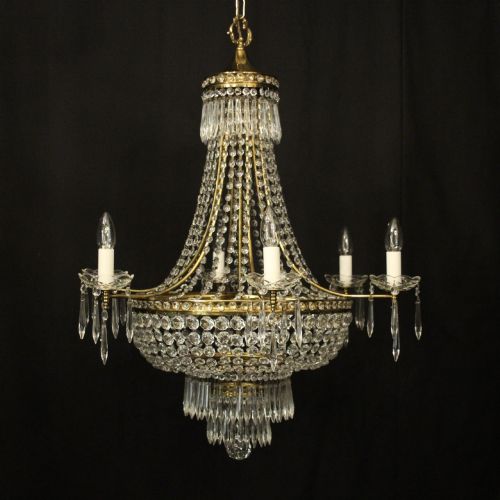
- Tent and waterfall
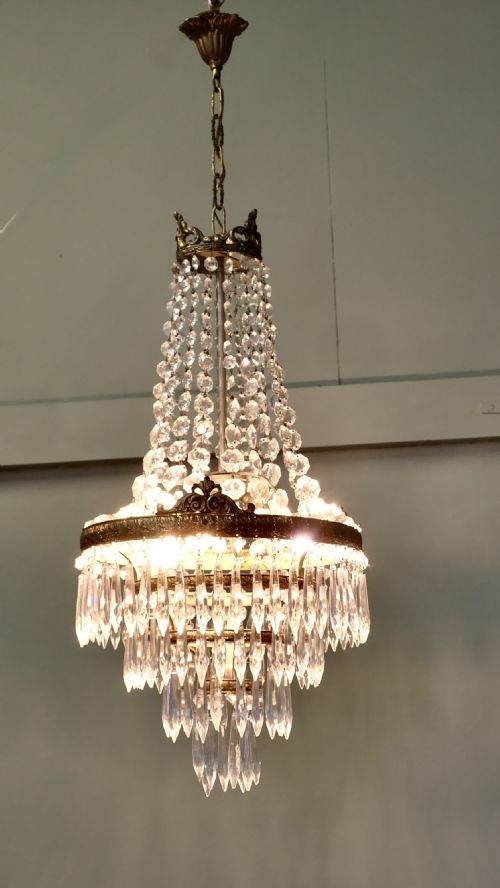
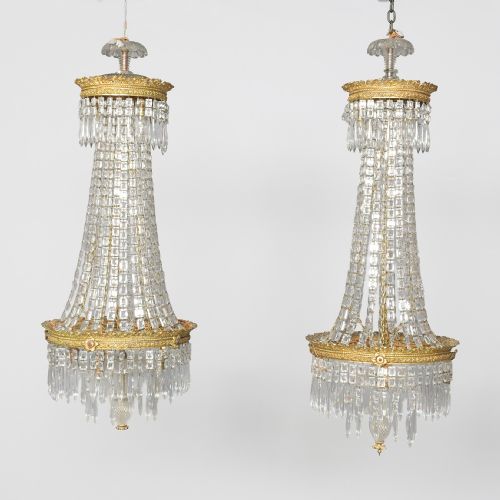
- A lighting configuration where upper strands of beads form a conical tent shape above a wider cascading skirt of crystals. This arrangement maximises surface reflection across the frame.
- Plafoniere
- A ceiling-mounted lighting fixture sitting close to the surface rather than hanging on a long chain or cord. These units often combine a brass frame with flat or bowl-shaped glass elements.
- Spelter
- An alloy of zinc and lead utilised as a cost-effective alternative to bronze for decorative figures and structural mounts. It is frequently painted or gilded to imitate more expensive metals.
- Toleware
- Painted or lacquered sheet metal used for decorative accents and structural components on light fittings. It provides coloured surfaces within French and continental designs.
- Coffin prisms
- Long, flat glass pendants with faceted edges shaped like narrow wedges. They hang from the main frame to catch and scatter light.
Crystal Pendant Light Fitting: Frequently Asked Questions
How do I hang a heavy crystal chandelier safely?
Suspension requires fixing directly into ceiling joists or installing a heavy-duty metal pattress box capable of supporting the combined weight of metal and glass.
Professional electrical installation ensures the wiring inside antique brass or gilt frames meets current safety standards before operation.
What periods do these light fittings come from?
The available lighting spans from the late nineteenth century, including Edwardian designs and pieces dated around 1900, through to the 1920s and 1930s.
Stylistic indicators such as French Empire or Art Nouveau elements help align specific pieces with these broader manufacturing eras.
How should I clean delicate glass drops?
Maintenance involves wiping individual crystals with a mild solution of warm water and mild detergent while the drops remain attached to the frame. Thorough drying prevents water spots from dulling the cut glass facets.
Harsh chemical cleaners risk damaging the gilt finishes on the surrounding brass or bronze mountings.
What distinguishes an Empire style chandelier?
Empire style fixtures typically feature formal symmetry, classical proportions, and specific configurations like tent and waterfall crystal arrangements. Gilt bronze mounts and restrained ornamentation define this aesthetic.
Such designs contrast with the more ornate and asymmetrical curves found in Rococo revival pieces.