
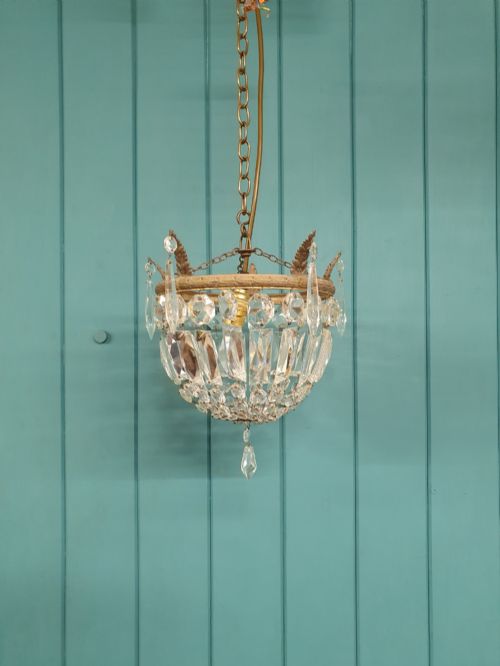
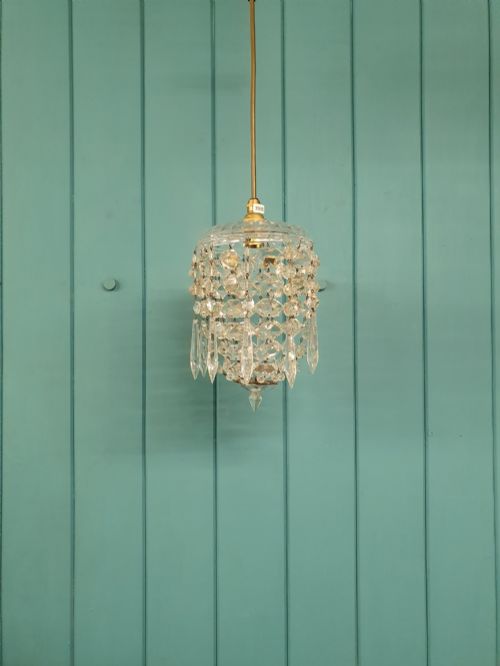
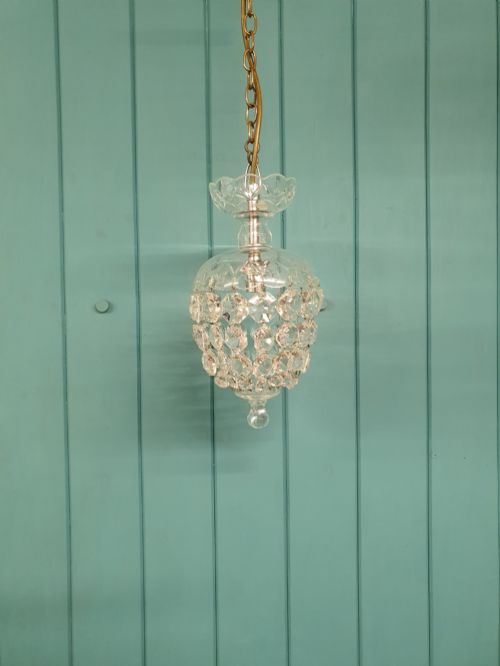
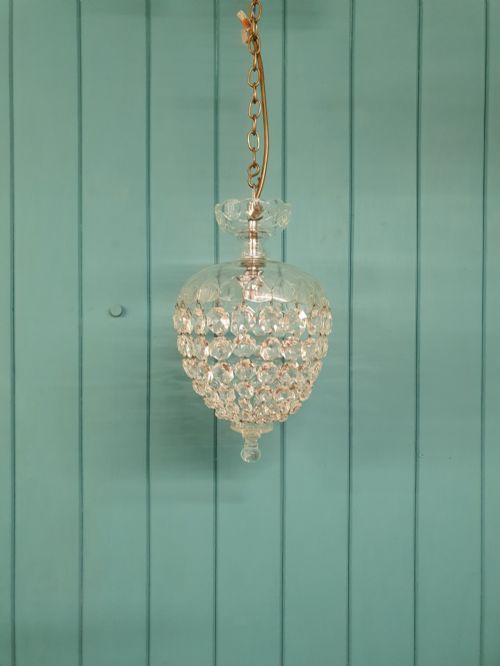
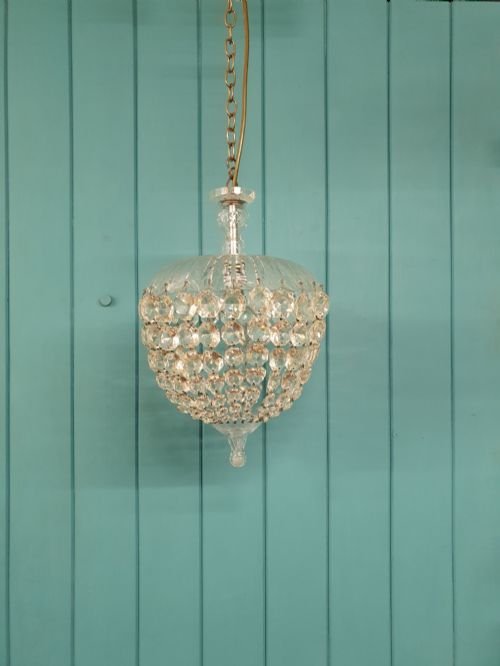
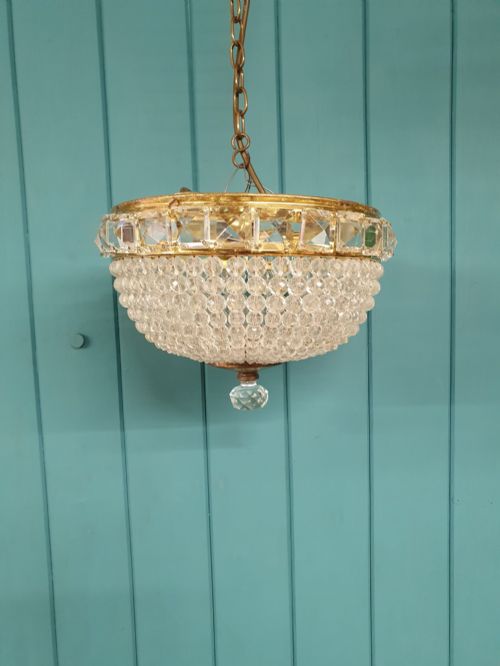
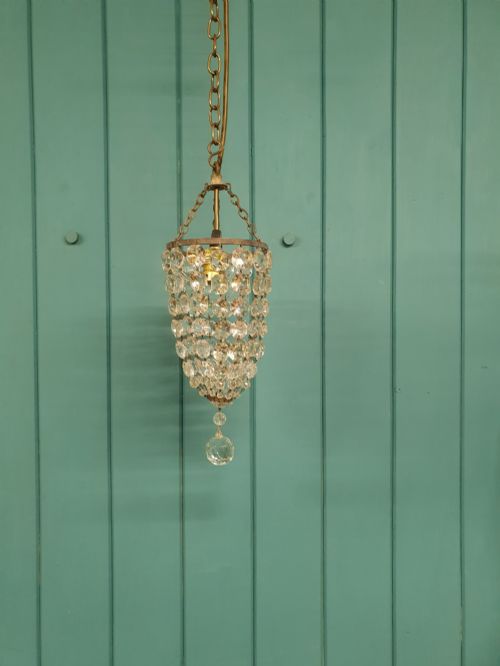


Edwardian Crystal Basket Light
An Edwardian crystal basket light brings genuine period sparkle to a ceiling, combining brass frames with intricate glass prisms.
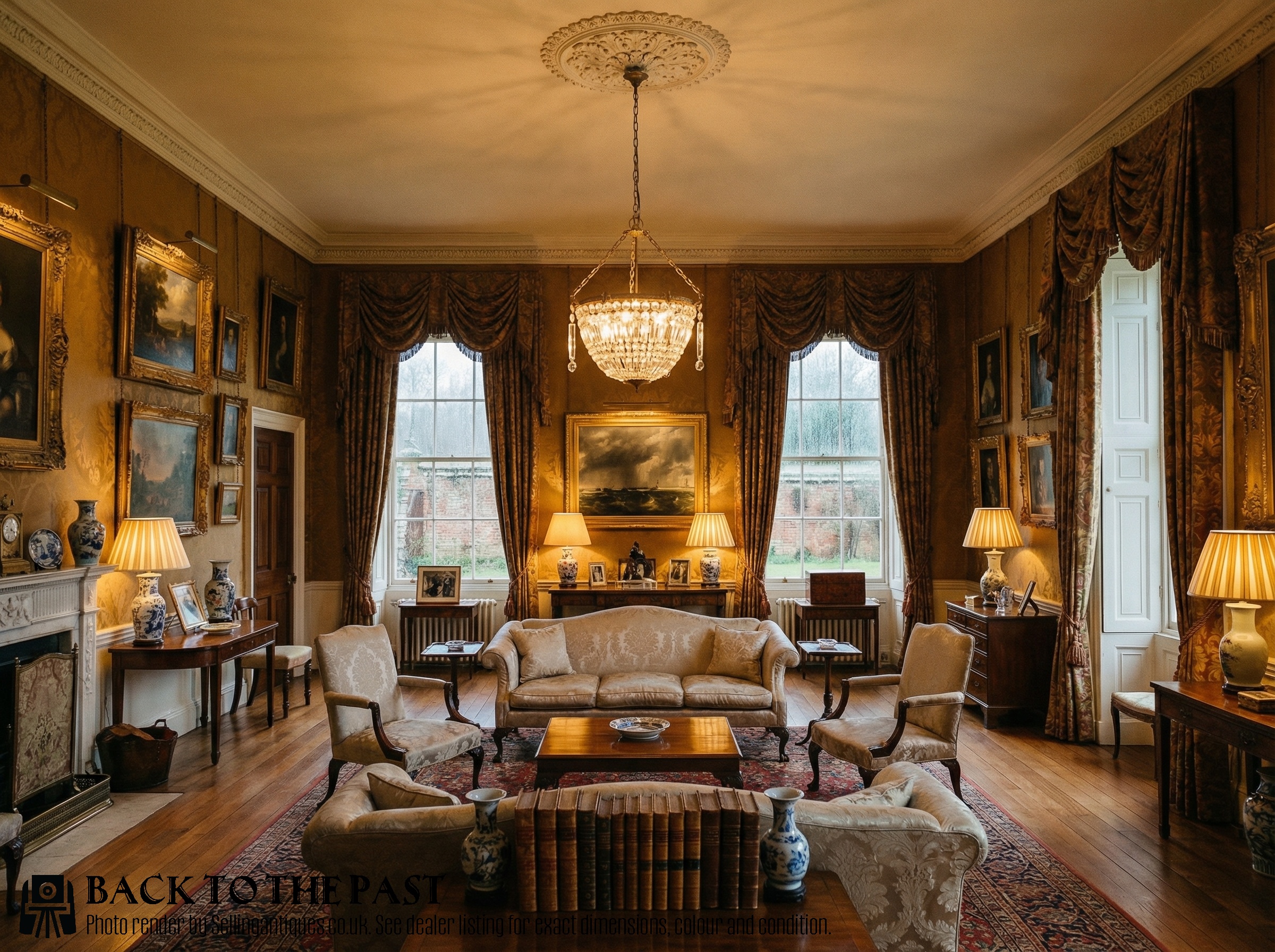
Edwardian Crystal Basket Light
An Edwardian crystal basket light is an overhead ceiling fixture designed to illuminate a room while casting complex light patterns from suspended glass elements. These pieces belong primarily to the early twentieth century, spanning Edwardian and nineteen-thirties periods alongside influences from French Regency and Empire styles.
Buyers encounter various compact and larger formats on this page, including bag chandeliers, dome top designs, tapered bag shapes, and small swag configurations. These hanging lamps range from modest six-inch versions up to substantial eighteen-inch centrepieces suitable for principal rooms.
Materials and Construction
Makers constructed the structural frames of these lights using brass and fine wire to support the weight of the glass components. Brass mounts secure the upper sections, providing a sturdy metallic framework that contrasts with the transparent hanging elements.
The ornamentation relies on cut glass, lead crystal, and glass crystal configured as beads, coffin prisms, and tents. Individual glass pieces are wired to the brass armature to form the characteristic basket, bag, or dome silhouettes.
Factors of Quality
The quality of an Edwardian crystal basket light rests on the clarity and cut of the glass components. Superior examples utilise heavy lead crystal with sharp, clean facets that refract light brilliantly, whereas simpler versions feature softer pressed glass or basic bead strands.
Construction intricacy also dictates the standard of the piece, particularly the density of the crystal draping and the solidity of the brass frame. Finer models integrate elaborate tent-and-bag arrangements with precise wirework, demonstrating greater craftsmanship than plain dome configurations.
The Edwardian Crystal Basket Light Glossary
- Bag chandelier
- A style of ceiling light shaped like a flat-backed or tapered bag where glass drops hang closely from a brass ring to a lower apex. This form directs illumination downward while glittering across multiple tiers of crystals.
- Coffin prism
- A long, flat-cut glass pendant shaped like a coffin, utilised in early twentieth-century lighting to catch and scatter light. These distinct prisms hang along the lower edges of basket and bag fixtures.
- Tent and bag
- A specific lighting silhouette featuring an upper canopy of glass strands gathered into a tent shape above a lower basket or bag structure. This double-tiered design maximises the quantity of crystal exposed to the lamp bulb.
- Brass mount
- The metallic collar or decorative band securing the upper portion of the glass basket to the ceiling suspension. It provides structural integrity while offering a polished or patinated visual contrast to the crystal.
Edwardian Crystal Basket Light: Frequently Asked Questions
How do I hang a crystal basket light?
These ceiling lights suspend from a standard electrical point using a matching brass chain and ceiling rose. Ensure the ceiling joist supports the combined weight of the brass frame and glass crystals securely.
Professional installation by an electrician is recommended to handle the internal wiring safely and adjust the drop height to suit your room proportions.
What rooms suit a basket chandelier?
Compact basket lights work well in hallways, cloakrooms, or bedrooms where ceiling height is modest. Larger eighteen-inch variations suit dining tables or living rooms needing a distinct period focal point.
The downward illumination creates an intimate pool of light rather than general ambient flooding.
How do I clean an Edwardian crystal light?
Dust the crystals regularly with a soft feather duster or microfiber cloth while the light remains switched off and cool. For a deeper clean, remove accessible glass drops and wash them in warm soapy water before drying thoroughly.
Avoid spraying cleaning solutions directly onto the brass frame to protect the aged metal finish.
How do I date these lights?
Dating relies on examining the brass composition, wire fixings, and the specific cut of the glass prisms. Edwardian and early-twentieth-century pieces display hand-wired crystal arrangements and characteristic bag or dome profiles.
Comparing the proportion of brass work to crystal density helps distinguish Edwardian models from later reproductions.