







Crystal Mantel Lusters
Crystal mantel lustres are dazzling, light-catching ornaments designed to dress a fireplace with glass pendants and colour.
Crystal Mantel Lusters
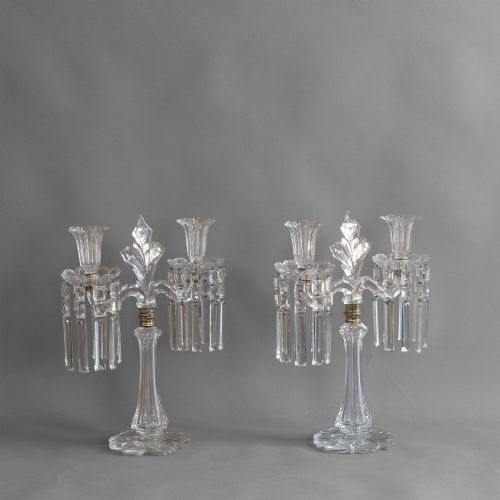
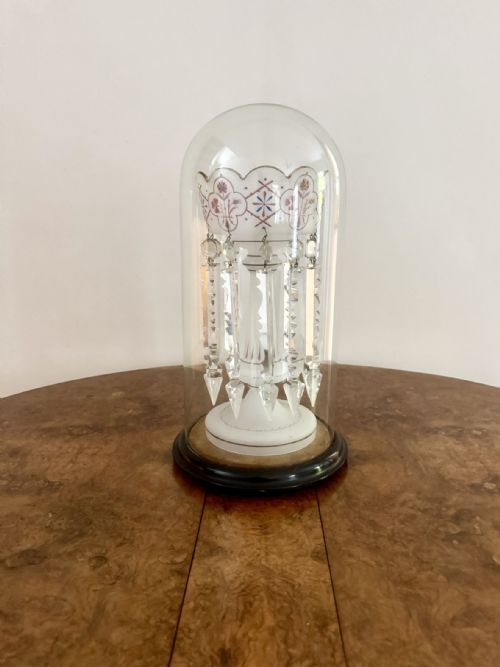
Crystal mantel lustres are decorative table and mantel ornaments designed to catch and refract light through suspended glass pendants. When people search for crystal mantel lustres, they often find pairs intended to sit symmetrically on either end of a chimney piece.
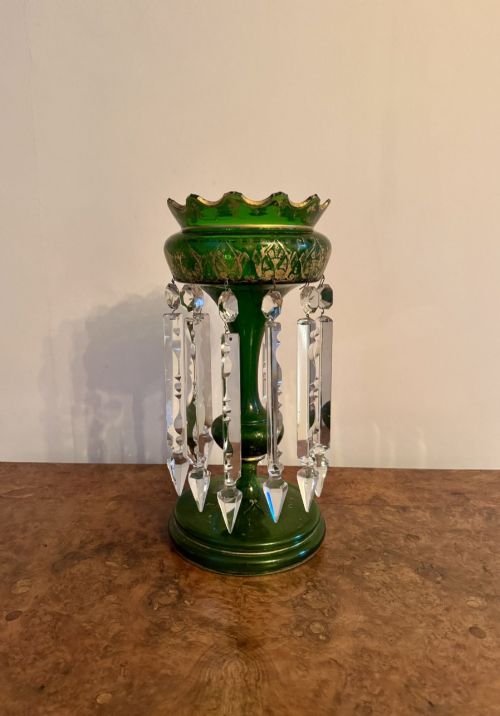
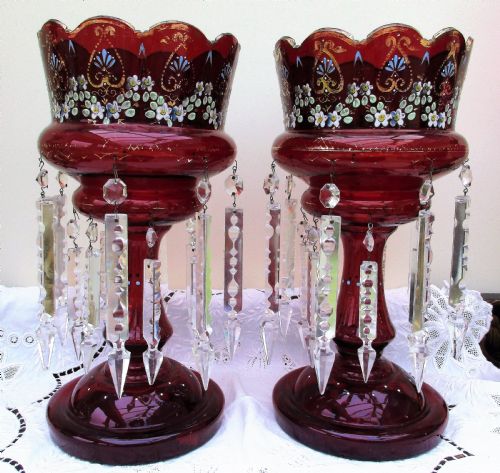
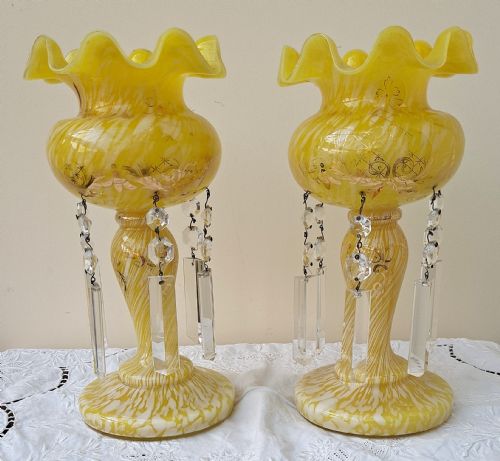
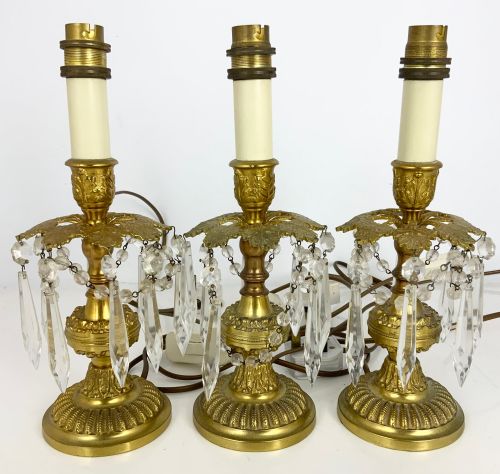
The versions most commonly met on this page belong to the Victorian and 19th-century periods, taking the form of upright vases or pedestals fitted with a ring of hanging prisms. Alongside dedicated mantel pieces, collectors encounter table lustres and converted candlestick forms.
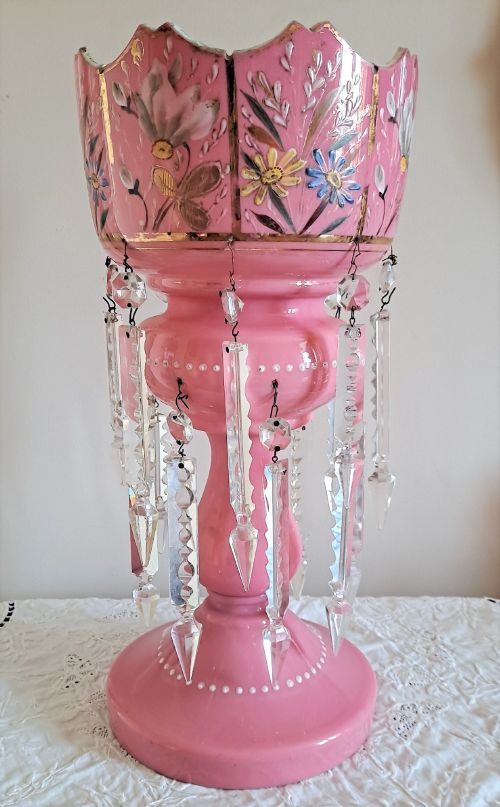
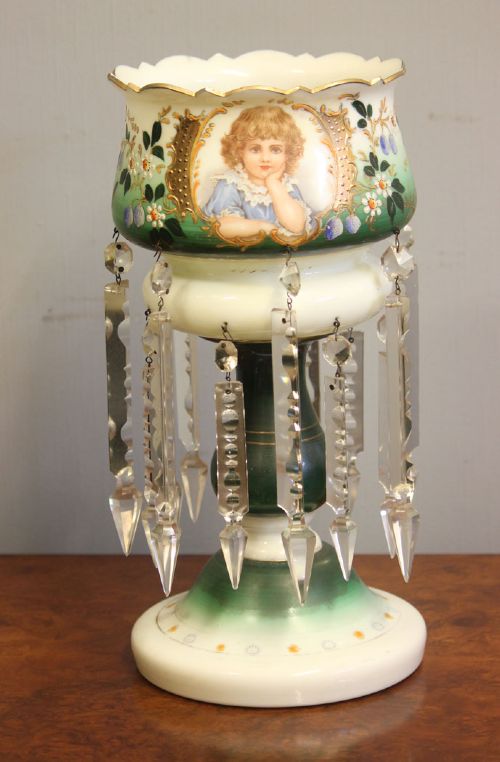
Many examples emerge in rich coloured glass such as ruby, green, yellow, and cranberry, often enriched with hand-painted enamel or gilding. French and Bohemian influences appear frequently alongside English productions, showing varied floral motifs and flash glass techniques.
How they were made
Makers shaped these pieces using blown glass, cut crystal, and coloured glass bodies combined with metal mounts in gilt brass, bronze, or ormolu. Glassmakers applied techniques like flashing, where a thin layer of coloured glass fuses over clear crystal before wheel-cutting.
Pendants and drops were hand-cut to create facets that maximise light reflection, then suspended from the central body using wire or metal pins. Artisans finished many examples with applied gold leaf, enamel decoration, or gilt metal detailing around the rims and bases.
Crystal Mantel Lusters Retail Price Guide 2026
Typical asking prices for crystal mantel lusters among the pieces listed under this phrase on Sellingantiques today, from the lower quarter to the upper quarter. They describe what is for sale here now, not the wider market.
Listings here span the Victorian period, the nineteenth century, and Regency eras, highlighting glass, cut crystal, and gilt metal.
What varies in quality
Quality in these pieces rests primarily on the depth and saturation of the glass colour, the precision of the hand-cutting on the prisms, and the crispness of any applied gilding or enamelwork. Heavy, substantial glass bodies with well-balanced proportions separate finer productions from simpler wares.
The completeness and originality of the hanging crystal drops heavily influence a piece, as does the integration of fine metalwork such as ormolu or bronze mounts. Richer Bohemian overlay techniques and detailed hand-painted florals signal higher workshop standards.
The Crystal Mantel Lusters Glossary
- Lustre
- A decorative mantel ornament featuring a central vase or candlestick stem hung with cut glass pendants. These pieces were originally made to generate extra sparkle in candlelight.
- Flash glass
- A technique where a thin layer of coloured glass is fused over a clear glass base, then selectively cut away to reveal the clear crystal underneath. This creates strong contrast and faceted brilliance.
- Ormolu
- Gilded bronze used for decorative mounts and structural elements in nineteenth-century furnishings. It provides a warm metallic contrast to coloured glass bodies.
- Opaline
- An opaque, milky glass often tinted in delicate pastel shades. It was widely used in nineteenth-century French table wares and decorative objects.
- Cranberry glass
- A rich, translucent red glass coloured by the addition of gold chloride during the melting process. It remains a defining hue of Victorian decorative glass.
Crystal Mantel Lusters: Frequently Asked Questions
How were crystal mantel lustres used?
These pieces sat upon fireplace mantels and side tables to reflect the flickering light of candles and oil lamps before electric lighting became common. Their hanging crystal prisms caught illumination from all angles to brighten dim nineteenth-century rooms.
Beyond functional illumination, they served as ornamental status symbols that displayed a household's taste for colourful, light-refracting glass. Pairs were standard, creating a balanced focal point on either end of a chimney piece.
How do I clean my lusters?
Cleaning requires removing the delicate crystal pendants individually and washing them gently in lukewarm soapy water. A soft cloth and mild cleanser preserve the fragile enamel work and gold leaf on the glass body.
Harsh abrasives and soaking must be avoided, particularly around gilt metal mounts and hand-painted surfaces. Drying each drop thoroughly before reattaching prevents water spots and protects the hanging wires.
Are these pieces functional candlesticks?
Many examples incorporate candle sockets at the top, allowing them to function as both candlesticks and light-catching ornaments. Others are closed vase forms meant purely for decorative display.
When candle sockets are present, they often show slight signs of historical wax residue from use. Collectors should check whether the socket accommodates standard taper candles safely.
How do I date Victorian glass lusters?
Dating relies on examining the weight of the glass, the cut of the prisms, and the style of any metal fittings. Victorian examples from the mid to late nineteenth century often feature deep ruby or green hues with hand-painted floral enamel.
Early nineteenth-century Regency pieces typically incorporate bronze and ormolu mounts with simpler cut drops. Examining the base pontil mark also helps determine the manufacturing era and blowing technique.