





Crystal Hock Wine Glasses
Crystal hock wine glasses bring tall, colourful elegance to the table, and finding the right pair means balancing rich enamel work with brilliant cut crystal.
Crystal Hock Wine Glasses
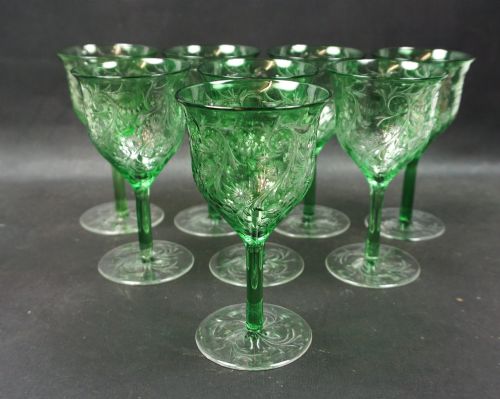
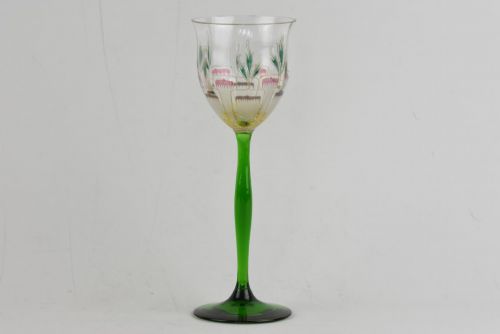
Crystal hock wine glasses are tall vessels traditionally used for German hock and white wines, distinguished by their elongated stems and coloured bowls. When you search for crystal hock wine glasses, you encounter pieces spanning the Victorian era through the Art Deco period, with notable examples from makers in France and Germany.
The versions you meet most frequently on this page feature rich shades of green and amber, often overlaid or cased upon clear lead crystal. These pieces showcase diverse design movements including Art Nouveau, Jugendstil, and Bohemian styles, reflecting the aesthetic shifts of the late nineteenth and early twentieth centuries.
Forms range from sets of matched wine glasses to individual roemers and tall decanters, all sharing the characteristic height suited for aromatic white wines. The selection includes delicate floral enamelling alongside deep geometric cuts, providing a broad view of period glassmaking.
Materials and construction
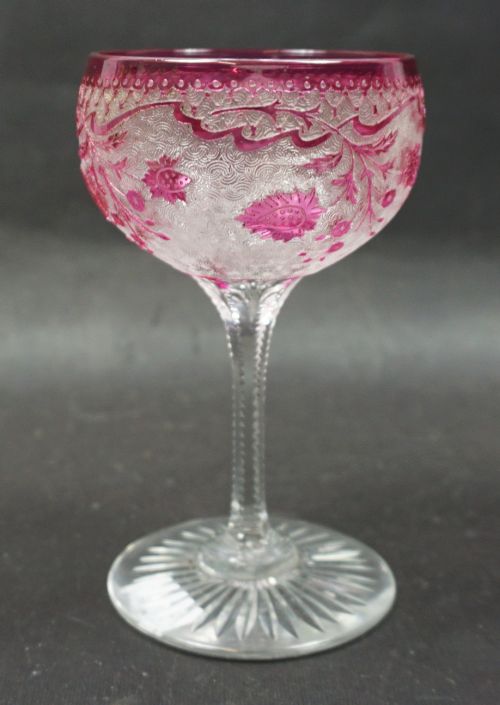
Makers fashioned these vessels using heavy lead crystal and lead glass, which provided the clarity and weight necessary for deep cutting and polishing. Overlay glass and cased glass techniques allowed artisans to fuse a layer of coloured glass over a clear crystal base before cutting through the outer layer to reveal the clear glass beneath.
Decoration often involved intricate hand-enamelling and gilding with gold leaf, creating vibrant floral motifs on the coloured surfaces. Engraving was also employed, particularly on Bohemian roemers, to etch detailed patterns into amber glass bowls.
Crystal Hock Wine Glasses Retail Price Guide 2026
Typical asking prices for crystal hock wine glasses among the pieces listed under this phrase on Sellingantiques today, from the lower quarter to the upper quarter. They describe what is for sale here now, not the wider market.
Continental and British aesthetics meet in these selections, encompassing Bohemian amber roemers and French overlaid decanters.
Distinctions in quality
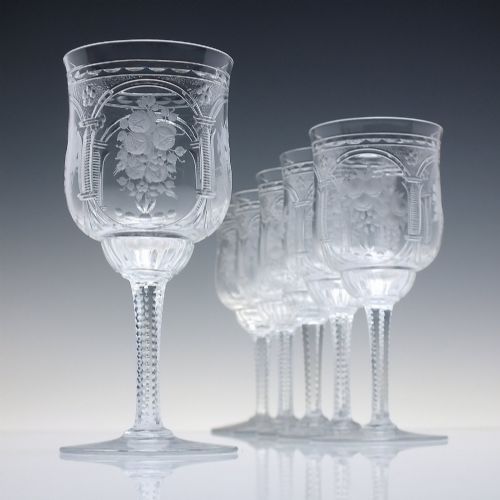
Quality in these glasses rests upon the precision of the glass cutting and the crispness of the overlaid colour layers. Finer pieces demonstrate sharp facet edges and flawless clarity within the lead crystal, whereas simpler examples show softer lines and heavier walls.
The artistry of the enamel work and gilding further separates standard production from exceptional output. Skilled hand-painting on Theresienthal or Baccarat pieces exhibits careful control and lasting adherence, while lesser items display simpler, thicker application.
Baccarat·Theresienthal·St Louis Massenet
The Crystal Hock Wine Glasses Glossary
- Hock
- A traditional British term for German white Rhine wine, which led to the naming of tall-stemmed glasses designed for its consumption. These glasses typically feature colourful bowls to enhance the table setting.
- Cased glass
- Glass made by blowing a bubble of one colour inside or outside a bubble of another colour, creating a layered effect. This technique was essential for creating the striking two-tone hock glasses.
- Roemer
- A traditional Germanic wine glass form featuring a wide bowl atop a cylindrical stem decorated with applied prunts. Bohemian examples often showcase engraved amber surfaces.
- Prunt
- A small blob of applied glass used to decorate the stem of a roemer for a secure grip. They are characteristic of traditional Germanic glassware styles.
- Jugendstil
- The continental European manifestation of Art Nouveau, prominent in German-speaking regions around nineteen hundred. It heavily influenced the floral enamelling seen on Theresienthal crystal.
Crystal Hock Wine Glasses: Frequently Asked Questions
What makes hock glasses different from standard wine glasses?
Hock glasses are traditionally much taller than standard wine glasses and feature elongated stems designed to keep the hand away from the bowl. Their coloured or cased glass bowls were historically intended to highlight the hues of Germanic white wines.
The taller profile also allows aromatic wines to release their bouquets more effectively. This specific shape became a canvas for elaborate cutting and enamelling during the Victorian and Edwardian periods.
How do I identify Bohemian roemers?
Bohemian roemers are usually recognised by their amber or green glass colouring and heavily engraved floral or geometric surfaces. They often incorporate traditional forms with thick stems and wide bases.
Unlike French crystal glasses that rely on sharp geometric cutting through overlay, Bohemian pieces frequently utilise surface engraving and rich enamel decoration.
Can I use antique hock glasses for dining?
Antique crystal hock glasses can certainly be used for special dining occasions, provided they are handled with proper care. Hand washing in warm water is essential to preserve the delicate enamel and gold leaf details.
Due to the lead content and historical nature of the glass, dishwasher use should be avoided entirely. Storing them securely on stable shelving prevents accidental tipping.
How do I date a crystal hock glass?
Dating these glasses involves examining the stylistic indicators of periods such as Art Nouveau, Victorian, or Art Deco. Design motifs like organic floral enamel point toward the nineteen hundreds, while cleaner geometric cuts often suggest the nineteen thirties.
Maker marks, where present on the base, provide definitive clues to production eras. The weight and depth of the crystal cut also help distinguish nineteenth-century examples from later twentieth-century production.