
Crystal Drop Ceiling Fitting
A crystal drop ceiling fitting catches the room's light from above, turning electricity into a brilliant shower of prismatic sparks.
Crystal Drop Ceiling Fitting
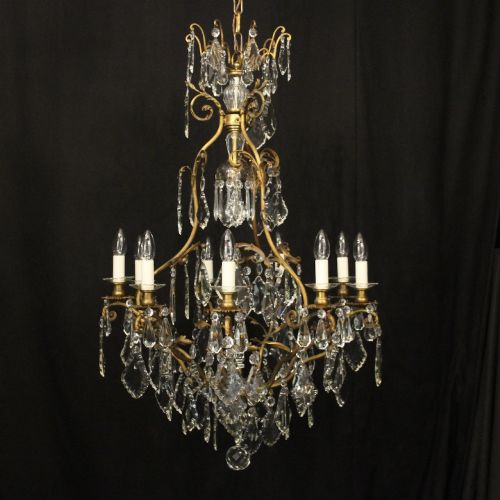
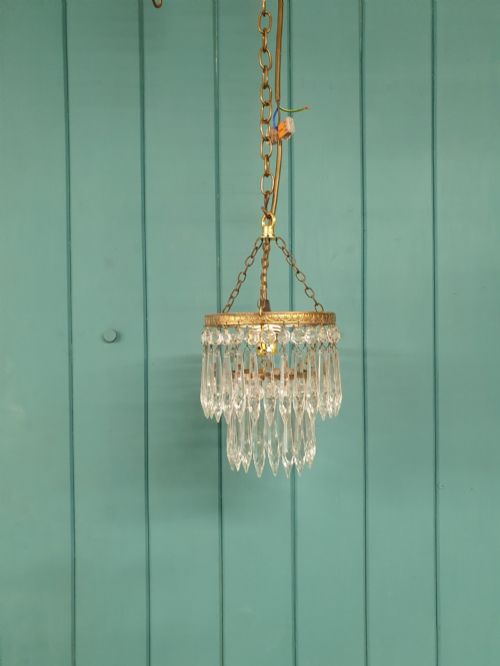
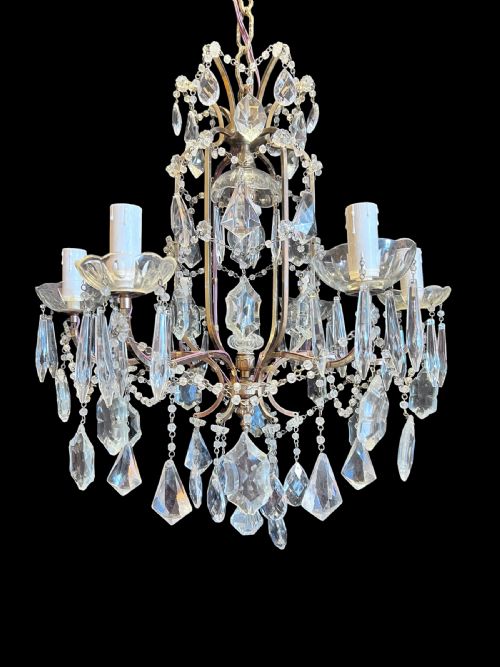
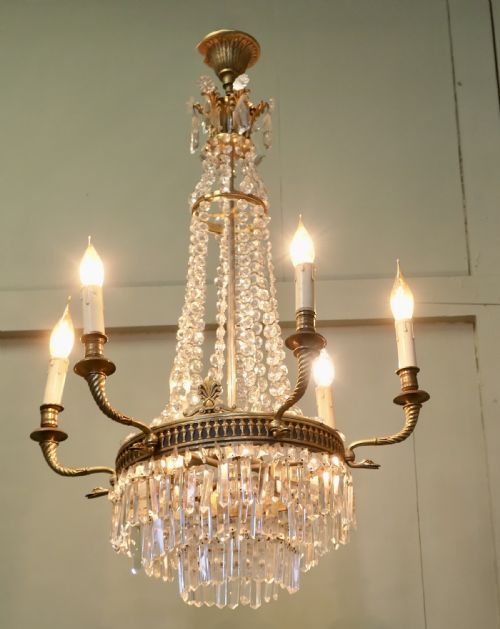
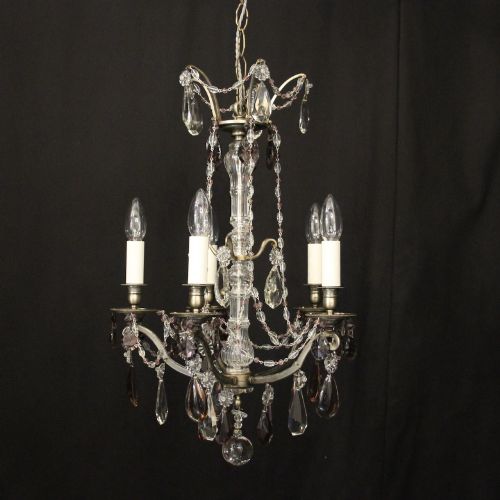
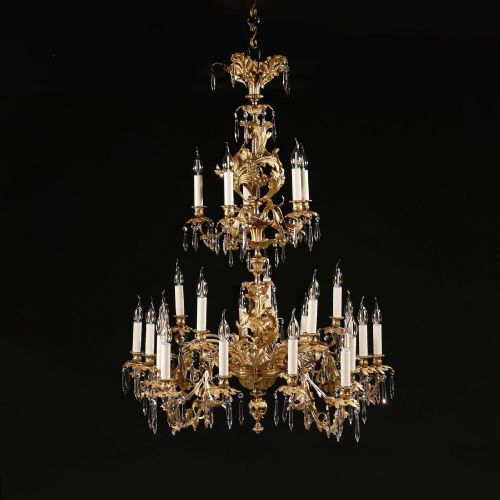
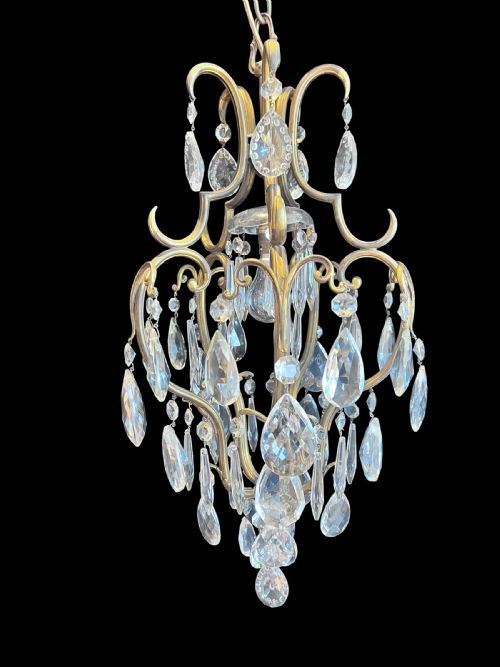
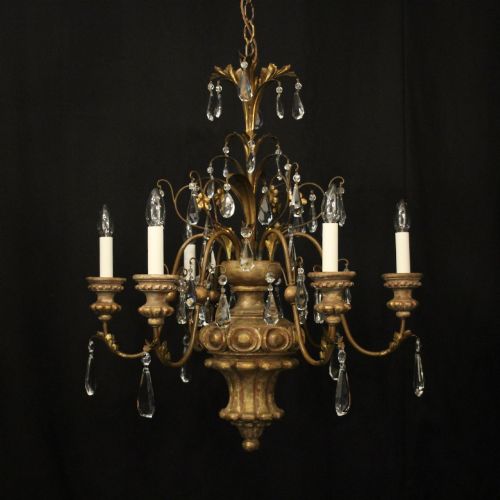
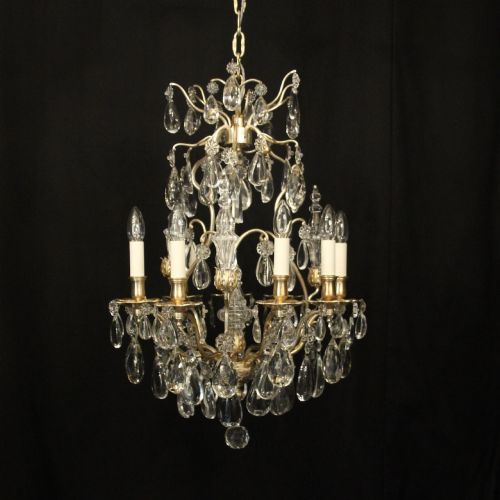
A crystal drop ceiling fitting brings overhead illumination through suspended glass prisms, cut crystals and metal frames. When you search for this phrase, you encounter grand chandeliers, pendant lights and compact flush mounts designed to anchor a room's decorative scheme.
The selections span from the late nineteenth century through the Edwardian era into the 1920s and 1930s. French Chateau, Empire and Rococo revival designs dominate the selection, alongside Italian Florentine and Swedish pieces.
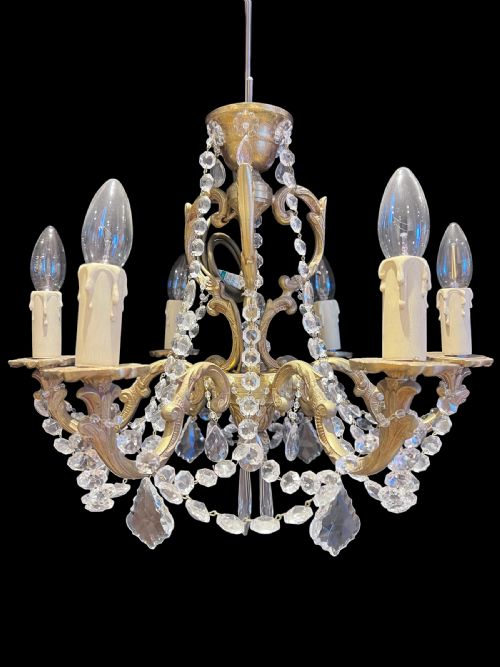
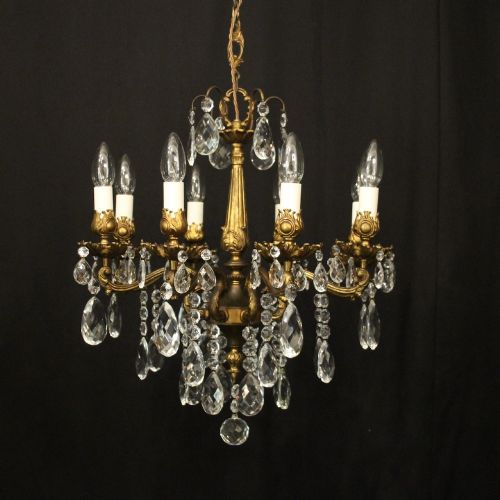
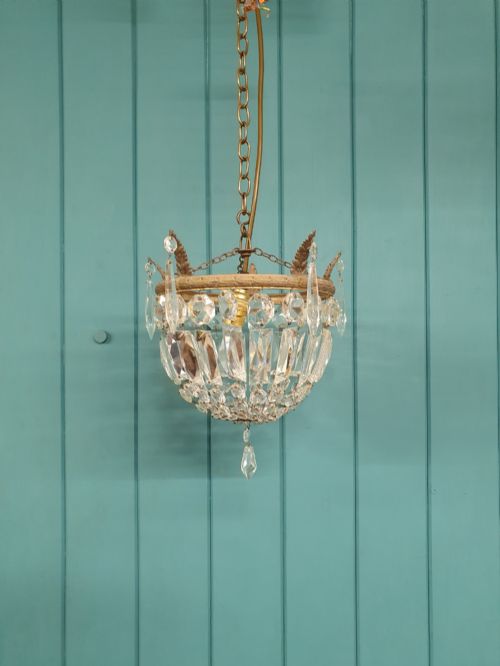
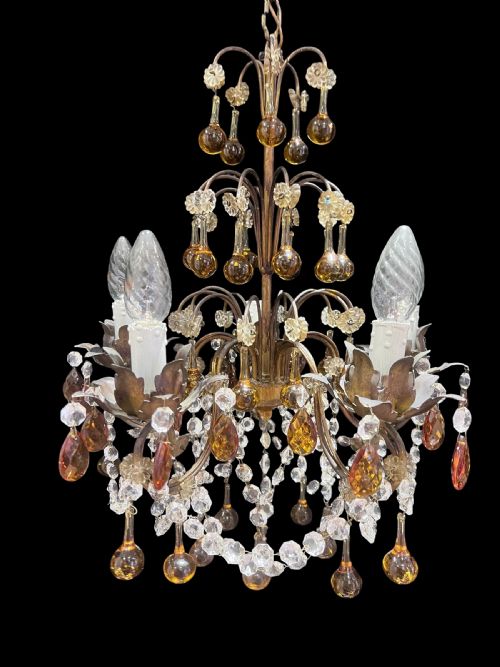
Most examples rely on branching arms or basket forms that hold numerous candle-style lights. Smaller variants such as bag chandeliers, spike lights and plafonieres offer similar prismatic effects on a more intimate scale.
Materials and construction
Frames rely on cast brass, gilded bronze, wrought iron, and gilt spelter to support the weight of the glass. These metal armatures are shaped into delicate foliate scrolls, restrained Empire rings, or elaborate tent structures.
Prisms, drops and pendants are fashioned from cut glass and crystal, often wired onto the metal framework with pins. Individual components range from flat coffin prisms andicicles to pear-shaped drops and cascading bead strands.
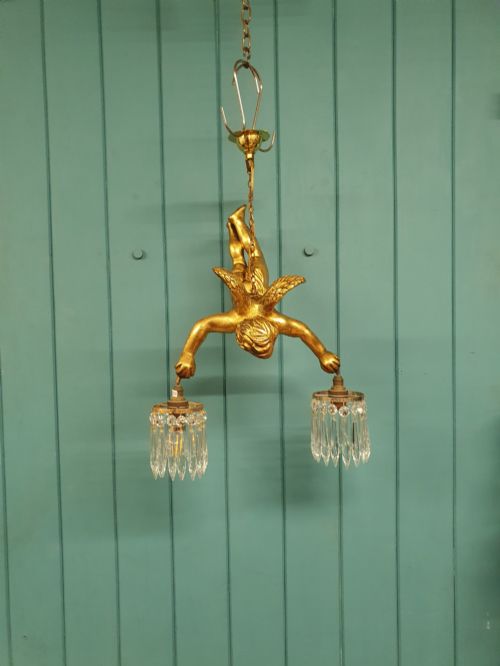
A flying cherub occasionally holds the lights aloft, ensuring the ceiling remains thoroughly entertained.
Judging the work
Quality rests upon the depth of the metal casting and the precision of the glass cutting. Crisp facets on the crystals refract light sharply, whereas softer, rounded edges diffuse the illumination duller.
The integration of the frame defines the structural integrity of the piece. Substantial gilt bronze and heavy brass hold their alignment over decades, while lesser constructions require more careful handling during installation.
The Crystal Drop Ceiling Fitting Glossary
- Tent and waterfall
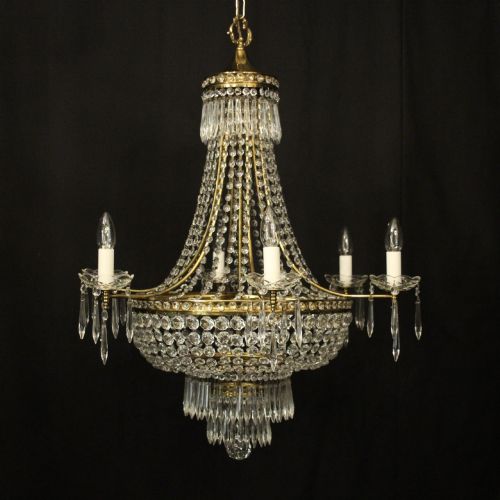
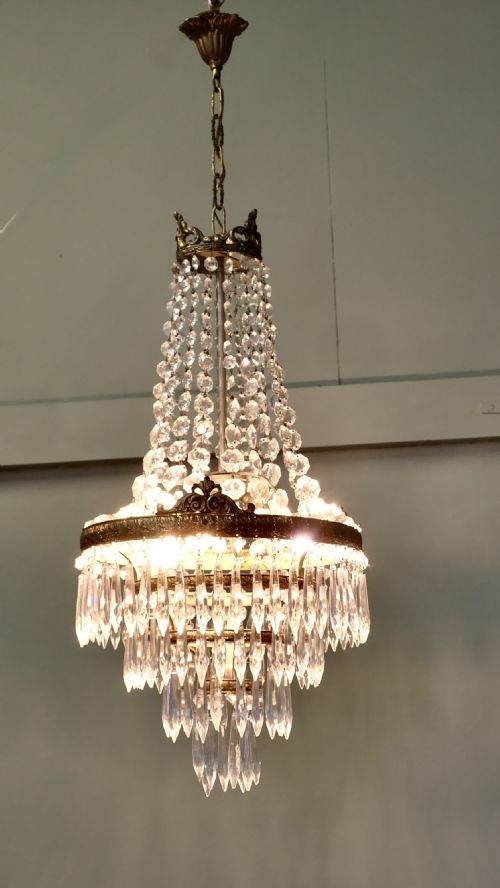
- A configuration where strings of crystal beads form an upper conical tent above a cascading apron of drops.
- Bag chandelier
- A basket-shaped fitting where crystals are gathered into a tapering net suspended beneath the light source.
- Coffin prism
- A flat, wedge-shaped glass drop with bevelled edges commonly found on Edwardian and early twentieth-century fixtures.
- Gilt bronze
- An alloy of copper and zinc treated with a gold wash to impart a warm, enduring metallic lustre.
- Plafoniere
- A shallow ceiling-mounted light fitting that sits close to the plaster rather than hanging on a chain.
Crystal Drop Ceiling Fitting: Frequently Asked Questions
How do I clean a crystal chandelier?
Maintenance involves wiping individual glass drops with a mild solution while the fitting remains suspended. Accessing each prism carefully prevents the delicate wire fixings from distorting.
Taking down every crystal for immersion is rarely necessary unless heavy accumulation obscures the facets. Routine dusting keeps the prismatic sparkle clear.
Are these fittings wired for modern ceilings?
Most antique fixtures arrive adapted for contemporary electrical circuits, though older internal wiring should be inspected by a professional electrician before installation. Standard lamp holders replace original candle tubes where necessary.
Ceiling weight capacities require careful consideration when hanging larger bronze and crystal structures. Secure joist fixing ensures the heavy metal armatures remain safely supported.
What is an Empire style chandelier?
Empire style draws upon neoclassical design principles popularised in the nineteenth century, featuring symmetrical arrangements, restrained mounts, and tent-and-waterfall crystal configurations. These fixtures project a formal architectural presence.
Proportions tend to be balanced and vertical, contrasting against the more asymmetrical curves seen in Rococo revival pieces. Gilded brass and bronze dominate this aesthetic category.
How do I date an antique crystal light?
Dating relies upon examining the casting methods, the cut of the glass prisms, and the style of the metalwork frame. Edwardian and 1920s pieces often incorporate machine-cut precision alongside traditional hand-assembly.
Earlier nineteenth-century examples display heavier bronze frames and hand-ground pontil marks on individual glass components. Comparing the mounting fixings and decorative motifs against documented periods confirms the era.