


Crystal Decanter in Frame
A crystal decanter in frame secures your spirits behind a locking bar, uniting cut crystal vessels with robust wood and plated metal stands.
Crystal Decanter in Frame
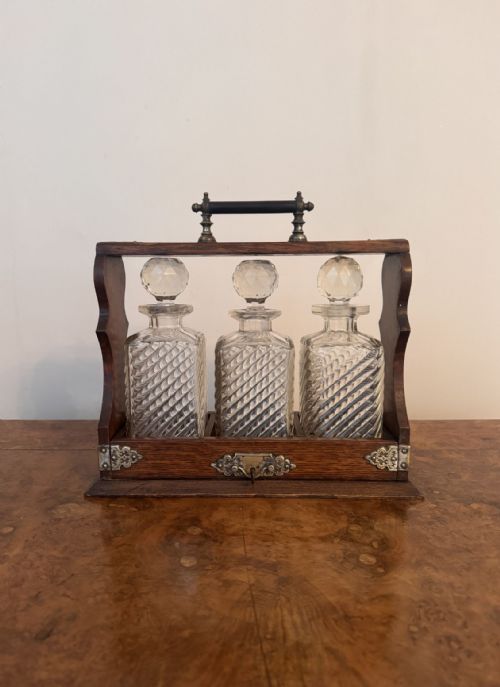
When you search for a crystal decanter in frame, you encounter securely housed drinks containers designed to prevent unauthorised access to expensive household spirits. These pieces commonly take the form of tantaluses and decanter stands originating from the Victorian, Edwardian, and Art Deco periods.
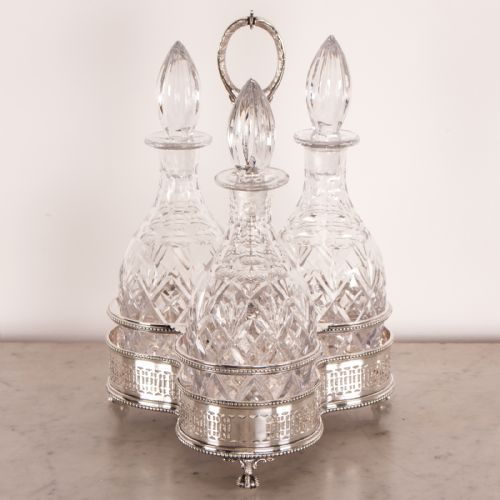
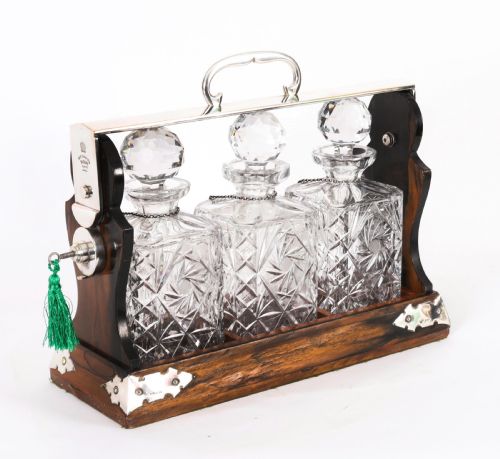
You are most likely to meet three-bottle configurations fitted into oak, coromandel wood, or silver-plated metal frames. The selection includes locking mechanisms alongside open stands and cruet sets intended for dining and drawing room use.
The assortment spans from robust oak cases bearing silver-plated mounts to refined coromandel boxes with intricate internal framing. Each example demonstrates how Victorian and Edwardian households combined decorative display with practical security for fine liquor.
Materials and construction
Makers constructed these frames using solid oak, walnut, and exotic coromandel wood, often housing them with cast and silver-plated metal components. Artisans fitted locking bars that drop down over the stoppers to secure the bottles within their wooden bases.
Materials recorded across the selection include cut crystal, silver plate, oak, coromandel wood, brass, and chrome.
Distinctions in quality
Quality separates through the weight and clarity of the crystal decanters and the density of the supporting wood. Superior pieces exhibit crisp, hand-cut facets on the glass and substantial silver plating on heavy brass or structural metal frames.
The sophistication of the locking mechanism also dictates standard, with finer examples featuring smooth-operating spring-loaded bars and fully functional key locks. The choice of cabinet wood, such as figured coromandel rather than standard oak, indicates higher workshop ambition.
Walker and Hall·Betjemann·Elkington·The Goldsmith Co·Hukin and Heath·Philip Ashberry
The Crystal Decanter in Frame Glossary
- Tantalus
- A locking drink cabinet or frame that holds decanters securely by their stoppers. The design prevents guests or servants from pouring drinks without the key.
- Silver Plate
- A thin layer of silver fused to a base metal such as copper or brass. This technique provided the lustrous appearance of solid silver at a lower production cost.
- Coromandel Wood
- A dense, dark brown timber with striking black streaks imported from Asia. Cabinetmakers reserved this prized material for high-end Victorian luxury goods.
- Cruet Set
- A matched collection of small glass bottles or jars held within a portable metal frame. These pieces typically served condiments, oils, or liqueurs at the dining table.
- Cut Crystal
- Glass containing lead oxide that increases its weight, brilliance, and refractive index. Artisans carved geometric patterns into the surface using rotating wheels.
Crystal Decanter in Frame: Frequently Asked Questions
What is a tantalus?
A tantalus is a locking decanter frame designed to keep expensive spirits secure from unauthorised use. The wooden or metal bar locks over the bottle stoppers so the decanters cannot be removed without a key.
First patented in the late nineteenth century, these pieces became status symbols in Victorian and Edwardian dining rooms. They allowed hosts to display their fine crystal while safely rationing access to the contents.
How do I unlock the decanters?
Most frames operate with a small key that turns a lock on the side or top of the wooden base. Turning the key releases the metal retaining bar, allowing it to swing upward or slide aside so the bottles lift free.
If the mechanism sticks, check that the decanters rest squarely in their individual wells. Older locks can be delicate, so gentle pressure prevents damage to the original brass or plated hardware.
How do I date these pieces?
Dating relies on stylistic clues, wood types, and any hallmarks stamped onto the silver-plated mounts. Victorian examples often feature heavy oak and ornate cast metal, while Edwardian versions lean toward cleaner lines and Art Deco pieces introduce modernist chrome.
Maker marks stamped into the metal frame provide the most reliable guide to a specific decade of production. Patent dates stamped near the lock can also narrow down the manufacturing era.