
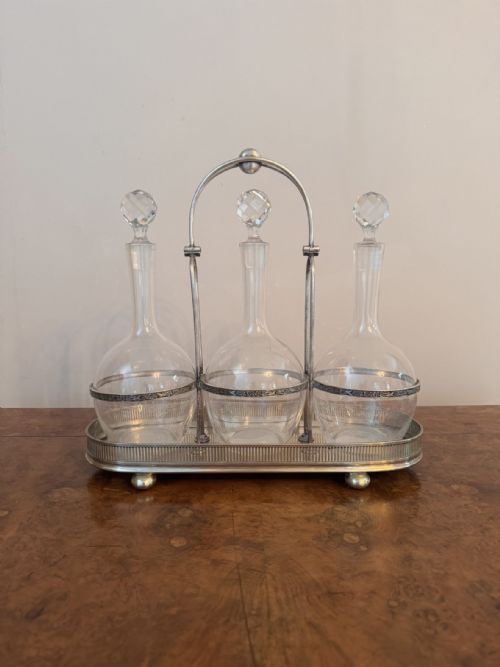
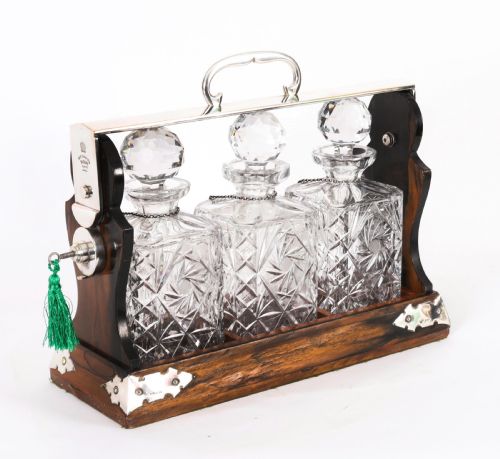


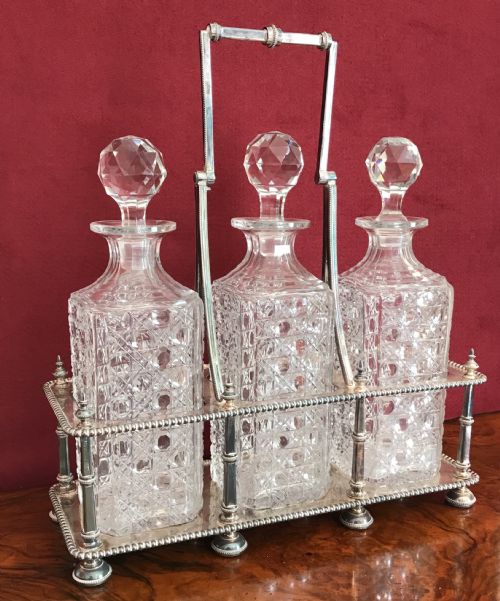


Edwardian Decanter Frame
An Edwardian decanter frame holds your finest spirits securely while bringing handsome period craftsmanship straight to the sideboard.
Edwardian Decanter Frame
An edwardian decanter frame sits proudly on a dining table or sideboard, designed to house glass vessels securely within a structured stand. You will frequently find these pieces configured as tantalus stands, fitted with locking mechanisms to protect the contents from unauthorized sampling.
The materials span sturdy oak, rich walnut, and exotic coromandel wood, often framed with polished silver plate and brass fittings. Alongside traditional tantalus sets, the listings include cruet sets, bottle holders, and open decanter stands dating from the late nineteenth century through to the nineteen-thirties.
The forms vary from simple two-bottle carriers to elaborate three-bottle locking frames featuring cut glass and crystal decanters. These pieces reflect the hospitality rituals of the period, combining practical security with striking domestic display.
How they were made
Makers utilised dense timbers like oak, walnut, and coromandel wood to build the robust chassis required to support heavy glass bottles. Woodworkers shaped these frames with precision joinery, frequently incorporating inlaid details and carrying handles.
Silver plating and brass hardware added structural reinforcement and decorative shine, securing the wooden frames and locking bars. Glassmakers produced heavy cut glass and cut crystal decanters designed to sit snugly within the metal and wood housings.
Listings feature oak, walnut, and coromandel wood frames, alongside cut crystal decanters mounted with silver plate and brass.
What varies in quality
The caliber of the timber and the weight of the silver plating dictate the primary tier of craftsmanship in these frames. Substantial oak or coromandel bodies paired with thick, heavy-gauge plating represent superior production standards.
The integration of the locking mechanism and the matching quality of the cut crystal decanters separate standard pieces from exceptional examples. Fully operational locking bars with original keys and undamaged crystal bottles elevate the standing of the entire ensemble.
Betjemann·Hukin and Heath
The Edwardian Decanter Frame Glossary
- Tantalus
- A locking drink stand that holds decanters securely in place while displaying the bottles within a wooden and metal frame. The locking bar prevents the removal of the decanters without a key.
- Silver Plate
- A thin layer of silver fused to a base metal, typically copper or brass, to provide a bright reflective finish. This technique offered the appearance of solid silver at a more accessible cost.
- Coromandel Wood
- A dense, heavily grained hardwood from Asia with dark brown and black stripes, prized for luxury nineteenth-century cabinet work. It appears on high-end frames and tantalus sets.
- Cruet Set
- A matched set of glass bottles or cruets held within a metal frame, traditionally used for condiments, oils, and vinegars at the dining table.
- Cut Crystal
- Glass containing lead oxide that increases its weight, brilliance, and clarity, shaped with deep geometric cuts across the surface. These heavy bottles catch the light when set inside the frame.
Edwardian Decanter Frame: Frequently Asked Questions
What is an edwardian decanter frame used for?
These frames serve to organise and display glass decanters on a sideboard or dining table for easy pouring during gatherings.
Tantalus versions add a locking bar across the stoppers to keep expensive spirits secure from household staff or children.
How do I unlock a tantalus?
Most locking frames require a small working key inserted into the lock at the end or side of the wooden base.
Turning the key releases the vertical retaining bar, allowing the metal handle to tilt and free the decanters.
How do I clean silver plated frames?
Wipe the plated surfaces gently with a soft microfiber cloth and a mild, non-abrasive silver cleaning cream.
Avoid getting polish onto the wooden housing or submerging the entire frame in water, particularly if the wood is veneered.
Are the decanters usually original to the frame?
Many pieces retain their matched cut crystal decanters, shaped specifically to fit the individual slots of the wooden base.
Because glass suffered breakage over the decades, some frames now house compatible replacement decanters from the same era.