



Crystal Claret Pitcher
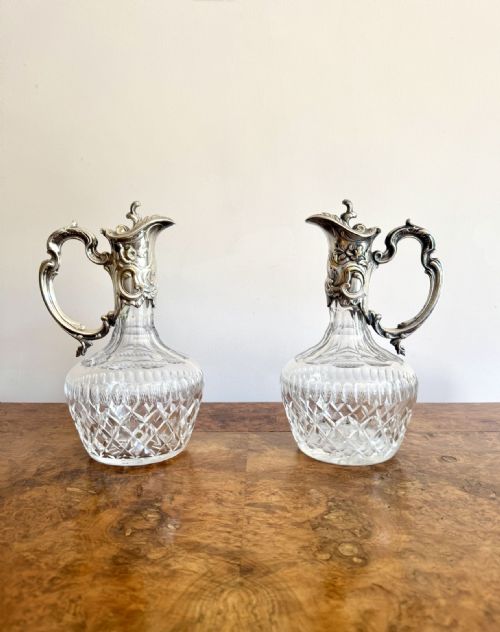
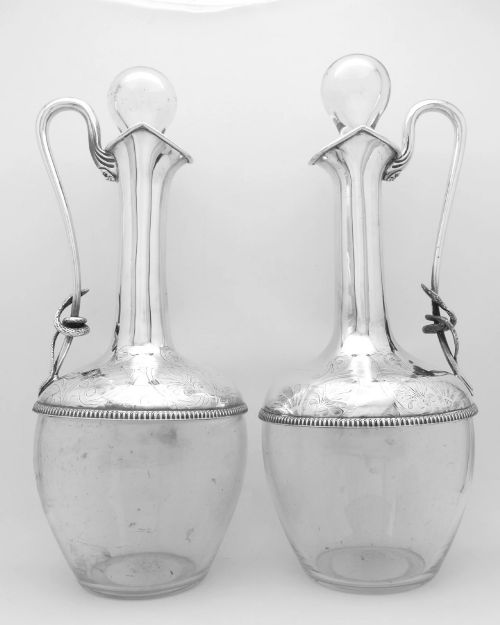
These crystal claret pitcher pieces combine clear cut glass bodies with gleaming metal mounts to serve wine with traditional elegance.
Crystal Claret Pitcher
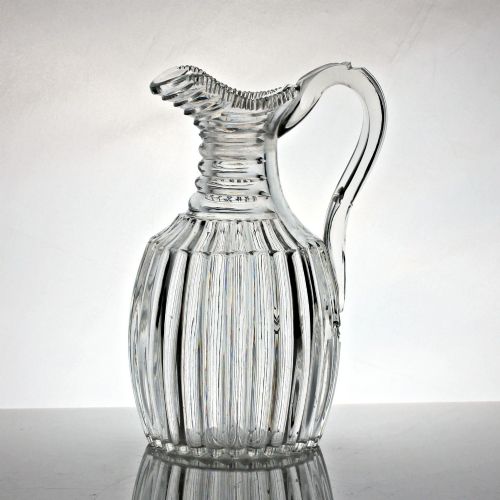
A crystal claret pitcher brings together a blown or moulded glass body with a hinged metal mount, designed specifically for holding and pouring wine at the dining table. When you search for this phrase, you encounter vessels that span multiple eras from the nineteenth century through the Edwardian period and into the twentieth century, reflecting shifting tastes in formal dining.
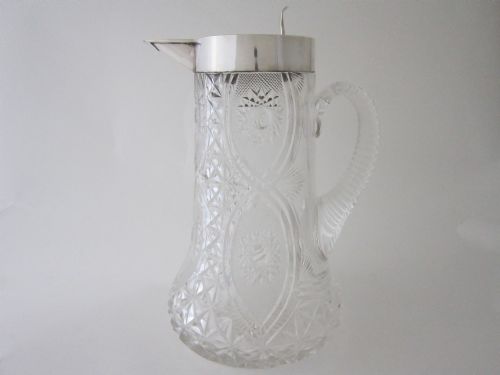
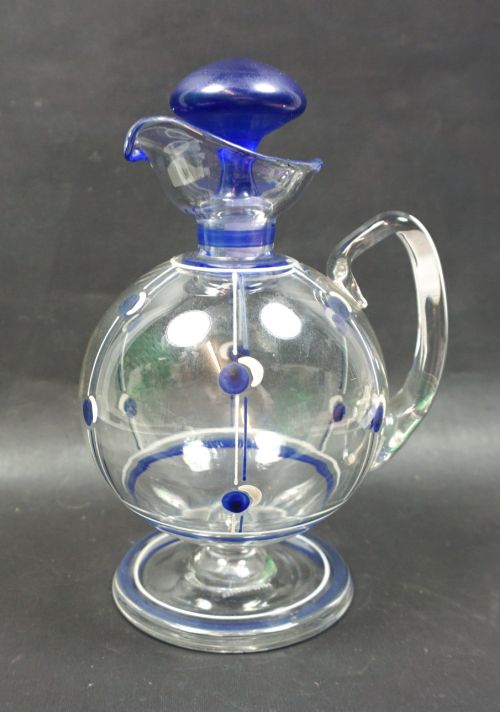
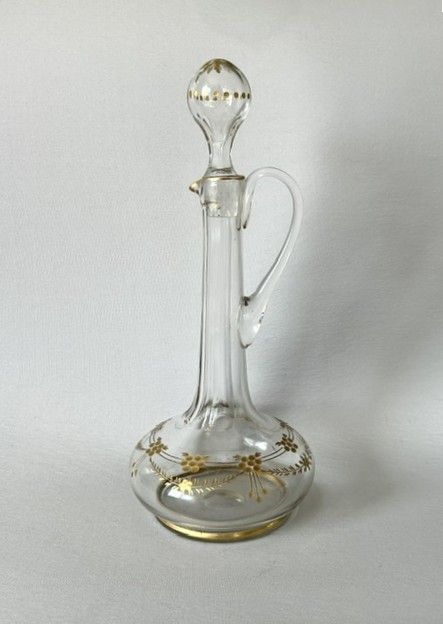
The most common examples you meet on this page date from the Victorian and Edwardian eras, combining heavy cut glass bodies with silver plate or sterling silver collars, handles and lids. Alongside these traditional British dining pieces, you also find Continental glassworks featuring specialised decoration such as enamel work, gilding or delicate latticinio threads.
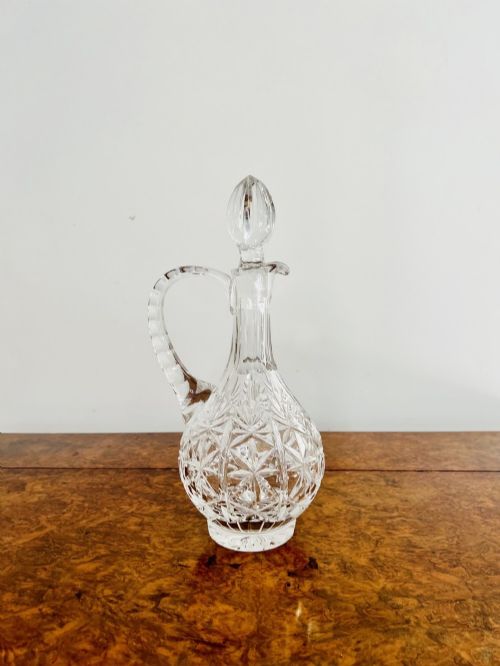
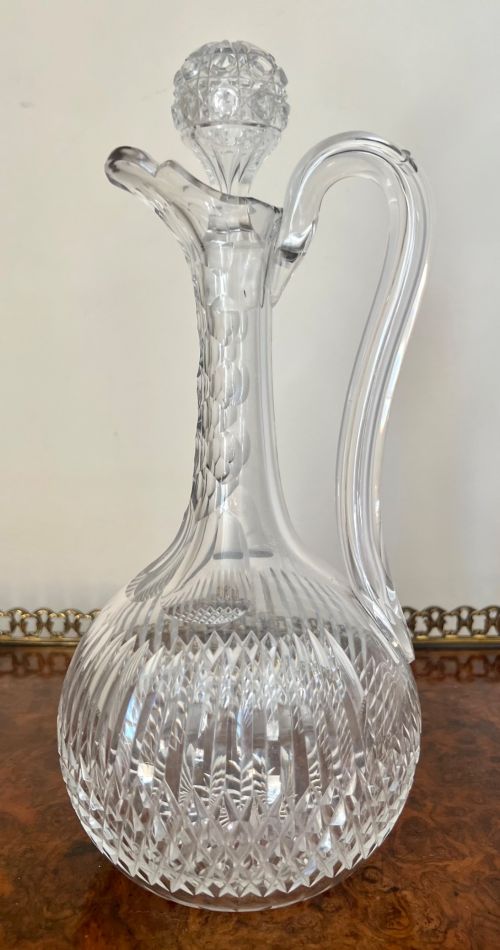
Makers and designers utilised various terminology in period production, listing these vessels variously as claret jugs, wine jugs, ewers or decanters depending on their specific form and handle configuration. Whether described as a water jug or a champagne jug, the core form remains a tall vessel optimised for serving drinks with a secure hinged lid.
Materials and construction methods
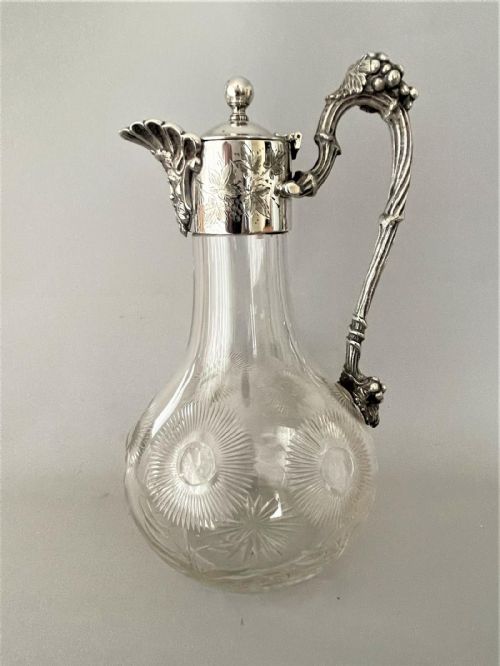
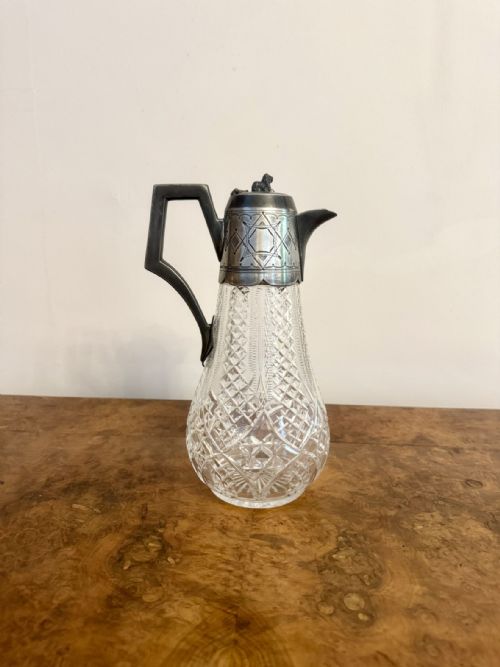
The foundation of a crystal claret pitcher is heavy lead glass or crystal, shaped by blowing into moulds or free-blowing before artisans applied deep geometric cuts using revolving wheels to create sparkling facets. This extensive cutting catches candle or electric light from multiple angles, defining the visual weight of nineteenth-century and Edwardian examples.
Metal mounts were cast, spun or electroplated, then securely fitted to the glass neck with collars and hinged covers that often incorporated detailed chasing, embossing or figurative elements like Baccarat or Bacchus masks and serpent handles. These silver or silver-plated mounts required precise smithing to ensure a watertight seal against the glass rim during pouring.
Judging quality and craftsmanship
Quality in a crystal claret pitcher rests upon the crispness of the glass cutting and the structural harmony between the glass body and its metal mount. Superior examples exhibit deep, sharp facets with polished recesses, whereas lesser items display shallow, soft wheel cuts that lack brilliance.
The weight and gauge of the silver plate or sterling silver mount also signal the tier of production, distinguishing heavy cast components from thin stamped metal. Furthermore, the integration of the handle and hinge mechanism dictates durability, with high-end pieces showing seamless attachment and smooth, balanced movement.
Asprey and Co. Ltd·Richardsons·Baccarat·Tiffany
The Crystal Claret Pitcher Glossary
- Claret jug
- A specialised serving vessel for red wine featuring a handle and a hinged lid. These pieces were essential accessories for formal dining tables across the nineteenth and early twentieth centuries.
- Cut glass
- Glass decorated by grinding facets and patterns into the surface using rotating wheels. This technique creates a brilliant play of light across the body of the vessel.
- Silver plate
- A layer of silver fused to a base metal foundation such as copper or Britannia metal. This process allowed makers to offer ornate mounts at a more accessible cost than solid sterling silver.
- Ewer
- A large jug with a wide spout and a looped handle, often rooted in classical forms. In nineteenth-century dining, these vessels frequently served wine or water.
- Latticinio
- A glassmaking technique involving opaque white or coloured glass threads twisted within clear glass. Originating on Murano, it was utilised by nineteenth-century European makers like Baccarat.
- Bacchus mask
- A decorative motif depicting the face of the classical god of wine, wreathed in grapes and vine leaves. Makers frequently cast this imagery into the spouts or mounts of wine jugs.
Crystal Claret Pitcher: Frequently Asked Questions
What is a crystal claret pitcher used for?
These vessels were created to decant and serve red wine, particularly claret, at the formal dining table. The hinged lid kept the contents protected while allowing smooth pouring into individual glasses.
Beyond wine service, many of these pitchers function effectively today for water, cordials or mixed drinks during gatherings.
How do I date a silver mounted glass jug?
Dating relies heavily on the hallmarks stamped into the silver mounts, which indicate the assay office, year and maker. Stylistic cues in the glass cutting and the shape of the handle also point to specific eras.
Victorian pieces often feature heavy ornamentation and deep cutting, whereas Edwardian examples frequently show lighter, more refined mounts and classical proportions.
What is the difference between crystal and glass?
Crystal contains added lead oxide, which increases the weight, clarity and refractive index of the material. This composition allows artisans to cut deeper, sharper facets that sparkle brightly under light.
Standard glass lacks this lead content, resulting in a lighter feel and less brilliance when facetted.