






Crystal Candle Lustres
Crystal candle lustres are decorative tabletop fixtures hung with glass prisms that catch and multiply the flame light.
Crystal Candle Lustres
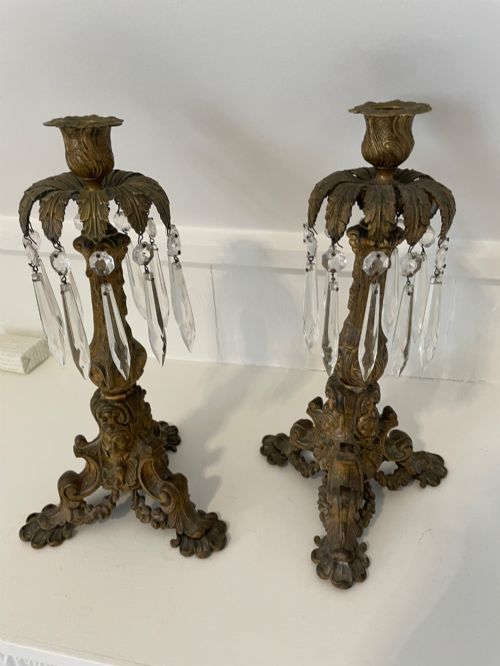
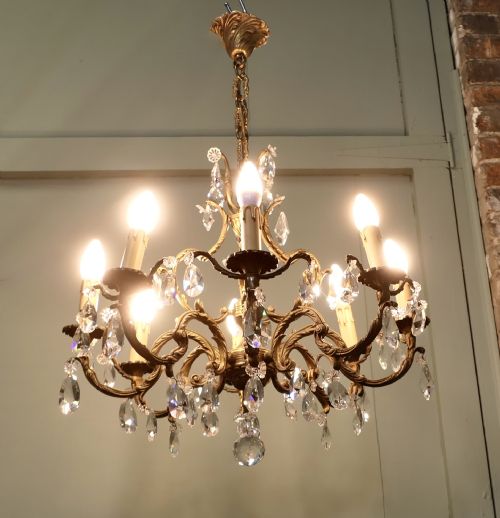
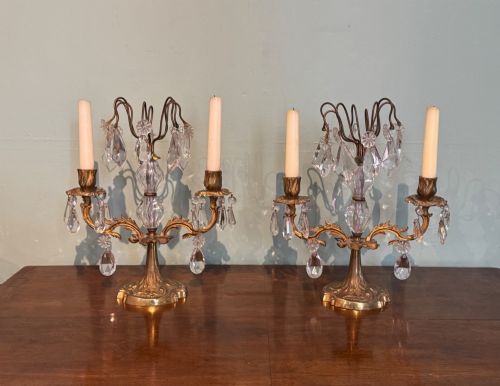
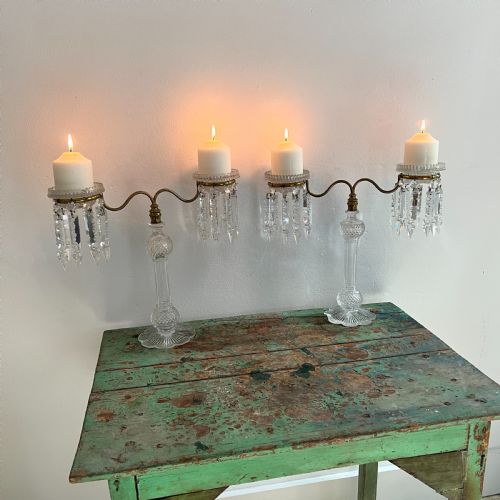
When you search for crystal candle lustres, you encounter decorative table pieces designed to hold candles while suspending glass drops from a central rim. These objects appear in forms such as mantel lustres, table lustres, and candelabra designed for dining rooms and drawing rooms.
The versions most frequently met on this page date from the nineteenth century, spanning the Regency, William IV, and Victorian periods. English and French examples predominate, alongside pieces from Bohemia, Sweden, and broader continental workshops.
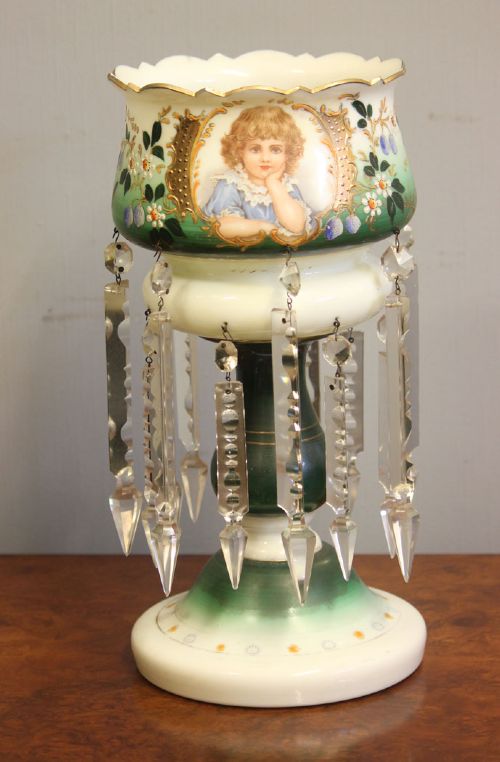
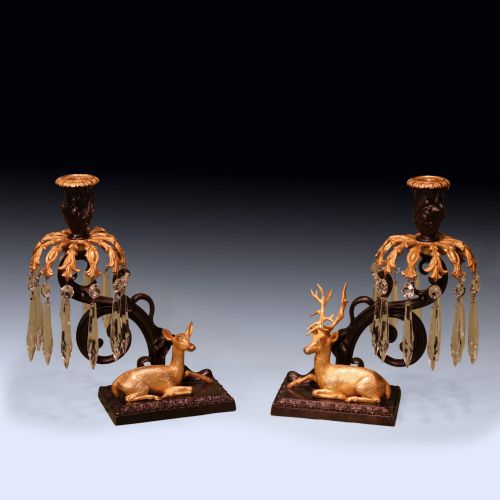
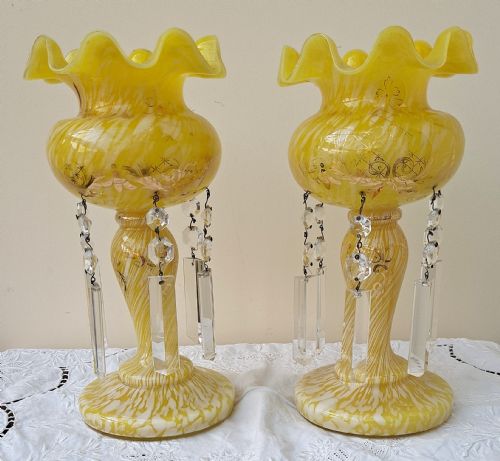
Makers produced these items in clear cut glass as well as vibrant coloured glass, including ruby, green, yellow, and opaline hues. Many incorporate metal mounts in brass, bronze, or ormolu, sometimes taking figurative shapes like stags, does, or griffins.
Materials and construction
Makers combined blown or moulded glass bodies with lead crystal prisms, attaching the hanging drops to the central shaft or sconce using wire or pinned metal loops. The glass elements frequently received hand-cut facets to enhance light refraction.
Metal components such as brass, gilt bronze, and ormolu provided structural stability and ornate bases, often cast and chased with rococo or empire motifs. Enamel and overlay glass techniques added surface colour and layered contrast to the bodies.
Crystal Candle Lustres Retail Price Guide 2026
Typical asking prices for crystal candle lustres among the pieces listed under this phrase on Sellingantiques today, from the lower quarter to the upper quarter. They describe what is for sale here now, not the wider market.
Listings here span the Regency, William IV, and Victorian periods, alongside early twentieth-century examples in glass, crystal, brass, and ormolu.
Judging quality in glass and metal
Quality rests on the depth and crispness of the glass cutting, the clarity of the crystal, and the presence of matching, original pendant drops. Complete sets of prisms with uniform shapes elevate a piece significantly.
The refinement of the metal casting, particularly in ormolu and bronze mounts, distinguishes finer examples. Details such as gilding preservation and the integration of coloured flash glass or overlay layers signal superior workshop output.
Clarkes
The Crystal Candle Lustres Glossary
- Lustre
- A candlestick or vase fitted with a circle of hanging glass pendants designed to reflect candlelight. These objects sat on mantelpieces and tables across nineteenth-century drawing rooms.
- Prism
- A cut glass pendant suspended from the rim of a lustre. These hanging drops refract light from the candles.
- Ormolu
- Gilded bronze applied to the mounts and bases of decorative objects. This technique was widely used in French and English Regency lighting.
- Overlay glass
- Glass formed of two or more distinct colour layers where the outer layer is cut away to reveal the contrasting colour beneath. Bohemian workshops utilised this method frequently.
- Flash glass
- Glass coated with a thin layer of coloured glass over a clear or contrasting body. Cutting through the top layer exposes the base material underneath.
Crystal Candle Lustres: Frequently Asked Questions
What are crystal candle lustres?
Crystal candle lustres are decorative candlesticks or mantle ornaments adorned with hanging glass prisms. They were designed to catch and multiply the flickering light of candles in nineteenth-century interiors.
These pieces typically feature a central stem or vase body with a ring of metal pins holding cut glass drops. They function as both lighting devices and ornamental centrepieces.
How were lustres used?
Lustres were placed on mantelpieces, side tables, and dining room sideboards to enhance the illumination of rooms before electric lighting. The suspended crystal pendants refracted the candle flames to brighten dark spaces.
During the Victorian and Regency periods, matching pairs served as formal decorative accents for drawing rooms. They remained unlit during the day to catch daylight through their glass drops.
How do I date a lustre?
Dating relies on stylistic clues, glass colours, and metal mount characteristics. Regency examples often feature bronze and ormolu mounts with classical motifs, while Victorian pieces frequently showcase ruby or green glass.
Earlier nineteenth-century pieces display hand-cut crystal facets and distinct proportions compared to later Victorian iterations. Comparing the shape of the prism drops and the casting style of the base helps narrow the period.
Are matching pairs common?
Pairs and sets form a large portion of surviving nineteenth-century lighting. Dining rooms and mantelpieces of the period required symmetrical arrangements, so manufacturers produced lustres in matched pairs.
Finding a complete pair with matching crystal drops is typical for this category. Single lustres do survive, though pairs remain the standard format for formal display.