




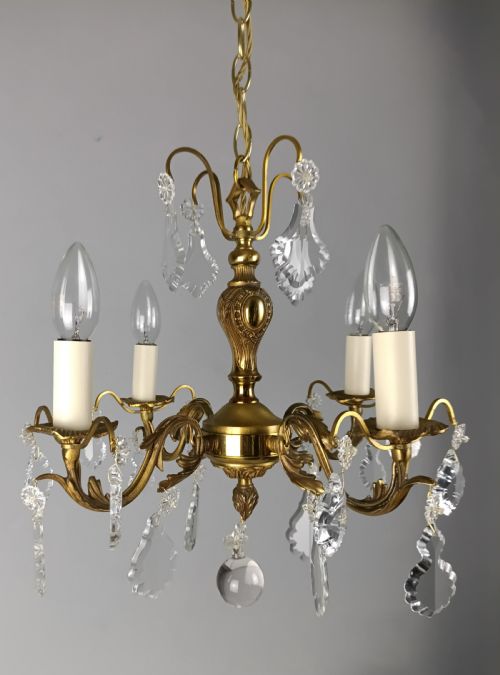


Crystal Branch Chandelier
A crystal branch chandelier brings intricate light and reflective weight to a room, drawing the eye upwards through cut glass and metalwork.
Crystal Branch Chandelier
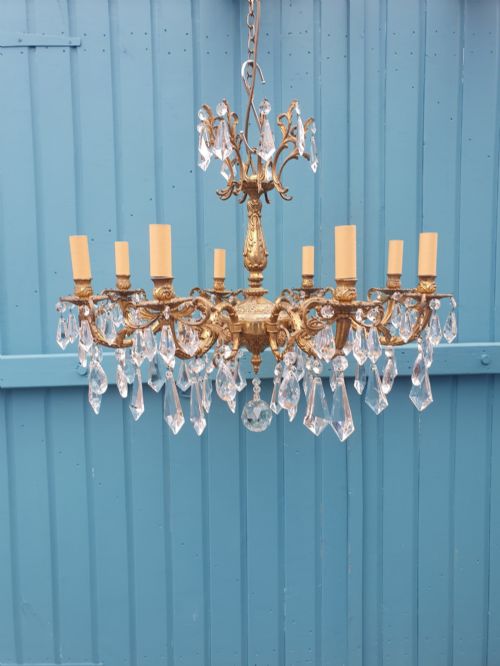
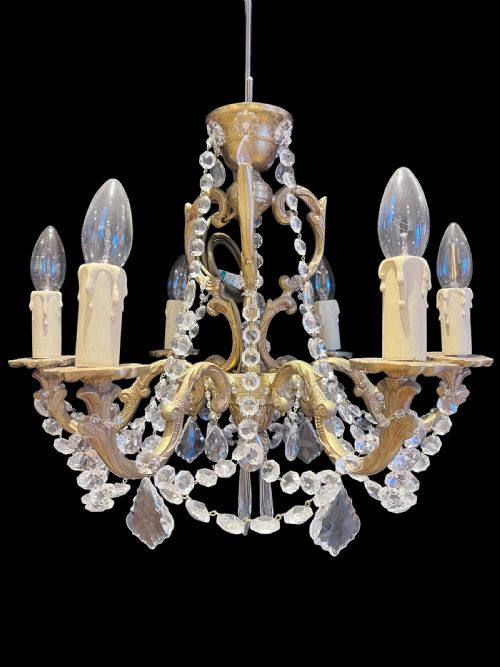
A crystal branch chandelier is an overhead lighting fixture structured around multiple arms or branches, heavily hung with cut glass drops and prisms. These pieces draw heavily on French decorative traditions, spanning styles from Rococo and Empire to Gustavian and simple country forms.
The version most commonly met on this page is a six-branch fixture dating from the late nineteenth century into the 1930s, often originating in France. Alongside standard ceiling fixtures, buyers also encounter related table lamps, candelabra and girandoles sharing the same vocabulary of glass and metal.
Makers and designers built these pieces to catch and refract candle or electric light across formal and domestic interiors alike. The forms range from restrained iron frames hung with coloured fruit pendants to elaborate gilt bronze and brass structures draped in cascades of crystal.
How they were made
Makers constructed the structural frames of these chandeliers using cast and chased brass, gilt bronze, wrought iron and gilded metal. These metal armatures provided the sturdy geometry necessary to support dozens of individual glass elements without buckling.
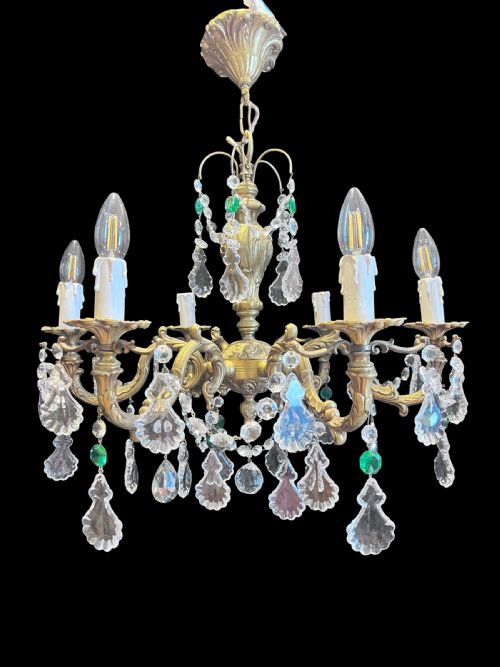
The decorative hanging components consist of cut glass, lead crystal and moulded crystal drops, sometimes incorporating coloured glass shaped into fruits like grapes, apples and pears. Artisans wired or pinned these pendants to the metal arms using delicate brass pins and wire loops, allowing each drop to move and sway.
Surface treatments included applied gilding, silver leaf and dark framing on iron, giving the metalwork contrast against the brilliant transparency of the glass pendants.
Crystal Branch Chandelier Retail Price Guide 2026
Typical asking prices for crystal branch chandelier among the pieces listed under this phrase on Sellingantiques today, from the lower quarter to the upper quarter. They describe what is for sale here now, not the wider market.
Several nineteenth-century iron chandeliers come adorned with dangling glass apples, pears, and grapes, bringing an orchard harvest indoors.
What varies in quality
Quality in these chandeliers rests on the clarity and depth of the crystal work alongside the crispness of the metal casting. Superior pieces utilise heavily leaded cut crystal that scatters light cleanly, paired with hand-chased bronze or substantial brass framing.
The complexity of the assembly separates standard production from finer examples, visible in tiered waterfall drops, intricate cage frameworks, and varied pendant shapes rather than uniform mass-produced beads. The integration of coloured glass fruits or delicate gilt arms further distinguishes the upper tier of the range.
The Crystal Branch Chandelier Glossary
- Tent and waterfall
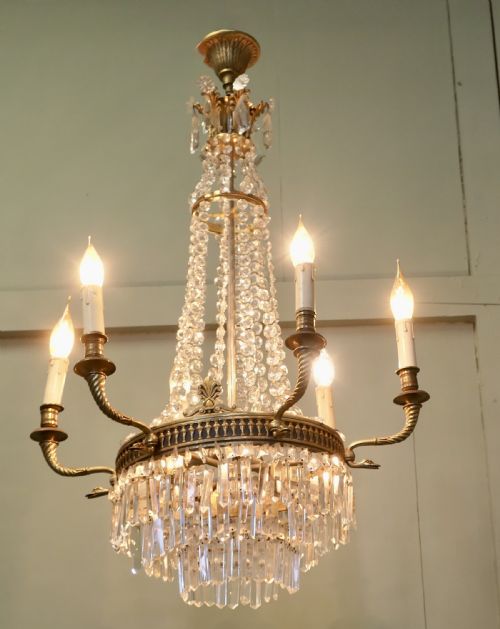
- A specific chandelier silhouette where glass beads form an upper tent shape over a central shaft, cascading down into a wider waterfall of drops around the lower branches.
- Girandole
- A branched candleholder or electrified light fixture featuring mirrors or extensive crystal prisms to multiply the illumination in a room.
- Gilt bronze
- Metal cast in bronze and treated with a gold leaf or mercury gilding layer, offering a warm and durable surface that resists tarnishing over decades.
- Cut glass
- Glass shaped and patterned by holding it against a revolving abrasive wheel, producing sharp facets that catch and bend light.
- Rococo
- A decorative style characterised by asymmetrical scrollwork, naturalistic curves, and shell motifs, frequently seen in French chandelier frames from the nineteenth century.
Crystal Branch Chandelier: Frequently Asked Questions
How do I clean a crystal branch chandelier?
Cleaning requires removing dust with a soft brush and wiping each crystal pendant individually with a mild glass cleaning solution applied to a cloth rather than sprayed directly onto the metal or wiring.
Support each pendant from underneath while cleaning to prevent strain on the delicate wire loops connecting the drops to the brass or iron branches.
Can these antique chandeliers be rewired for modern ceilings?
Most antique chandeliers can be adapted or rewired by a qualified electrician to meet current safety standards while preserving the original internal channels and lamp holders where possible.
Careful rewiring ensures that heavier frames and older brass components remain secure and capable of supporting standard electrical loads safely.
How do I tell an Edwardian chandelier from a nineteenth century piece?
Nineteenth-century examples often feature heavier gilt bronze or cast brass armatures with complex hand-cut crystal drops and denser tent configurations. Edwardian pieces tend toward lighter framing, sometimes incorporating simplified glass boughs and more restrained ornamentation.
Examining the casting seams, the thickness of the metal, and the method used to cut the crystal helps establish the manufacturing period.
Where were these chandeliers typically hung in historic homes?
In period interiors, larger multi-branch chandeliers hung centrally in salons, dining rooms, and formal reception spaces where maximum illumination and visual impact were desired. Smaller three or four-branch versions suited intimate chambers or boudoirs.
Table lamps and girandoles placed on sideboards or mantelpieces provided complementary secondary lighting.