

Crystal Bead Pendant Light
A crystal bead pendant light brings focused illumination and reflective sparkle to a room through suspended glass drops and brass or gilt metal frames.
Crystal Bead Pendant Light
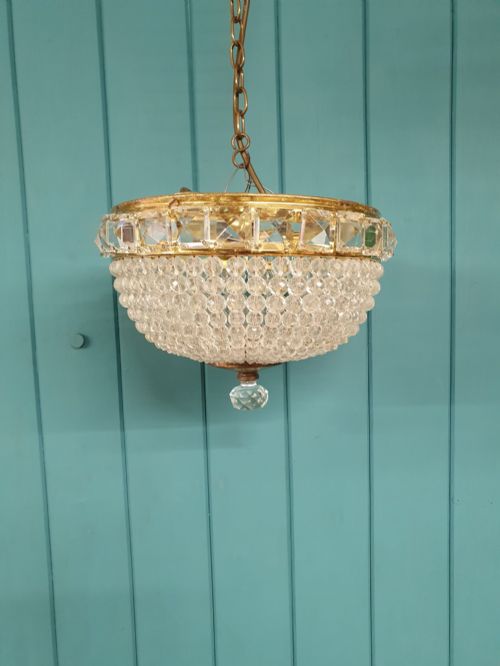
A crystal bead pendant light gathers illumination within frames of brass, gilt metal, wire, or iron, suspended by chains or mounted closely to ceilings. These fixtures span the Edwardian period, the 1900s, 1910s, 1920s, and 1930s, alongside examples originating in the nineteenth century.
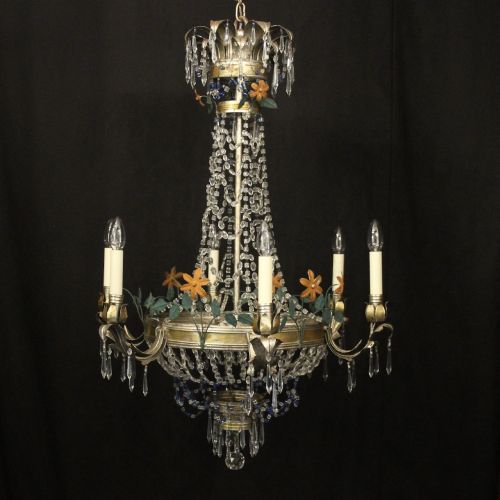
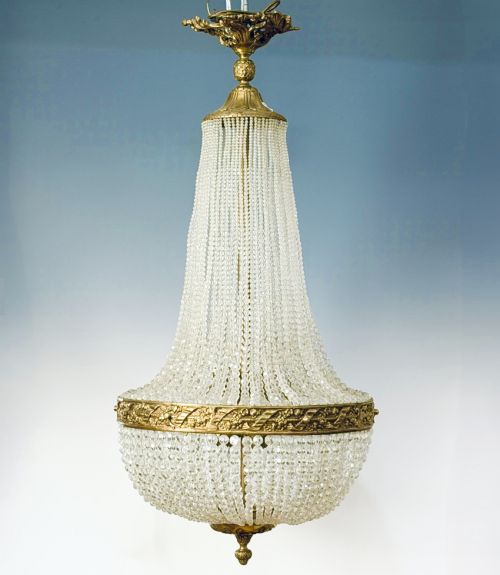
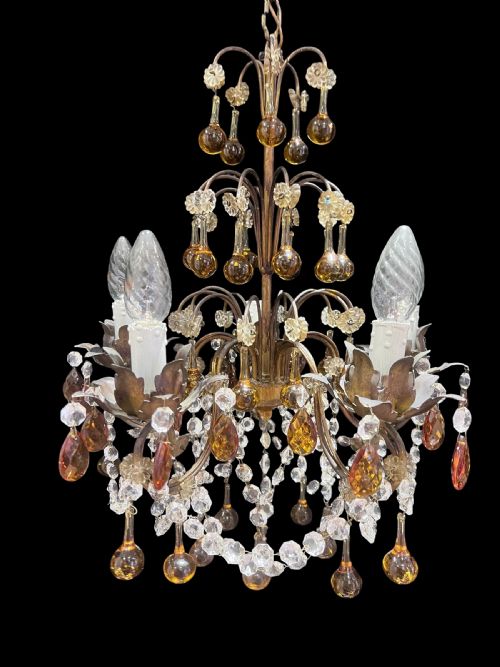
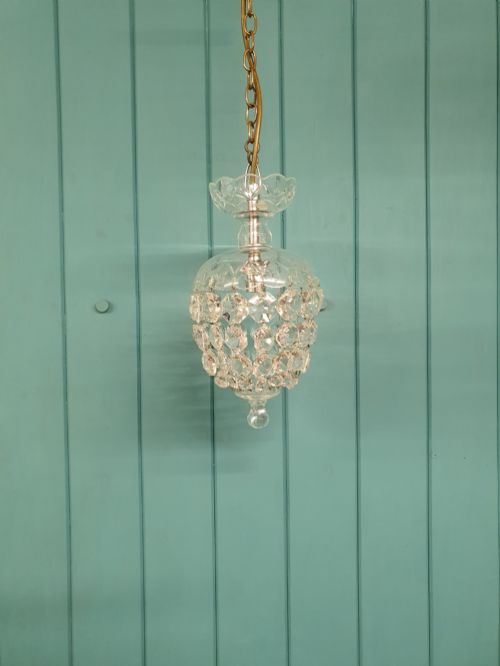
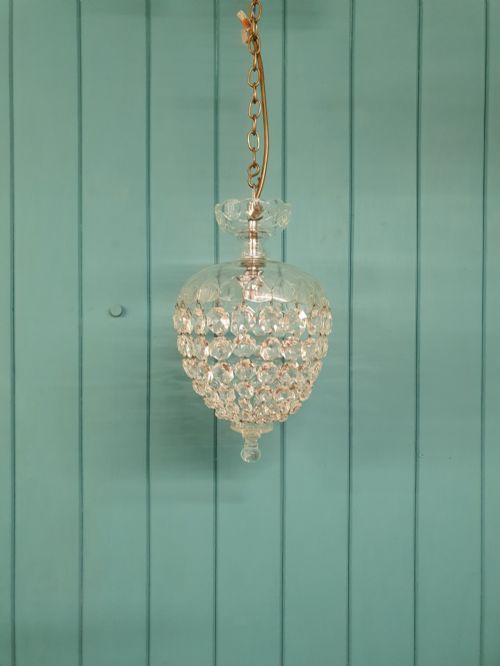
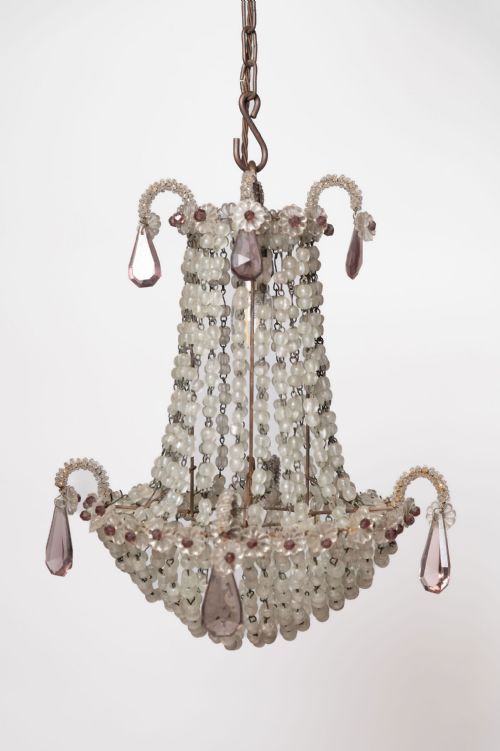
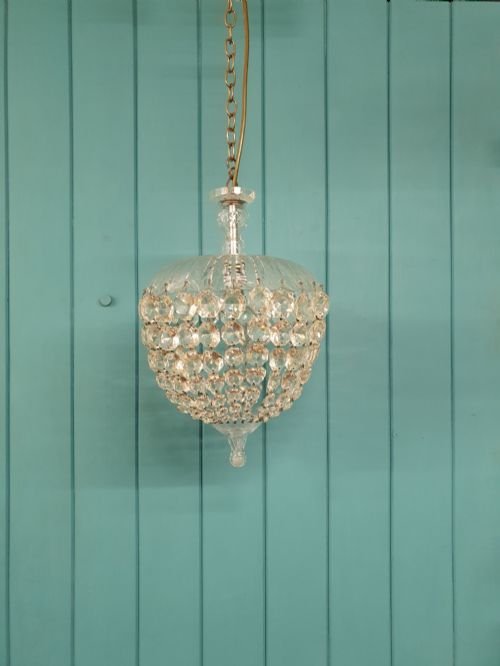
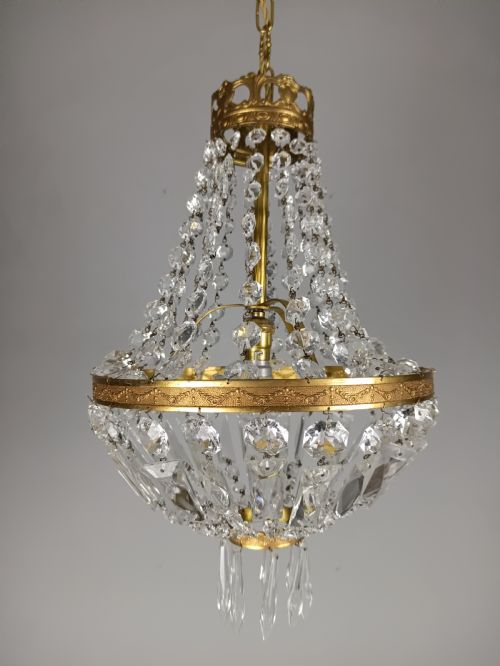
The form appears most frequently as bag chandeliers, dome top lights, and tapered basket designs, alongside French Empire tent and waterfall configurations. Italian workshops contribute galleon and pod chandeliers, while other examples incorporate coloured crystal fruits such as grapes, apples, and pears.
Italian Venetian, Florentine, and Rococo Revival aesthetics sit alongside French Chateau and Art Deco interpretations, reflecting diverse European decorative traditions from the early twentieth century.
Materials and construction methods
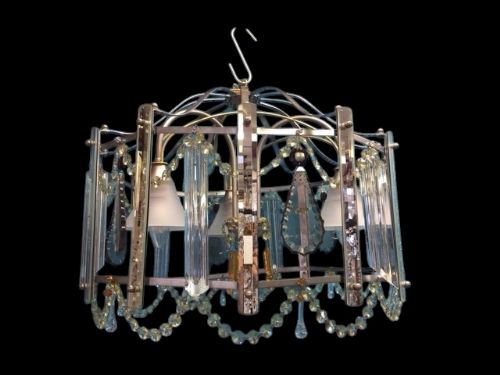
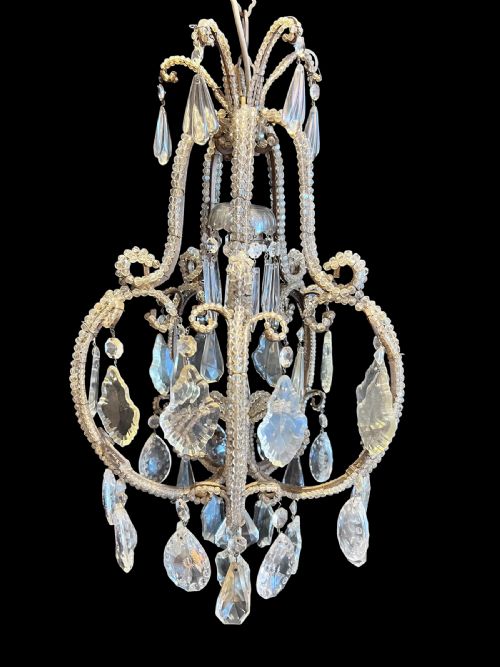
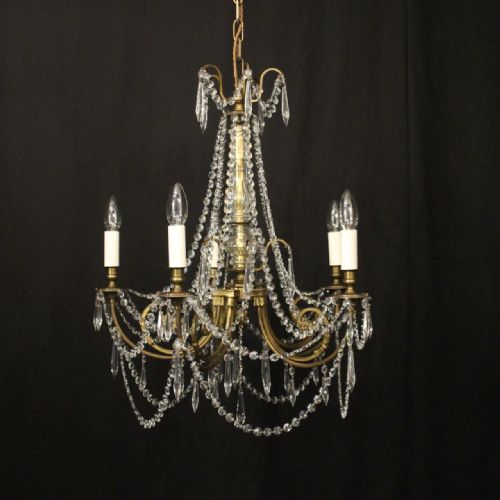
Illumination passes through cut glass, rock crystal, and moulded crystal beads, drops, prisms, and teardrops. Individual glass elements are wired onto metal frames, creating layered tent and waterfall cascades or dense bagging.
Listings feature items from the Edwardian period, the 1900s, 1910s, 1920s, and 1930s, constructed in brass, gilt metal, wire, and glass.
Assessing quality in antique lighting
Quality rests upon the precision of glass cutting and the clarity of the crystal components, which dictate how effectively light refracts through the fixture. Heavier metal castings and more intricate wirework or gilt framing distinguish superior examples from simpler production.
The harmony of proportion between the metal armature and the arrangement of beaded swags, drops, and central prisms determines the visual balance of the piece.
Wedgwood
The Crystal Bead Pendant Light Glossary
- Bag chandelier
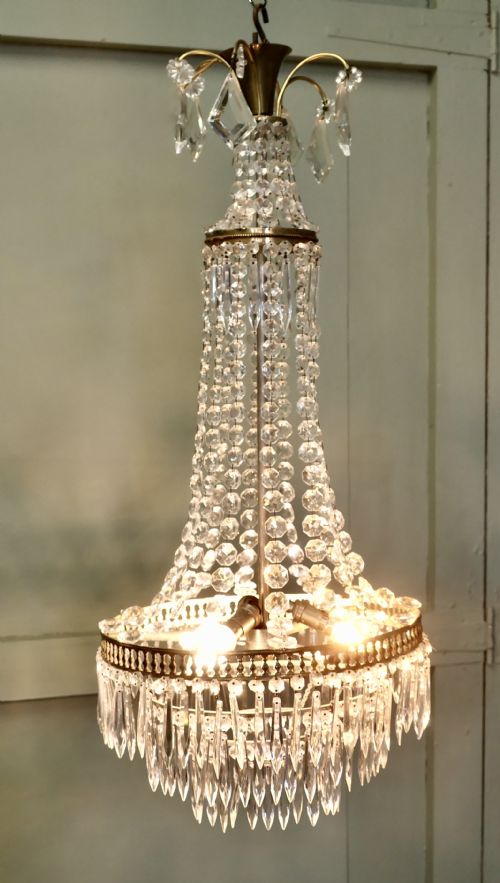
- A lighting fixture featuring a flattened or tapered base constructed from rows of glass beads resembling a mesh bag. This form concentrates light downward while diffusing it through the surrounding crystal mesh.
- Tent and waterfall
- A lighting configuration where upper tiers of glass beads form an inverted cone shape, dropping into cascading layers below. This style originates largely from neoclassical French Empire designs.
- Cut glass
- Glass shaped and faceted using abrasive wheels to create sharp geometric patterns that enhance light reflection. It appears frequently on drops, beads, and prisms across Edwardian and Art Deco fixtures.
- Gilt metal
- Metal coated with a thin layer of gold leaf or gilt paint to simulate solid gold. This finish provides a reflective backdrop for crystal beads and coloured glass elements.
- Rock crystal
- Naturally occurring colourless quartz mineral carved and polished for use in lighting and jewellery. It offers superior optical clarity and weight compared to manufactured glass.
Crystal Bead Pendant Light: Frequently Asked Questions
What periods do these lights come from?
The lighting fixtures span the Edwardian era, the 1900s, 1910s, 1920s, and 1930s, with select examples originating in the nineteenth century.
Design styles reflect this timeframe through French Empire, Art Deco, and Italian regional aesthetics.
How are crystal bead pendant lights constructed?
Makers assembled these pieces using metal armatures of brass, gilt metal, iron, or wire to support arrangements of glass and crystal elements. Individual beads, prisms, and drops are wired to the frame to form bags, baskets, or tent and waterfall cascades.
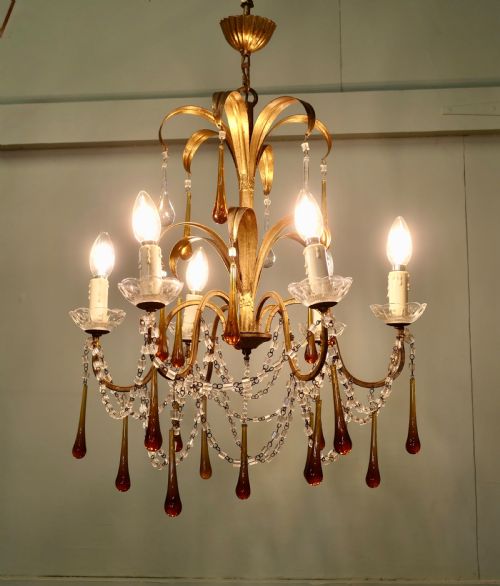
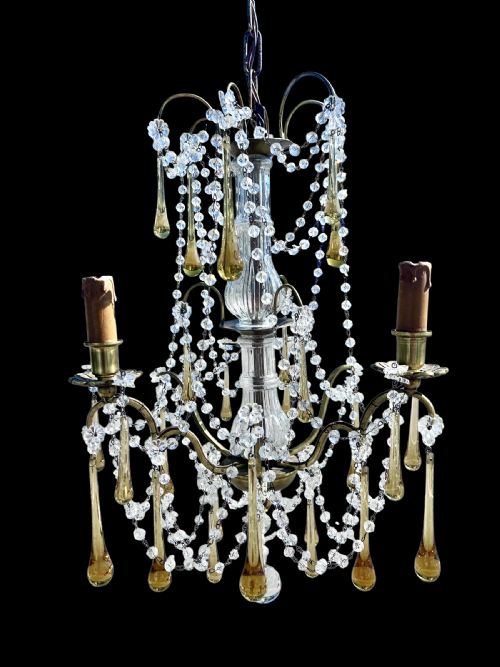
Coloured crystals, including amber, blue, red, and cobalt accents, appear alongside clear cut glass components.
Where were these chandeliers made?
The documented pieces originate primarily from French and Italian workshops, encompassing styles such as Venetian, Florentine, Rococo Revival, and French Chateau. English basket chandeliers also appear within the available range.
Different regional centres favoured specific forms, from Italian galleons and pods to French gilt tolewear and Empire tent configurations.
How do I choose the right size?
Fixtures are recorded in various dimensions, including compact six-inch and eight-inch dome top lights, medium bag chandeliers, and large multi-light installations spanning up to twenty-four lights.
Scale should be matched to room proportions and ceiling height, considering whether the fixture is a small pendant or a grand multi-branched chandelier.