
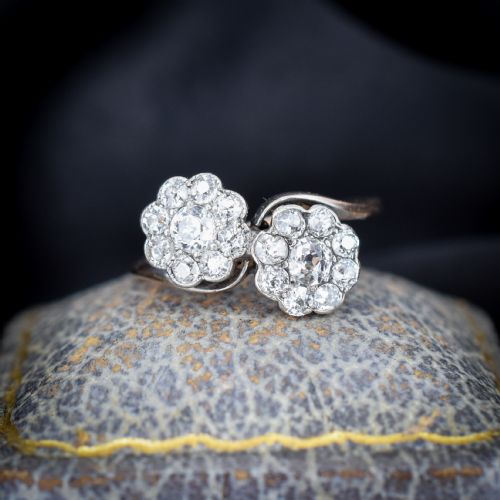

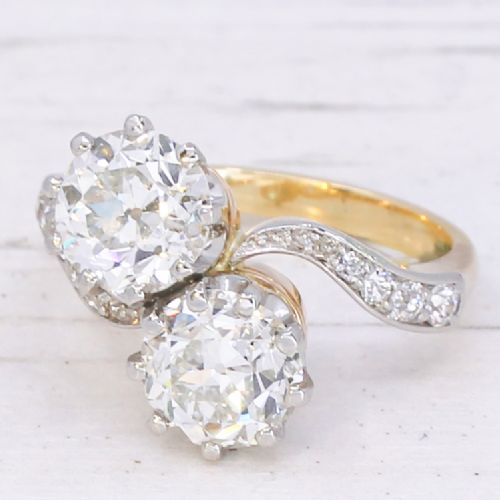


Crossover Engagement Ring
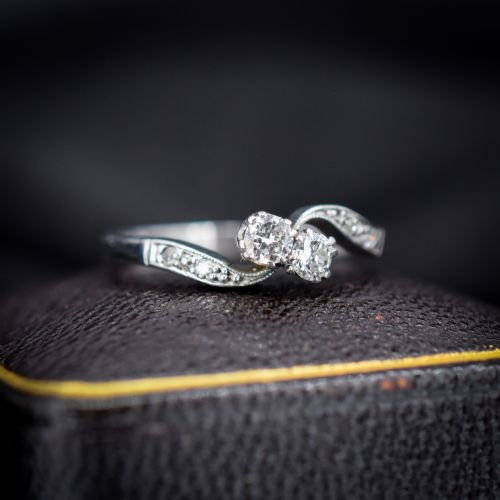
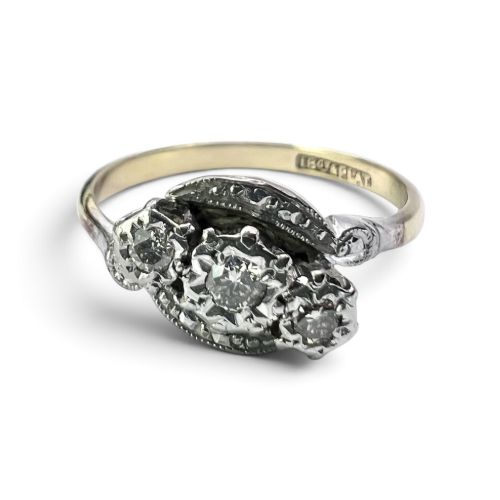
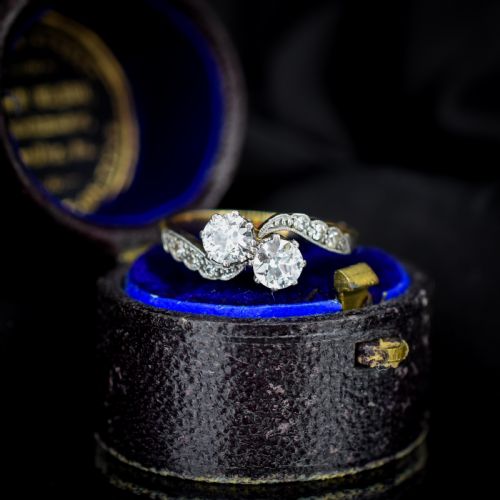
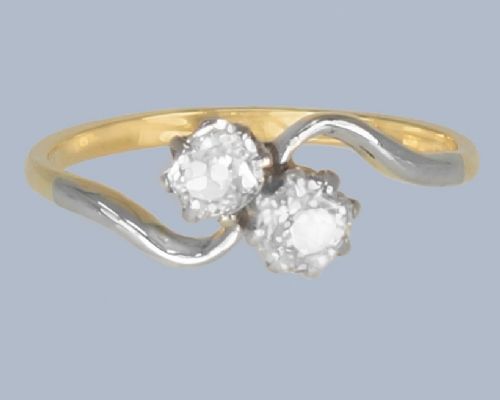
A crossover engagement ring brings two stones together in a fluid twist, symbolising union with distinctive historical charm.
Crossover Engagement Ring
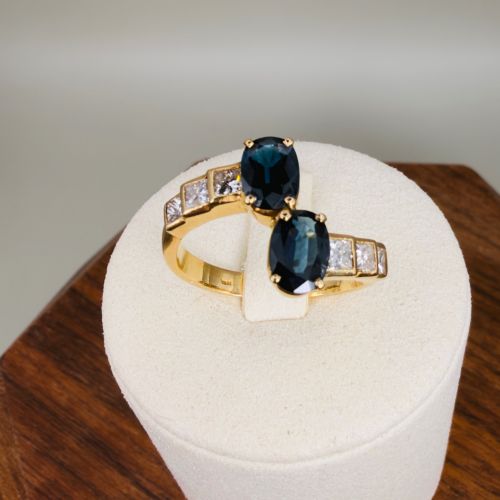
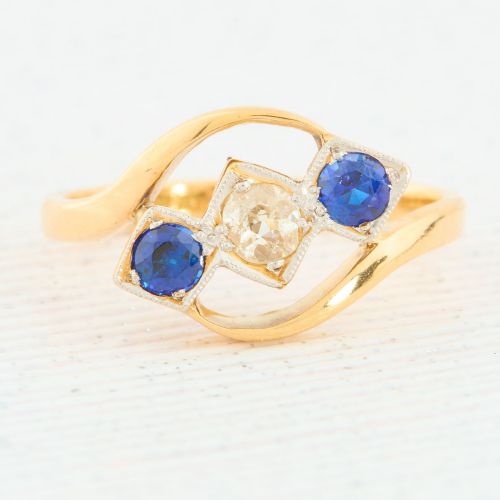
On this page, buyers will most frequently encounter Edwardian and Art Deco examples alongside vintage pieces from the 1940s and 1950s. These rings typically pair diamonds with sapphires, rubies, or pearls, set into a combination of yellow gold, white gold, and platinum.
How they were made
Goldsmiths constructed these rings using a combination of 18ct gold for the warm shank and durable platinum claws or settings to securely hold old cut diamonds and coloured gemstones. Platinum adoption grew significantly during the Edwardian and Art Deco periods, allowing artisans to fashion fine, strong wirework and millegrain edges.
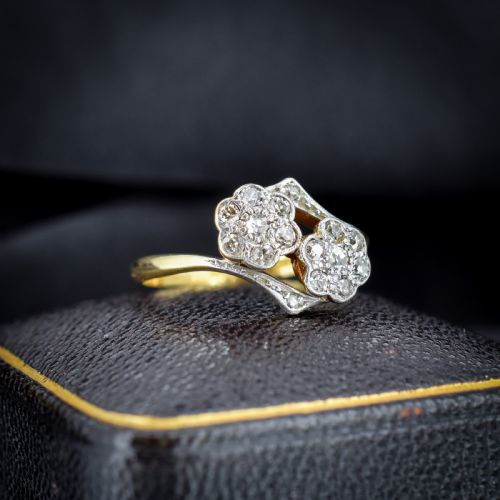
The twist and bypass forms required precise hand-shaping to ensure the shoulders flowed seamlessly towards the stones without compromising structural integrity. Master jewellers utilised claw, bezel, and cluster configurations to mount gems closely together in dynamic, sweeping lines.
Several rings incorporate natural pearls alongside diamonds, proving that Victorian couples were already hedging their bets against boring symmetry.
What varies in quality
The distinction between standard and exceptional pieces rests in the fluidity of the metalwork and the matching of the central stones. Superior rings exhibit hand-forged curves that wrap the finger smoothly, maintaining balanced proportions whether featuring diamonds, sapphires, or pearls.
Gemstone selection dictates overall presence, with finer examples displaying well-matched old cut diamonds or vibrant natural sapphires and rubies that complement each other in size, colour, and historical character.
The Crossover Engagement Ring Glossary
- Toi et Moi
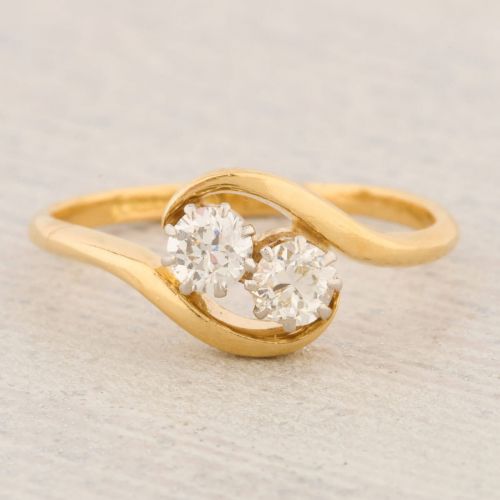
- A French term meaning you and me, describing a two-stone ring where dual gems sit side by side or sweep together in a twist. This romantic configuration gained immense popularity during the Edwardian era.
- Bypass ring
- A ring style where the shank ends pass one another rather than meeting straight on, creating a dynamic overlapping silhouette. This design provides natural flexibility in visual movement across the hand.
- Old cut diamond
- A hand-faceted diamond cut prior to the standardisation of modern brilliant cuts, typically featuring a smaller table, higher crown, and open culet. These stones catch candlelight and low illumination with a distinct, softer brilliance.
- Millegrain
- A decorative technique featuring a fine line of tiny raised metal beads along the edges of a setting. It adds a delicate texture frequently seen in Edwardian and Art Deco platinum work.
- Trilogy ring
- A ring featuring three primary stones representing the past, present, and future. In crossover variants, these three gems are often integrated into a sweeping twist or swirl band.
Crossover Engagement Ring: Frequently Asked Questions
What is a toi et moi ring?
A toi et moi ring is a specific style of crossover ring featuring two main gemstones that sit closely together or twist around the finger. The configuration traditionally represents two souls becoming one.
These pieces frequently combine diamonds with coloured stones such as sapphires, rubies, or pearls, set in yellow gold or platinum during the late Victorian and Edwardian periods.
How do I wear a crossover ring?
Crossover rings make striking standalone engagement pieces due to their sculptural and asymmetrical silhouettes. Their sweeping bands draw the eye naturally along the finger.
When pairing them with wedding bands, many owners choose curved or contoured wedding rings that nestle neatly against the twist of the bypass shoulders.
How can I tell an Edwardian ring from an Art Deco ring?
Edwardian rings typically showcase delicate platinum millegrain work, intricate openwork filigree, and romantic organic motifs. They lean towards graceful curves and softer feminine aesthetics.
Art Deco rings transition into geometric precision, featuring sharp lines, step-cut stones, symmetrical patterns, and bold contrasts between yellow gold and white platinum.
What are old cut diamonds?
Old cut diamonds are antique stones shaped by hand before modern machinery standardised cutting angles. They possess smaller table facets and higher crowns, producing a distinctive, deep scintillation.
These historic diamonds sit comfortably within antique settings, contributing an authentic period character that modern brilliant cuts cannot replicate.