
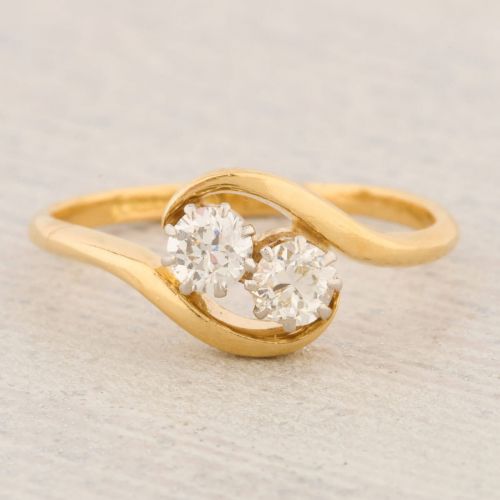
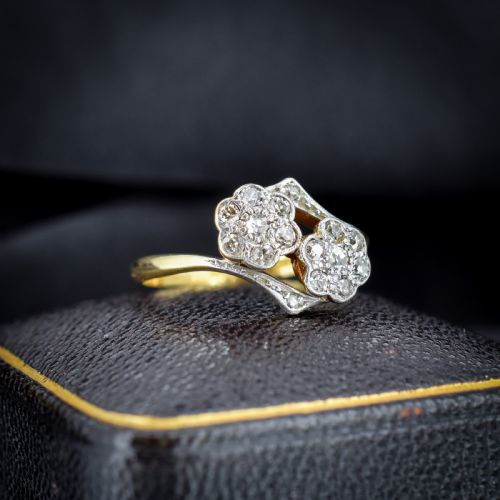
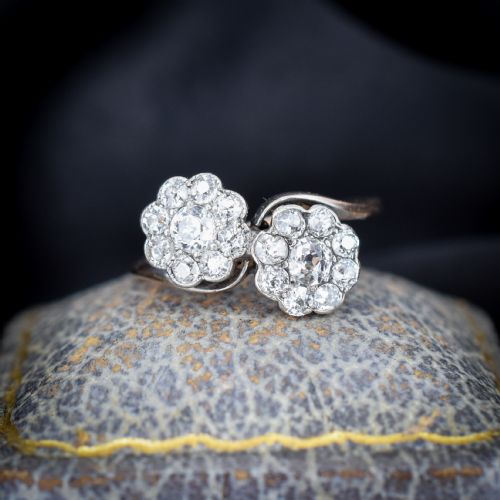

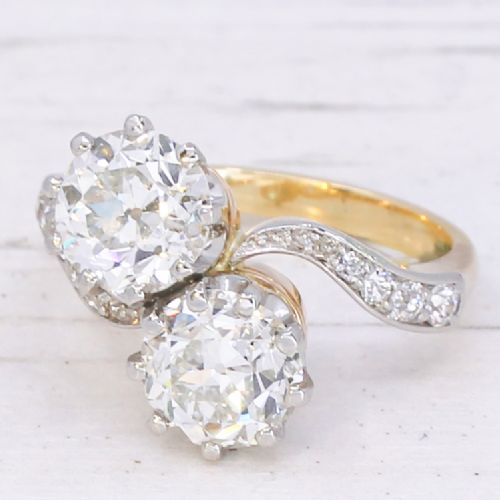


Crossover Dress Ring
A crossover dress ring wraps distinct gems around the finger in a continuous, flowing line that catches the light from every angle.
Crossover Dress Ring
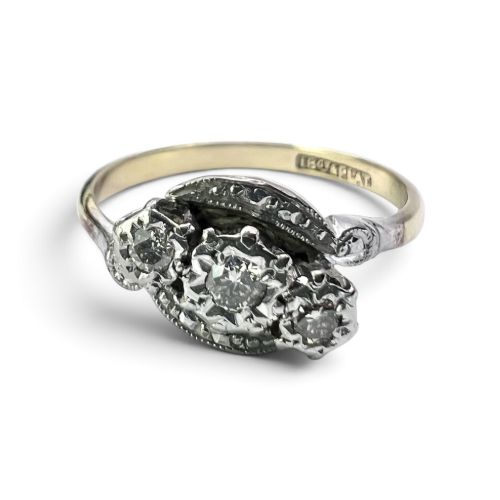
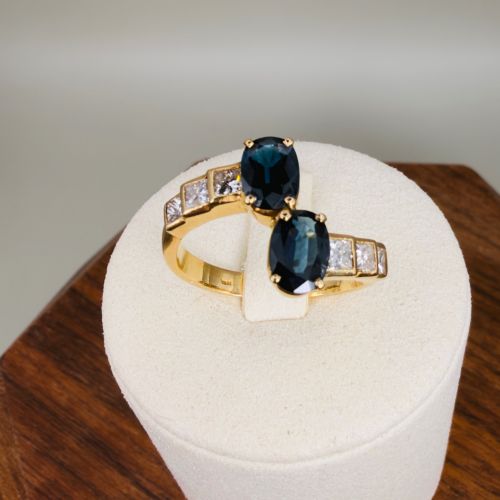
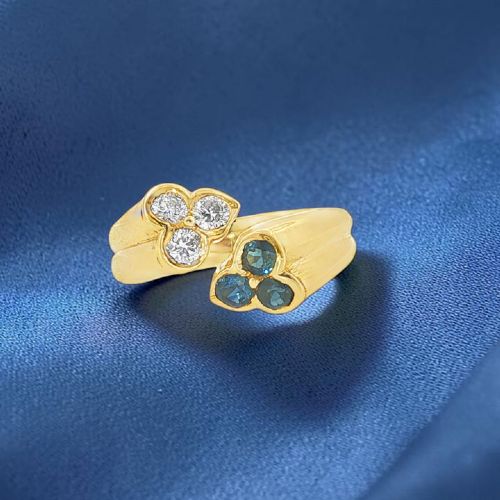
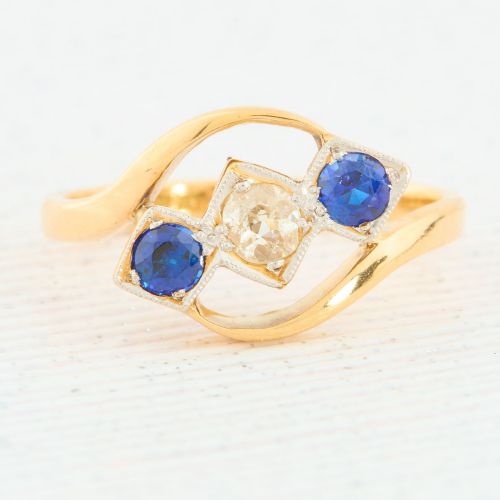
A crossover dress ring positions two or more principal stones side by side or in a flowing twist, often described as a bypass or toi et moi configuration. These pieces span periods from the late nineteenth century through the Edwardian and Art Deco eras to mid-century and later decades.
The layout typically contrasts gemstones such as diamonds paired with sapphires, rubies, emeralds, pearls, or turquoise. You will frequently encounter Edwardian and Art Deco examples featuring old cut diamonds alongside coloured stones set in gold and platinum.
Materials and construction
Goldsmiths utilised 18ct yellow gold, white gold, and platinum to mount the stones securely while keeping the metalwork refined. Platinum settings were frequently combined with gold shanks during the Edwardian period to provide a bright white contrast for old cut diamonds.
Stones are secured using claw settings, cluster arrangements, or flush mounts that follow the sweeping contours of the band. Gemstones such as rubies, sapphires, and diamonds are shaped in old European, cushion, princess, or rose cuts.
Materials appearing across the current pieces include platinum, white gold, yellow gold, diamonds, sapphires, rubies, emeralds, and pearls.
Judging quality in these rings
Quality rests in the harmony of the stone pairing and the precision of the twist or bypass curve. Master jewellers balanced the proportions of opposing gems so that neither stone overwhelms the other within the overall silhouette.
The integrity of the original setting work and the crispness of the metal shaping also separate standard examples from finer pieces. Hallmark clarity and minimal wear to the prongs or shoulders indicate careful preservation over the decades.
Kutchinsky
The Crossover Dress Ring Glossary
- Crossover ring
- A ring design where the band or stone settings sweep over one another in a twist or bypass formation. This style allows two primary gems to sit closely together on the finger.
- Toi et moi
- French for you and me, this term describes a ring featuring two main gemstones set side by side. It represents a classic configuration within the broader crossover category.
- Old cut diamond
- A hand-faceted diamond cut before modern machine-standardised proportions were developed. These stones typically exhibit smaller tables and higher crowns that produce a softer, candlelit sparkle.
- Bypass ring
- A ring style where the ends of the band pass each other rather than meeting in a complete circle. This construction creates an open, flowing line on the hand.
- Platinum
- A dense, durable white precious metal utilised extensively in antique and vintage jewellery. Its strength allowed jewellers to create delicate wirework and secure settings for precious stones.
Crossover Dress Ring: Frequently Asked Questions
How do I wear a twist ring?
Twist and crossover rings sit well on their own as a statement piece due to their distinctive shape and stone arrangement.
Because of the curving shoulders, pairing them with a straight wedding band may leave a small gap between the two rings.
What periods do these rings come from?
The available selection spans from the late Victorian and Edwardian eras through Art Deco and mid-century modern designs.
Each period brings distinct mounting techniques, from platinum-topped Edwardian settings to bolder mid-century gold work.
How do I care for an antique ring?
Clean antique and vintage rings gently using warm water, mild soap, and a soft brush to remove everyday oils and dust.
Avoid harsh ultrasonic cleaners, particularly for rings containing softer stones, pearls, or emeralds that require delicate handling.