


Crossover Band Ring
A crossover band ring wraps the finger in dual lines of stones, offering a distinctive historical silhouette that pairs gems like diamonds, rubies, and sapphires.
Crossover Band Ring
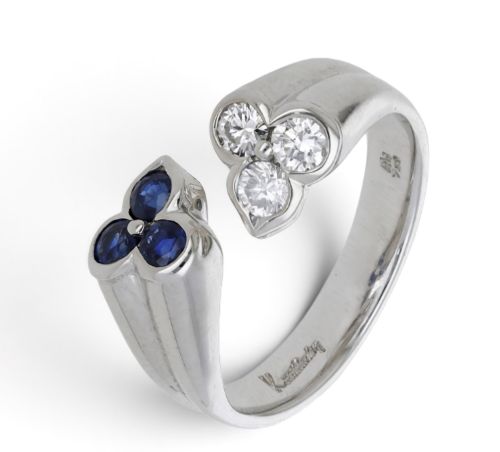
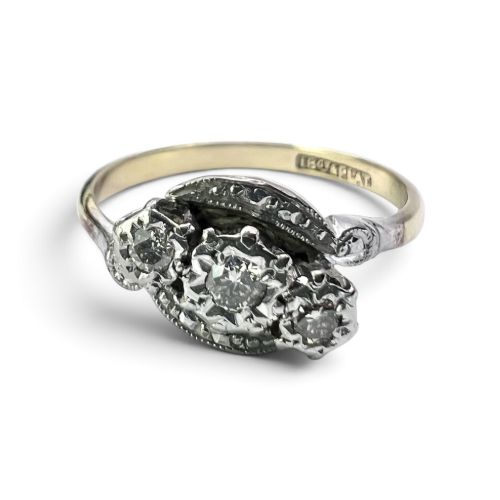
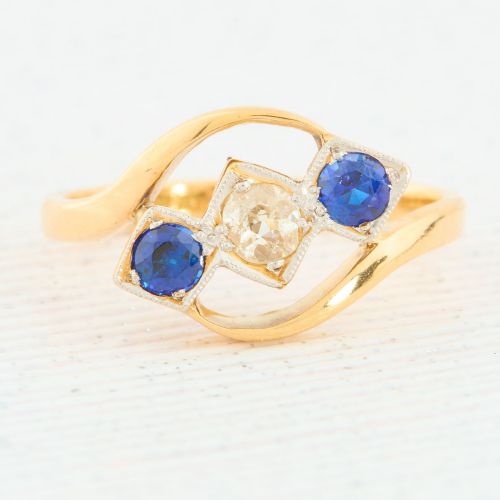
A crossover band ring is defined by a characteristic interlacing or sweeping band design, which often brings two distinct stones into a close embrace on the finger. When searching for a crossover band ring, buyers encounter pieces spanning the Edwardian era, the 1920s Art Deco period, mid-century designs, and late twentieth-century works. These pieces frequently showcase gemstones such as diamonds, sapphires, rubies, turquoise, jade, and pearls mounted in gold or platinum.
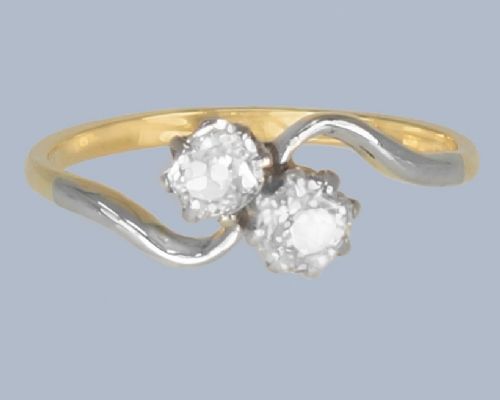
The selections on this page demonstrate the enduring appeal of twin-stone configurations, such as the classic toi et moi format, alongside clustered and multi-stone arrangements. Edwardian examples often feature delicate old-cut diamonds paired with pearls or turquoise, while later mid-century iterations introduce bolder square-cut diamonds and substantial sapphires. Each piece reflects the aesthetic priorities of its decade, shifting from intricate Edwardian filigree and scrolling gold work to the clean geometric lines of the Art Deco period and the robust profiles of the 1950s and 1960s.
How they were made
These rings rely on traditional precious metals, predominantly 18ct gold, 9ct gold, and platinum, which provide the structural strength required to support curved shank designs and close-set stones. Goldsmiths utilised these metals to create dual bands that twist or cross over the finger, securing gemstones in claw, bezel, or flush settings. Platinum gained favour in the Edwardian period for its ability to hold delicate millegrain edges, while yellow gold provided warm contrast in earlier and mid-century designs.
Gemstone selection dictates the visual rhythm of the piece, with old-cut diamonds, rose-cut diamond eyes, square-cut diamonds, rubies, and sapphires shaped to fit the sweeping contours of the band. Cultured pearls and natural pearls are integrated into specific configurations, requiring careful setting techniques to protect their organic surfaces. The combination of platinum for upper settings and gold for shanks demonstrates a pragmatic approach to colour and durability practiced by period jewellers.
Snake rings of the early twentieth century often used rose-cut diamond eyes to stare back from the finger with glittering intensity.
What varies in quality
The distinction between tiers of these rings lies in the integrity of the structural crossover and the matching of the central stones. Superior examples display seamless metalwork where the bands flow naturally without awkward thickness or visible strain at the intersection. The harmony of paired gemstones, such as matched diamonds or complementary sapphires and rubies, dictates the visual success of the design.
Execution of detail also separates standard production from finer work, particularly in the precision of claw settings, the crispness of engraved shoulders, and the retention of original millegrain decoration. The choice of materials influences distinction, with platinum-topped mountings and high-carat gold foundations representing more ambitious manufacturing standards across the Edwardian and mid-century periods.
The Crossover Band Ring Glossary
- Toi et Moi
- A French term meaning you and me, describing a ring featuring two main gemstones set side by side or crossing paths to represent two entities in union.
- Old Cut
- A precursor to the modern brilliant cut, featuring a smaller table, higher crown, and open culet that produces a softer, candlelit sparkle.
- Rose-Cut
- A vintage gemstone cut with a flat base and a domed crown faceted with triangular planes, resembling an unopened rosebud.
- Millegrain
- A decorative technique involving a row of tiny raised metal beads along the edges of a setting, common in Edwardian jewellery.
- Trilogy
- A ring design featuring three primary stones, often interpreted to represent the past, present, and future.
Crossover Band Ring: Frequently Asked Questions
How do I clean an antique crossover ring?
Clean these rings gently using warm water, mild dish soap, and a soft-bristled brush to remove everyday debris from beneath the settings.
Avoid harsh chemical dips or ultrasonic cleaners if the piece incorporates pearls, turquoise, or softer organic gems that absorb moisture and react poorly to vibration.
Can a crossover band ring be resized?
Many of these rings can be adjusted by a skilled jeweller, depending on the complexity of the crossover shank and the placement of side stones.
Extensive resizing may disrupt the symmetry of twin stones or stamped hallmarks, so consult a professional experienced in antique jewellery.
What is the difference between Edwardian and Art Deco rings?
Edwardian rings typically exhibit romantic motifs, platinum-topped gold, delicate filigree, and soft floral or garland aesthetics.
Art Deco rings embrace geometric abstraction, sharp angles, calibrated gemstones, and streamlined platinum constructions that reflect interwar modernity.
Are pearls durable enough for daily wear in a ring?
Pearls possess a softer organic composition compared to diamonds or sapphires, making them vulnerable to scratches, cosmetics, and household chemicals.
Wear pearl-set crossover rings with heightened care, removing them during rigorous activities to preserve the nacre.