

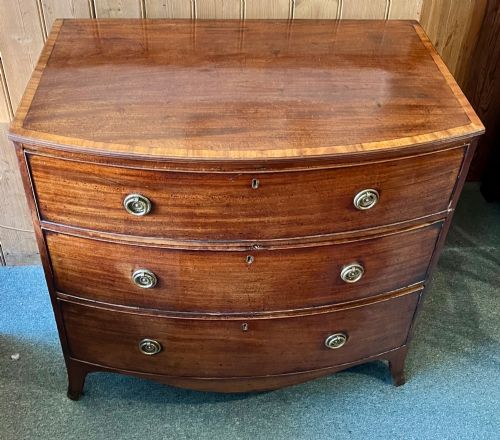
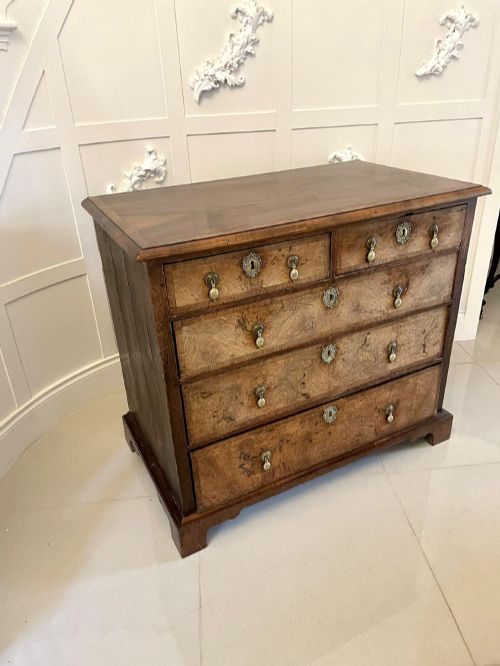
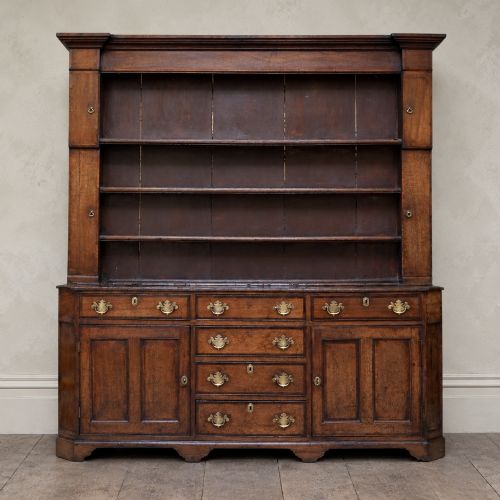
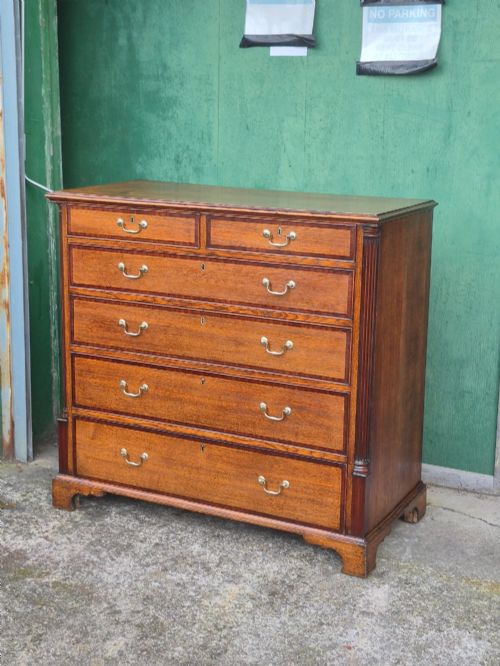
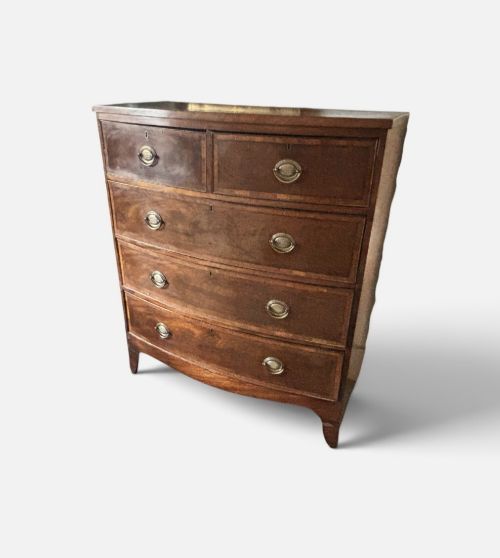
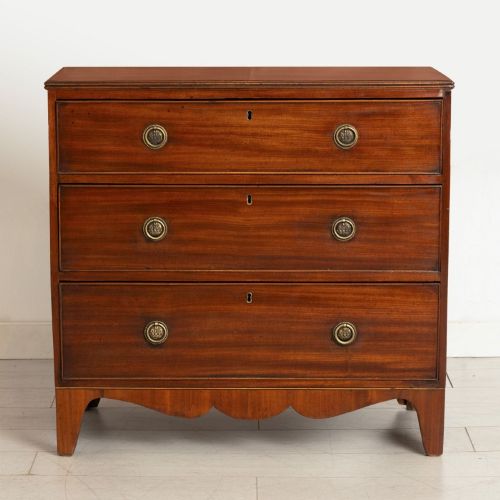
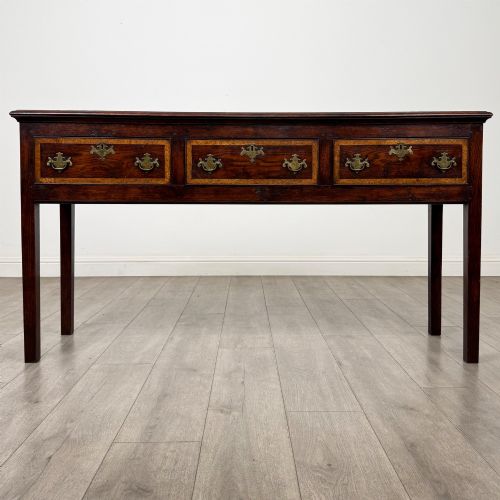
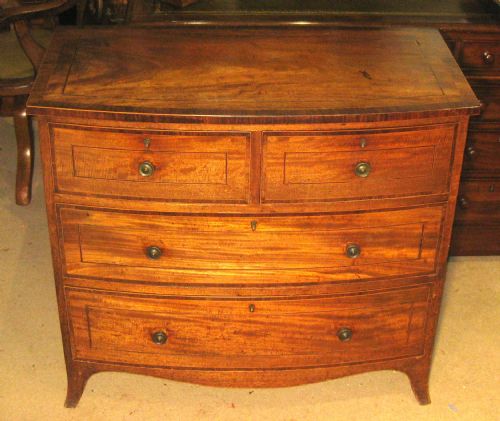
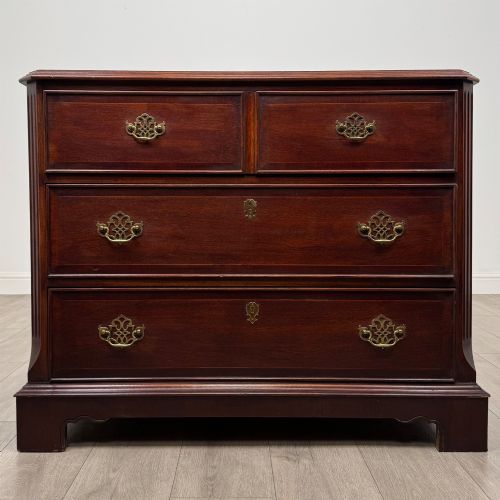
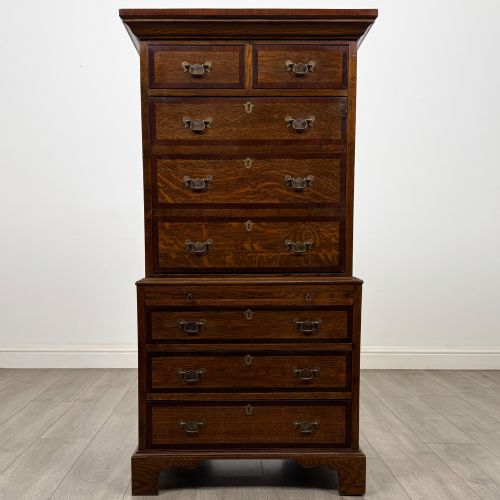

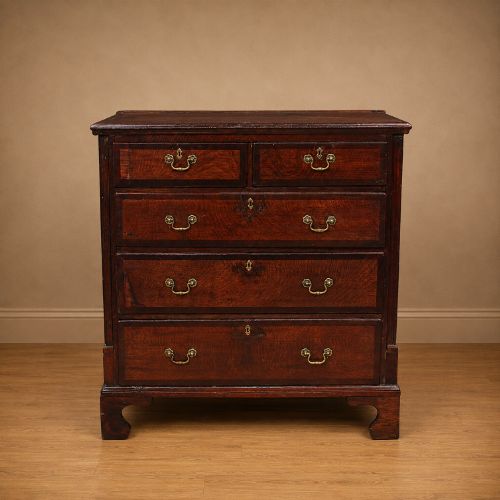
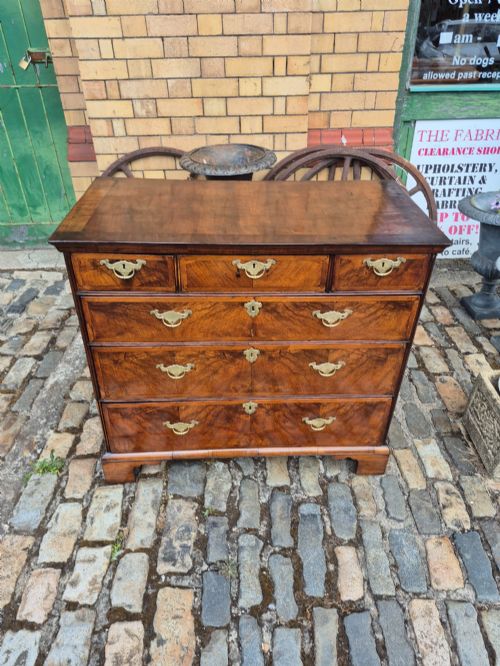
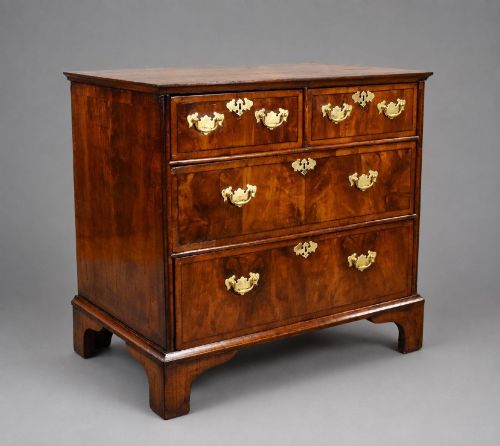
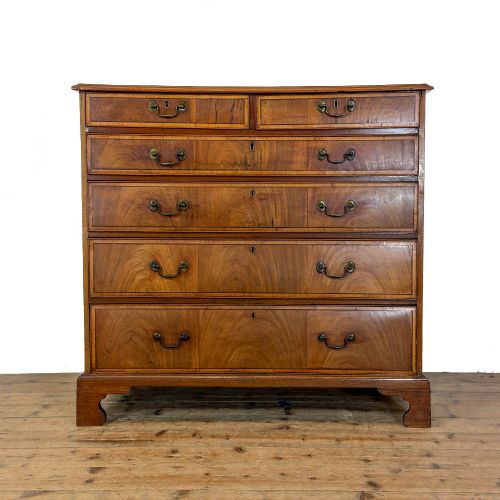
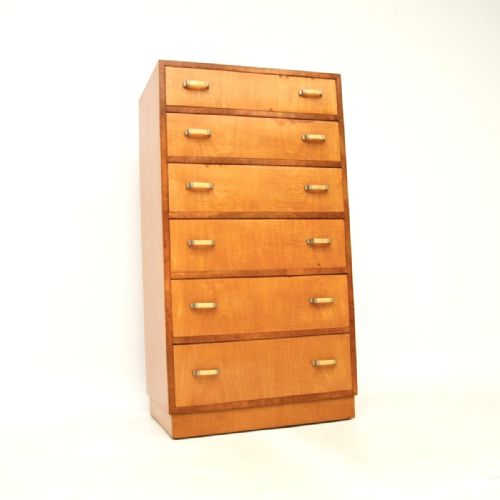
Crossbanded Dresser
A crossbanded dresser pairs sturdy foundational timber with a contrasting border veneer that frames the grain.
Crossbanded Dresser
When you search for a crossbanded dresser, you encounter timber furniture spanning the eighteenth and nineteenth centuries, alongside regional oak dresser bases and tall storage chests. These pieces typically combine a primary cabinet wood with a border band applied to the top or drawer fronts.
The examples on this page cover forms ranging from compact Georgian chests of drawers to large Lancashire dresser bases and plate racks. Oak, mahogany, and walnut provide the primary structure for these items across Georgian, Regency, and Victorian periods.
How they were made
Cabinetmakers utilised solid timbers such as oak, mahogany, and walnut for the primary carcass and drawer construction. They then applied contrasting veneers like satinwood, burr walnut, and mahogany around the edges of tops and drawer fronts to create a framed appearance.
Brass handles and escutcheons were fitted to drawer faces, while secondary woods like pine appeared in concealed structural areas. Joinery techniques relied on traditional dovetailed drawer construction and pegged frames to ensure lasting stability.
Crossbanded Dresser Retail Price Guide 2026
Typical asking prices for crossbanded dresser among the pieces listed under this phrase on Sellingantiques today, from the lower quarter to the upper quarter. They describe what is for sale here now, not the wider market.
Listings feature eighteenth-century and nineteenth-century periods, utilising mahogany, oak, walnut, and satinwood across chest and dresser forms.
What varies in quality
The skill of the cabinetmaker dictates the precision of the veneer work, visible in the alignment of the grain where the crossbanding meets the primary timber. Subtleties in the choice of burr walnut or figured mahogany elevate the visual depth of the surface.
Proportion and execution of secondary details, such as graduated drawers, shaped brass hardware, and secondary framing timbers, separate standard utilitarian storage from finely finished examples.
The Crossbanded Dresser Glossary
- Crossbanding
- A decorative border technique where veneer is laid perpendicular to the grain of the main surface. This frames the top or drawer fronts with a contrasting stripe of wood.
- Dresser base
- A low sideboard or cupboard originating from regional kitchens and dining rooms. It provides surface workspace and lower storage without an upper plate rack.
- Graduated drawers
- A series of drawers decreasing in depth from bottom to top. This arrangement creates a balanced visual weight on chests of drawers.
- Satinwood
- A dense, lustrous timber with a pale yellowish colour and fine grain. Cabinetmakers utilised it for contrasting banding and inlaid details.
Crossbanded Dresser: Frequently Asked Questions
What is a crossbanded dresser?
A crossbanded dresser is a storage piece or low base featuring timber veneer applied in strips around the perimeter of the top or drawers. This technique contrasts the grain direction of the border with the central wood.
Such items appear across Georgian, Regency, and Victorian periods in woods like mahogany, oak, and walnut.
How do I identify a Georgian piece?
Georgian pieces display hand-cut dovetails, secondary timbers such as oak or pine inside drawers, and traditional brass hardware. The proportions follow classical design rules of the eighteenth century.
Examination of the drawer linings and backboards reveals the hand tools and construction methods typical of the period.
Where were these pieces used?
These items served primarily in bedrooms, parlours, and dining spaces for storing linens, clothing, and tableware. Dresser bases functioned in large kitchens and dining rooms for food preparation and serving.
Their robust timber construction allowed them to withstand daily domestic use over centuries.
How do I care for wooden furniture?
Keep wooden furniture away from direct heat sources and strong sunlight to prevent the timber and veneer from drying out. Maintain a stable indoor humidity level.
Apply natural beeswax occasionally to nourish the surface and preserve the finish without sealing the wood.