



Crocodile Skin Case
These crocodile skin case pieces are practical luxuries from the Victorian, Edwardian, and Art Deco eras that hold personal items, travel gear, and documents.
Crocodile Skin Case
A crocodile skin case encompasses a diverse range of functional objects from the late nineteenth century through to the 1930s. Buyers searching this phrase encounter everything from small pocket accessories to large travel luggage.
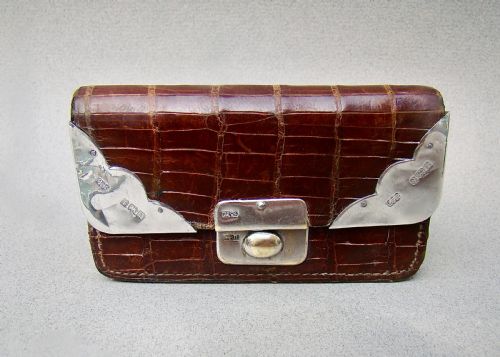
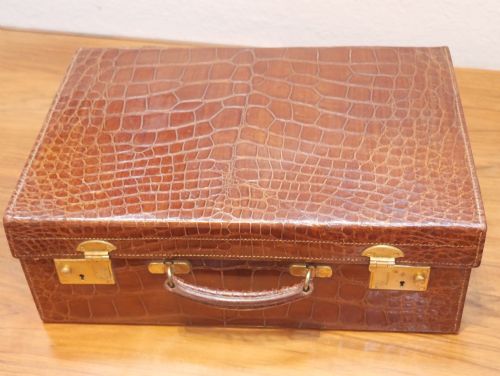
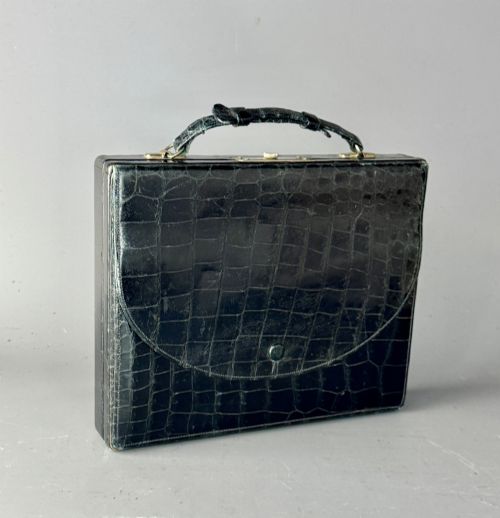
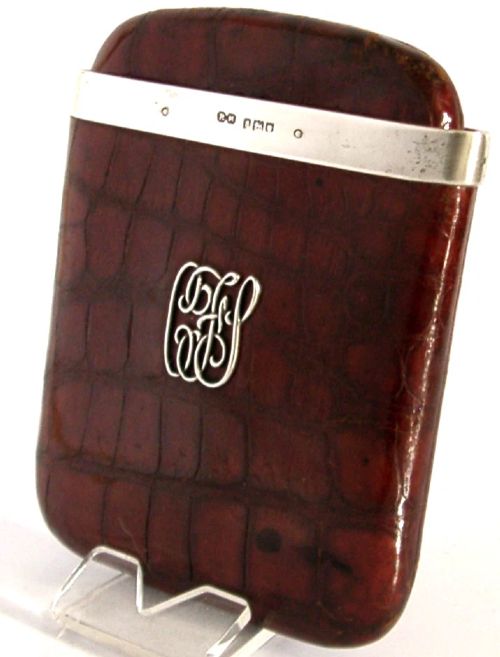
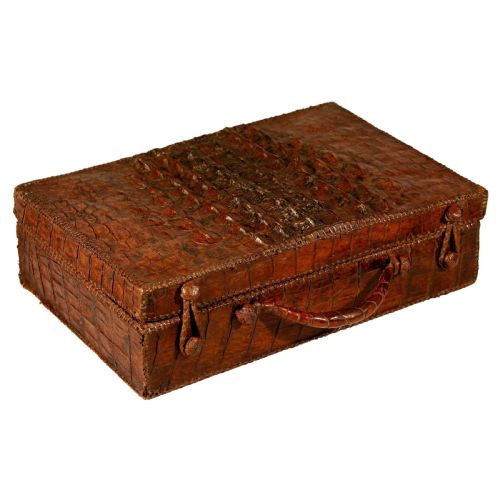
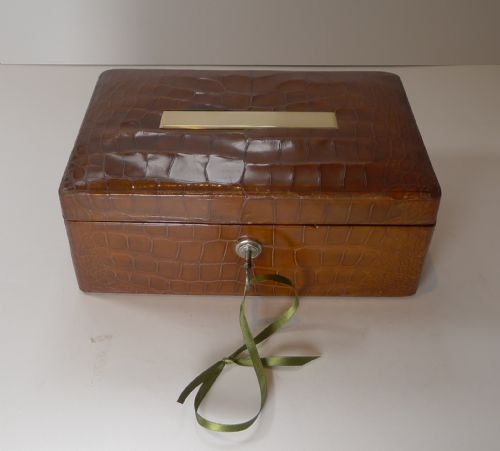
The pieces on this page most commonly appear as vanity cases, suitcases, and jewellery boxes from the Edwardian and Art Deco periods. Smaller items such as card cases, cigar holders, and purses also recur frequently across the inventory.
Origins span English and Scottish workshops, with Birmingham silversmiths often mounting the hides. The selection demonstrates how reptilian leather found application across both gentleman's travel gear and lady's dressing table accessories.
Materials and construction
Construction relies upon a robust core of wood, metal, or leather carcass covered in genuine crocodile or alligator hide. Hornback skins provide a heavily textured exterior on larger suitcases, while smaller items utilise flatter flank leather.
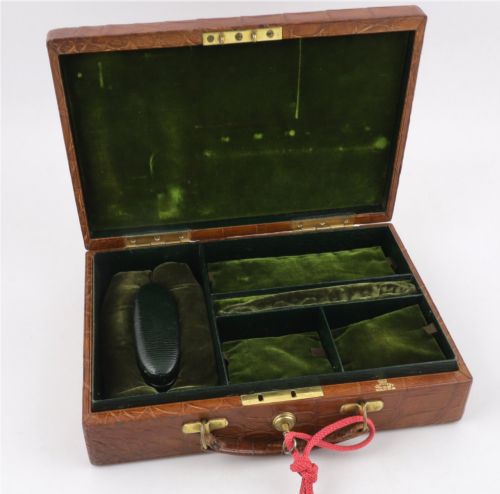
Sterling silver mounts, corners, and hinges frequently secure the edges and provide fastening mechanisms. Interiors are lined with complementary materials such as velvet, silk, or softer leathers tailored to the specific object type.
Listings span the late Victorian period through the 1930s, featuring brass, sterling silver, wood, and velvet alongside crocodile leather.
Markers of quality
Quality depends upon the integrity of the hide and the precision of the taxidermy work used to prepare the skin. Uniform scale patterns and secure adherence to the underlying carcass separate superior examples from lesser items.
The incorporation of hallmarked sterling silver mounts and fitted internal compartments elevates a piece. Maker attributions stamped into the leather or metalwork further distinguish workshop output from anonymous production.
Charles Penny Brown·Dunhill London·J C Vickery·Harriet Thomson·Lawrence Emanuel·Danziger & Isaacs
The Crocodile Skin Case Glossary
- Hornback
- The ridge of heavy, raised scutes running down the back of the reptile. This part of the hide produces the most heavily textured exterior on suitcases and large trunks.
- Vesta case
- A small pocket box designed to hold wax matches. These objects often received silver mounts and crocodile leather wrapping during the Victorian era.
- Hallmark
- An official stamp applied by an assay office to indicate the purity of precious metal. British pieces commonly display these marks on silver corners, clasps, and match cases.
- Vanity case
- A portable container fitted for cosmetics, brushes, and dressing accessories. Art Deco examples often incorporate internal mirrors and silver-topped jars.
- Carcass
- The structural foundation of wood or stiffened leather that supports the outer reptile skin. A sound carcass maintains the rigidity and shape of the case.
Crocodile Skin Case: Frequently Asked Questions
How do I date a crocodile skin case?
Dating relies primarily on silver hallmarks, structural styles, and associated maker marks found on the mounts or interiors. Victorian pieces tend to feature heavy ornamentation, whereas Art Deco items display geometric restraint.
The integration of specific accessories, such as vanity jars or early smoking paraphernalia, also helps place an item within the 1890 to 1930 timeframe.
Were these cases made from alligator or crocodile?
Period makers used both crocodile and alligator hides interchangeably depending on availability and the specific requirements of the item. Contemporary descriptions often grouped the two reptilian leathers together.
Distinguishing between the specific reptile species requires examining scale patterns and pore distribution, though both provide the same distinctive texture.
How should I clean crocodile leather?
Maintenance requires gentle dusting with a dry cloth and occasional application of specialised leather conditioners formulated for exotic skins. Avoid excessive moisture, which can warp the underlying carcass and stain the interior lining.
Keeping the pieces away from direct sunlight prevents the natural hide from drying out and cracking over time.
What were small cases used for originally?
Small cases served specific social functions such as carrying calling cards, cigars, or matches during polite visits and travel. Card cases protected paper calling cards from bending in pockets or carriage compartments.
Smoking accessories kept delicate cheroots and matches secure and dry before the widespread adoption of modern packaging.