


Green Velvet Case
A green velvet case is a fitted container lined to protect delicate treasures, offering tactile luxury and period craftsmanship that collectors prize.
Green Velvet Case
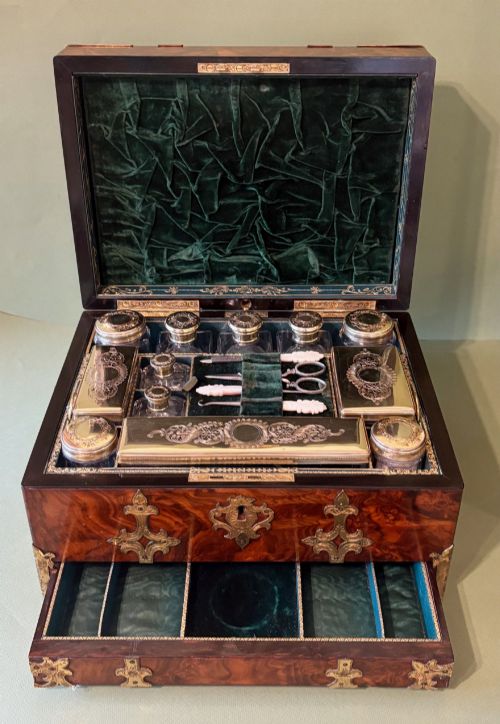
When you search for a green velvet case, you encounter Victorian and Edwardian containers designed for jewellery, dressing sets, cutlery, and musical instruments. These pieces emerge from the nineteenth century and the early twentieth century, carrying the distinct styles of the Victorian era, the Edwardian period, and Neoclassical design.
The objects span varied domestic and professional forms, including fitted workboxes, dressing cases, shop display counters, and instrument housings. On this page, you are most likely to meet Victorian and 19th-century examples fashioned from wood, leather, and glass alongside their plush internal linings.
Materials and construction
Makers constructed these enclosures using dense timbers such as rosewood, burr walnut, and coromandel, often enhancing the exterior surfaces with brass inlay or mother-of-pearl. The structural wood provides rigid protection while displaying rich natural grain patterns characteristic of nineteenth-century cabinet work.
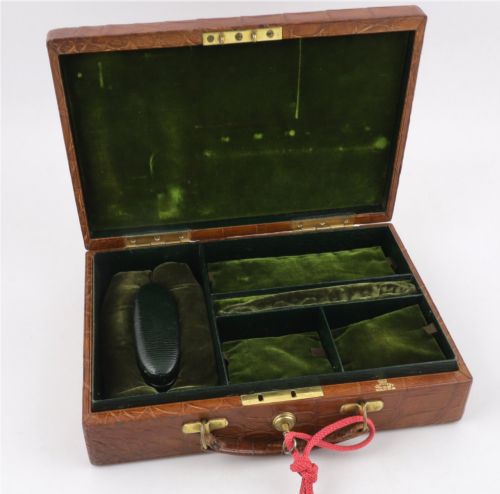
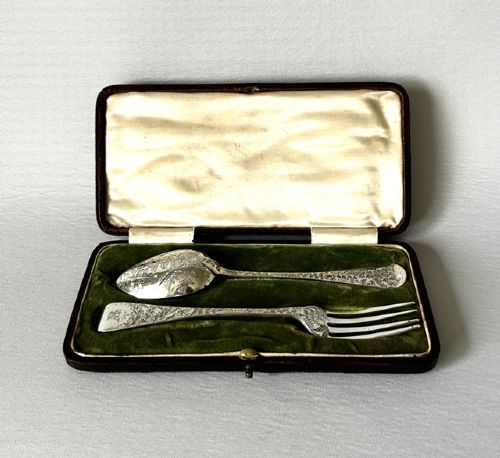
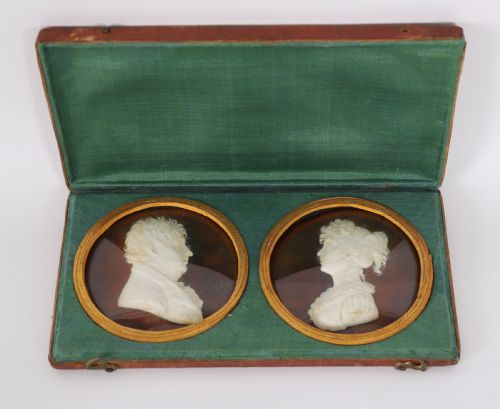
Interiors rely on soft velvet textiles to cushion delicate items like portrait miniatures, silver christening sets, and jewellery. Specialised housings utilise alligator skin, crocodile leather, or fitted wooden compartments to secure contents firmly during transport or display.
Some nineteenth-century instrument cases required alligator skin to survive the damp journeys of touring musicians.
Assessing quality
The distinction between standard containers and superior examples rests in the precision of the exterior joinery and the complexity of the internal fittings. Finer pieces integrate luxury materials like coromandel and meticulous mother-of-pearl inlay, reflecting the high skill of period workshops.
Preservation of the delicate velvet lining and the integrity of specialised hardware, such as brass clasps and hinges, dictate the standing of a piece. Original fitted interiors that remain complete elevate an object far above those altered or stripped of their contents.
J C Vickery·W.E Hill·Edwards
The Green Velvet Case Glossary
- Coromandel
- A dense, heavily grained East Indian timber prized for luxury nineteenth-century boxes and dressing cases. It typically displays rich dark brown hues with contrasting lighter stripes.
- Mother-of-pearl
- The iridescent inner layer of mollusc shells utilised for delicate decorative inlay on woodwork. Artisans shaped tiny sections into geometric patterns or floral motifs.
- Grand Tour
- A cultural journey undertaken by wealthy young Europeans in the eighteenth and nineteenth centuries to collect art and antiquities. Associated items include framed wax portrait reliefs.
- Dressing case
- A fitted portable box containing compartments for cosmetics, grooming tools, jewellery, and writing implements. These sophisticated containers were essential travel companions for the affluent.
Green Velvet Case: Frequently Asked Questions
What items go in a green velvet case?
These containers traditionally held delicate personal possessions such as jewellery, silver cutlery, dressing accessories, and portrait miniatures. Instrument makers also utilised them to protect violins and cellos.
Interior compartments were custom-built to secure specific objects, preventing movement and damage during transit or storage.
How do I date a green velvet case?
Dating relies on examining the timber species, construction techniques, and stylistic markers such as Victorian ornamentation or Edwardian simplicity. Materials like coromandel and mother-of-pearl inlay point directly to nineteenth-century manufacturing trends.
Maker marks, where present, provide definitive clues to the workshop of origin and the active years of the firm.
Are these cases suitable for modern display?
These containers integrate seamlessly into modern interiors as decorative objects on sideboards, desks, or dressing tables. Their rich wood exteriors and plush linings offer a striking contrast in contemporary settings.
They also serve practical functions for organising small personal treasures, keeping them safe and dust-free.