



Crocodile Skin Box
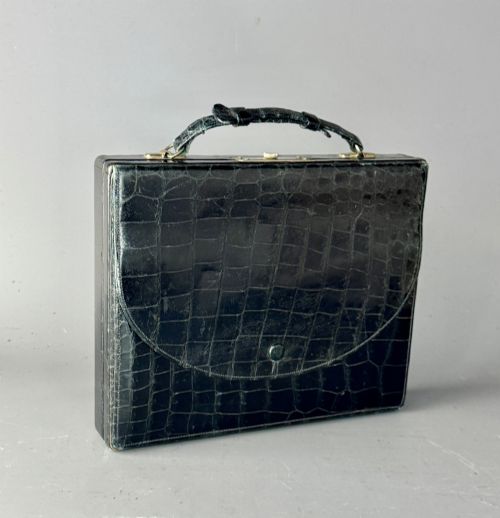
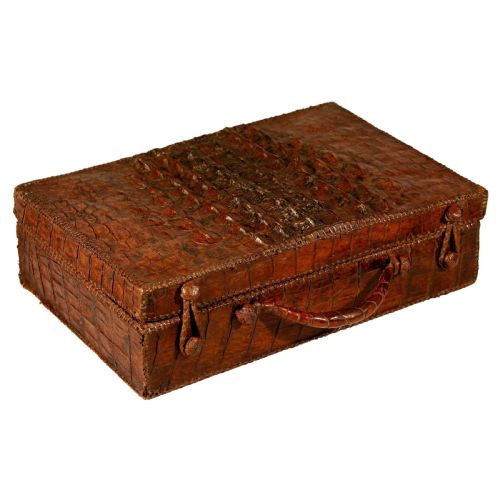
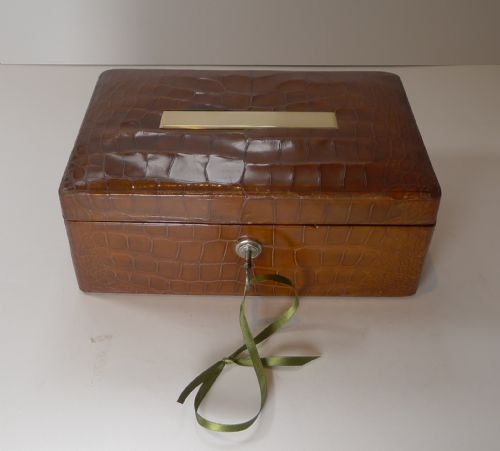
A crocodile skin box is a tactile luxury container built for travel or vanity, combining exotic hide with sterling silver and brass fittings.
Crocodile Skin Box
A crocodile skin box serves as a portable container for personal valuables, travel items, and writing implements. The examples found here span the Victorian, Edwardian, and Art Deco eras, extending from the late nineteenth century to the 1930s.
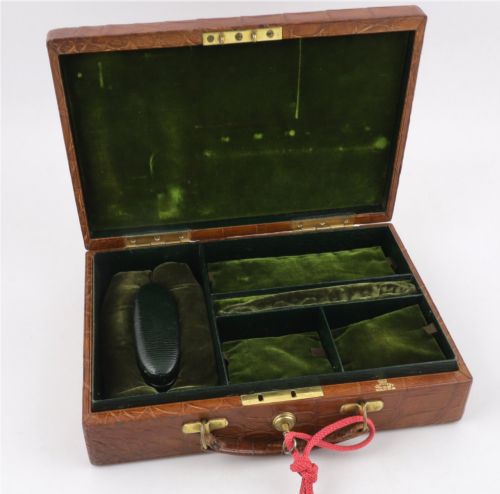
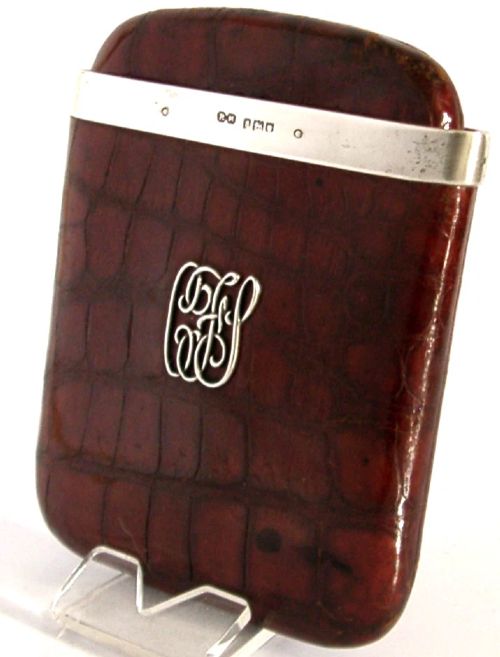
The most common form on this page is the jewellery box, designed with fitted interior trays for rings, cufflinks, and watches. Larger specimens include writing cases, cigar cases, and heavy travel luggage or vanity trunks.
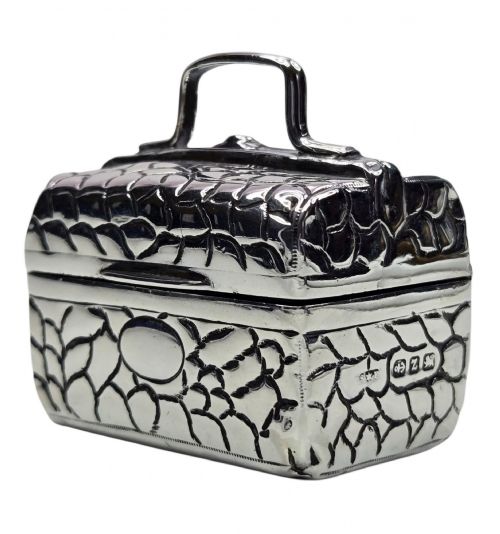
These pieces originate from workshops operating in London and Birmingham, often bearing the marks of notable makers and silversmiths. Their construction bridges practical utility with opulent personal accessories.
Materials and Construction
Makers built the foundational carcass using timber such as wood, then wrapped the exterior in crocodile leather or alligator hide. The natural hornback scales provide a distinct, rugged texture across the surface.
Interiors typically feature linings of velvet or silk, creating a soft bed for delicate contents. Metal mounts, locks, and hinges fashioned from brass or sterling silver secure the structure and finish the corners.
Listings feature items spanning the nineteenth century through the Art Deco period, utilising crocodile hide, brass, sterling silver, and velvet.
Assessing Quality and Distinction
Quality rests in the selection of the hide and the integrity of the fitted interior compartments. Uniform scale pattern and robust wrapping demonstrate superior craftsmanship in luxury leather goods.
The incorporation of hallmarked sterling silver mounts and working brass locks elevates a piece from a simple container to a bespoke maker's commission. Surviving internal trays and intact silk or velvet linings distinguish finer examples.
Dunhill London·J C Vickery·John Pound London
The Crocodile Skin Box Glossary
- Hornback
- The ridge of skin running down the back of the reptile, featuring raised, bony scutes that create a highly textured surface on the box exterior.
- Vanity Case
- A structured travel case fitted for cosmetics, brushes, and personal grooming items, popular during the Art Deco period.
- Trinket Box
- A small container intended for holding rings, pins, and small personal ornaments rather than large pieces of jewellery.
- Sterling Silver
- An alloy of silver containing ninety-two point five percent pure silver, frequently used for the corners, shields, and hinges of these boxes.
Crocodile Skin Box: Frequently Asked Questions
How do I date a crocodile skin box?
Dating relies on the style of the box, associated maker marks, and silver hallmarks which denote specific assay office years. Victorian and Edwardian examples often feature heavy brass locks and fitted silk interiors.
Later Art Deco pieces from the 1930s display cleaner geometric lines and minimalist metal mounts. Comparing the construction methods to known archived pieces helps narrow the decade of production.
What were these boxes originally used for?
Owners utilised these containers to safeguard valuable personal possessions during travel or while at home. Smaller boxes held rings and cufflinks, while larger trunks accommodated full jewellery collections or writing equipment.
Cigar cases and vanity boxes served specific social and grooming functions for the wealthy owner on the move. Each form matched the precise lifestyle requirements of the late nineteenth and early twentieth centuries.
How do I care for antique crocodile leather?
Maintaining crocodile leather requires keeping the hide away from direct sunlight and excessive moisture to prevent cracking. Gentle dusting with a dry, soft cloth preserves the natural sheen of the scales.
Avoid modern chemical cleaners and leather conditioners that might damage the historic finish or stain the interior velvet and silk linings. Periodic professional inspection of the brass and silver hardware ensures hinges remain stable.
Are crocodile and alligator skin boxes different?
Makers and contemporary retailers often used the terms interchangeably to describe exotic reptile leather goods. Both materials offer similar scale patterns, durability, and tactile luxury.
Distinguishing between the two requires microscopic examination of the scale pores, which rarely affects the historical appreciation of the antique piece. Both hides were favoured by high-end makers for luxury travel accessories.