

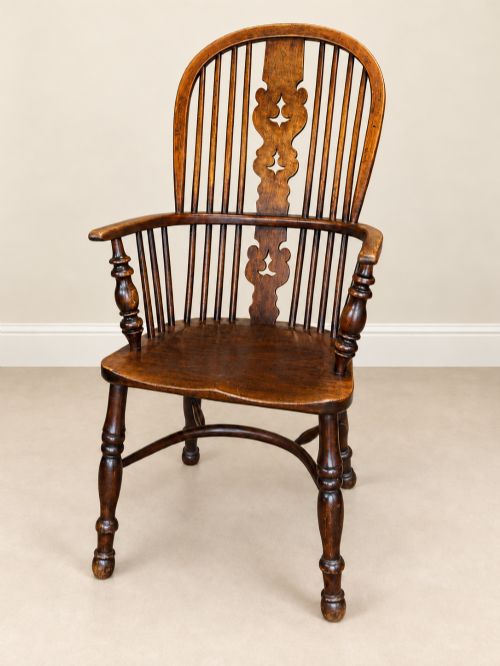
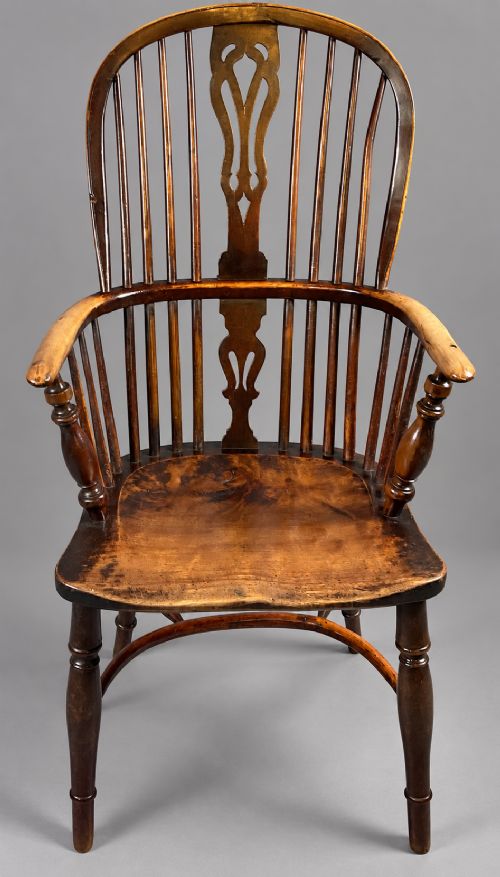
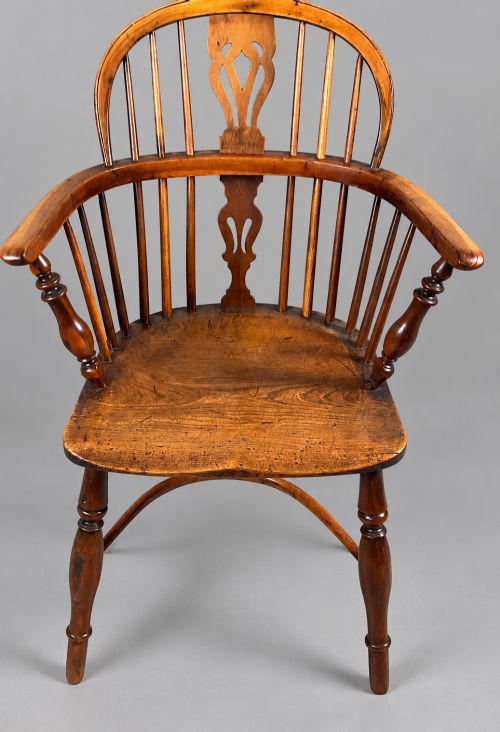

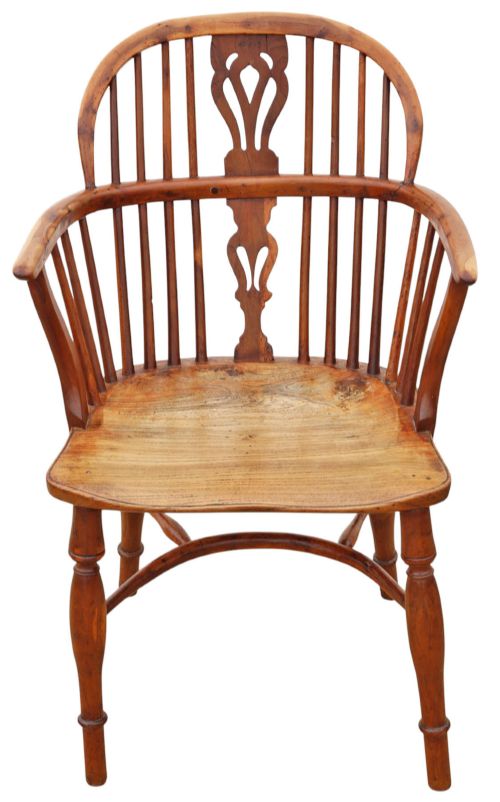

Crinoline Windsor Chair
A crinoline windsor chair brings robust English country craftsmanship and sculptural bentwood lines directly into any interior.
Crinoline Windsor Chair
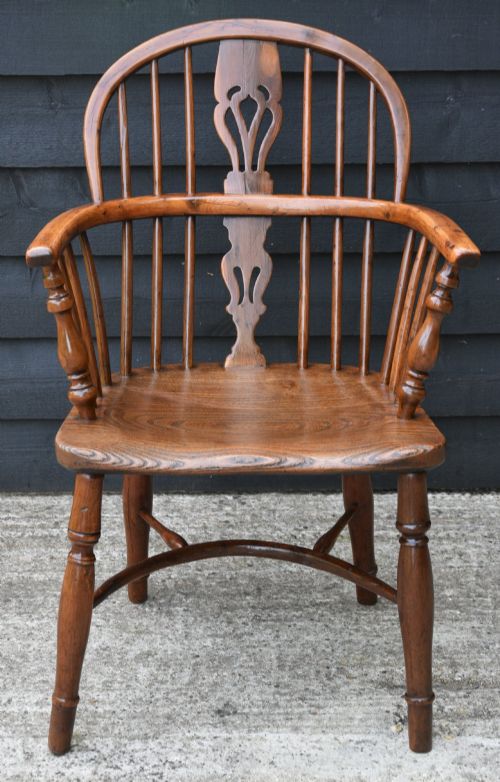
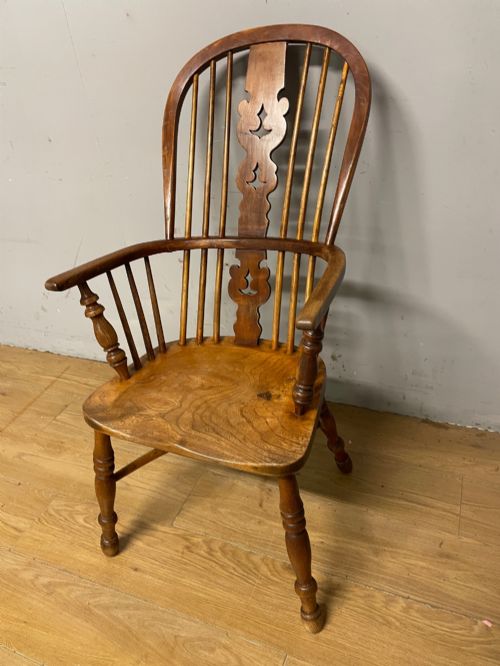
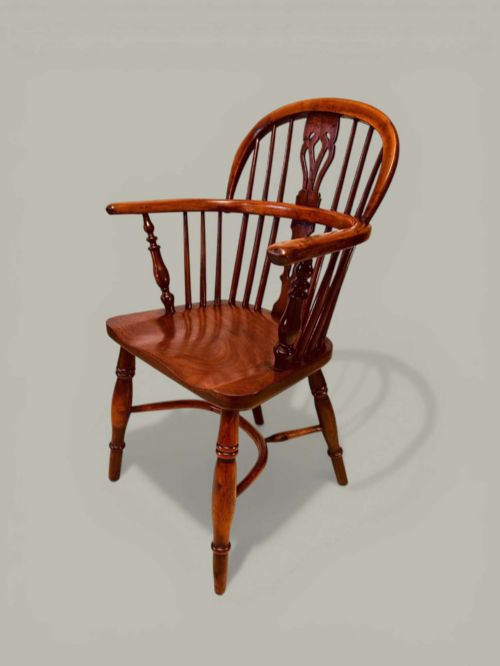
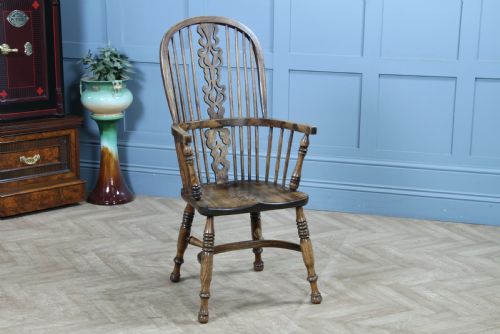
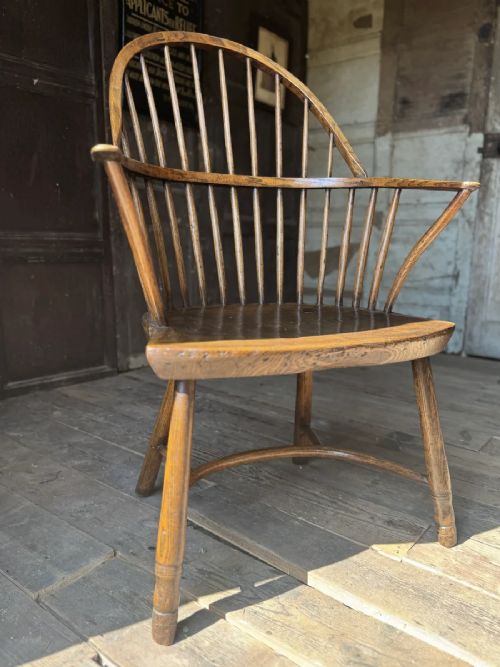
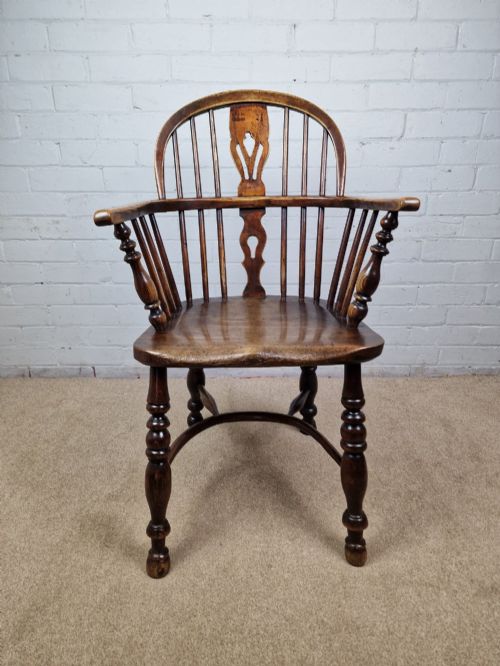
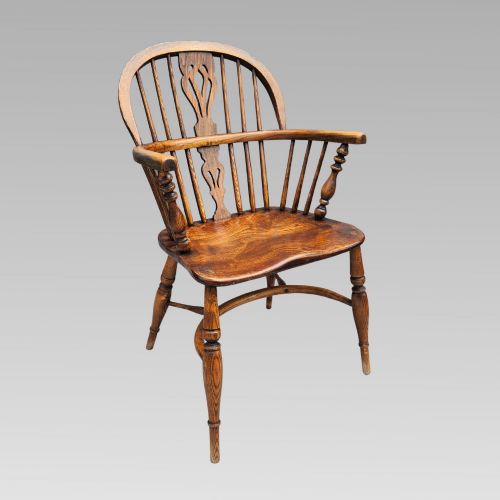
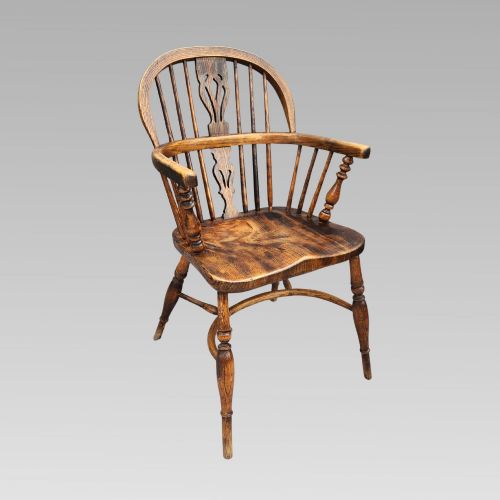
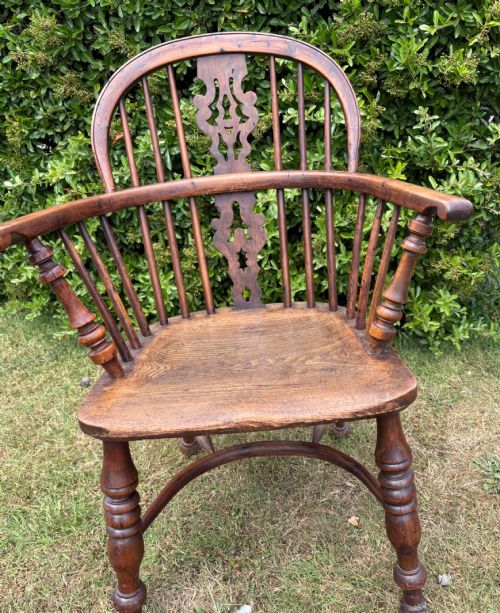
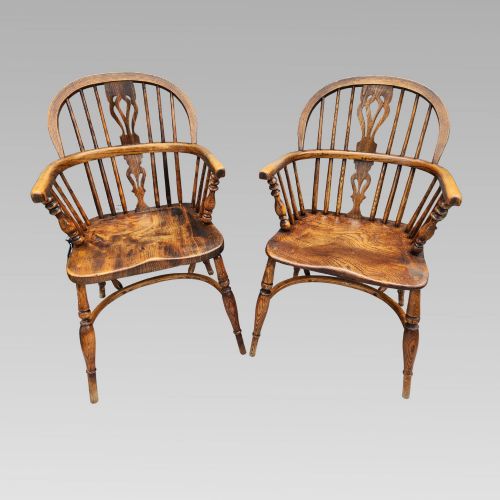
A crinoline windsor chair is a traditional wooden seating form featuring a distinctive curved under-stretcher that resembles the shape of a hoop skirt, reinforcing the legs while adding visual elegance. Buyers seeking this phrase encounter low-back, high-back, and hoop-back armchairs originating primarily from the nineteenth and eighteenth centuries. These pieces emerge predominantly from English regional traditions, particularly Nottinghamshire and the West Country.
Most examples found on this page pair a rich yew wood or elm seat with ash spindles and occasionally fruitwood legs, demonstrating the utilitarian brilliance of vernacular furniture makers. The selection ranges from single scholarly examples to matched sets of dining chairs and occasional child-sized armchairs. Such seating provides tangible links to historic English country houses and cottage interiors.
How they were made
Makers constructed these seats by boring holes directly into solid elm blocks and wedging tapered spindles and legs into place without traditional joinery glue. The iconic crinoline stretcher was steam-bent from green wood and pinned horizontally between the legs to provide structural rigidity.
Woodturners utilised pole lathes to shape individual spindles, arm supports, and legs from native timbers like ash, beech, and fruitwood. Craftsmen selected figured yew wood for its striking grain patterns, contrasting the darker timber against pale elm seats.
Crinoline Windsor Chair Retail Price Guide 2026
Typical asking prices for crinoline windsor chair among the pieces listed under this phrase on Sellingantiques today, from the lower quarter to the upper quarter. They describe what is for sale here now, not the wider market.
Several charming child-sized armchairs prove that historic households accommodated junior family members with proper miniature seating.
What varies in quality
The sophistication of the turning on the legs and spindles dictates the upper echelon of these armchairs, separating utilitarian workshop output from refined rural artistry. Sculpted comb-pieces, central splats, and well-defined saddle seats reveal the hand of a master provincial carpenter.
Timber selection heavily influences the desirability of a piece, with richly figured yew wood and burr grain bringing significantly more visual depth than plain elm or mixed utility woods. Original surface patination and tight structural integration across the crinoline stretcher elevate preserved examples.
Gabbitass Worksop·Fred Walker·Rockley·Allsop Worksop
The Crinoline Windsor Chair Glossary
- Crinoline stretcher
- A curved metal or wooden brace connecting the legs of a chair below the seat, resembling a nineteenth-century hoop skirt. This structural element provides lateral stability while softening the rigid geometry of straight legs.
- Comb-back
- A Windsor chair variant where the top rail resembles the spine of a comb, holding vertical spindles that rise above the arm rail. This design offers elevated back support in regional vernacular seating.
- Yew wood
- A dense, highly figured native timber prized by chairmakers for its warm reddish-brown tones and distinctive grain patterns. Craftsmen utilised yew for prominent components like armbows and solid seat planks.
- Stick back
- A minimalist chair construction method where turned spindles are tenoned directly into a solid wooden seat and top rail. This method exemplifies sturdy English country craftsmanship.
- Low back
- A chair design where the arms and back rail form a continuous low horizontal sweep around the sitter. These compact proportions suit intimate dining spaces and small parlours.
Crinoline Windsor Chair: Frequently Asked Questions
What is a crinoline stretcher?
A crinoline stretcher is a curved wooden brace linking the legs of a chair beneath the seat, shaped like a historic hoop skirt. It provides essential structural support to the frame while adding a decorative focal point.
This specific design feature helps specialists attribute regional origins to vernacular chairs produced across English rural counties.
How do you date an old windsor chair?
Dating relies upon examining tool marks, timber combinations, and structural wear patterns visible across the seat base and undercarriage. Eighteenth-century examples often display broader saddle seats and deep adze work compared to later Victorian iterations.
Maker stamps and regional turning styles also offer reliable clues for narrowing down the decade of production.
Which woods were used?
Craftsmen utilised native British timbers, most frequently pairing elm for solid sculpted seats with ash or yew for spindles and arms. Beech and fruitwood also appear frequently in the turned legs and undercarriages.
This multi-wood construction allowed makers to match the specific properties of each timber to the structural demands of different chair parts.
Where were these chairs made?
English country workshops in Nottinghamshire, Yorkshire, and the West Country produced the vast majority of these regional seating forms. Local timber availability heavily influenced the choice of materials used by provincial carpenters.
Certain towns developed distinct regional characteristics in their spindle turnings and armbow shapes.