

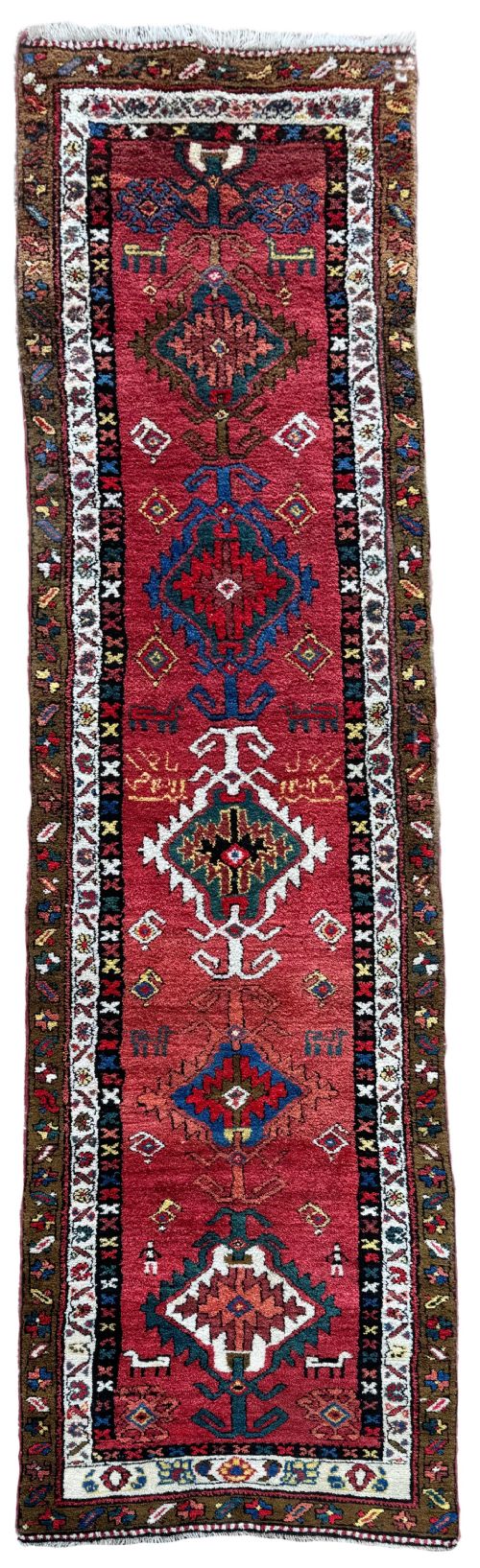
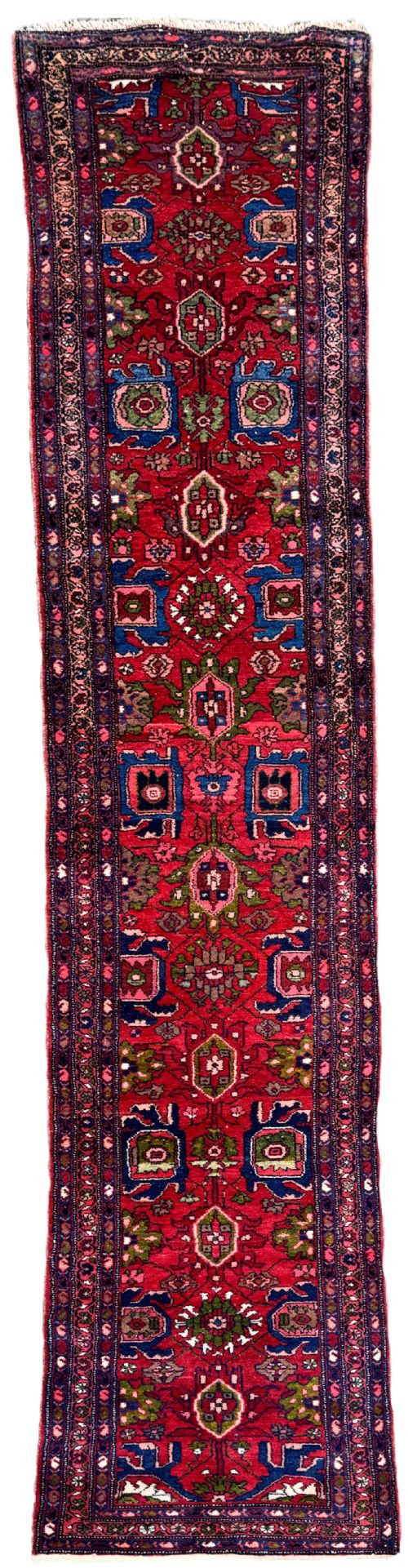
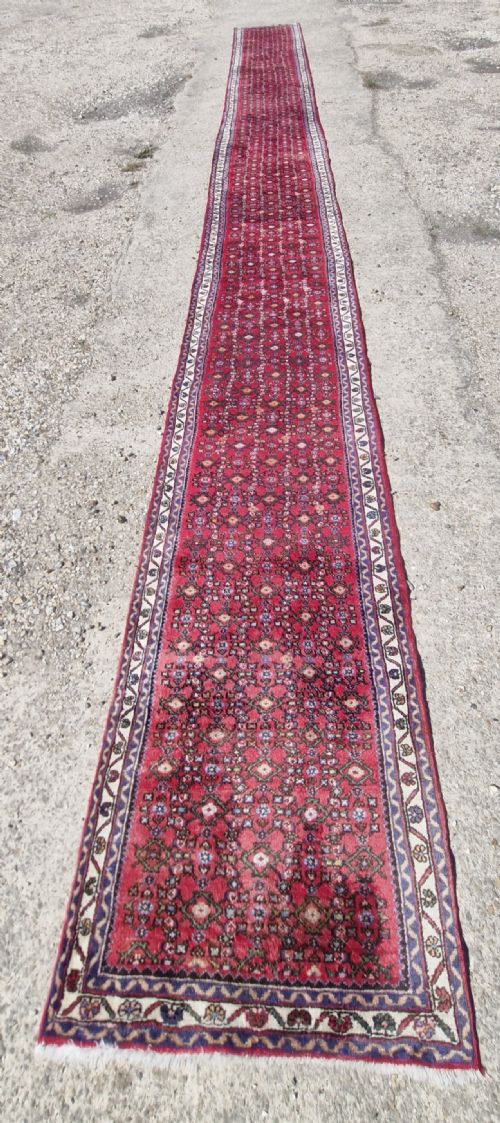
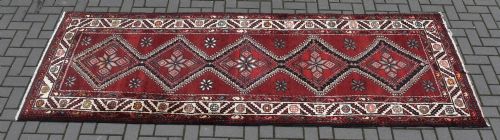


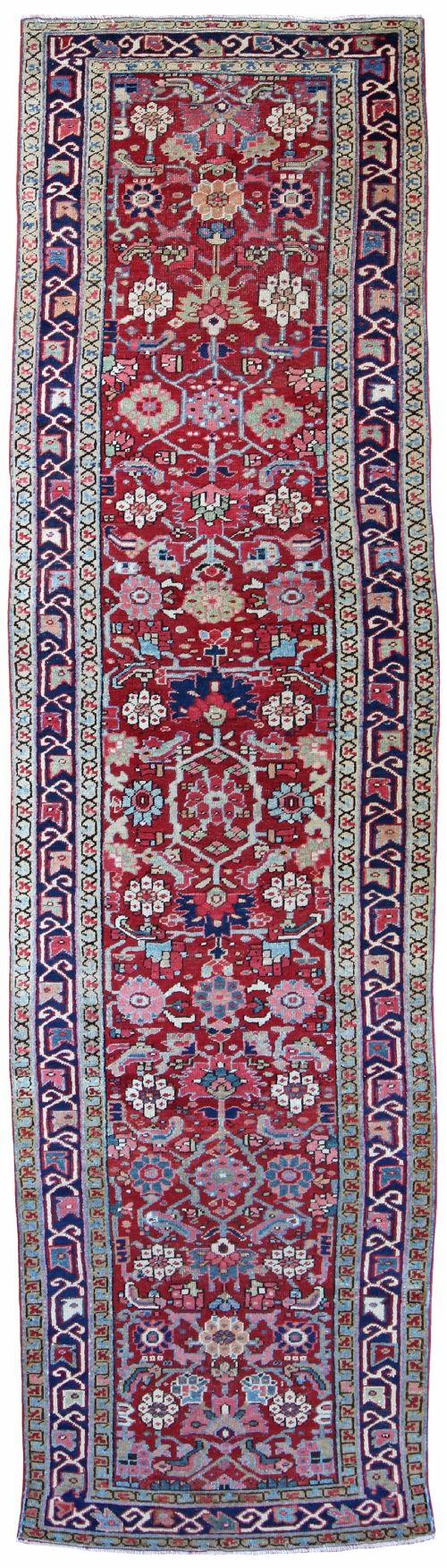

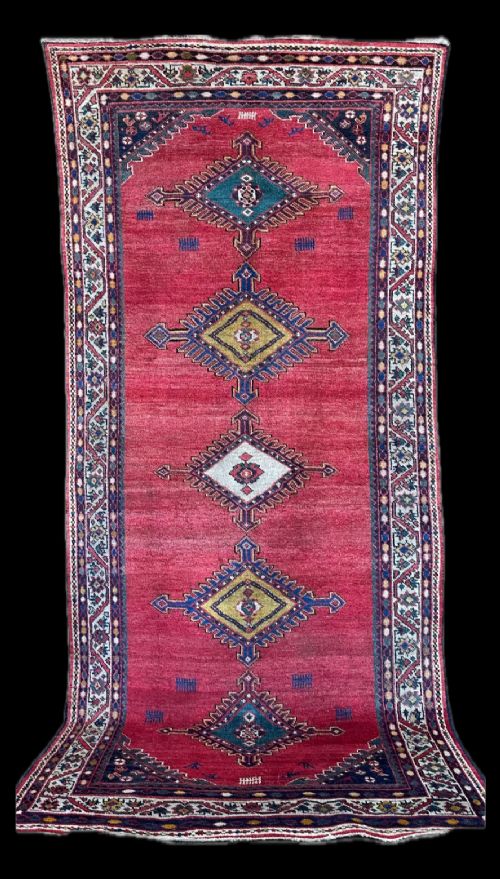

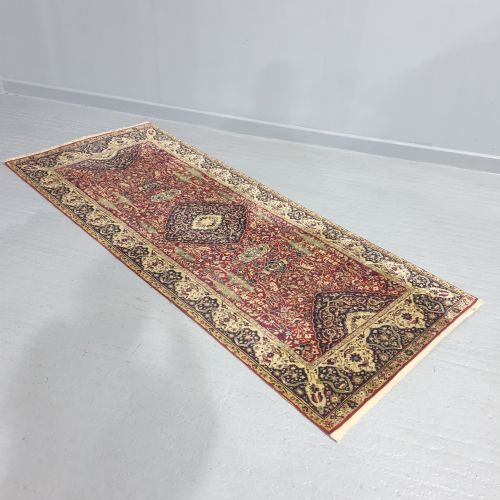
Crimson Tribal Hallway Rug
A crimson tribal hallway rug brings enduring warmth and intricate pattern to narrow spaces.
Crimson Tribal Hallway Rug
A crimson tribal hallway rug is a long, narrow floor covering designed for corridors, landings, and halls, often originating from Persian and Turkmen weaving traditions. These pieces combine rich red tones with geometric or traditional tribal motifs shaped by the communities that made them.
The selections encountered here span several decades from the late nineteenth century through to the mid-twentieth century. They include specific regional types such as Heriz, Hamadan, Feraghan, and Ersari, each bringing distinct design traits to narrow interiors.
Materials and construction
These textiles are built upon natural foundations using wool for the pile and cotton for the structural warp and weft threads. Handweaving traditions dictate the dense knotting and flat-woven ends that give each piece its durable character.
The characteristic crimson hues and complementary shades derive from traditional dyeing methods applied to local wool. Artisans worked these materials into elongated runner formats suited to heavy domestic traffic in corridors.
Crimson Tribal Hallway Rug Retail Price Guide 2026
Typical asking prices for crimson tribal hallway rug among the pieces listed under this phrase on Sellingantiques today, from the lower quarter to the upper quarter. They describe what is for sale here now, not the wider market.
The listings span wool and cotton materials across traditional Persian and Turkmen styles from the late nineteenth to the mid-twentieth century.
Distinctions in quality
Quality rests in the precision of the knotting, the crispness of the tribal geometry, and the integrity of the wool foundation. Finer examples display greater clarity in their medallions and borders.
The depth and saturation of the crimson dye along with the balance of the overall design separate standard utility runners from exceptional regional specimens.
The Crimson Tribal Hallway Rug Glossary
- Runner
- A long, narrow carpet format specifically proportioned for hallways, corridors, and staircases. It directs movement through a domestic space.
- Heriz
- A style originating from North-West Persia known for bold geometric medallions and robust structural qualities. These runners handle heavy corridor use well.
- Feraghan
- A regional Persian weaving style associated with fine knotting and intricate floral or Herati patterns. They represent a sophisticated level of village production.
- Ersari
- A Turkmen tribal designation characterised by distinctive guls and deep red colour palettes. These pieces reflect specific nomadic heritage.
- Warp
- The vertical threads stretched across the loom that carry the tension of the weave. The wool or cotton fringe at either end originates here.
Crimson Tribal Hallway Rug: Frequently Asked Questions
Where should I place a hallway runner?
These long formats suit corridors, entrance halls, and landings where narrow floor spaces benefit from warmth and protection. They direct the eye down a passage while cushioning footsteps.
Ensure you measure the clear floor space between skirting boards or stairs to leave an even border of exposed wood or stone on each side.
How do I care for an old wool rug?
Vacuum gently using suction attachments without rotating bristle brushes that can pull at the wool fibres. Rotate the piece periodically to ensure even wear across the length.
Professional cleaning tailored to antique textiles preserves the natural lanolin in the wool and keeps the crimson dyes stable.
What is a tribal design?
Tribal designs stem from nomadic or village weaving traditions rather than urban workshops. They feature repeating geometric motifs, stepped polygons, and symbolic patterns passed down through generations.
These patterns often rely on memory and local custom rather than drawn cartoons, giving each runner a distinct personal touch.
How can I tell different regional styles apart?
Regional styles reveal themselves through specific colour combinations, border arrangements, and structural motifs. For instance, Heriz pieces favour bold geometric corners, while Hamadan runners often use all-over Herati patterns.
Examining the density of the weave and the materials used in the foundation helps identify the origin of each runner.