
Crested Gilt Frame Mirror
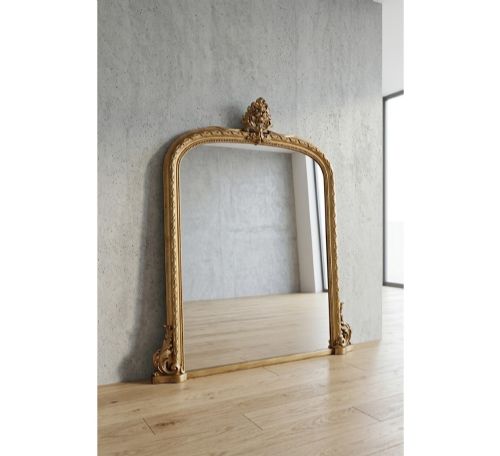
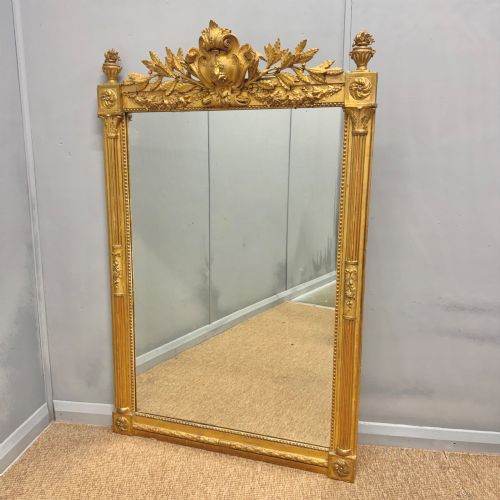
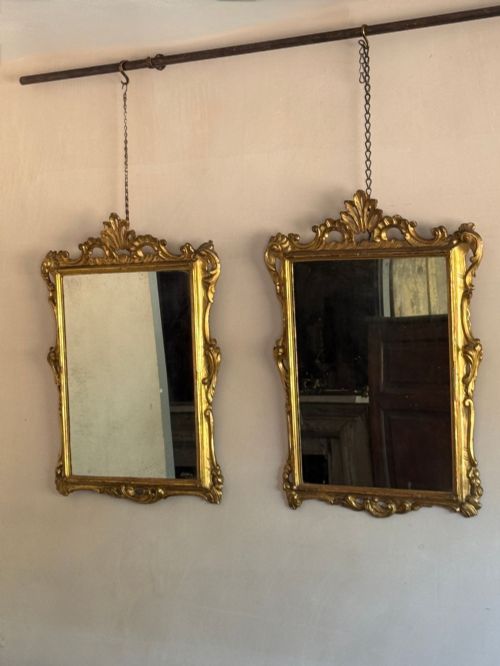
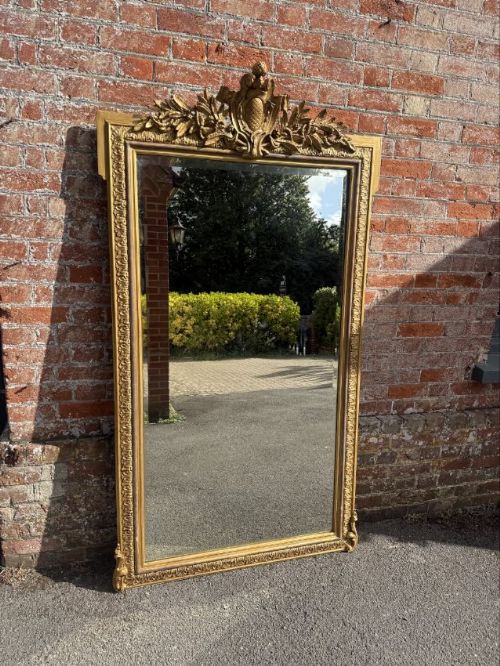
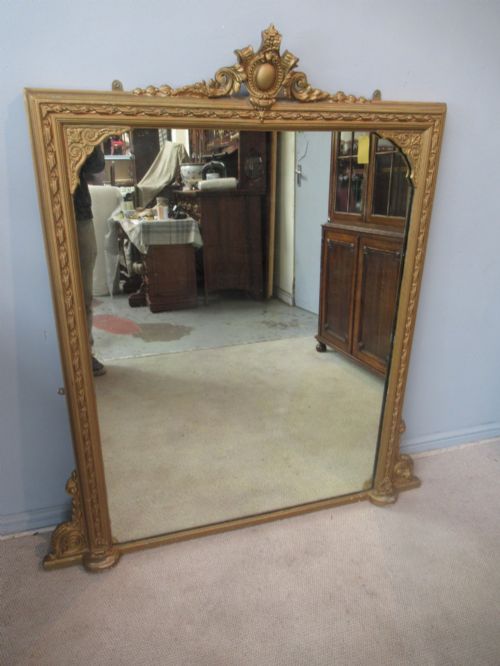
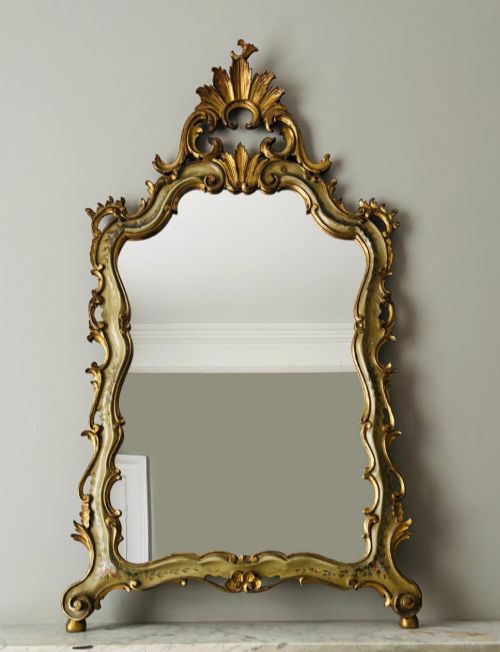
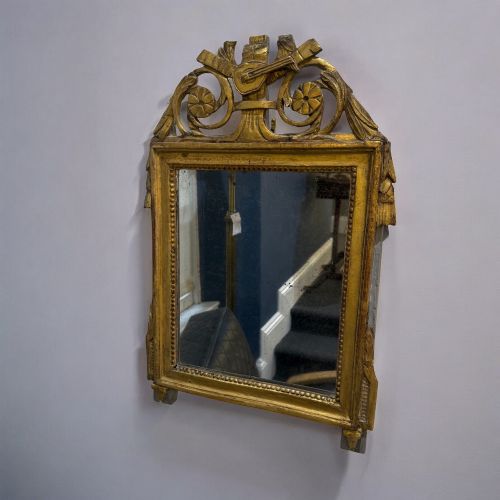
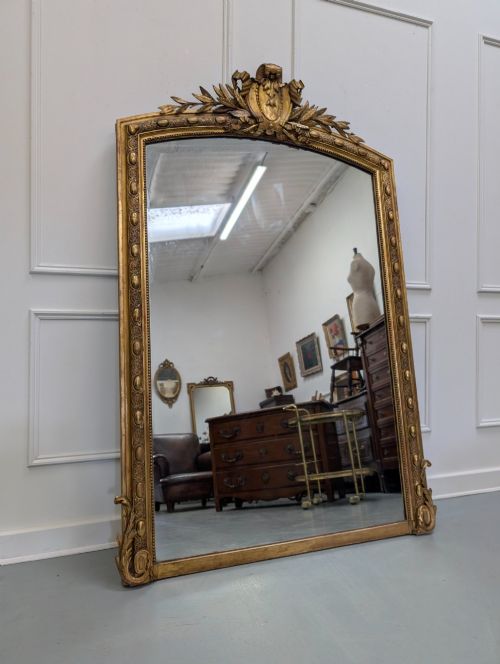
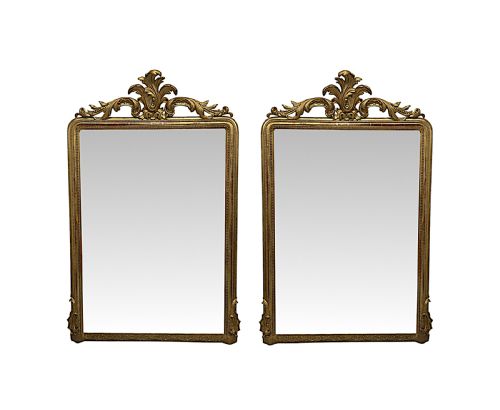
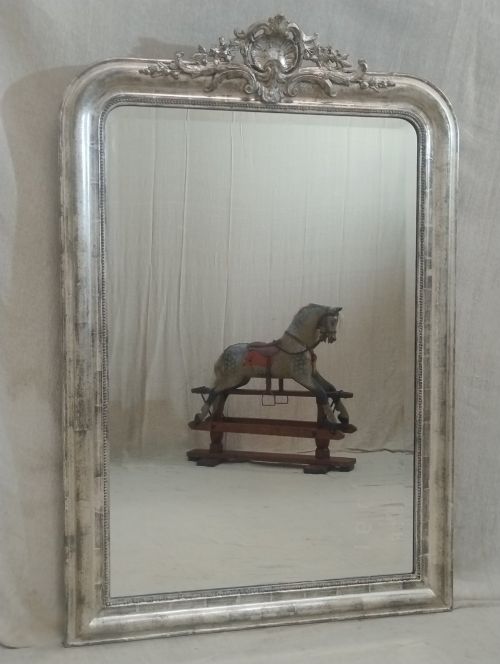
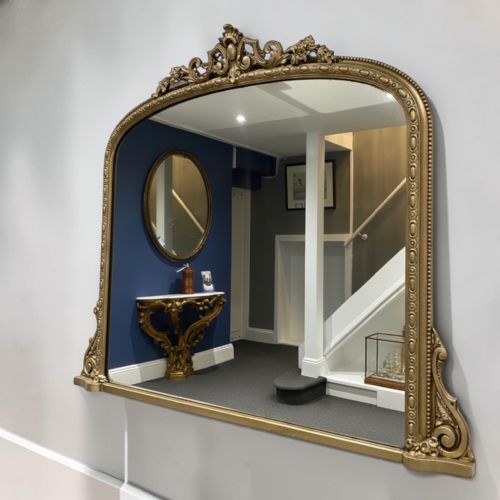
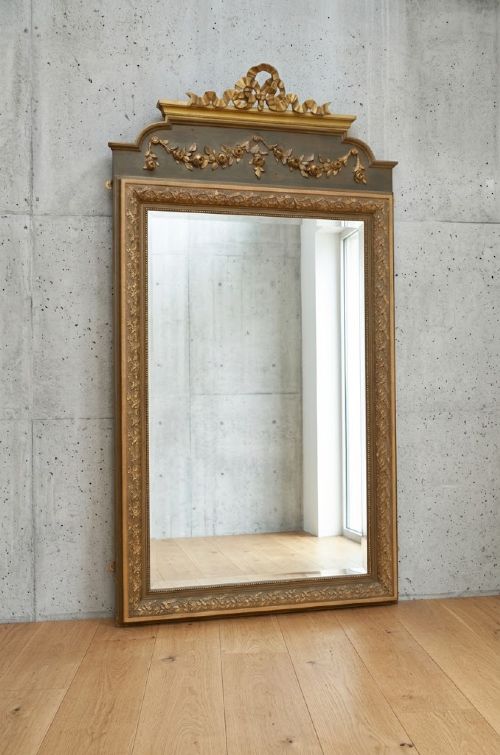
A crested gilt frame mirror brings reflective depth and carved ornamentation to a room, drawing the eye upwards with its elaborate crest.
Crested Gilt Frame Mirror
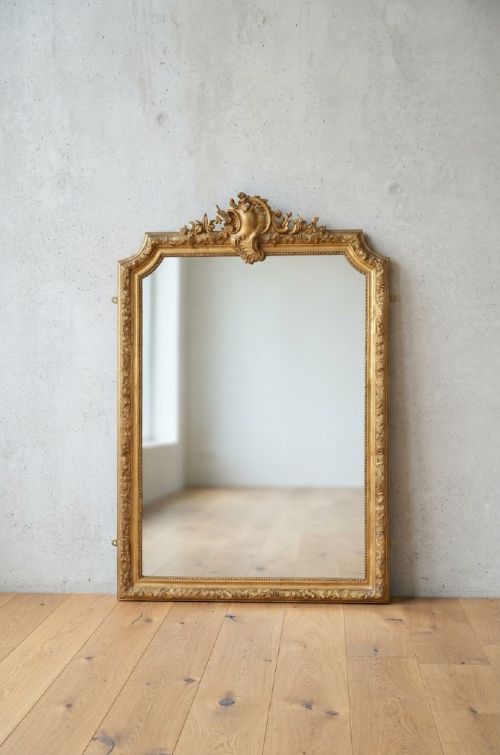
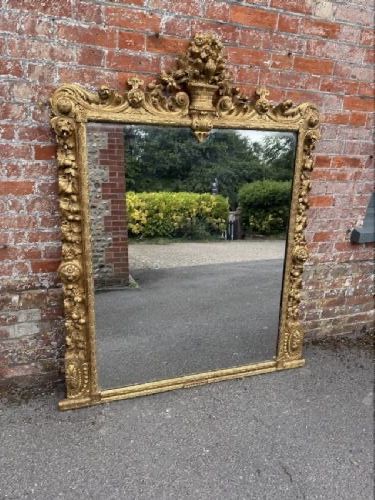
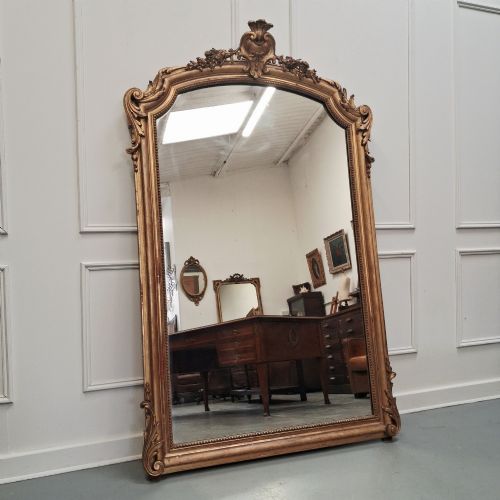
A crested gilt frame mirror is a decorative wall or overmantel glass piece defined by its ornate upper cresting and gilded surface. These items appear primarily in eighteenth, nineteenth, and early twentieth century periods, reflecting styles from Georgian fretwork to French Rococo and Louis XVI revivals.
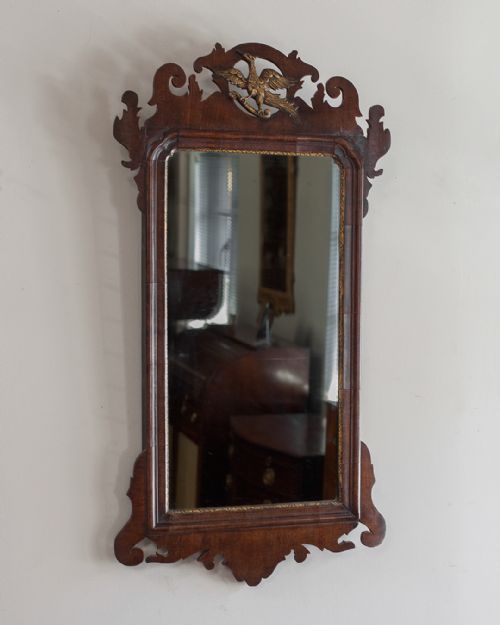
The selections available here span large architectural overmantel pieces designed for mantelpieces as well as smaller wall and pier mirrors. Common structural forms include carved wood, gesso, and mahogany frames featuring classical motifs, ribbon ties, or birds upon the top crest.
Origin variations range from English workshops influenced by Chippendale and William Kent designs to French chateau and salon pieces. Buyers encounter both rectangular wall formats and tall vertical mirrors intended to hang between windows or above fireplaces.
How they were made
Makers constructed these frames using timber such as mahogany, pine, or general wood as a foundation, applying layers of gesso to build up intricate surface relief. Artisans then carved details directly into the wood or moulded composition ornaments to form the elaborate crests.
Gilding was achieved by applying gold leaf or liquid gold over the prepared gesso and wood base, sometimes incorporating silver-gilt or parcel-gilt highlights. Mirror glass plates were historically silvered using mercury or modern chemical processes, fitted into the rebate behind secure wooden backs.
Several mirrors include perched birds upon their crests, echoing the traditional ho-ho bird motif popular in eighteenth-century decorative design.
What varies in quality
Quality in a crested gilt frame mirror rests upon the crispness of the hand-carved relief work and the depth of the gilding layers. Pieces with deeply undercut wooden carving and genuine gold leaf display superior craftsmanship compared to those reliant on heavy composition mouldings.
The preservation of the original mirror plate, whether mercury glass or early bevelled glass, significantly influences the character of the piece. Integrated cresting that remains structurally sound without extensive replacement parts indicates a better-preserved example.
The Crested Gilt Frame Mirror Glossary
- Giltwood
- Wood that has been coated with gold leaf or gold paint. This technique gives the frame a bright metallic finish.
- Gesso
- A plaster-like mixture applied to wood frames to create a smooth surface for carving and gilding. It allows for intricate decorative relief work.
- Overmantel mirror
- A large horizontal mirror designed specifically to hang above a fireplace mantel. These pieces often feature substantial crests to fill vertical wall space.
- Pier mirror
- A tall narrow mirror designed to fit on the wall space between two windows. They frequently incorporate detailed crests at the top.
- Parcel-gilt
- A decorative finish where only specific portions of an object are gilded while the rest shows dark wood or ebonisation. This creates a contrasting two-tone appearance.
Crested Gilt Frame Mirror: Frequently Asked Questions
Where should I hang an overmantel mirror?
These large mirrors are traditionally positioned centrally above a fireplace mantelpiece to reflect light and anchor the room's proportions.
Ensure the wall fixings are secured into solid masonry or studs to support the substantial weight of carved wood and glass.
How do I identify the period of a gilt mirror?
Dating relies on examining the framing style, such as Georgian fret-cut mahogany or Louis XVI neoclassical symmetry, alongside the construction of the wooden backboards.
Hand-carved details and the presence of early mirror plates with slight oxidation points toward nineteenth-century or earlier origins.
What is the difference between gesso and carved wood?
Carved wood involves shaping the timber frame directly with chisels and tools, whereas gesso is a plaster mixture built up and moulded into relief patterns.
Many fine frames combine both techniques, using a timber base with gesso applied to capture ultra-fine decorative details.
Can these mirrors be cleaned safely?
Dust the gilded frame gently with a soft, dry brush to prevent disturbing fragile leaf or composition ornament.
Clean the glass plate sparingly using a cloth dampened slightly with water or a mild glass cleaner, avoiding contact with the surrounding gilt edges.