


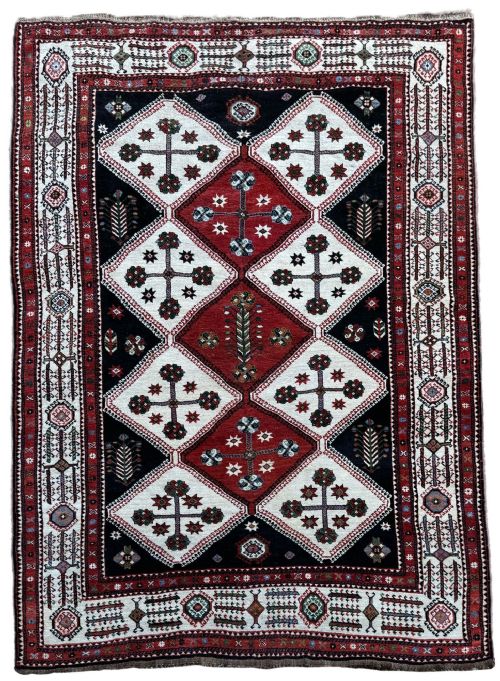
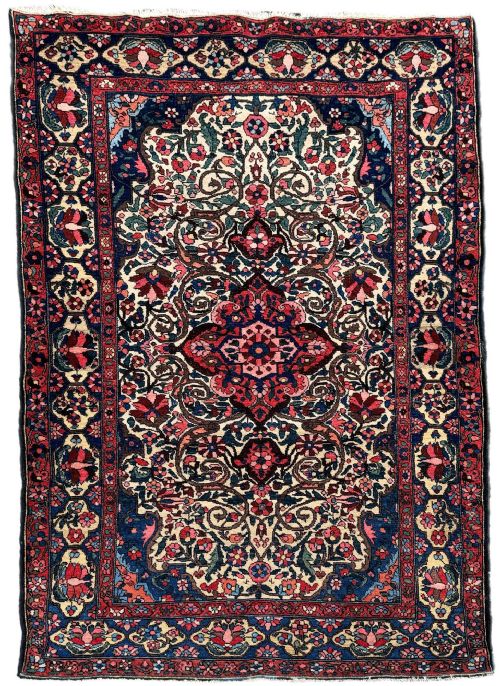
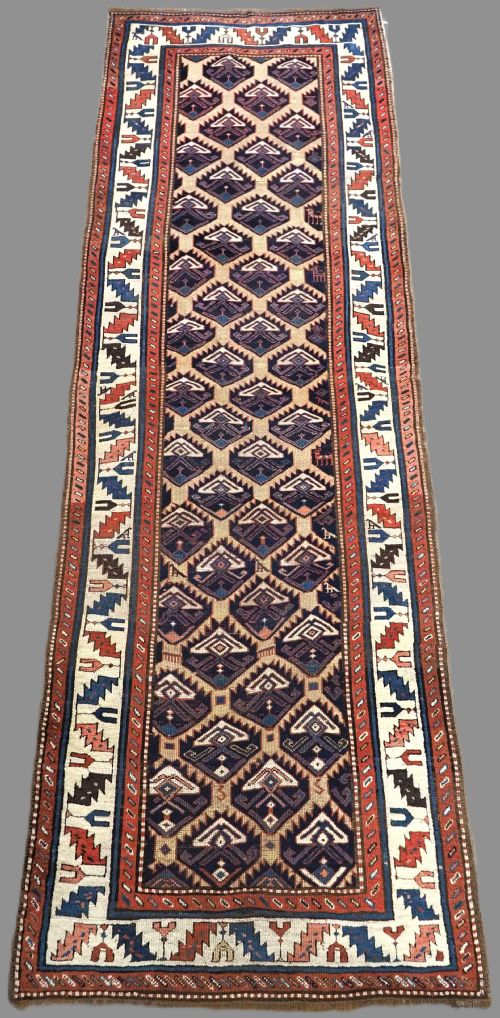
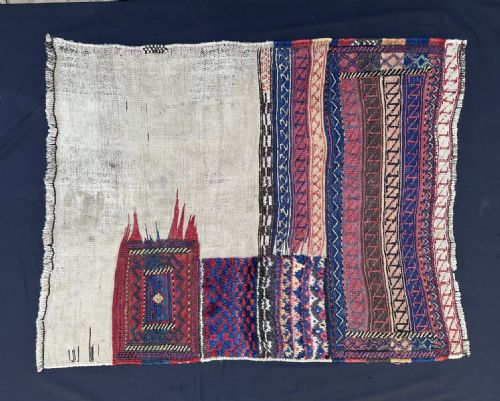

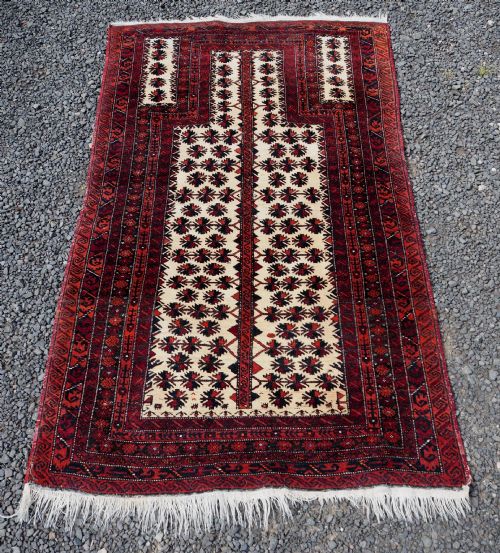
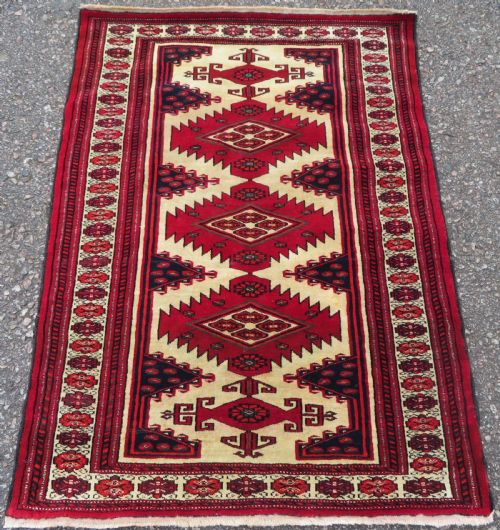

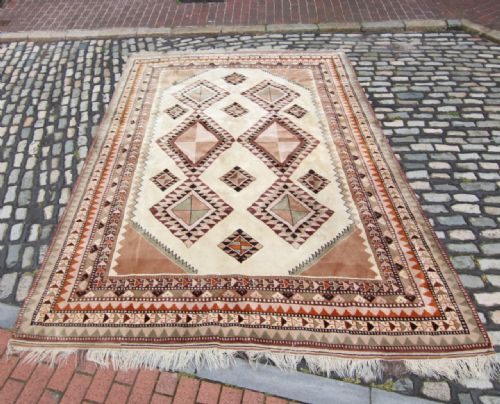
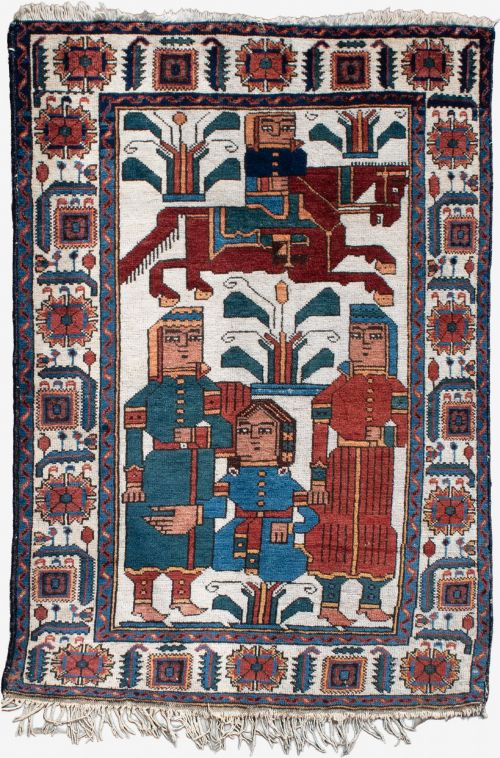
Cream Tribal Rug
A cream tribal rug brings the textured patterns of nomadic weaving into a room through pale wool and traditional motifs.
Cream Tribal Rug
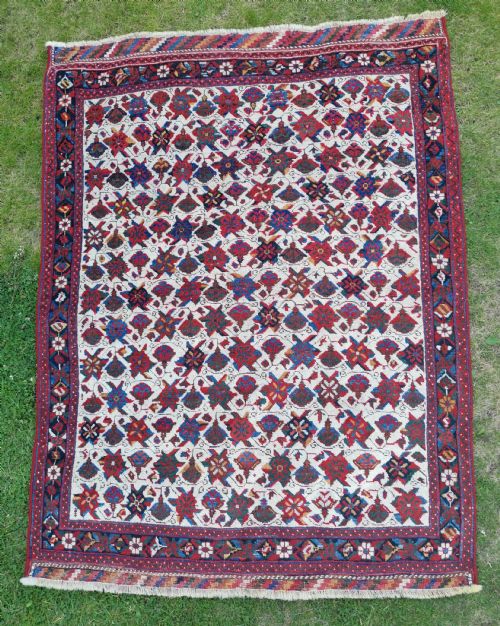
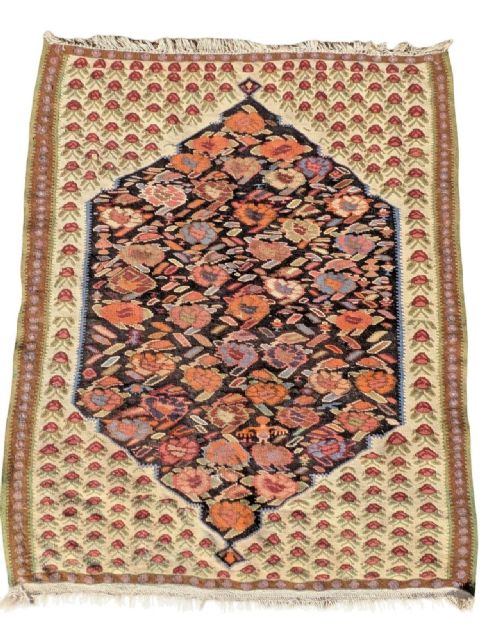
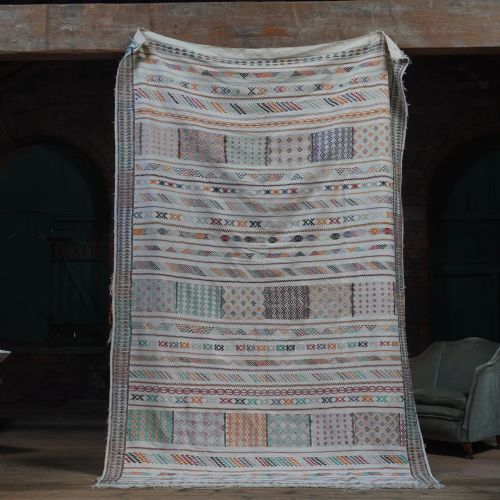
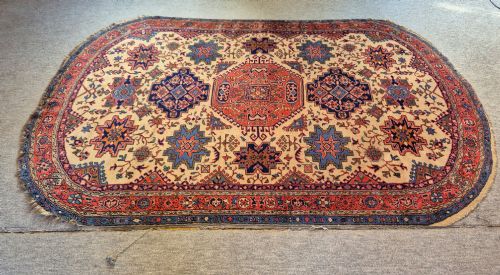
A cream tribal rug represents a diverse group of floor coverings and textiles woven by nomadic and village communities, primarily across Persia, Turkey, Central Asia and the Caucasus. When searching for a cream tribal rug, buyers encounter historic examples spanning the nineteenth and early twentieth centuries, rendered in pale ivory or neutral ground colours.
The selection includes specific regional forms such as Kurdish, Bakhtiar, Afshar, Baluchi and Lori carpets, alongside prayer rugs, runners and utilitarian bags like bread sofreh. These textiles display distinct tribal patterns, geometric medallions and lattice designs created by village weavers working within longstanding cultural traditions.
How they were made
The pieces rely on traditional hand-weaving techniques, utilising hand-spun wool, cotton foundations and occasionally silk or goat hair. Weavers incorporated natural dyes to colour the yarns, producing nuanced shades that settle softly against the ivory and cream grounds.
Construction methods vary from pile carpets to flat-woven kilims and embroidered textiles like Suzanis. Dense knotting and sturdy hand-woven structures allowed these rugs to withstand the demanding practical requirements of nomadic and village life.
The listings on this page include nineteenth-century and early twentieth-century examples woven with natural dyes, wool, cotton and silk.
What varies in quality
Quality rests on the integrity of the materials and the precision of the tribal design. Finer pieces display tightly packed knots, resilient hand-spun wool that retains its lanolin, and sophisticated handling of natural dyes that yield depth in the cream background.
The vitality of the tribal drawing and the originality of the composition distinguish exceptional examples from standard village production. A well-preserved pile and balanced proportions elevate the visual impact of the weaving.
The Cream Tribal Rug Glossary
- Sofreh
- A woven cloth utilised for serving bread or meals within nomadic households. These flat-woven pieces often feature striking geometric fields.
- Kilim
- A flat-woven textile produced without a pile. These rugs rely on tightly interlocked warp and weft threads to create sharp geometric patterns.
- Suzani
- An embroidered textile originating from Central Asia, typically worked in silk on a cotton or silk foundation. They display large floral and medallion motifs.
- Prayer rug
- A small rug featuring a mihrab or niche design used historically for daily prayers. The niche points toward Mecca during ritual use.
- Chuval
- A large storage bag created by Turkmen tribes. These functional textiles showcase intricate gul motifs and secondary guls across the face.
Cream Tribal Rug: Frequently Asked Questions
How do I clean an old tribal rug?
Historic wool and natural dye textiles require gentle maintenance to preserve their structure. Professional surface cleaning is recommended rather than immersion or harsh chemical treatments.
Regular light vacuuming without a rotating brush helps remove embedded dust without pulling at the hand-spun pile or delicate foundation threads.
Where were these tribal rugs made?
The pieces originate from village and nomadic communities across regions such as Persia, Anatolia, the Caucasus and Central Asia. Specific tribal confederations and provinces, including Fars, the Chahar Mahal, and Turkmenistan, produced distinct regional styles.
Weavers worked within local traditions, passing specific geometric motifs and knotting techniques down through generations of families.
Can I use these rugs on modern floors?
These historic textiles adapt well to contemporary interiors, adding texture and neutral warmth to wooden or stone flooring. Placing a suitable breathable underlay beneath the rug prevents slipping and reduces wear.
Rotating the rug periodically ensures even exposure to foot traffic and sunlight across the pale cream ground.
How do I tell different tribal designs apart?
Distinguishing regional types involves examining the specific palette, border arrangements and geometric vocabulary used in the weave. Turkmen pieces often feature repeated octagonal guls, while Persian tribal rugs like Afshar or Bakhtiar display distinct medallion systems and boteh motifs.
Structural characteristics such as edge finishing, knot count and wool texture provide further clues to the specific group or region of origin.