


Cream Tree of Life Rug
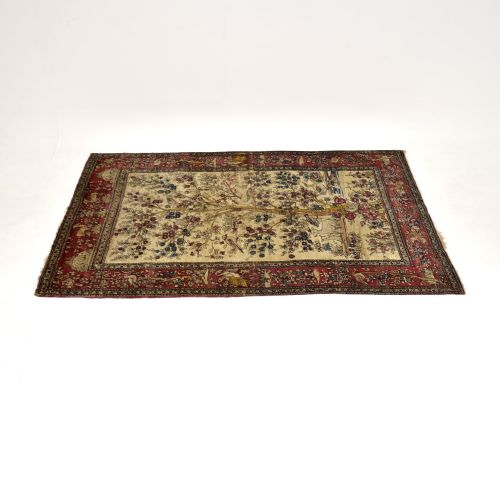
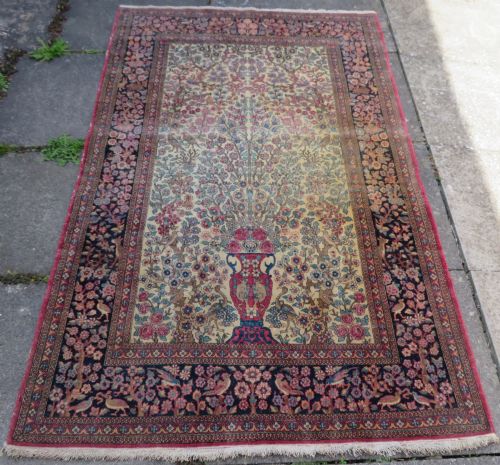
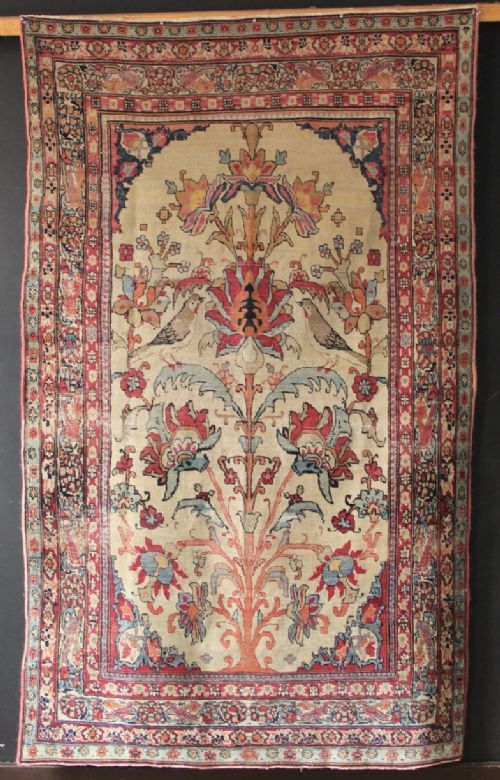
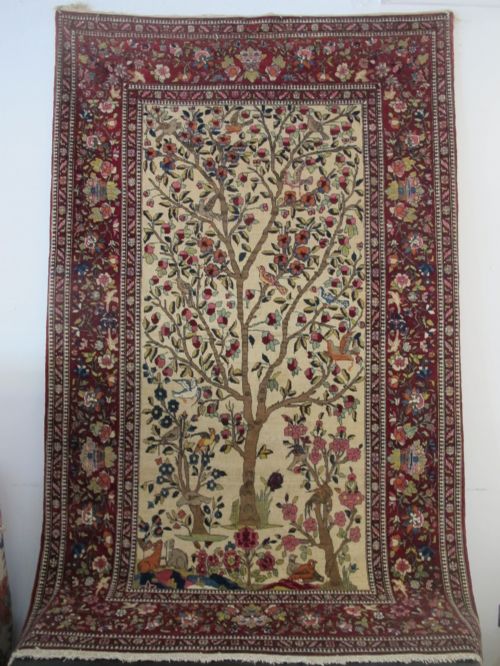
A cream tree of life rug brings centuries of Persian weaving tradition into a room, offering botanical imagery rooted in wool and cotton.
Cream Tree of Life Rug
When you search for a cream tree of life rug, you encounter hand-knotted floor coverings originating from Persia across the late nineteenth and early twentieth centuries. These pieces display the iconic vertical motif symbolising growth and eternity, rendered against light neutral grounds.
The selection includes workshop productions from urban centres alongside regional tribal pieces, showing how different weavers interpreted the central botanical theme. Most examples span the period from the eighteen sixties through to the nineteen twenties, combining traditional wool pile with cotton foundations.
Materials and construction methods
These carpets and rugs rely on wool for the surface pile, providing durability and softness underfoot, while cotton serves as the structural foundation for warp and weft threads. Hand-knotting techniques allow for intricate detailing within the central tree design and surrounding floral borders.
Weavers in different Persian provinces utilised locally sourced natural dyes and materials to achieve the distinct cream backgrounds and contrasting motifs recorded in nineteenth and early twentieth century production.
Current listings feature Persian rugs and carpets produced between eighteen sixty and nineteen twenty, utilising wool and cotton materials.
Distinguishing quality in weaving
Knot density and precision of line separate urban workshop masterworks from simpler tribal interpretations, dictating the crispness of the botanical forms. The finesse of the wool pile and the subtlety of the colour graduation across the cream field further distinguish finer examples.
The architectural balance of the central tree motif and the complexity of the accompanying floral or vase designs indicate the level of artistry invested by the original maker.
Ahmadi Isfahan·Kirman Lavar
The Cream Tree of Life Rug Glossary
- Tree of life
- A central symbolic motif depicting a growing tree with branches, leaves, and flowers, representing eternity and the connection between earth and heaven.
- Warp
- The vertical foundation threads stretched tightly on the loom before knotting begins, which form the fringe at either end of the rug.
- Weft
- The horizontal threads passed through the warps after each row of knots to compact and secure the pile in place.
- Pile
- The vertical cut or loop ends of the knotting thread that form the usable, soft surface of the rug.
- Prayer rug
- A specialised format featuring a mihrab or niche design at one end, traditionally used to indicate direction during daily devotions.
Cream Tree of Life Rug: Frequently Asked Questions
How do I clean an antique rug?
Surface dust should be gently removed using a suction-only vacuum without a rotating brush. Professional specialist cleaning is recommended for deeper maintenance to protect the historic wool fibres.
Water and harsh chemical detergents must be avoided, as they can damage natural dyes and weaken the cotton foundation over time.
Where should I place these rugs?
These pieces suit low-traffic living rooms, studies, or bedrooms where the wool pile receives minimal heavy friction. Placing them away from direct, strong sunlight preserves the integrity of the natural dyes.
A quality underlay helps prevent slipping and reduces wear between the floorboards and the cotton foundation.
How are different regional styles identified?
Regional attributions depend on specific structural characteristics, such as knot counts, palette choices, and border arrangements. Urban centres like Isfahan or Tabriz often display precise curvilinear floral motifs, whereas tribal pieces show bolder geometric interpretations.
Examining the selvedges and fringe construction provides additional clues regarding the specific Persian province of origin.
What does the tree motif signify?
The tree of life represents ancient symbolism concerning creation, endurance, and the afterlife. In Persian weaving, this botanical pillar frequently incorporates flowering branches, birds, or vases.
Weavers adapted this enduring theme across generations, tailoring the scale and surrounding foliage to suit both tribal traditions and urban workshop aesthetics.