






Cream Painted Sign
When you seek a cream painted sign, you are looking for functional display lettering or trade markers brought to life with a pale ground.
Cream Painted Sign
A cream painted sign represents functional trade, advertising or display markers finished in pale neutral tones. These pieces emerge from periods spanning the late nineteenth century through the mid-twentieth century.
The versions most commonly met on this page include large painted pine display boards and mid-century auctioneers or commercial notices. They serve as direct records of commerce, industry and public gathering spaces.
How They Were Made
Makers utilised timber such as pine as the primary substrate for large display boards, applying successive layers of oil-based cream paint to form a durable background. Lettering and details were then applied by hand using contrasting pigments.
Metal panels also appear, shaped and coated with protective enamel or flat paint layers to withstand utilitarian use. The combination of simple wooden supports and hand-applied signwriting defines their robust construction.
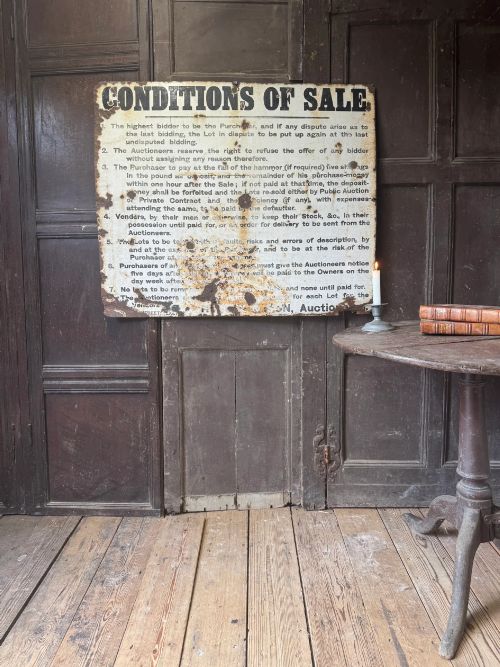
Some signs spent decades bearing the brisk rules of West Country auctioneers before retiring quietly to the wall.
What Varies in Quality
The standard of a cream painted sign rests upon the precision of the hand-lettering and the character of the aged surface. Examples displaying crisp typography and balanced proportions command greater visual authority.
Significance is also shaped by the integrity of the original painted surface and the honesty of the wear accumulated over decades of public use.
The Cream Painted Sign Glossary
- Enamel
- A vitreous substance fused to a metal substrate through high-heat firing, providing a smooth, glossy and highly durable surface for exterior or trade signage.
- Gold leaf
- Extremely thin sheets of beaten gold applied to painted lettering or decorative elements to create a brilliant, reflective metallic accent.
- Pine
- A common softwood used historically for large structural signboards and displays due to its availability and suitability for taking flat paint layers.
- Paint
- A liquid pigment mixture applied to wood or metal surfaces to provide colour, protection and a ground for hand-lettered text.
Cream Painted Sign: Frequently Asked Questions
What is a cream painted sign?
A cream painted sign is a piece of commercial or trade display woodwork or metalwork featuring a pale neutral painted ground. These objects were originally produced for public houses, auctions, or general trade use.
Over time, they have transitioned from purely utilitarian items into decorative wall elements valued for their typography and history.
How were these signs used?
These boards and panels were mounted in public spaces, shops, and auction rooms to convey conditions of sale, business names, or directional information. Their bold lettering ensured readability from a distance.
In modern settings, they function as wall art that introduces industrial or folk character to an interior.
How do I date a sign?
Dating relies on the materials used, the style of the lettering, and the construction methods of the backing board or metal panel. Earlier nineteenth-century examples often display hand-mixed pigments and traditional signwriting techniques.
Mid-century pieces typically feature different typeface conventions and standardised board preparation methods.
How do I care for my sign?
Care involves keeping the piece in a stable environment away from excessive moisture and direct sunlight to protect the aged paint layers. Gentle dusting with a dry cloth preserves the fragile surface without disturbing the original finish.
Avoid using liquid cleaners or chemical solvents that could lift the historic paint or signwriting.