

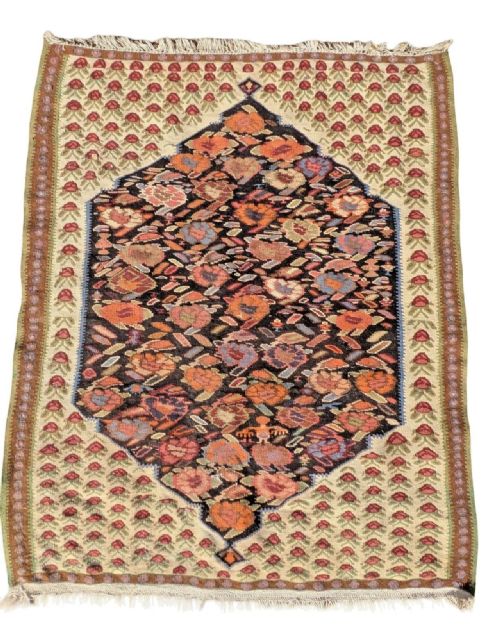
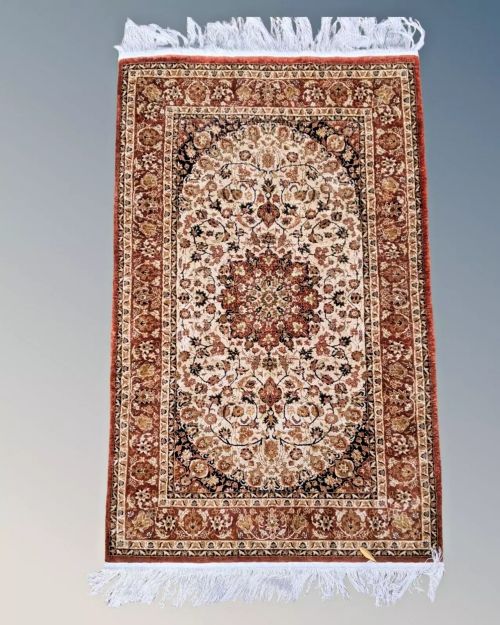
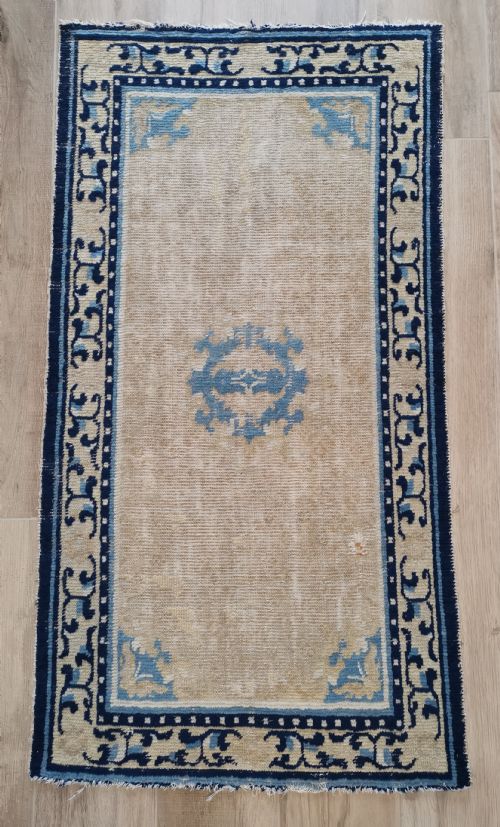
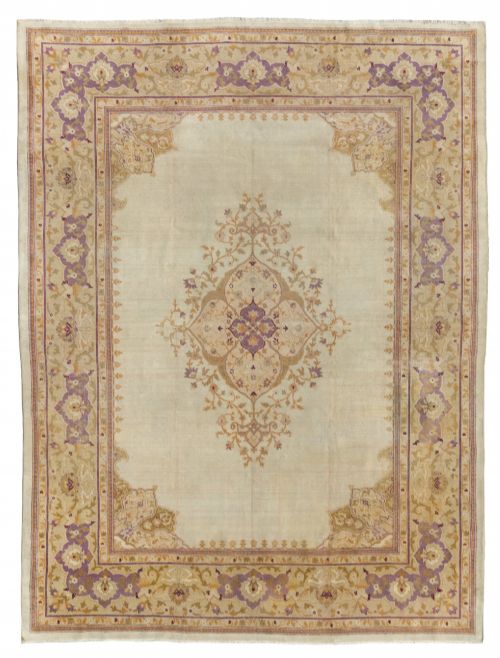


Cream Medallion Rug
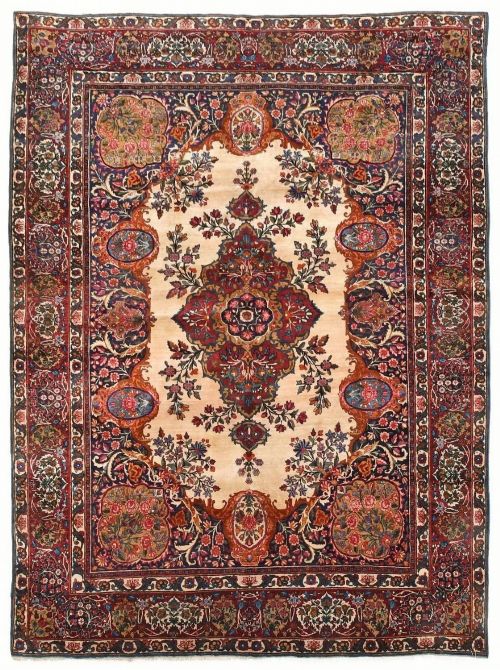
A cream medallion rug brings a grounded centre to a room, offering ivory grounds and central motifs shaped by Persian and Ottoman traditions.
Cream Medallion Rug
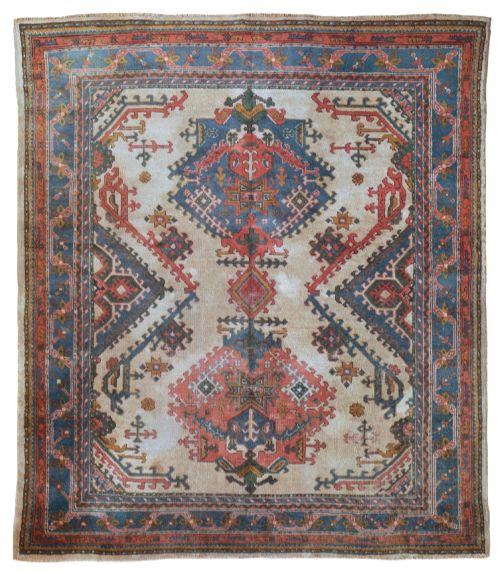
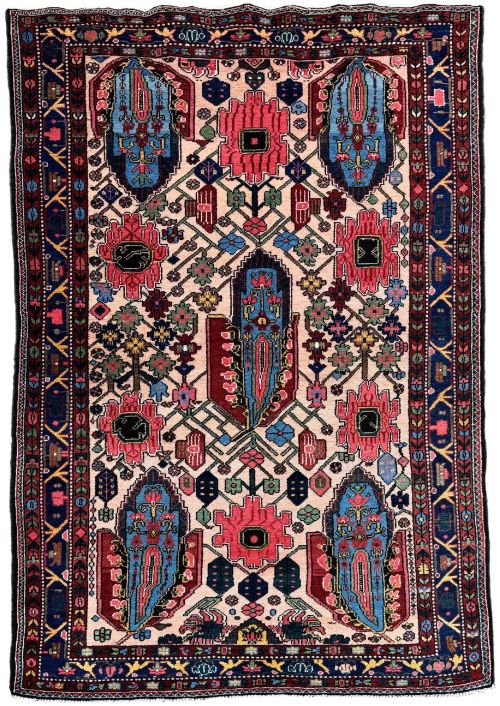
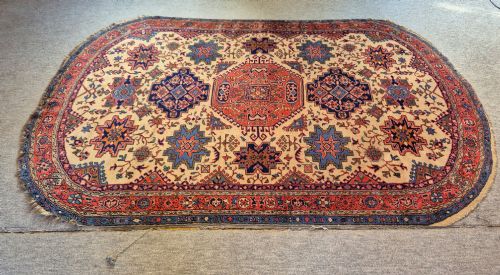
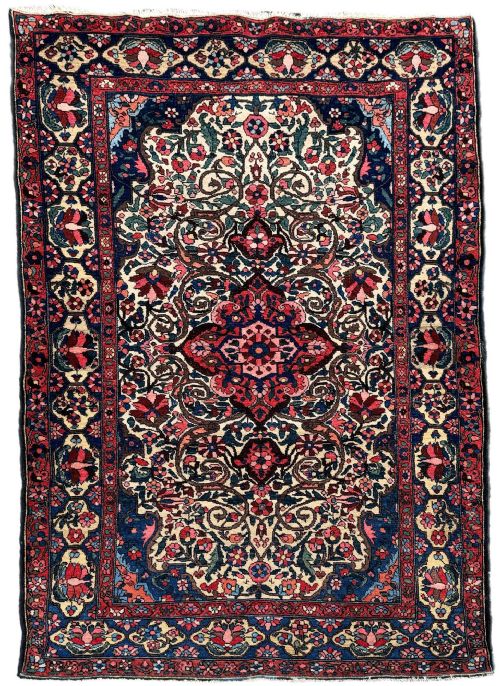
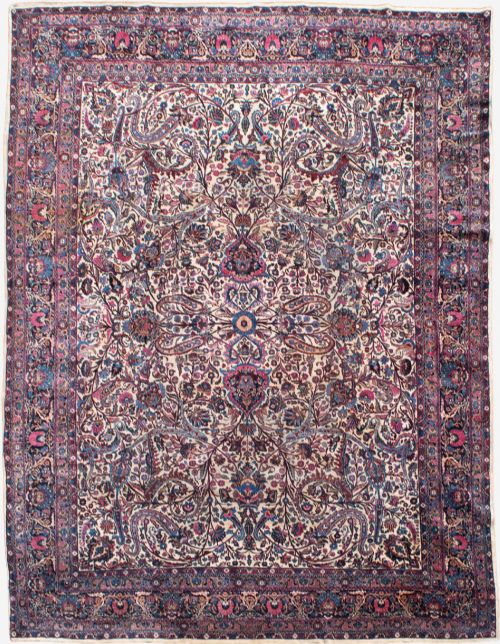
A cream medallion rug centres the floor with a distinct central motif set against an ivory or light ground. These pieces stem from Persian, Ottoman Turkish, and European weaving centres, spanning the nineteenth and early twentieth centuries.
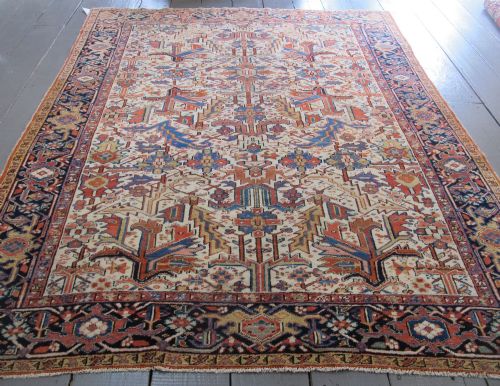
The inventory on this page ranges from room-size Kirman and Heriz carpets to smaller tribal rugs from Bakhtiar, Malayer, and Kurdish weavers. Village kilims and silk pieces from Kashmir also appear among the selections.
Buyers meet varied regional forms, including geometric Caucasian patterns, curvilinear Tabriz designs, and open field Gabbeh pieces. Each type carries the distinct palette and knotting style of its specific origin.
How They Were Made
Weavers utilised natural wool, cotton foundations, and occasional silk highlights to construct these textiles by hand on vertical or horizontal looms. Pile carpets employ hand-tied knots, while flatwoven kilims rely on interlocking weft techniques.
Dyers sourced natural materials to colour the wool, producing soft pastel palettes, ivory grounds, and deep indigo contrasts that mellow gracefully over decades.
Cream Medallion Rug Retail Price Guide 2026
Typical asking prices for cream medallion rug among the pieces listed under this phrase on Sellingantiques today, from the lower quarter to the upper quarter. They describe what is for sale here now, not the wider market.
Some nineteenth-century Malayer weavers hid tiny embroidered butterflies within the ivory ground of their carpets.
What Varies in Quality
Knot density and structural tightness dictate the crispness of the medallion and the durability of the pile under foot. Finer city carpets maintain intricate curves, whereas rustic village rugs display bolder, more geometric interpretations.
The choice of wool and the purity of the dye determine how richly the cream ground holds its tone and how supple the foundation remains.
Benlian·Mohtasham Kashan
The Cream Medallion Rug Glossary
- Medallion
- The central ornamental design set into the middle of the carpet field. This focal motif often mirrors the spandrels in the corners.
- Ground
- The main background colour of the rug field upon which the medallion and secondary patterns sit. Ivory and cream grounds dominate this selection.
- Kilim
- A flatwoven carpet produced without pile by tightly interweaving warp and weft strands. These pieces offer a lighter weight and reversible design.
- Warp
- The vertical foundation threads stretched lengthwise on the loom before knotting begins. Cotton and wool serve as the primary materials for these structural elements.
- Pile
- The dense surface layer of upright yarn ends formed by individual knots. The height and density of this layer affect the texture and warmth of the textile.
Cream Medallion Rug: Frequently Asked Questions
How do I clean a vintage rug?
Gentle surface brushing and professional specialist washing preserve the natural wool fibres and protect the delicate dyes from running.
Avoid harsh chemical treatments or domestic carpet cleaners that strip the lanolin from the wool.
Where were these rugs made?
The pieces originate primarily from Persian weaving regions such as Tabriz, Heriz, Kirman, and Malayer, alongside Turkish and Caucasian centres.
Each workshop or village applied distinct regional patterns and colour combinations to their looms.
Can I place furniture on them?
Medium and heavy room-size carpets handle furniture weight comfortably, provided the placement distributes pressure evenly across the pile.
Using a quality underlay prevents slipping and reduces friction between the foundation and the floorboards.
How do I date a carpet?
Stylistic shifts, dye chemistry, and structural construction help place pieces within nineteenth and early twentieth-century periods.
Comparing knot types and regional motifs against documented examples narrows the likely decade of manufacture.