

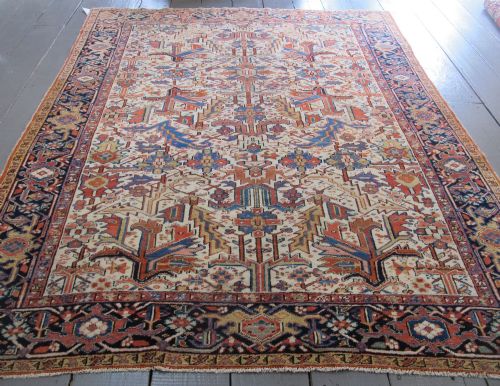


Cream Ground Carpet
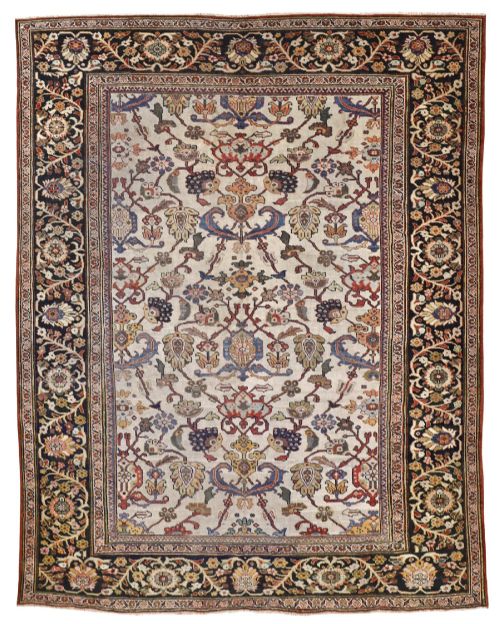
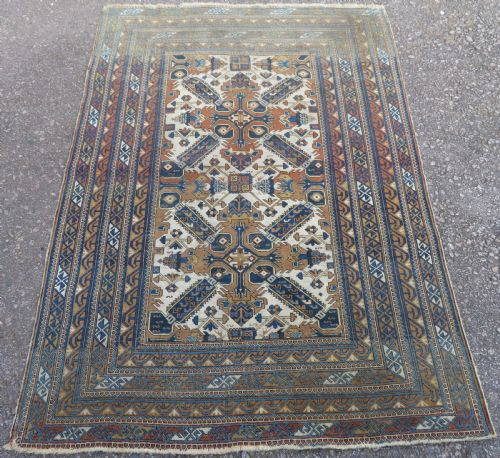
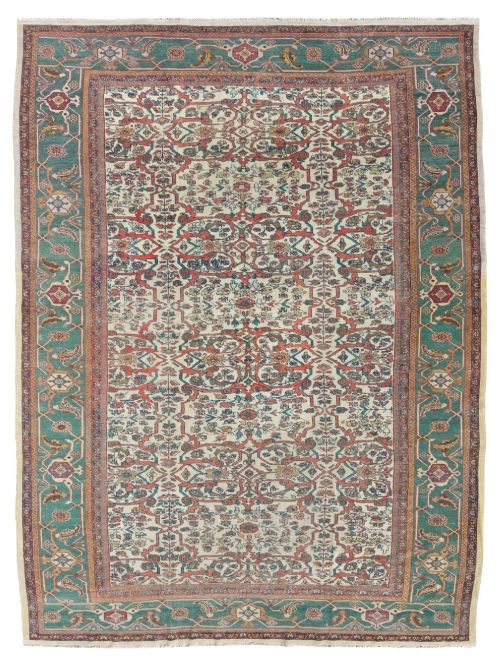
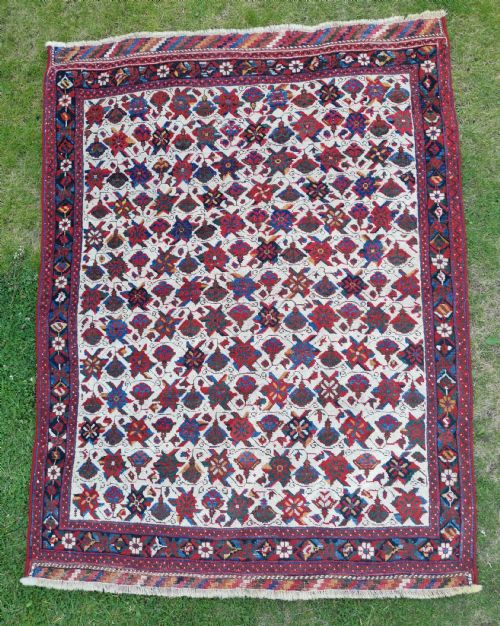
Cream ground carpet designs provide a light, luminous base for intricate Persian and Anatolian village and town weaving.
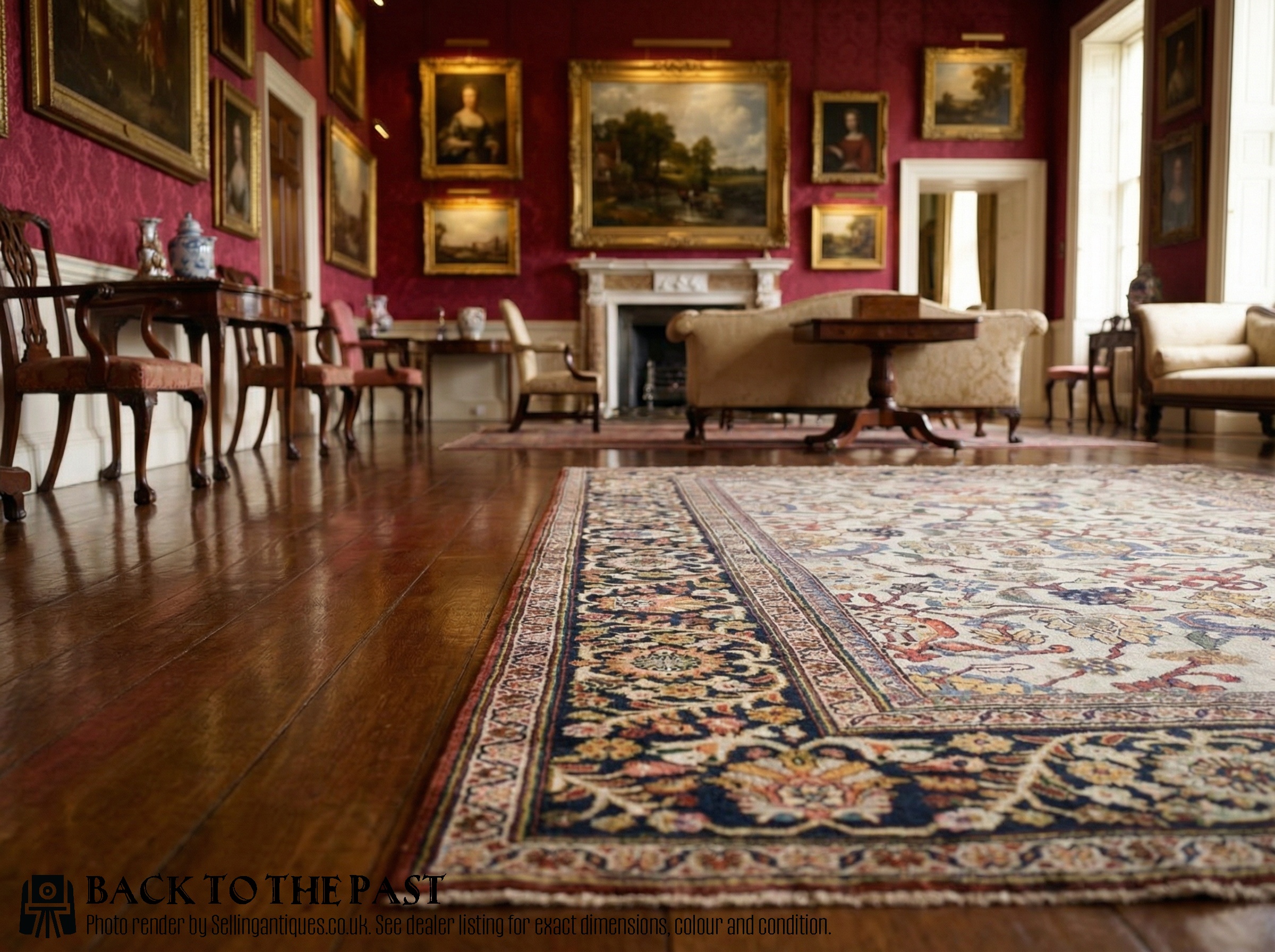
Cream Ground Carpet
A cream ground carpet uses a pale ivory, cream, or light neutral field to set off bolder medallions, floral lattices, and tribal motifs in the surrounding borders and central fields. When you search for a cream ground carpet, you encounter woven pieces originating from Persian and Anatolian workshops and tribal regions, dating from the nineteenth century through the early twentieth century.
The format ranges from smaller scatter rugs and prayer rugs up to large country house carpets. Pieces bearing these pale grounds often display regional designs such as Heriz, Mahal, Sultanabad, Afshar, Shirvan, and Ushak patterns.
Village and tribal weavers from districts like Malayer, Kurdish territories, and Dagestan also produced these lighter field compositions. They function practically to brighten rooms while anchoring traditional furniture schemes.
Materials and construction
The structure relies upon hand-spun wool pile knotted onto sturdy cotton foundations. Weavers employed natural dye stuffs to achieve the soft colour palettes and contrast against the pale ivory fields.
Pile density and knot counts vary according to origin, with workshop carpets from Sultanabad or Ziegler presenting broader, more expansive designs, whilst Caucasian and Afshar examples utilise tighter geometric precision.
Cream Ground Carpet Retail Price Guide 2026
Typical asking prices for cream ground carpet among the pieces listed under this phrase on Sellingantiques today, from the lower quarter to the upper quarter. They describe what is for sale here now, not the wider market.
Certain nineteenth-century Malayer rugs introduce unexpected butterflies fluttering across the cream ground alongside traditional floral sprays.
Assessing quality
Quality rests in the handling of the wool, the balance of the composition, and the retention of soft colour subtlety across the light ground. Finer examples display crisp drawing within the floral lattice or medallion without muddy transitions.
The integrity of the foundation and evenness of wear dictate the structural standard. Strong selvedges and stable pile preservation distinguish superior survivals from heavily restored pieces.
The Cream Ground Carpet Glossary
- Medallion
- A central ornamental motif placed in the middle of the carpet field. It often mirrors the corner spandrels in design and colour.
- Prayer rug
- A small rug featuring a mihrab or niche design at one end, traditionally used for individual prayer. The format appears frequently in Anatolian and Caucasian weaving.
- Boteh
- A stylised almond or pear-shaped motif representing a floral shoot or cypress tree. This pattern recurs in Kurdish and Persian village runners.
- Heriz
- A style of carpet originating from north-west Persia known for bold geometric medallions and robust structural wool. They typically handle heavy foot traffic well.
- Sultandabad
- A nineteenth-century Persian carpet type characterised by large-scale, open floral patterns adapted for Western export tastes. They frequently employ soft neutral grounds.
Cream Ground Carpet: Frequently Asked Questions
How do I clean a cream ground carpet?
Professional specialist rug cleaning is essential for antique wool and cotton textiles. Regular gentle vacuuming without a beater bar prevents dust accumulation in the pile.
Avoid household detergents and moisture treatments, which can cause dye bleed into the pale ivory ground. Specialist cleaning preserves the natural lanolin in the wool.
Where were these carpets made?
These carpets originate primarily from Persian weaving centres, Anatolian towns, and Caucasian workshops. Regions such as Heriz, Mahal, Ushak, and Shirvan developed distinct local styles.
Nomadic and village groups, including Afshar and Kurdish weavers, also produced pieces with pale neutral grounds. Each district employed specific geometric or floral vocabulary.
How do I date an antique carpet?
Dating relies upon wool quality, dye analysis, structural characteristics, and design motifs typical of specific decades. Nineteenth-century pieces often show vegetable-derived palettes and hand-spun irregularities.
Later pieces from the early twentieth century may incorporate transitional synthetic elements or different knotting tensions. Comparing known regional exemplars helps narrow the period.
Can I use these rugs in high traffic areas?
Sturdy village and workshop carpets constructed with dense wool pile handle moderate domestic traffic effectively. Placing a suitable underlay beneath the rug prevents slipping and reduces fibre friction.
Lighter ivory grounds show dirt more readily than dark fields, making regular maintenance advisable in busy hallways. Proper placement extends the working life of the textile.