


Cream Gilt Decorative Mirror
A cream gilt decorative mirror brings warmth and light into a room through pale painted surfaces paired with reflective metallic leaf.
Cream Gilt Decorative Mirror
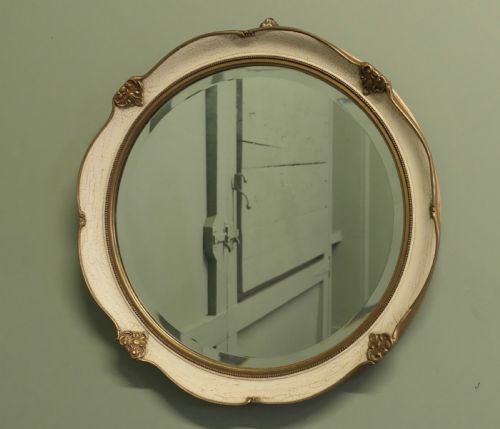
A cream gilt decorative mirror combines painted cream or off-white surfaces with gilt highlights, offering a softer alternative to solid metallic frames. These pieces span the nineteenth century through the early twentieth century, drawing on French, Italian, and English design traditions.
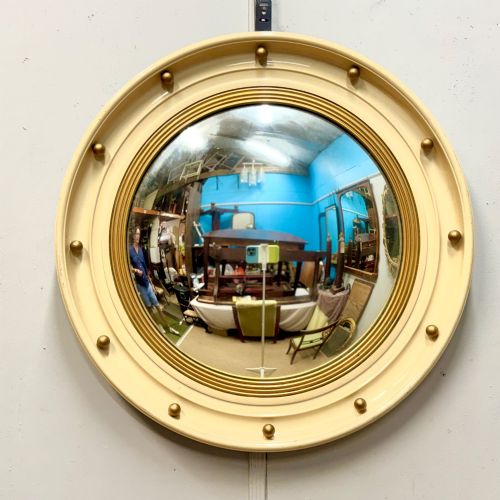
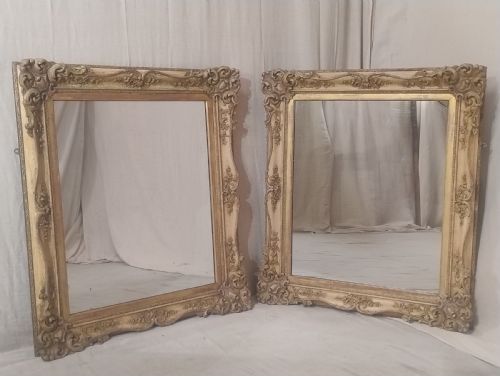
The selection on this page centres heavily on nineteenth-century French examples, alongside Italian rococo styles and later French art deco pieces. Formats range from large trumeau and overmantle mirrors to smaller pier glasses, round convex butler mirrors, and paired wall hangings.
Buyers choose these mirrors to anchor a mantelpiece, fill a hallway, or hang above a console table. The pale painted ground softens the visual weight of the frame while the gilding catches daylight and candle or lamp illumination.
How they were made
Makers built the structural frames from carved wood, applying layers of gesso to create smooth surfaces and intricate relief details such as flower mouldings, cherubs, garlands, and doves. Gold leaf or gilt was then laid over portions of the frame, often contrasting with painted cream, white, or red ground colours.
Glass production of the period produced flat, convex, or silvered border plates set securely into the heavy timber and gesso carcasses. Many frames retain their original paint and gilding layers, showing the combined handiwork of woodcarvers, gilders, and painters.
Materials recorded across these listings include carved wood, gesso, gold leaf, giltwood, and painted surfaces.
What varies in quality
Quality rests in the depth of the wood carving and the crispness of the gesso mouldings rather than simple surface decoration. Finer pieces display hand-carved relief work with distinct botanical or figural details, whereas simpler examples rely more heavily on moulded composition ornament.
The integrity of the original surface finish separates standard items from exceptional ones. Retaining undisturbed layers of original cream paint alongside genuine gold leaf or gilt creates a superior visual harmony as the materials age.
The Cream Gilt Decorative Mirror Glossary
- Trumeau
- A decorative wall mirror incorporating a painted panel or artwork directly above the glass plate. These tall pieces were designed to sit between windows or above mantelpieces in period drawing rooms.
- Gesso
- A plaster-like mixture applied to wooden frame substrates to provide a smooth base for carving and gilding. Artisans built up this material to form intricate raised motifs.
- Giltwood
- Timber that has been coated with thin sheets of gold leaf or metallic powder. This technique provides a durable metallic sheen across the carved frame elements.
- Pier Glass
- A tall mirror designed specifically to hang on the section of wall between two windows. They often sat directly above matching console tables.
- Convex Glass
- A curved glass plate that projects outward to capture a wide panoramic reflection of the interior space. It is frequently set into round frames like butler mirrors.
Cream Gilt Decorative Mirror: Frequently Asked Questions
Where should I hang a trumeau mirror?
A trumeau mirror works best mounted centrally above a fireplace mantel or above a low sideboard in a dining room. Their vertical proportions suit rooms with high ceilings where they draw the eye upward.
Ensure the wall fixings are substantial enough to support the considerable weight of the carved wood and gesso frame.
What is an overmantle mirror?
An overmantle mirror is a wide horizontal glass designed specifically to sit directly on the wall above a fireplace mantel. They reflect light across the room and balance the visual weight of the hearth below.
Many examples from the nineteenth century feature decorative crests or arched tops that soften the rectangular geometry.
How do I identify a French rococo style mirror?
French rococo style mirrors feature asymmetrical scrollwork, C-scrolls, and naturalistic floral motifs carved into the wood and gesso. The frames often use curved, organic outlines rather than strict symmetrical geometry.
Cream paint combined with gilt highlights accentuates the fluid, decorative relief work characteristic of this aesthetic.