




Cream Floral Tapestry
Cream floral tapestry pieces bring warmth and botanical motifs into a room, taking the form of woven wall hangings, cushions, rugs and upholstered seating.
Cream Floral Tapestry
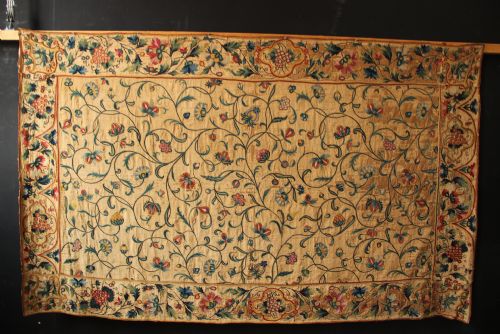
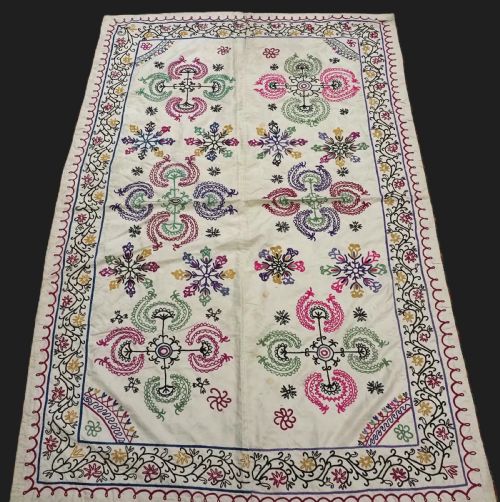
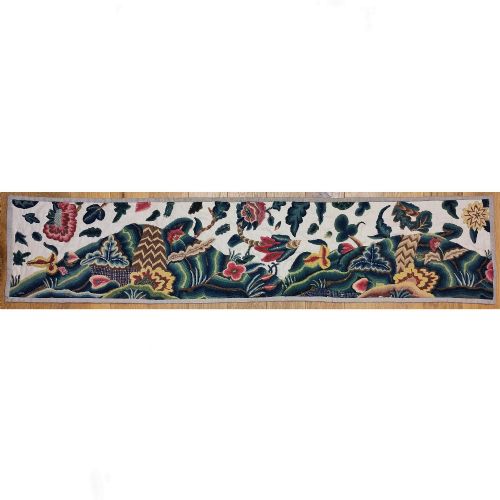
Cream floral tapestry encompasses a broad range of antique textiles, needleworks, rugs and upholstered furnishings that feature botanical designs upon light grounds. When searching this phrase, a buyer encounters everything from French Aubusson cushions and rugs to Central Asian silk suzanis and English crewelwork panels.
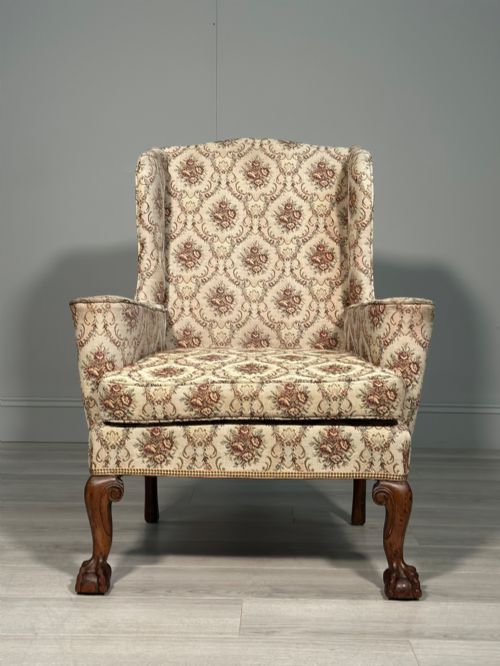
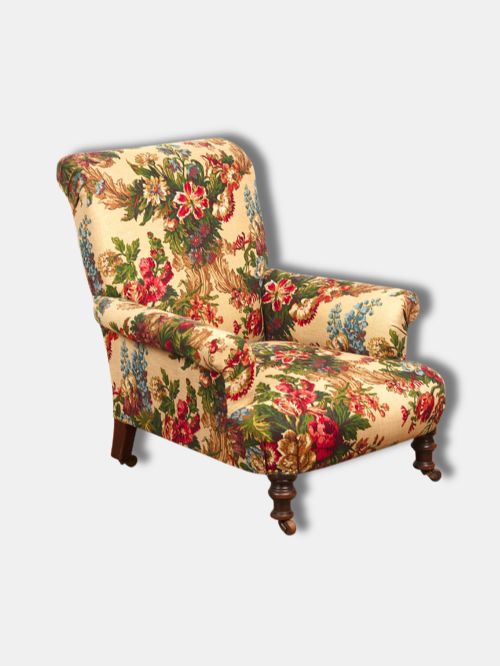
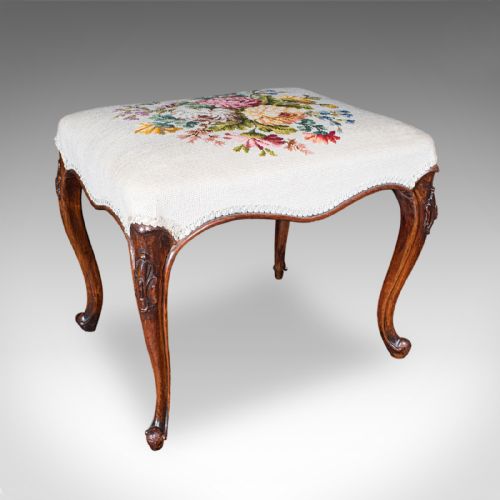
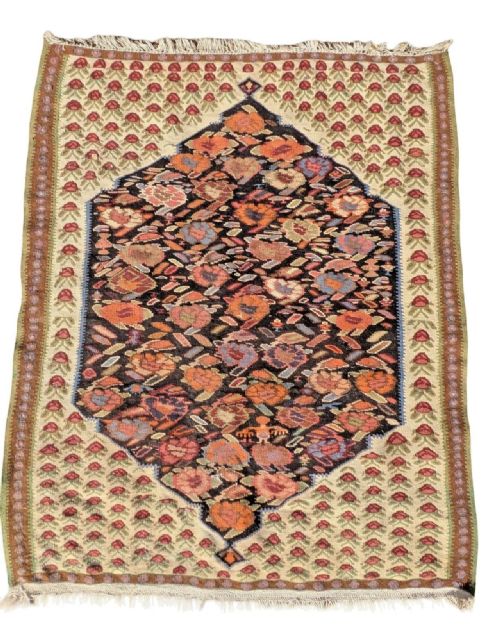
The pieces appearing on this page span several centuries, reaching from the seventeenth century through the Victorian era up to the mid-twentieth century. French, English, Portuguese, Italian and Central Asian origins dominate the selection, appearing on wall hangings, armchairs, footstools and carpets.
Seating upholstered in floral needlework and woven wall hangings represent the most common forms met here. These items bring historical texture into domestic spaces through varied textile techniques applied to floral subjects.
Materials and construction
Textiles in this category rely primarily on natural fibres such as wool, silk, cotton and linen. Makers embroidered silk onto silk grounds in Central Asian suzanis, whilst European works combined wool and linen in crewelwork and needlepoint.
Support structures for upholstered pieces involve hardwoods such as mahogany and walnut, alongside painted or ebonized wooden frames. Brass components occasionally appear on furniture elements supporting the textiles.
Weaving, needlepoint and embroidery techniques define the construction. Workers stitched wool or silk yarns onto canvas, linen or cotton foundations to build floral patterns by hand.
Cream Floral Tapestry Retail Price Guide 2026
Typical asking prices for cream floral tapestry among the pieces listed under this phrase on Sellingantiques today, from the lower quarter to the upper quarter. They describe what is for sale here now, not the wider market.
Listings here feature wool, silk, cotton and linen across items originating from the seventeenth century to the twentieth century.
Assessing quality
Quality in these textiles rests upon the fineness of the stitchwork and the complexity of the design. Dense needlework and finely worked silk embroidery demonstrate greater artisan skill than looser, simpler executions.
The condition of the natural fibres and the integrity of any supporting wooden frame dictate the grade of an item. Intact pile on rugs, secure upholstery and well-preserved silk or wool yarns elevate a piece above worn examples.
Strahan And Co·Gillows
The Cream Floral Tapestry Glossary
- Suzani
- An embroidered tribal textile from Central Asia, typically featuring floral and botanical motifs worked in silk on a cotton or linen ground. These large panels were traditionally made as part of a bride's dowry.
- Crewelwork
- A type of embroidery utilising wool yarn on a linen or cotton foundation, often seen in English wall hangings and panels. It allows for varied textured stitches to build up floral patterns.
- Aubusson
- A style of tapestry and flat-woven rug originating from the French town of the same name. They frequently display classical floral and architectural compositions.
- Kilim
- A flat-woven carpet or rug produced in regions including the Balkans and Central Asia. They lack a pile, relying on the interlacing of warp and weft threads to form geometric and floral patterns.
- Needlepoint
- Embroidery stitched onto a stiff open-weave canvas ground, covering the entire foundation to create a dense pictorial surface. It frequently appears on nineteenth-century chair seats and footstools.
Cream Floral Tapestry: Frequently Asked Questions
How do I clean an antique tapestry?
Antique textiles require specialist care rather than standard domestic cleaning methods. Gentle surface dusting is usually the limit of home maintenance.
Professional textile conservators should handle any deep cleaning to protect fragile silk and wool fibres from damage.
Where were suzanis made?
Suzanis originate primarily from Central Asian regions including Uzbekistan, specifically cities such as Bokhara and Samarkand. Artisans there stitched these panels by hand.
Families created them as decorative household textiles and ceremonial items for weddings.
Can I use these rugs on the floor?
Many flat-woven kilims and rugs function well on floors with appropriate underlay to prevent sliding. Low-traffic areas suit antique textiles best.
Fragile silk pieces or delicate needleworks require wall mounting or placement away from heavy foot traffic to preserve the fibres.
How do I date a piece?
Dating relies on stylistic clues, construction methods and the materials used in both the textile and any accompanying wooden frame. Victorian, Georgian and earlier periods show distinct structural traits.
Comparing stitch density and dye types against known examples helps narrow down the decade of production.