





Cream Floral Ottoman
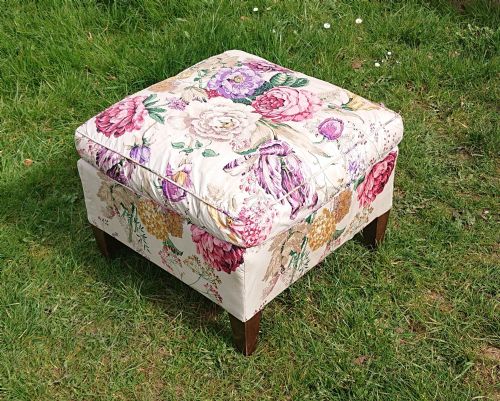
These cream floral ottoman selections bring together period seating and antique textiles, offering tactile warmth and historic character for a traditional interior.
Cream Floral Ottoman
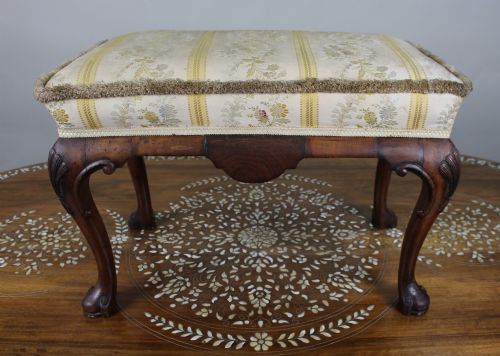
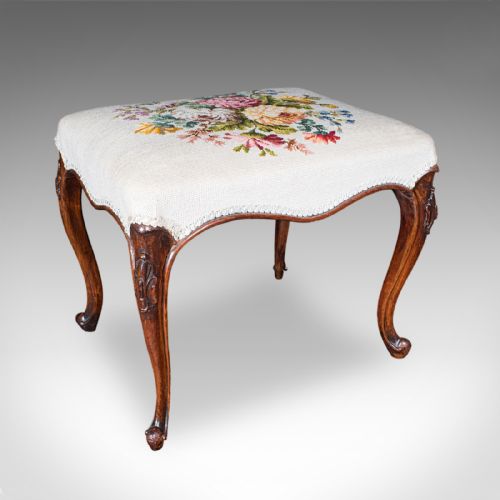
When buyers search for a cream floral ottoman, they typically encounter a diverse grouping of low seating and historic textiles spanning from the eighteenth century to the Edwardian era. The pieces range from walnut footstools upholstered in needlepoint to large woven carpets originating from Anatolia and Ushak.
Early Victorian footstools and Queen Anne style seating form a prominent part of the current selection, often featuring cushion tops or painted frames.Alongside these solid forms, seventeenth and eighteenth-century embroideries and nineteenth-century prayer rugs provide alternative ways to incorporate floral motifs into a room.
Materials and construction methods
The hard furniture components rely on traditional timbers such as mahogany, walnut, and assorted hardwoods, shaped into stools with painted or polished finishes. Upholstered sections employ woven fabric, cotton, and wool, often worked in needlepoint or detailed embroidery.
Carpets and textiles utilise wool and textile weaves to form intricate patterns, demonstrating fine weave techniques seen in Anatolian and Sivas rugs from the late nineteenth century.
Cream Floral Ottoman Retail Price Guide 2026
Typical asking prices for cream floral ottoman among the pieces listed under this phrase on Sellingantiques today, from the lower quarter to the upper quarter. They describe what is for sale here now, not the wider market.
A Monastir prayer rug brings centuries of quiet devotion straight to your hearth.
Assessing quality and craftsmanship
Quality in these items is determined by the crispness of the needlework and the integrity of the wooden frames, whether executed in a straightforward English vernacular or a refined Queen Anne style. Finer examples show superior tension in the textile upholstery and careful preservation of painted surfaces on the hardwood frames.
In the woven carpets and embroideries, differentiation lies in the density of the weave, the complexity of the classic design, and the retention of natural dye colours across wool and cotton fibres.
Howard & Sons
The Cream Floral Ottoman Glossary
- Needlepoint
- A type of canvas work embroidery executed with wool or cotton yarn, frequently used to cover Victorian footstools and cushion tops. It provides a durable and textured surface for frequently used seating.
- Ushak carpet
- A large woven floor covering originating from the town of Ushak in western Anatolia, known for distinctive floral or medallion designs. These pieces date across the nineteenth century.
- Queen Anne style
- A decorative aesthetic characterised by graceful curved lines and restrained ornamentation, appearing on twentieth-century revival stools in this selection.
- Anatolian
- Pertaining to the historic region of Asia Minor, frequently used to describe nineteenth-century rugs and prayer carpets produced with traditional regional motifs.
- Prayer rug
- A small textile woven with a mihrab design intended for devotional use, exemplified by nineteenth-century examples from Monastir.
Cream Floral Ottoman: Frequently Asked Questions
What is a cream floral ottoman?
A cream floral ottoman encompasses period footstools, upholstered seating, and antique carpets featuring lighter backgrounds and botanical motifs.
These items range from Victorian needlepoint stools to nineteenth-century Ushak rugs.
How were these footstools used?
Period footstools provided comfortable foot support beside firesides in nineteenth-century drawing rooms.
Today they function as low occasional seating or decorative accents in sitting rooms.
How do I care for antique needlework?
Antique needlepoint and textile upholstery require protection from direct sunlight to prevent the wool and cotton threads from fading.
Gentle surface cleaning and avoiding excessive moisture will preserve the historic weave.
How do I identify a Victorian stool?
Victorian stools often employ walnut or hardwood frames combined with hand-worked needlepoint or cushion tops.
Construction details and traditional upholstery techniques help distinguish pieces from the mid-to-late nineteenth century.