





Cream Fabric Salon Chairs
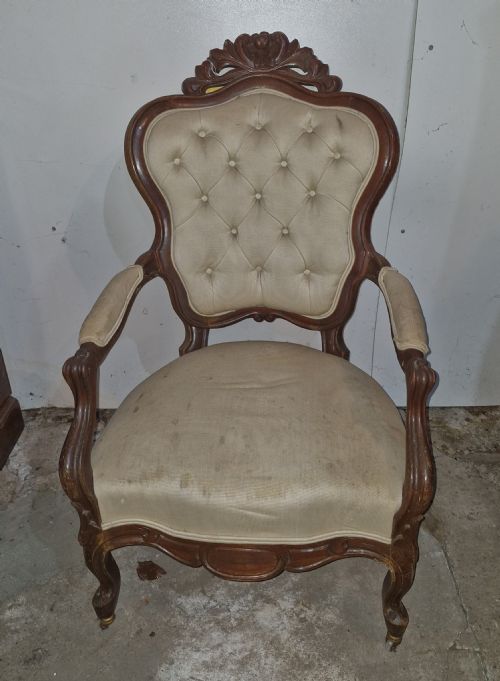
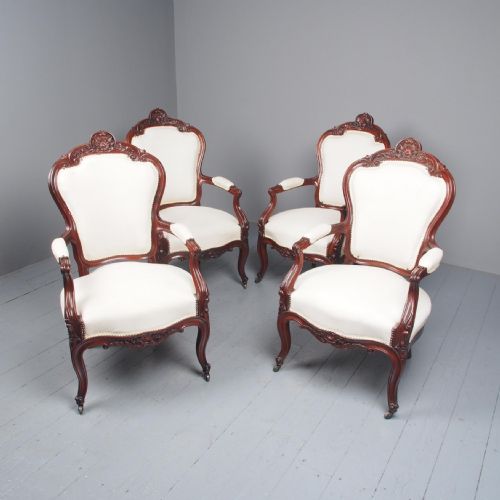
Cream fabric salon chairs bring elegance to a room, offering comfortable seating shaped by Victorian, Edwardian and French revival styles.
Cream Fabric Salon Chairs
When you search for cream fabric salon chairs, you are looking at upholstered seating designed for formal reception rooms and parlours. The pieces on this page span the nineteenth and early twentieth centuries, including individual armchairs, pairs, sets and larger parlour suites.
The forms range from button-back chairs to open armchairs with carved frames, alongside larger settees. You will find pieces reflecting Victorian and Edwardian tastes, as well as continental French Louis XVI and Empire revivals.
Most examples combine wooden frames with soft textile upholstery, often featuring cabriole legs or inlaid woodwork. They serve as both functional seating and decorative centrepieces in a traditional interior.
How they were made
Makers shaped these frames from solid timbers including mahogany, walnut and giltwood, frequently employing carved details and satinwood inlay. Craftsmen constructed the structural supports to bear weight while maintaining slender, graceful profiles.
Upholsterers applied textile coverings over supportive padding, securing the fabric to wooden frameworks with brass tacks or hidden fixings. Button-back techniques and open arm construction required precise handiwork to achieve lasting comfort and symmetry.
The listings span from 1850 to 1920, covering Victorian, Edwardian and French revival styles built in mahogany, walnut and giltwood.
What varies in quality
The refinement of the wood carving and the choice of timber set the foundation for a superior piece. Finer examples display crisp detail in the woodwork and harmonious proportions across legs, arms and backs.
Upholstery execution and frame rigidity distinguish standard production from exceptional craftsmanship. The integrity of the joinery and the grace of the silhouette determine the overall standing of each chair.
The Cream Fabric Salon Chairs Glossary
- Cabriole leg
- A furniture leg that curves outward and then tapers inward, typically ending in a pad or scroll foot. This shape originates from classical forms and appears frequently on Victorian seating.
- Button-back
- An upholstery style where depressions are formed in the padding by stitching buttons through to the frame at regular intervals. It creates a padded diamond pattern across the backrest.
- Giltwood
- Wood that has been coated with a thin layer of gold leaf or gilt paint. It was used on decorative frames to imitate solid gold.
- Satinwood
- A durable, yellowish wood with a lustrous grain used for fine cabinet making and decorative inlay. It provides a bright contrast against darker timbers like mahogany.
- Parlour suite
- A matching set of seating furniture, such as chairs and settees, designed for a formal reception room. These suites ensured a unified decorative scheme in nineteenth-century homes.
Cream Fabric Salon Chairs: Frequently Asked Questions
What is a salon chair?
A salon chair is a light, decorative seat designed for entertaining guests in a formal reception room or parlour during the nineteenth and early twentieth centuries.
Unlike heavier dining or library seating, these chairs prioritise elegant proportions and comfortable upholstery, often featuring exposed wooden frames in mahogany, walnut or giltwood.
How do I date a salon chair?
Dating relies on examining the timber, the style of the legs and the upholstery techniques used in the construction. Victorian and Edwardian pieces often show distinct revival influences such as Louis XVI or Rococo styles.
Cabinet makers of the nineteenth century used specific joinery methods and woods that help narrow down the period of manufacture alongside stylistic details.
Where should I place these chairs?
These chairs suit drawing rooms, bedrooms or quiet reading corners where their decorative frames and neutral upholstery can stand out. Pairs look particularly striking placed beside a fireplace or beneath a mirror.
Ensure the scale of the chair matches the surrounding furniture to maintain a balanced room layout.
Are these chairs comfortable for daily use?
Most salon chairs provide supportive upright seating intended for conversation rather than lounging. The open arms and padded backs offer a comfortable posture for reading or entertaining.
If the internal padding has been restored, the comfort level will reflect modern upholstery standards while preserving the historic frame.