

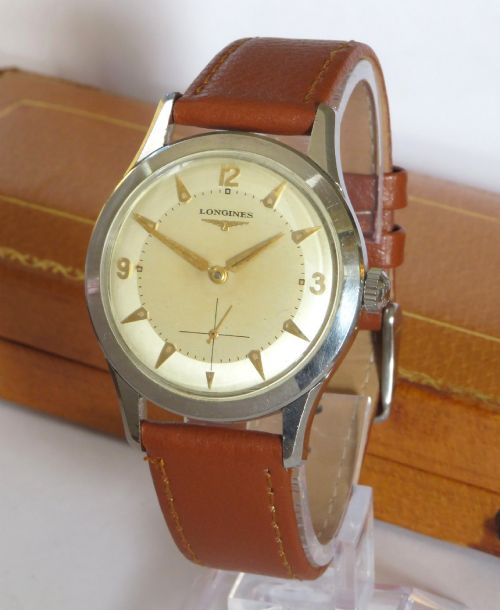
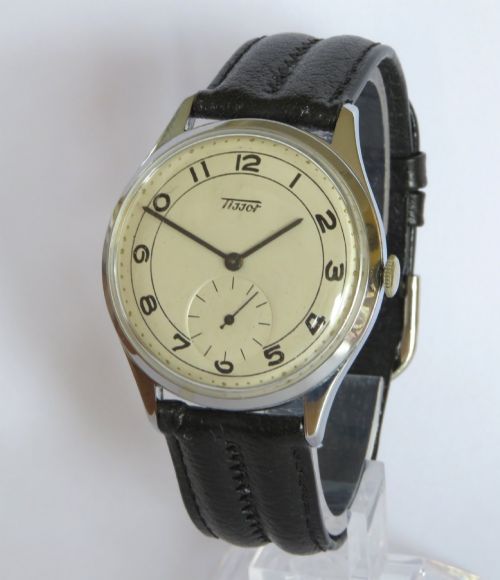
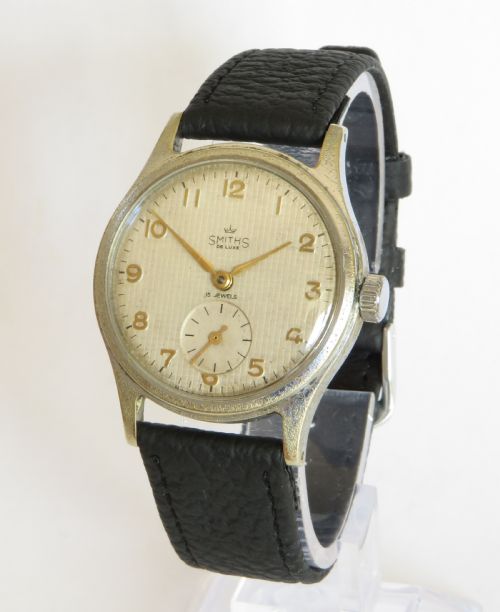
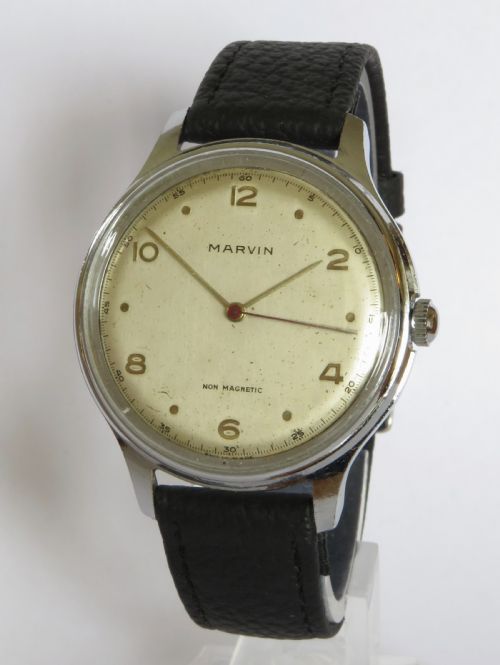
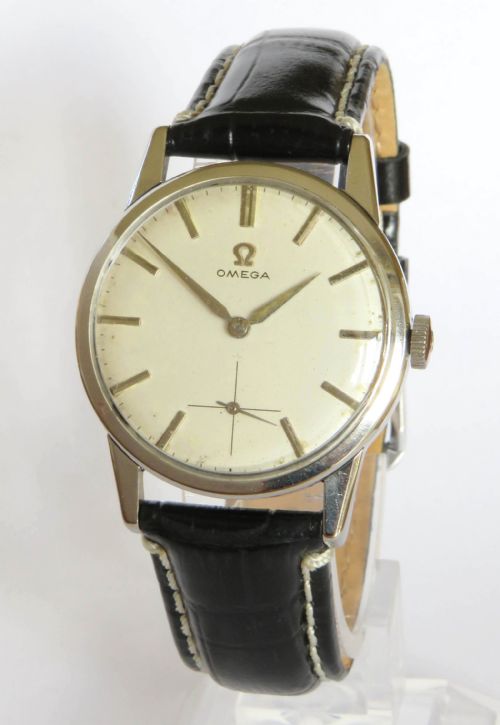
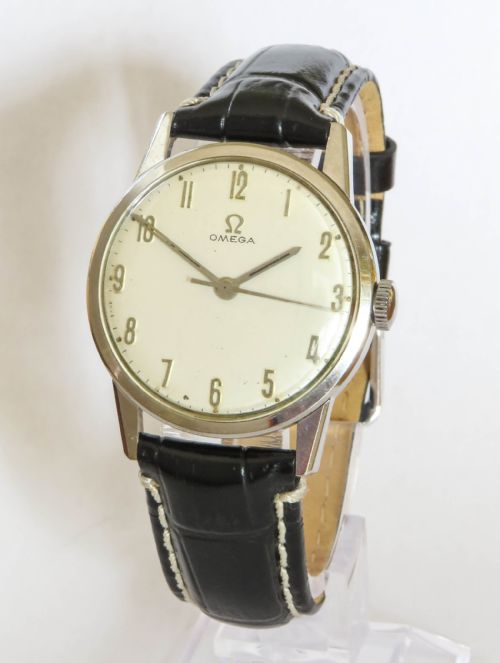
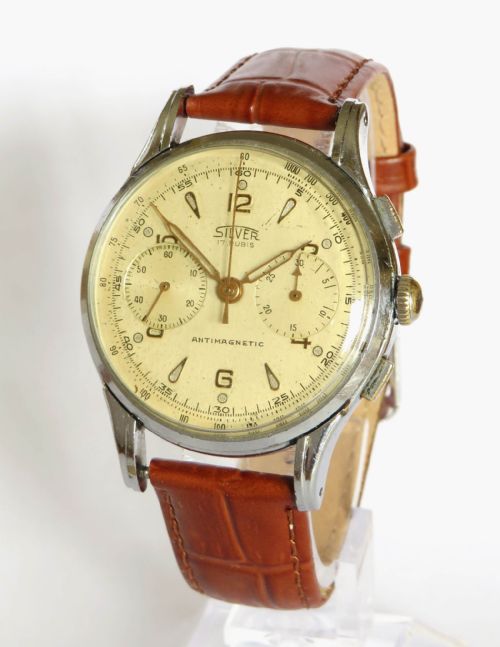
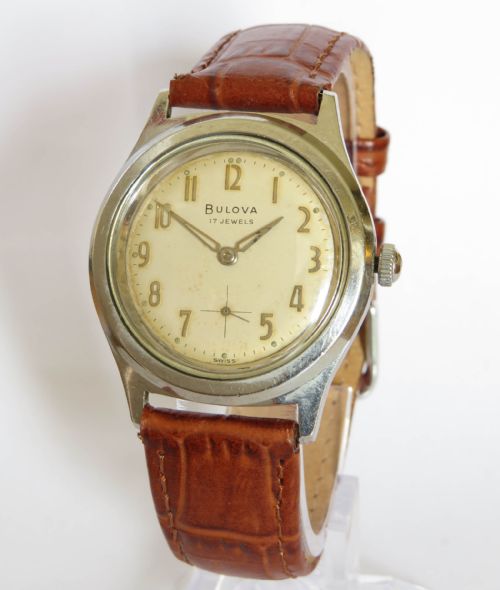
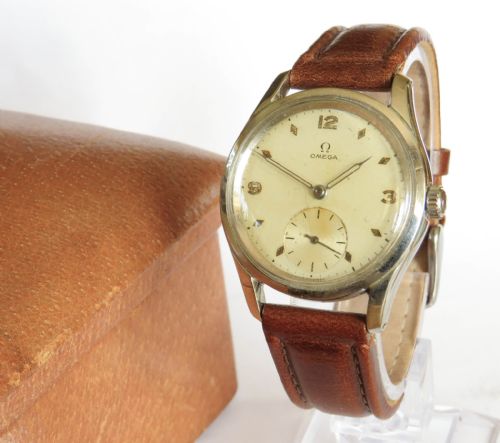
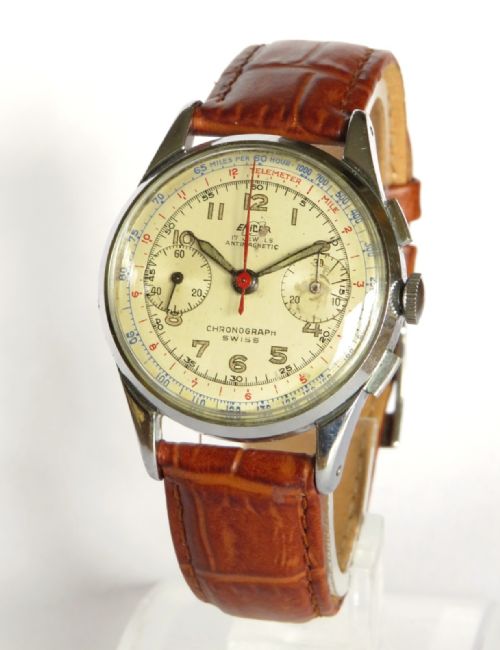
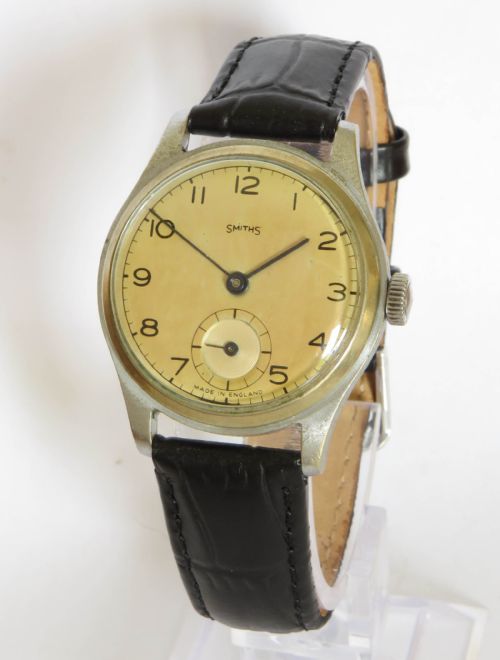
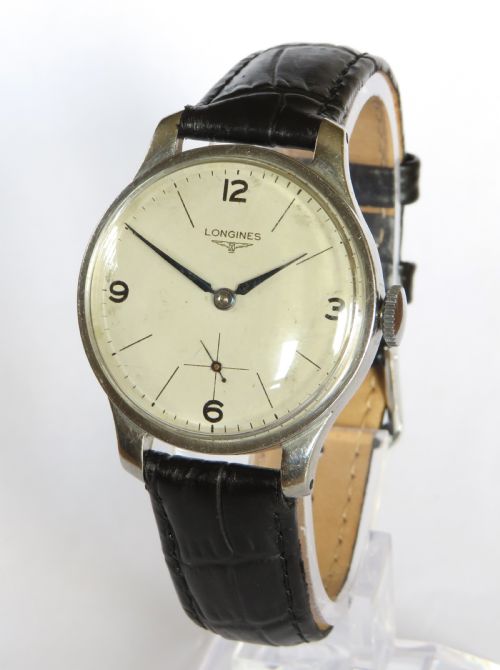


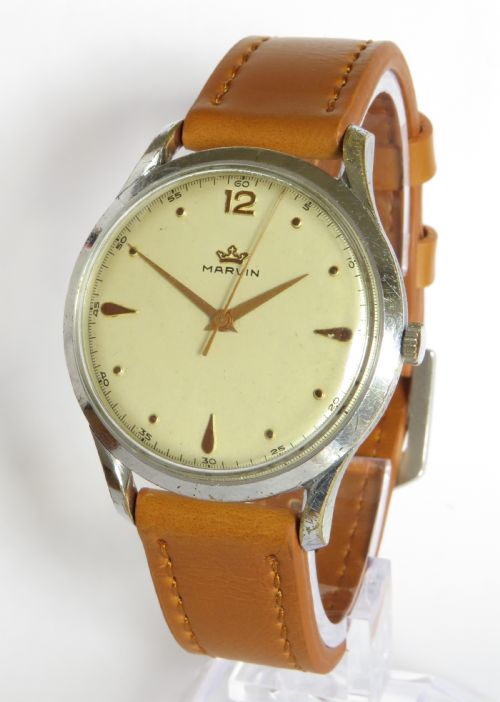
Cream Dial Gents Watch
A cream dial gents watch brings a distinct vintage character to the wrist, spanning styles from Art Deco to mid-century modern.
Cream Dial Gents Watch
A cream dial gents watch represents a wristwatch designed for men, featuring a pale, warm face that sets it apart from standard white or black versions. These timepieces are predominantly found from the 1930s, 1940s, 1950s, and 1960s, reflecting decades of shifting horological design.
The most common versions met on this page are mid-century pieces originating from Swiss and British makers. Styles range from Art Deco influences of the late 1930s through to sturdy automatic and manual wristwatches of the nineteen-fifties and sixties.
Makers represented in these listings include established names such as Omega, Longines, Bulova, Smiths, Enicar, Tissot, Rotary, Marvin, and others. Each manufacturer brought distinct regional traits, whether from English workshops or Swiss houses.
How they were made
Cases of a cream dial gents watch are constructed from stainless steel, chrome, steel, or gold plate, housing the delicate mechanical movements within. Over these dials sits glass or acrylic crystal, protecting the face from daily wear.
Straps and bands are traditionally finished in leather to secure the watch comfortably to the wrist. The construction relies on traditional manual and automatic mechanical assemblies housed inside durable metal casings.
Cream Dial Gents Watch Retail Price Guide 2026
Typical asking prices for cream dial gents watch among the pieces listed under this phrase on Sellingantiques today, from the lower quarter to the upper quarter. They describe what is for sale here now, not the wider market.
Some mid-century dials arrive preserved as New Old Stock, stepping out of the past without a single scratch on their acrylic glass.
What varies in quality
The standard of a cream dial gents watch is defined by the reputation of the maker and the preservation of its original components. Pieces originating from prominent Swiss houses or specialist British makers often display finer movement finishing and more robust casing materials.
The condition of the dial itself and the crispness of the applied markers or numerals determine the visual appeal of the piece. Unpolished cases and clean, untouched dials distinguish the upper tier of vintage timepieces from those with heavily restored or weathered surfaces.
Antoremi·Enicar·Smiths·Longines·Omega·Bulova·Rotary·Marvin·Prisma·Dogma Prima·Tissot·Felca·Larex
The Cream Dial Gents Watch Glossary
- Chronograph
- A watch with a stopwatch function in addition to its timekeeping display. This complication uses independent sweep hands to measure elapsed time.
- Acrylic
- A lightweight, shatter-resistant plastic used for watch crystals during the mid-century period. It can be easily polished to remove surface scratches.
- Gold plate
- A layer of gold applied to a base metal core such as steel or brass. This technique offered the luxurious appearance of solid gold at a more accessible cost.
- Manual
- A mechanical watch movement that requires daily hand-winding via the crown to store energy in the mainspring. These movements lack an automatic rotor.
- Automatic
- A self-winding mechanical movement that uses a weighted rotor, which pivots with the natural motion of the wearer's wrist to wind the mainspring.
Cream Dial Gents Watch: Frequently Asked Questions
What periods do these watches come from?
The pieces span several decades, with examples originating from the 1930s, 1940s, 1950s, and 1960s. Mid-century designs are particularly prominent in the current selection.
Art Deco influences appear in the earlier pieces from the late thirties, while robust automatic models represent the later decades.
Are these watches mechanical or quartz?
Every timepiece listed from these decades operates on mechanical principles, utilising manual-wind or automatic movements.
Battery-powered quartz movements did not become mainstream until later, so these vintage items rely entirely on traditional gears and springs.
What materials are used for the cases?
Cases are constructed from a variety of metals, including stainless steel, chrome, plain steel, and gold plate.
The choice of metal often reflects the era and the intended market tier of the specific watch.
How do I care for a vintage watch?
Vintage timepieces require gentle handling and protection from moisture, as older seals may no longer be waterproof. Regular servicing by a professional watchmaker keeps the mechanical movement running accurately.
Manual pieces need consistent daily winding, while automatic models rely on wrist movement to maintain their power reserve.