




Cream Art Deco Armchairs
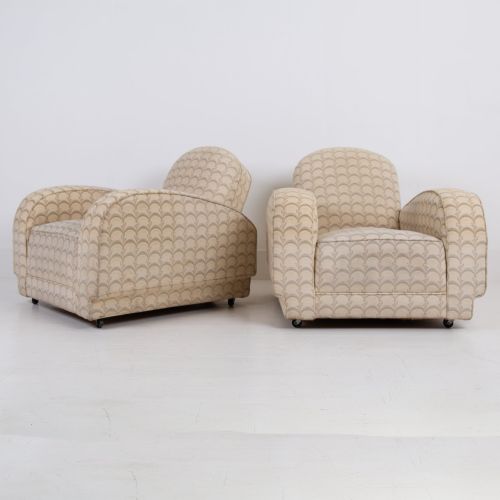
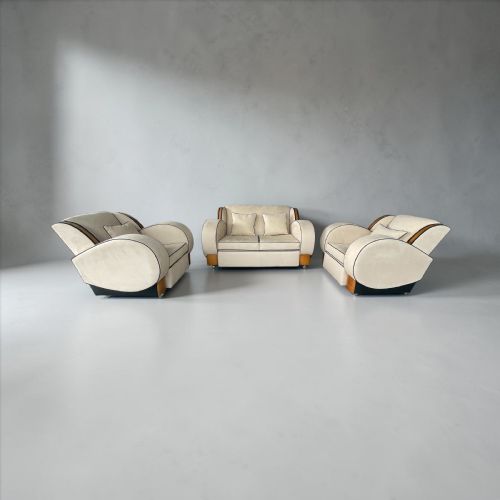
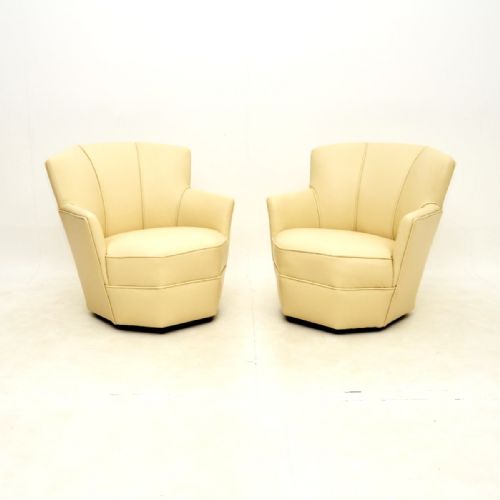
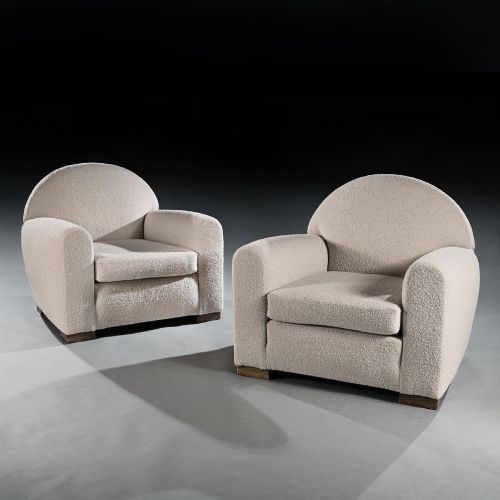
Cream art deco armchairs combine bold geometric lines with tactile leather and warm wood frames to anchor a period room.
Cream Art Deco Armchairs
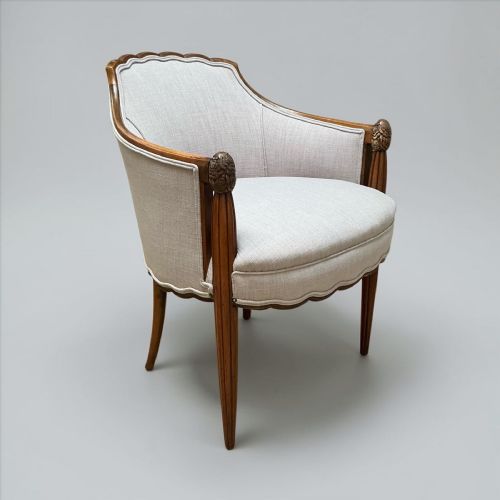
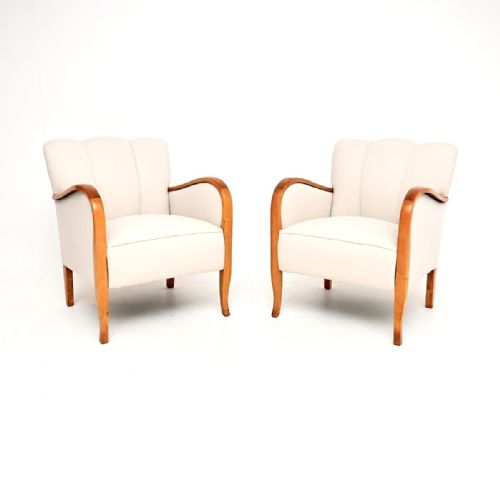
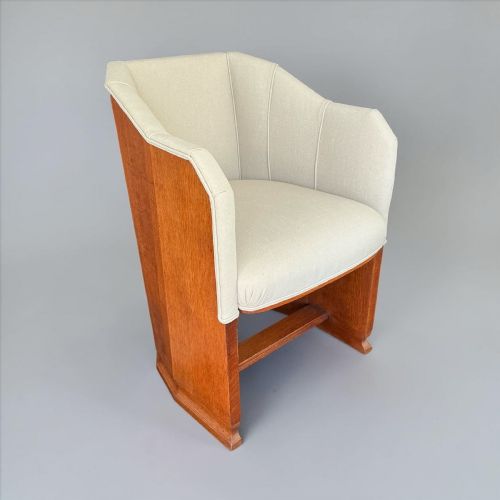
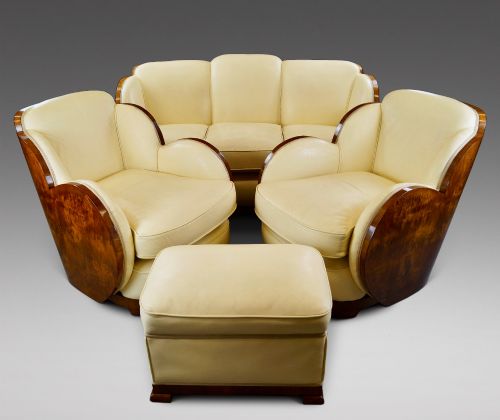
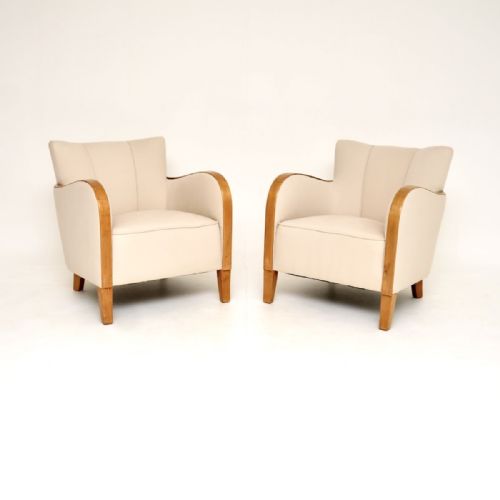
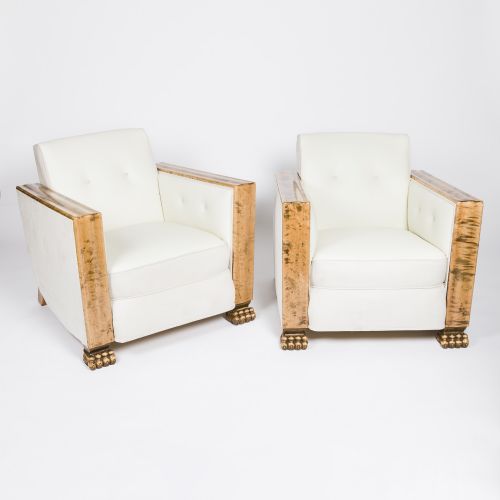
These cream art deco armchairs encompass seating from the 1920s, 1930s, and 1940s, originating from English, French, and Swedish workshops. Buyers encounter single occasional seats, paired club chairs, and three-piece lounge suites upholstered in light tones.
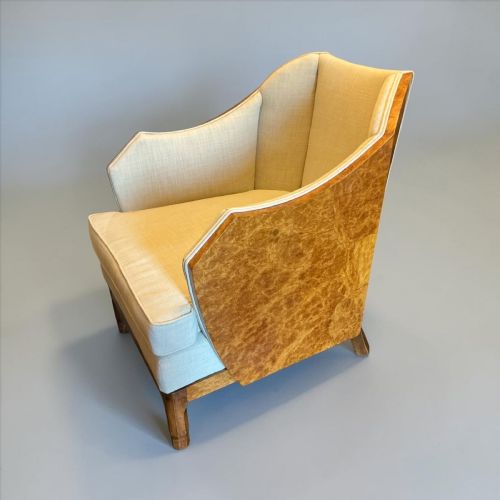
Forms range from streamlined side and desk chairs to robust cloud suites and scalloped tub shapes. Timber frames in walnut, burr walnut, and satin birch support the upholstered elements across domestic lounge settings.
Swedish and French iterations introduce distinct regional variations in wood selection and silhouette, whilst English pieces frequently pair substantial walnut structures with leather upholstery.
Materials and construction
Frames rely on hardwoods such as walnut and timber, often veneered in figured burr walnut or satin birch to display complex wood grain patterns. These wooden structures provide the architectural backbone for curved armrests and rounded backs.
Upholstery combines traditional springing and stuffing with leather and woven fabric covers. Smooth Italian cream leather or neutral textiles are fitted tightly to the undulating contours characteristic of the period.
Listings feature pieces from the 1920s, 1930s, and 1940s, utilising leather, walnut, satin birch, and timber.
Evaluating quality
The sophistication of the timber veneer work dictates the visual standing of a piece, with book-matched burr walnut or satin birch elevating the design above plain hardwood. Superior examples display seamless alignment of wood grains across curved surfaces.
The integrity of the upholstery execution determines comfort and line fidelity, particularly on rounded cloud and tank shapes. Precision in stitching and the tautness of the leather finish separate standard production from master craftsmanship.
Hille·Hary and Lou Epstein
The Cream Art Deco Armchairs Glossary
- Burr walnut
- A highly figured wood grain obtained from walnut tree growths, valued for its swirling patterns. It appears frequently on the veneered panels of seating frames.
- Satin birch
- A pale, lustrous hardwood favoured by Scandinavian designers for its clean grain. This timber defines the aesthetic of Swedish seating from the period.
- Cloud suite
- An upholstered seating group characterised by thick, rounded, overlapping cushions resembling cumulus clouds. These substantial suites emerged during the 1930s.
- Bridge chair
- A compact, light armchair designed originally for card games or casual parlour use. They feature open armrests and modest footprints.
Cream Art Deco Armchairs: Frequently Asked Questions
How do I clean cream leather?
Maintenance requires gentle wiping with a damp cloth and mild soap, followed by a specialised leather conditioner to keep the hide supple. Avoid harsh chemicals that strip the original neutral finish.
Regular dusting prevents dirt embedding into the natural grain of the leather upholstery.
Are these chairs comfortable for daily sitting?
Most variants offer deep seating and supportive padded armrests designed for relaxation. Cloud suites and club chairs provide particularly generous proportions for regular use.
Lighter side chairs and desk seats suit shorter periods of sitting due to their more compact frames.
How do I distinguish Swedish from English pieces?
Swedish examples typically utilise pale satin birch and restrained geometries, reflecting a lighter aesthetic. English items frequently employ dark walnut and heavier, more imposing upholstered volumes.
Regional finishing techniques and choice of exposed wood grain clarify the geographic origin.
Can these match modern interiors?
The neutral cream upholstery and clean lines integrate easily into contemporary neutral colour schemes. Their sculptural silhouettes act as focal points without overwhelming surrounding modern furniture.
Pairing them with minimalist tables highlights the architectural qualities of the wood frames.