
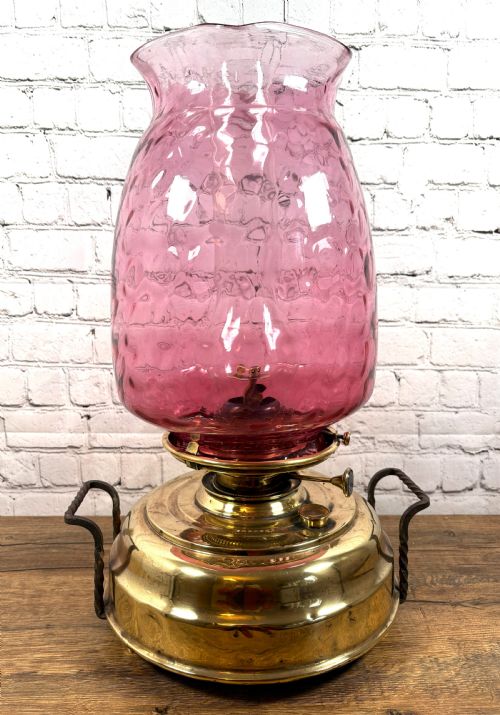


Cranberry Shade Oil Lamp
These pieces combine rich ruby-pink glass and polished metal to cast a warm glow, bringing period atmosphere to a room.
Cranberry Shade Oil Lamp
A cranberry shade oil lamp brings together a coloured glass shade and a metal, ceramic or glass base designed for burning paraffin or oil for illumination. These objects date predominantly from the nineteenth century and the Victorian period, though examples stretch into the early twentieth century.
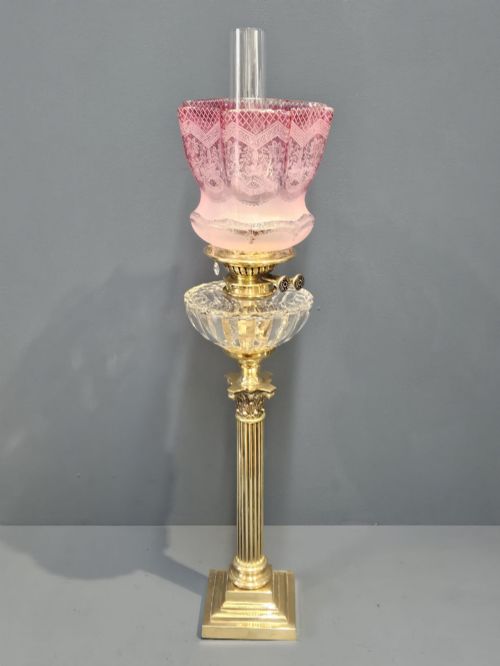
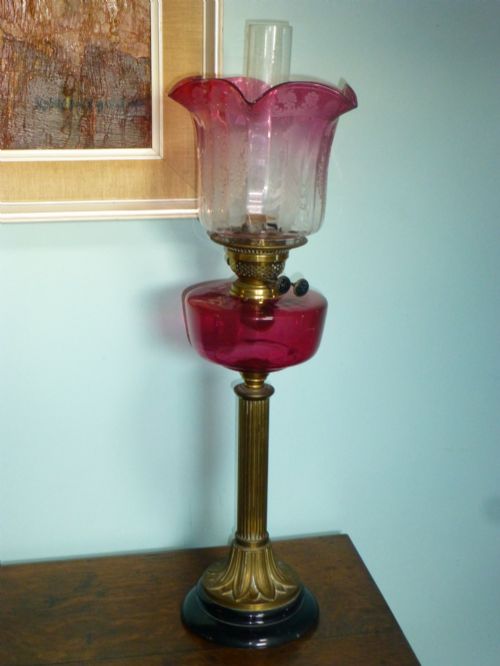
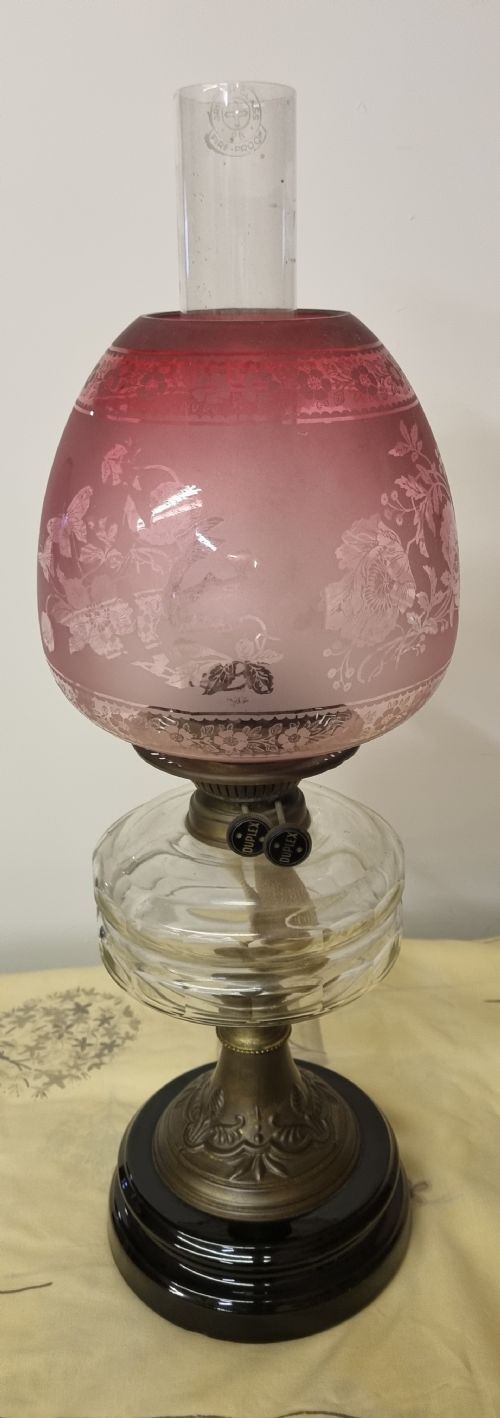
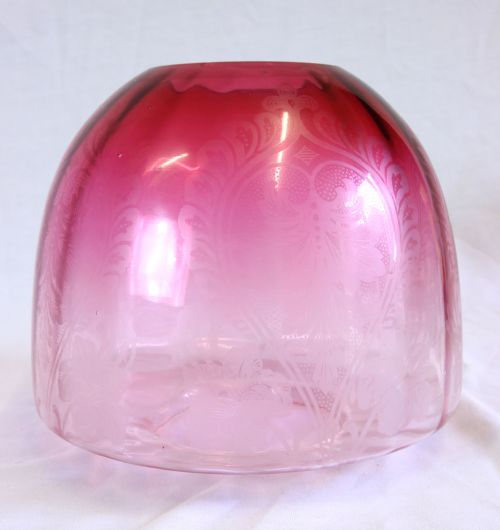
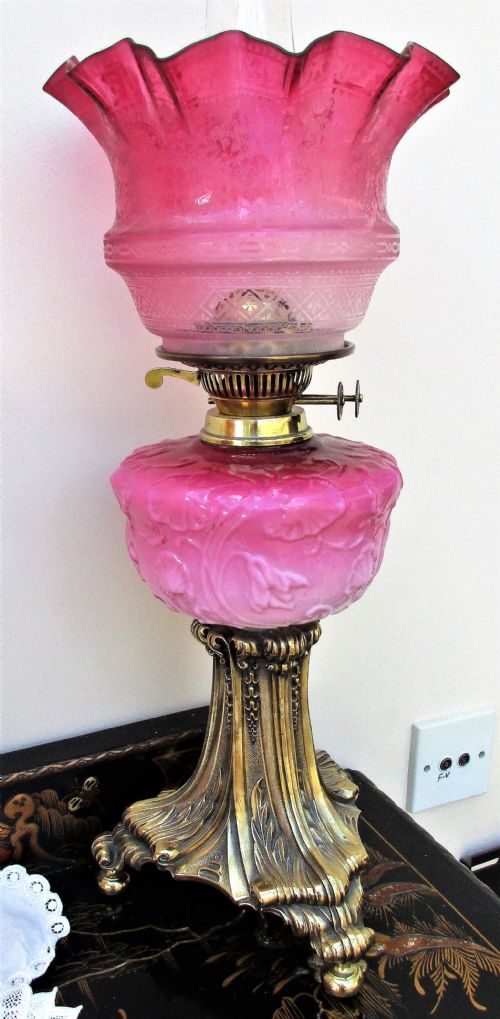
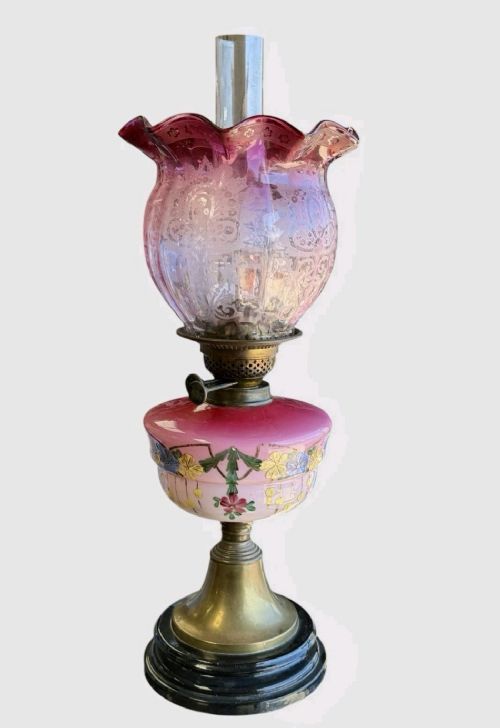
The most common form on this page pairs a brass or ceramic column base with a vibrant cranberry glass shade, sometimes featuring hand-painted details, frilled rims or etched patterns. Tall floor standing versions and double burner duplex models also appear among the table lamps.
Origins span English workshops, German porcelain factories, and French revival designs, reflecting the widespread domestic use of these lighting fixtures before the general adoption of electricity.
Materials and construction
Makers shaped the distinctive pink glass by adding gold chloride to the molten metal mix before blowing and moulding the shades and fonts. Metal components relied on heavy brass, copper, bronze and silver plating, often cast with Corinthian columns or reeded details.
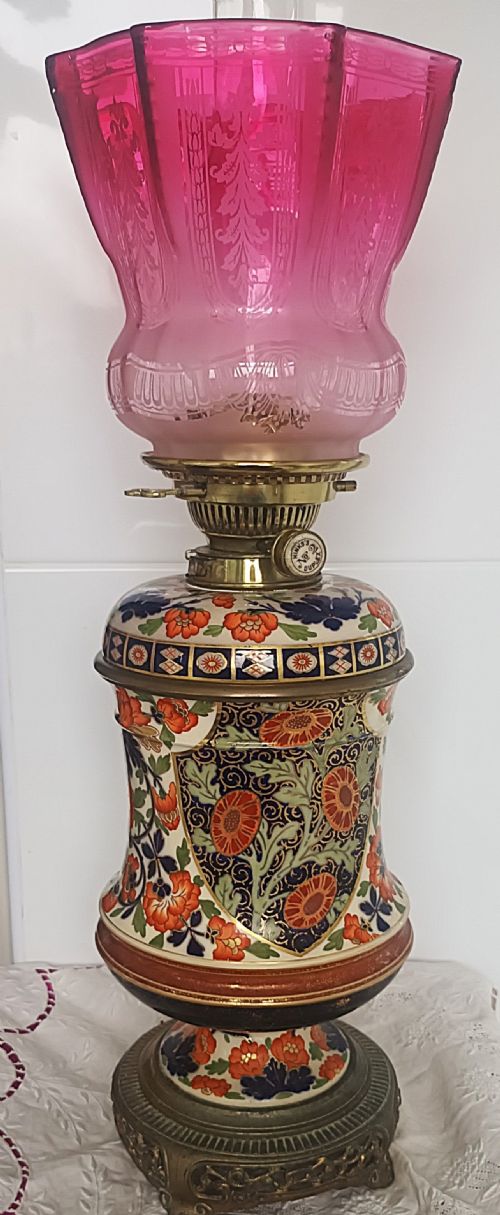
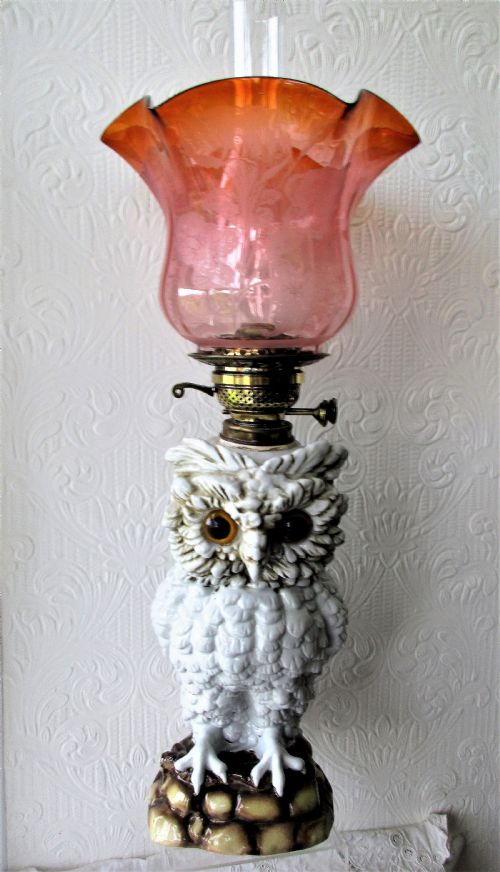
Ceramic and porcelain bases came from established potteries, occasionally taking figurative forms like owls or incorporating hand-painted decoration beneath the burner mechanism.
An inquisitive porcelain owl sits ready to illuminate the parlour.
Gradations of quality
Quality rests in the weight of the metal casting, the depth and consistency of the cranberry glass colour, and the presence of original matching burners and funnels. Heavier brass columns and crisp glass mouldings distinguish finer workshop output from standard domestic lighting.
The integration of the ceramic or glass font with the metal stand and the presence of makers' names on the burner mechanisms mark out pieces produced by notable makers rather than anonymous factories.
Hinks·Taylor Tunnicliff·Sitzendorf·Doulton Lambeth·Benson
The Cranberry Shade Oil Lamp Glossary
- Duplex burner
- A twin-wick burner mechanism that produced a brighter flame than single-wick designs. These mechanisms often bear manufacturer stamps.
- Font
- The oil reservoir sitting atop the lamp base. It is frequently made of cranberry glass to match the upper shade.
- Peg lamp
- A small oil lamp fitted with a narrow peg at the base designed to drop directly into an existing candlestick socket.
- Frilled shade
- A glass lampshade with a rippled or fluted edge created by manipulating the hot glass during the blowing process.
- Corinthian column
- A classical architectural column style frequently used for the tall brass stems of nineteenth century table lamps.
Cranberry Shade Oil Lamp: Frequently Asked Questions
How do I operate an old oil lamp?
Fill the lower reservoir with suitable lamp oil, allow the wick to absorb the liquid thoroughly, and adjust the thumbwheel to raise the wick slightly above the metal gallery before lighting.
Keep the flame moderate to prevent smoke, and use the burner controls to extinguish the light safely when finished.
Are these lamps safe to use today?
Many people continue to burn lamp oil in period pieces, provided the metal reservoir and burner mechanism remain sound and leak-free.
Alternatively, many buyers choose to wire them for electricity or use them purely as decorative display items in period interiors.
How can I date a Victorian oil lamp?
Examine the burner mechanism, as patent dates and manufacturer names stamped onto the brass provide reliable chronological markers for the piece.
Stylistic cues such as heavy brass Corinthian columns or French Rococo revival details also point towards specific decades within the nineteenth century.
Why is the glass pink?
The distinct pink hue results from the addition of gold chloride or gold dust to the molten glass batch during production.
Skilful manipulation of the temperature during annealing determined whether the glass emerged with a pale pink tint or a deep cranberry tone.