



Craftsman Open Bookshelf
A craftsman open bookshelf brings honest timber and simple lines into a room, offering sturdy storage for daily reading.
Craftsman Open Bookshelf
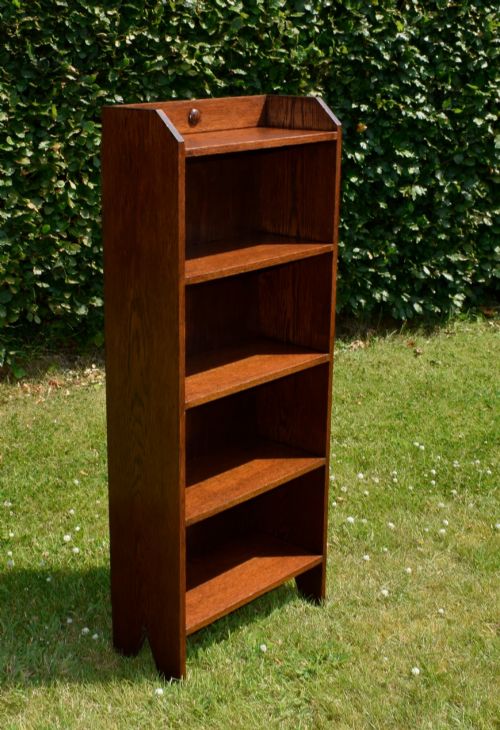
A craftsman open bookshelf displays volumes on open shelves without glazed or panelled doors, keeping texts within arm's reach. These pieces emerge predominantly from the Arts and Crafts movement, reflecting a philosophy of utility and straightforward design.
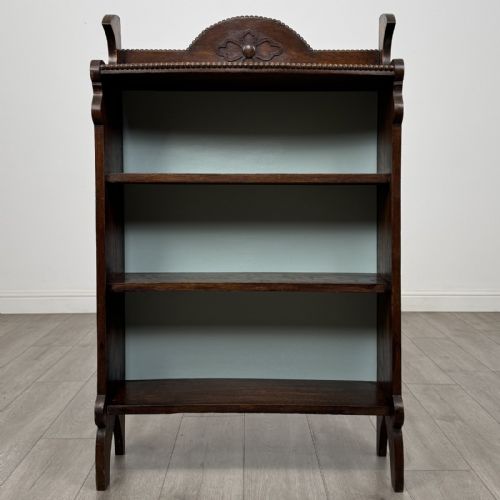
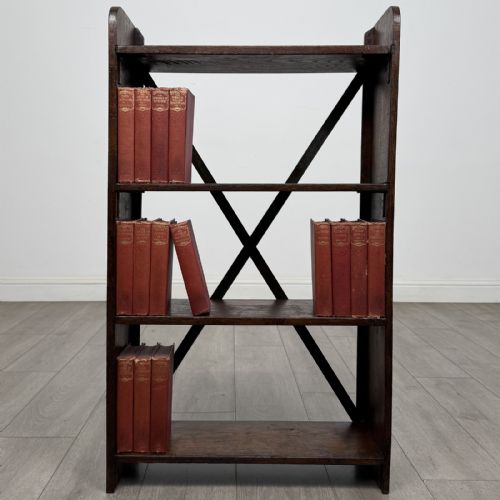
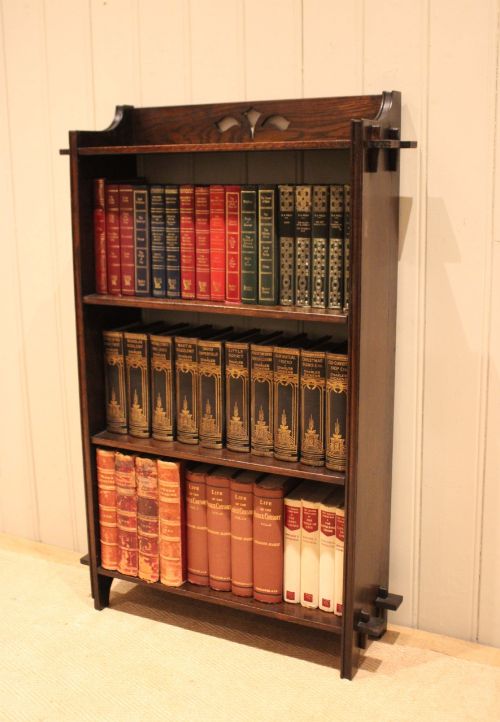
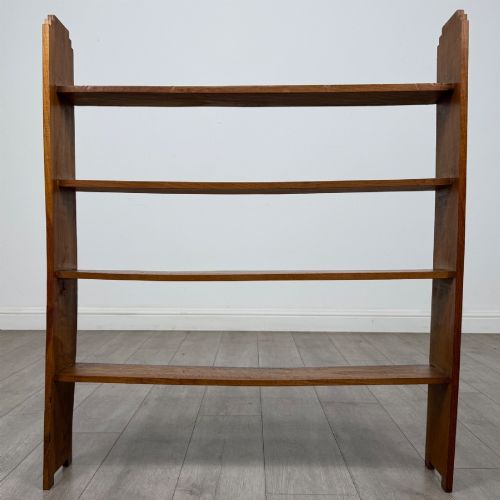
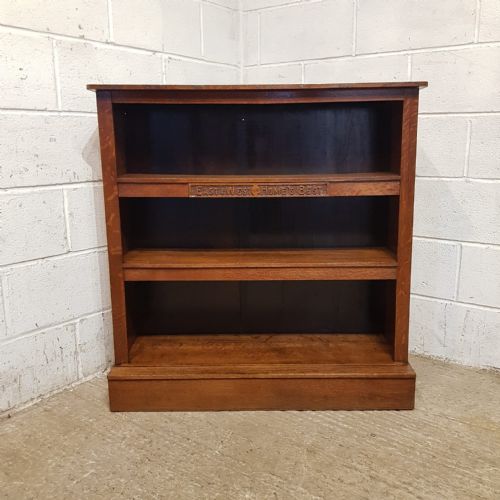
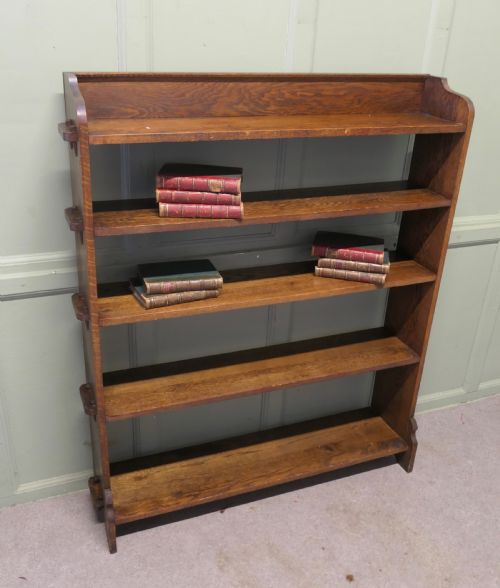
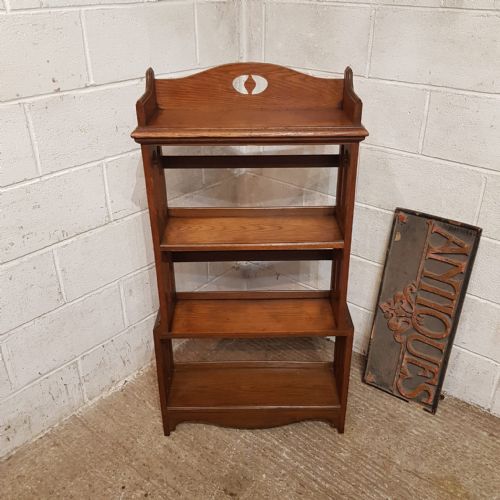
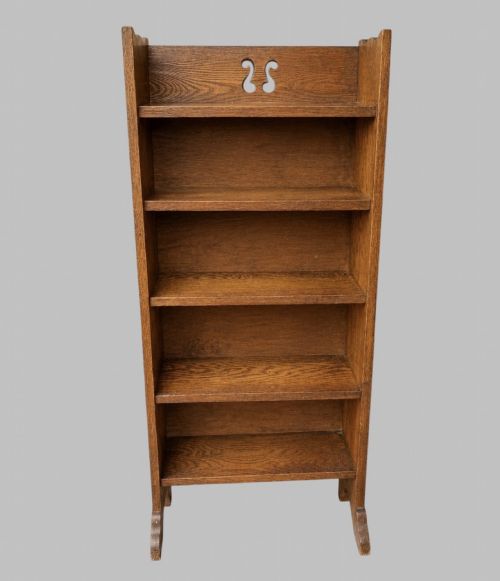
The version most commonly met on this page is the oak open bookcase, often attributed to the early twentieth century or the Edwardian period. Such pieces range from compact four-shelf units to taller five-shelf variations, sometimes featuring height-adjustable shelves.
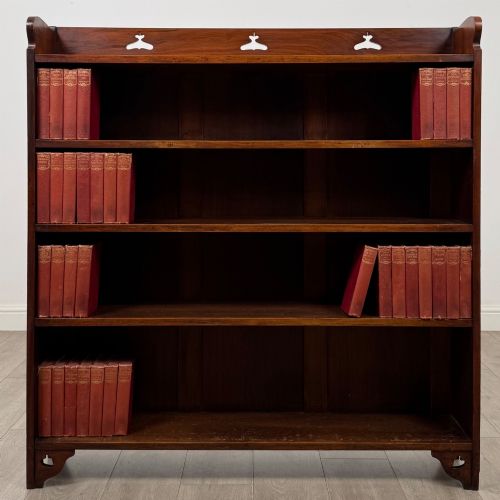
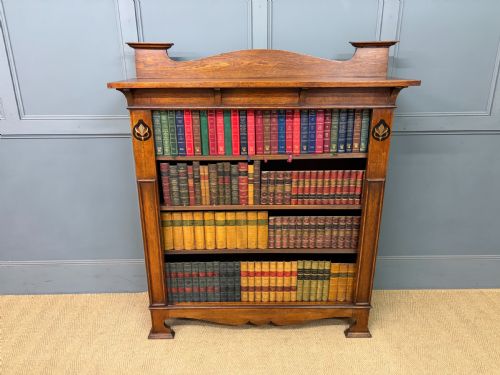
Makers occasionally incorporated decorative cut-outs into the uprights or side panels to relieve the heavy timber form. While oak predominates, walnut examples with marquetry or inlay also appear, showing a slightly more formal domestic ambition.
How these bookcases were made
Makers relied heavily on solid oak and walnut, selecting timber for its visible grain and natural strength rather than applying thick decorative veneers. Construction focused on durability, utilising thick planks for the top, base, and fixed or adjustable shelves.
Surface ornament remained restrained, allowing the natural material and simple joinery to define the object. Where decoration occurs, it takes the form of subtle inlay, marquetry, or characteristic structural cut-outs rather than applied plaster mouldings.
Craftsman Open Bookshelf Retail Price Guide 2026
Typical asking prices for craftsman open bookshelf among the pieces listed under this phrase on Sellingantiques today, from the lower quarter to the upper quarter. They describe what is for sale here now, not the wider market.
Materials across these listings include solid oak, walnut, marquetry, and inlay.
What varies in quality
Quality rests upon the selection of timber and the integrity of the joinery rather than elaborate ornamentation. Heavier solid oak construction with well-fitted adjustable shelving stands apart from lighter or more utilitarian framing.
Design touches also separate standard examples from finer ones. The presence of thoughtful decorative cut-outs, crisp edge-working, and superior cabinetmaker attribution elevates a piece far above a plain utility bookcase.
The Craftsman Open Bookshelf Glossary
- Arts and Crafts
- A design movement valuing traditional craftsmanship and simple forms over mass production. This style rejects excessive Victorian ornamentation in favour of honest construction.
- Edwardian
- A historical period spanning the reign of King Edward VII, noted for lighter domestic furniture styles. Pieces from this era often refine earlier, heavier Victorian proportions.
- Marquetry
- The art of applying small pieces of veneer to a structure to form decorative patterns. It adds pictorial detail to otherwise plain surfaces.
- Inlay
- A technique where contrasting materials are set into recesses flush with the surrounding wood. This method highlights specific panels or friezes on cabinet work.
Craftsman Open Bookshelf: Frequently Asked Questions
What is a craftsman open bookshelf?
A craftsman open bookshelf is a utilitarian storage unit designed to hold books without the obstruction of glass doors. These pieces rely on straightforward joinery and sturdy timber construction.
Most examples date from the late nineteenth century through the early twentieth century, aligning with the Arts and Crafts movement. They prioritise practical utility and honest materials over superficial ornament.
How were these bookcases used?
These pieces served primarily as accessible library storage in studies, sitting rooms, and parlours. Their open fronts allowed owners to browse and retrieve volumes quickly.
Some variations included height-adjustable shelves to accommodate oversized folios and varied collections, reflecting a practical domestic function.
How do I date a craftsman bookcase?
Dating relies upon timber selection, hardware, and stylistic markers associated with specific periods. Pieces from the eighteen-eighties often show heavier proportions, whilst those from nineteen-ten tend towards cleaner lines.
Attributions also look to specific workshops or maker signatures, though many surviving examples remain unmarked workshop pieces from the Edwardian era.
Are these bookcases made of solid wood?
The majority of these pieces utilise solid oak, providing a heavy and durable frame for daily book storage. Walnut also appears in select examples.
Construction typically avoids modern manufactured boards, relying instead on thick timber planks for the uprights, shelves, and back panels.