
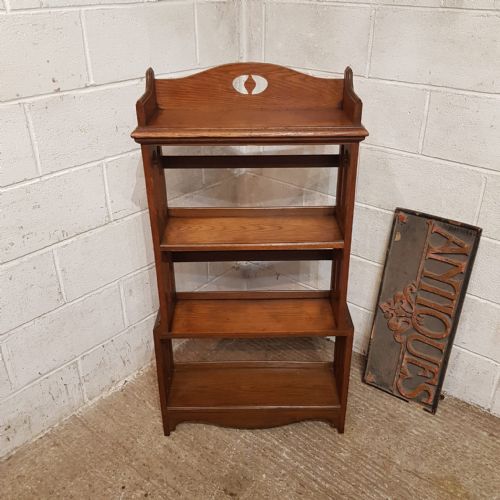
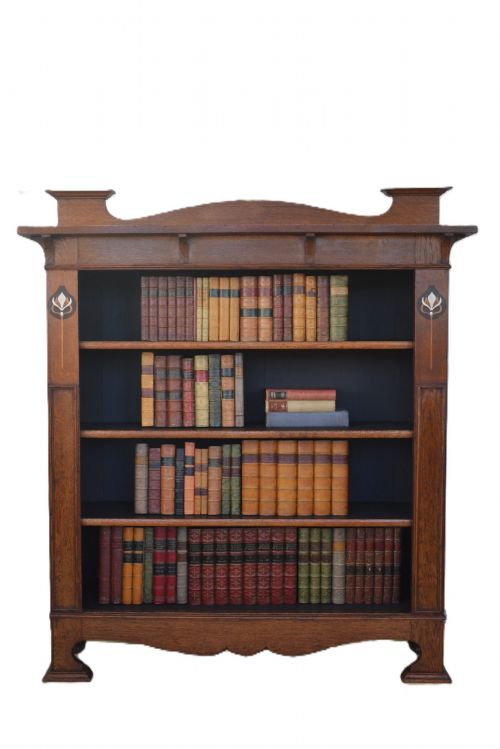

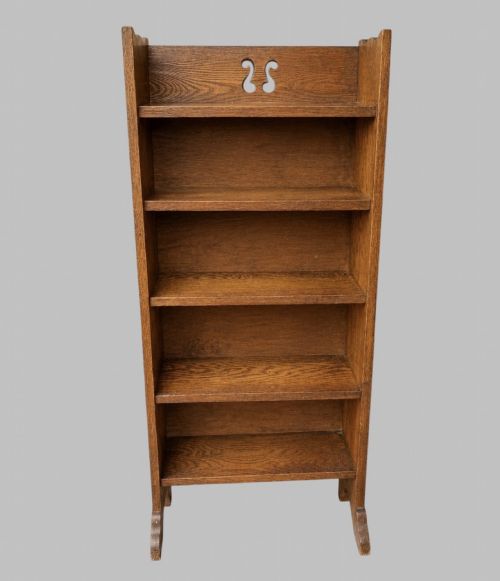


Craftsman Oak Shelves
Craftsman oak shelves bring honesty of material and utility to a room, rooted in the principles of the Arts and Crafts movement.
Craftsman Oak Shelves
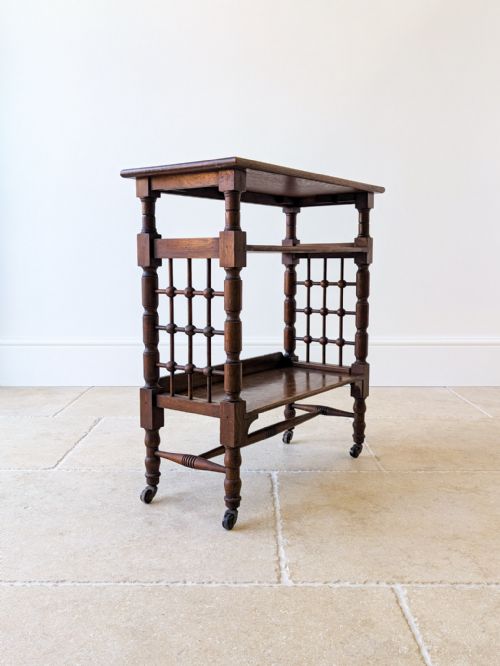
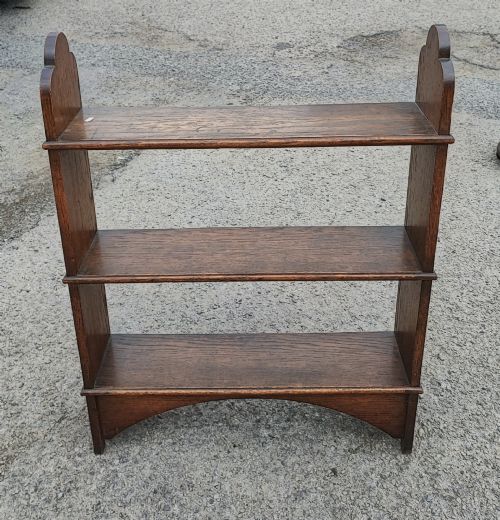
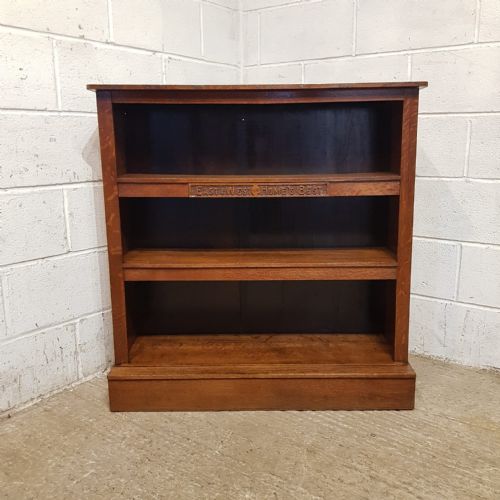
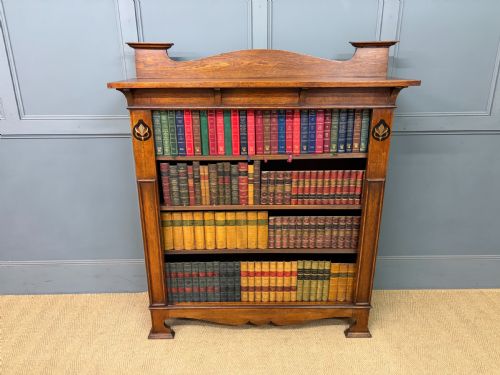
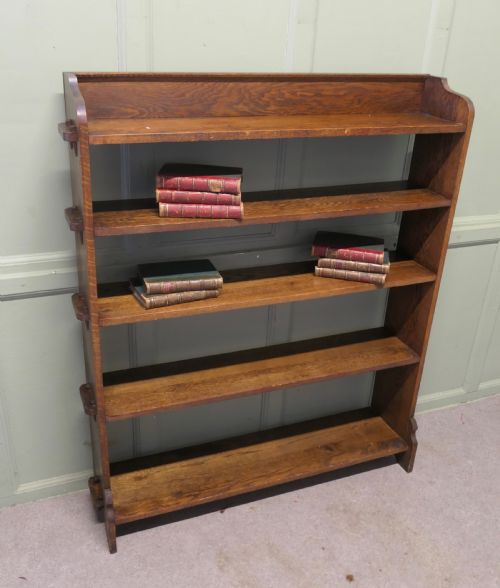
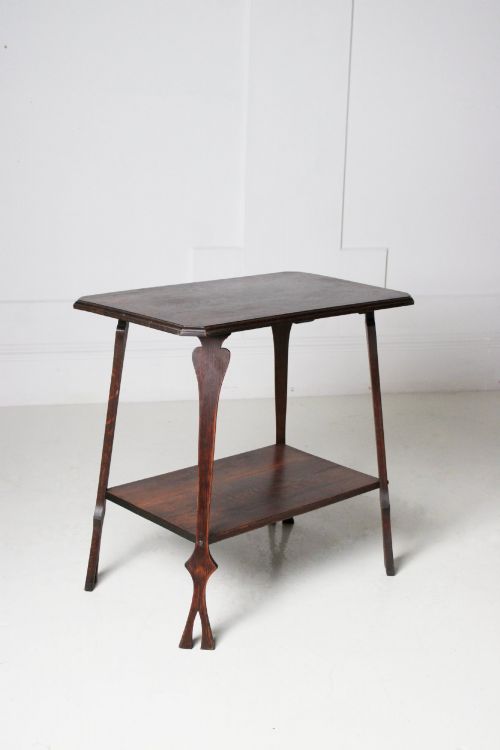
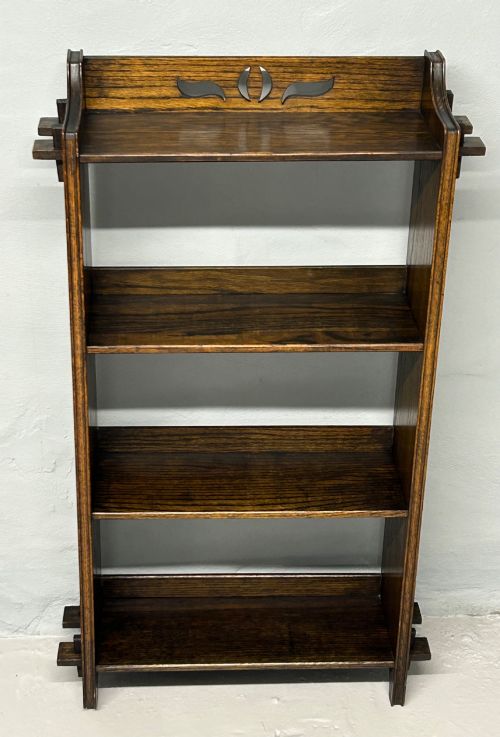
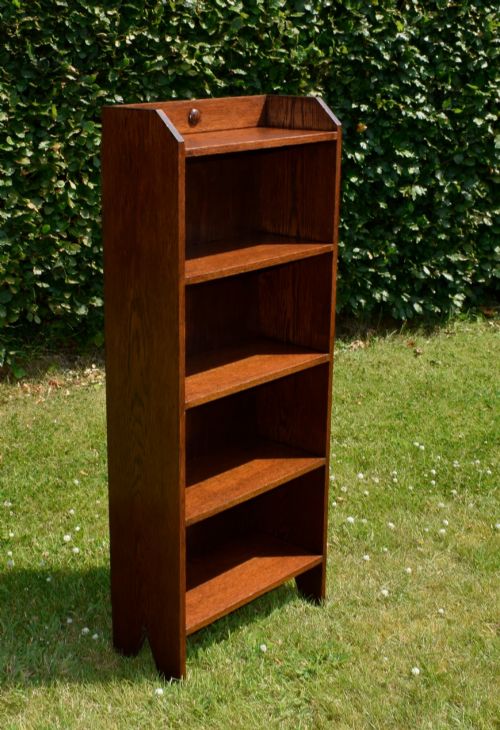
Craftsman oak shelves encompass open bookcases, slope-shelf book troughs and small side pieces spanning the late nineteenth and early twentieth centuries. When searching for craftsman oak shelves, buyers typically encounter open-front bookcases and occasional tables created during the height of the Arts and Crafts movement.
The pieces originating from this period range from straightforward utilitarian shelving units to more distinctive forms like cottage dressers and side cabinets. Most examples date from the decades around nineteen hundred, reflecting the concerted shift away from Victorian mass production toward simpler forms.
Materials and construction
Solid oak serves as the primary material for these pieces, chosen for its durability and distinctive grain pattern. Workshops frequently utilised plain or quarter-sawn timber to highlight the natural figure of the wood.
Construction techniques prioritise visible structural integrity rather than hidden joinery. Secondary materials such as brass fittings occasionally appear on cabinets and tables, while decorative elements like marquetry, inlay and cane add subtle texture to specific forms.
Listings for craftsman oak shelves span the period from eighteen eighty to nineteen thirty, encompassing Edwardian examples alongside core Arts and Crafts forms.
Distinctions in quality
The distinction between standard workshop production and finer examples rests largely on the selection of timber and the precision of the joinery. Pieces displaying thoughtful proportions and careful attention to the grain of the solid oak stand apart from heavier, more utilitarian items.
Subtle details such as hand-shaped decorative cut-outs, well-fitted adjustable shelving mechanisms and understated brass hardware elevate certain bookcases and tables above basic commercial output. The integrity of the original construction remains a primary indicator of superior craftsmanship.
The Craftsman Oak Shelves Glossary
- Arts and Crafts
- A design movement spanning the late nineteenth and early twentieth centuries that championed traditional craftsmanship, simple forms and high-quality materials. This aesthetic directly informed the construction of domestic furniture and shelving.
- Quarter-sawn oak
- A method of milling timber that produces characteristic medullary ray figuring across the board. Furniture makers utilised this cut to display decorative grain patterns.
- Book trough
- A low-profile open stand designed to hold a small selection of books readably angled for easy access. These pieces often sat beside firesides or on tables.
- Cottage dresser
- A compact version of the traditional dining room dresser, adapted for smaller domestic spaces. These pieces combine open display shelving with enclosed storage below.
- Inlay
- The technique of inserting contrasting materials into wood to form decorative patterns. Craftsman pieces occasionally employ this to accent surfaces.
Craftsman Oak Shelves: Frequently Asked Questions
What defines arts and crafts oak furniture?
Arts and crafts oak furniture is characterised by honest construction, solid timber construction, and a rejection of excessive Victorian ornamentation in favour of functional utility.
Pieces from this movement rely on the natural grain of the oak and visible structural joints to create an enduring aesthetic appeal.
How do I date these oak shelves?
Dating typically involves examining the construction methods, hardware, and stylistic cues present in the piece. Items originating from the late nineteenth or early twentieth centuries often bear distinct characteristics of the Arts and Crafts movement.
Documentation or attribution to specific workshops can also help narrow down the decade of manufacture.
Where should I place a book trough?
A book trough works well beside a fireside, reading chair, or low window seat where accessible book storage is required. Their compact footprint allows them to fit comfortably in smaller rooms.
These pieces keep frequently read volumes close at hand while adding a distinct period accent to the interior.