







Countryside Art Decor
Countryside art decor brings traditional pastoral scenes and rural charm into interior spaces through oil paintings and watercolours.
Countryside Art Decor
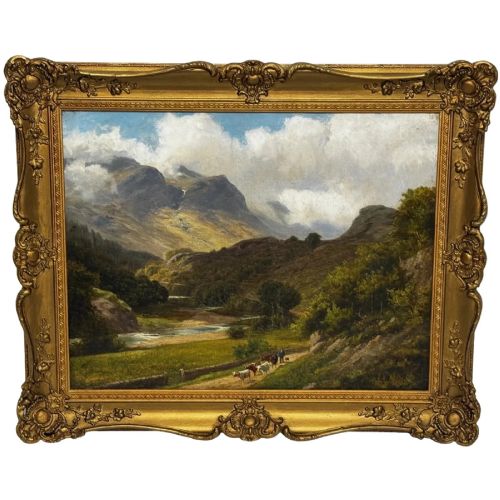
Countryside art decor encompasses oil paintings, watercolours, and framed wall art capturing rural landscapes, agricultural scenes, and pastoral views. When buyers search for countryside art decor, they encounter traditional British school works alongside Victorian pastoral scenes and mid-century impressions.
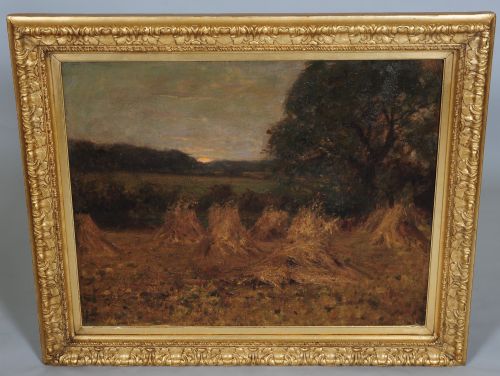
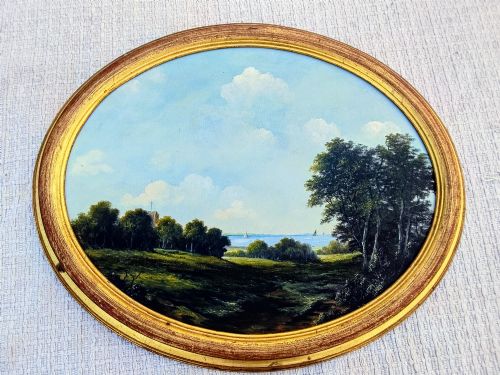
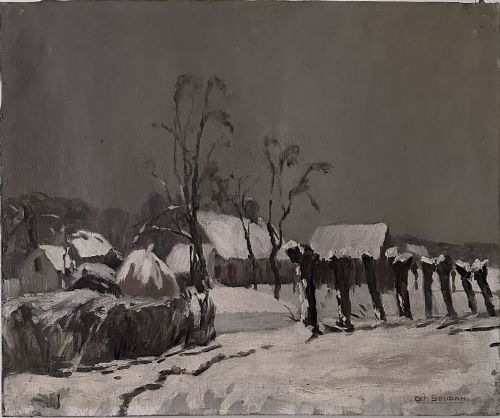
The pieces on this page span several distinct periods, reaching from nineteenth century Victorian works through to twentieth century modernist interpretations. Common subjects include lake district landscapes, winter villages, harvest fields, and coastal sea views rendered on canvas or paper.
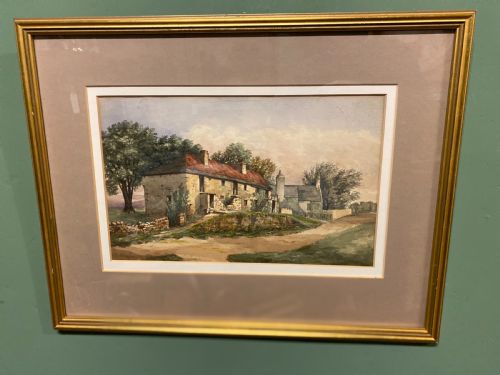
Buyers will most frequently meet traditional oil paintings on canvas alongside delicate watercolours depicting figures, cottages, and farmworkers in rural settings. These artworks reflect changing artistic approaches to the British countryside across different decades.
Materials and Techniques
Artists create these countryside scenes primarily using oil paint on canvas or watercolour applied to paper, occasionally employing thick impasto techniques to build surface texture. Frames are frequently constructed from wood, including giltwood and gilt wood finished with gold leaf.
Canvases are stretched over wooden supports and secured within traditional frames, whilst watercolours are protected beneath glass to preserve the delicate pigments. The combination of oil paint, canvas, and carved wooden framing defines the physical structure of these framed works.
Countryside Art Decor Retail Price Guide 2026
Typical asking prices for countryside art decor among the pieces listed under this phrase on Sellingantiques today, from the lower quarter to the upper quarter. They describe what is for sale here now, not the wider market.
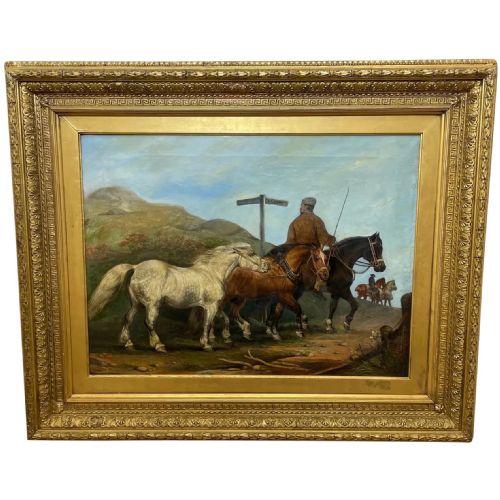
Several canvases quietly preserve the hustle of nineteenth-century hunt meetings alongside tranquil depictions of cows resting by quiet rivers.
Factors That Separate the Finest Pieces
Quality in these rural artworks rests upon the artist's handling of light, atmosphere, and brushwork to convey genuine depth within the landscape. Superior examples demonstrate confident execution in depicting natural elements such as water, foliage, and cloud formations.
The integrity of the original framing, particularly period giltwood or gold leaf mouldings, contributes significantly to the overall presence of the piece. Works that retain their original stretcher bars, clear signatures, and stable paint surfaces stand apart from lesser examples.
Helen Layfield Bradley·Robert Thorne Waite·Charles Faulkner·Henry H Parker·William Langley·Herbert Royle·Rowland Henry Hill·Edward Lloyd
The Countryside Art Decor Glossary
- Impasto
- A technique where paint is laid onto a canvas in very thick areas, usually thick enough that the brush or painting-knife strokes are visible. This method adds tangible physical texture and dimensionality to elements like foliage or clouds.
- Giltwood
- Wood that has been treated with a thin layer of gold leaf or gold paint to give a metallic golden finish. It appears frequently on traditional picture frames from the nineteenth and twentieth centuries.
- Watercolour
- A painting method in which the paints are made of pigments suspended in a water-based solution. These works are typically executed on paper and require protection under glass.
- Pastoral
- A genre of art that romanticises rural life and depicts scenes of agricultural landscapes, farmworkers, and rustic cottages. It forms a central thematic element in traditional British school painting.
- Stretcher
- A wooden framework upon which an artist's canvas is fastened to keep it taut. Original stretchers help confirm the age and unaltered condition of an oil painting.
Countryside Art Decor: Frequently Asked Questions
What subjects appear in countryside art decor?
These artworks predominantly feature rural landscapes, harvest fields, winter villages, and pastoral scenes depicting farmworkers and cottages. Coastal views and lake district settings also frequently appear across the selection.
The pieces capture specific regional locations in Britain, ranging from Welsh valleys to Cumbrian lakes and Yorkshire fields, recorded through the eyes of various historical schools.
How should I display these paintings at home?
Oil paintings and watercolours require placement away from direct sunlight and excessive moisture to protect the canvas, paper, and giltwood frames. Wall spaces with stable ambient temperatures suit them best.
Pairing these framed works with traditional or mid-century interior schemes allows the rural subject matter to anchor a room's decorative focus.
How do I distinguish Victorian pieces from later works?
Victorian and nineteenth century pieces often exhibit traditional brushwork focusing on narrative detail in rural scenes, frequently housed in heavy gilt wood frames. Signatures and stretcher construction offer further clues to age.
Twentieth century examples, including those from the nineteen-sixties, tend to show freer impressionistic handling of paint and different framing conventions while maintaining the countryside theme.
Are watercolours framed differently from oil paintings?
Watercolours are executed on paper and require protective glass alongside mount boards to prevent the surface from touching the glazing. Oil paintings on canvas remain unglazed so the textured paint surface stays exposed.
Both mediums rely on wooden frames, though watercolours generally feature lighter mount surrounds whilst oils sit within deeper moulding profiles.