
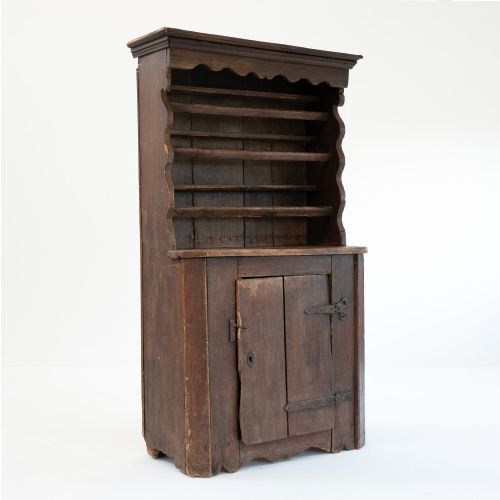
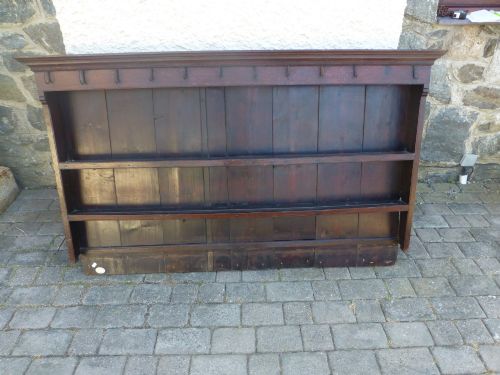
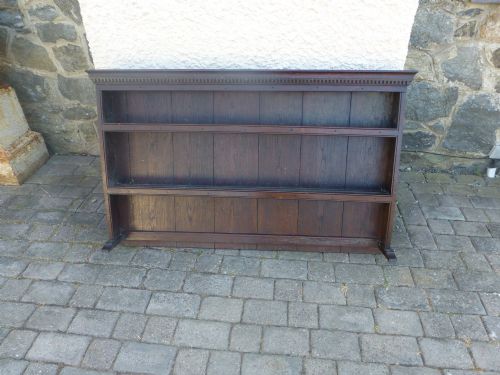
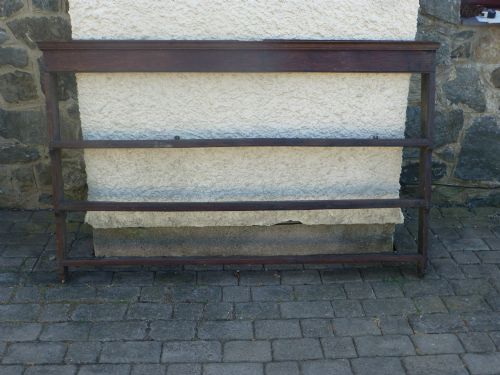
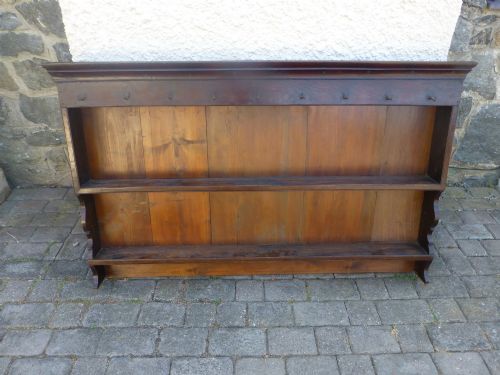
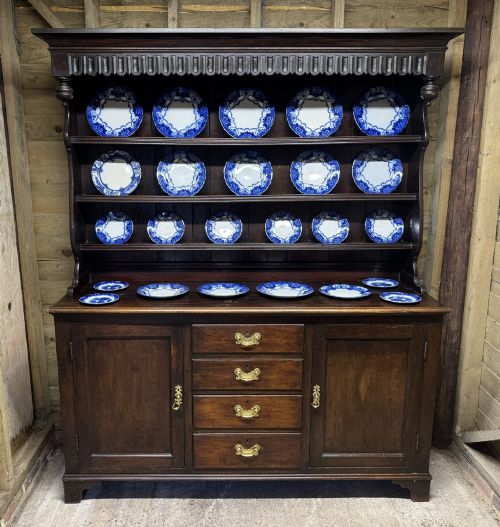
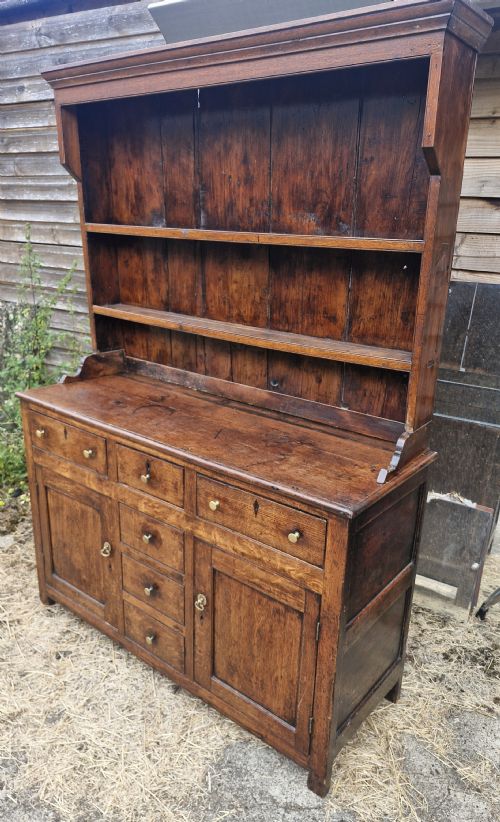
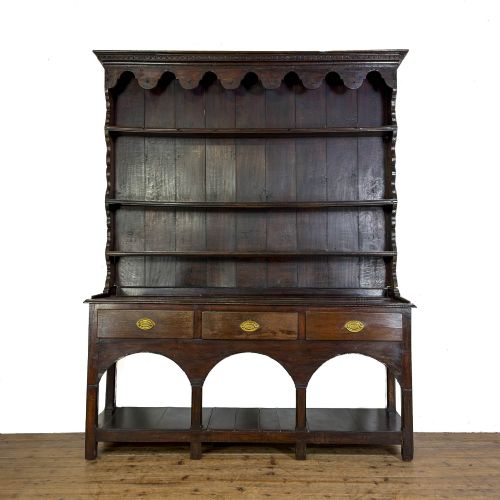
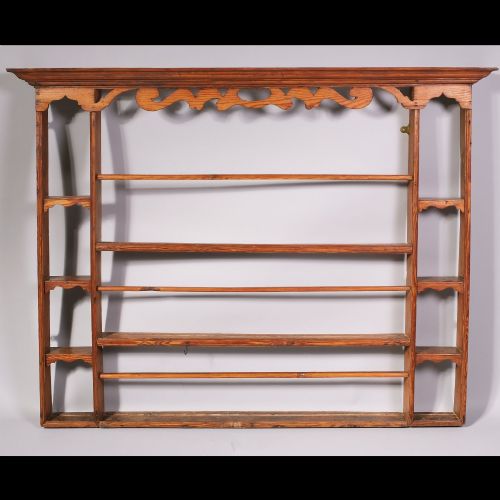
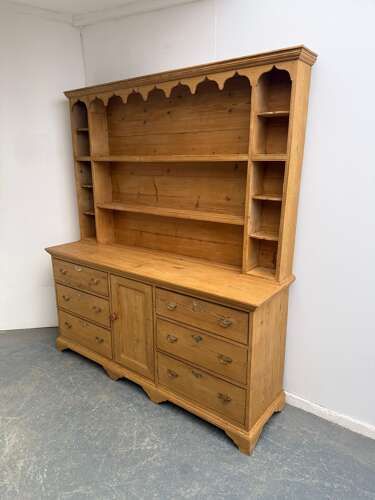
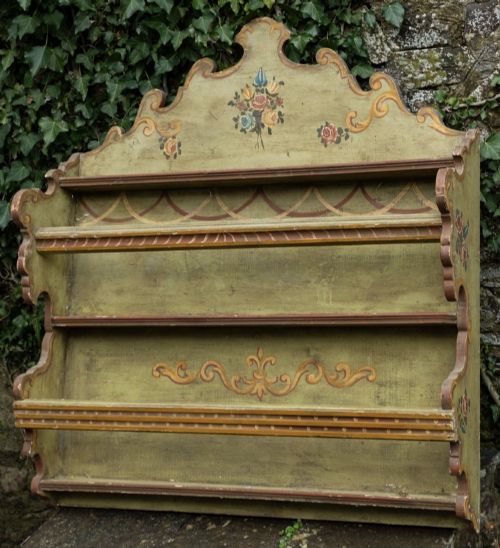
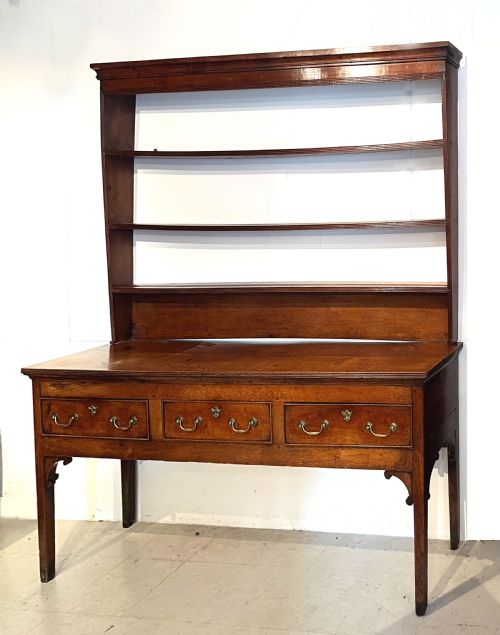

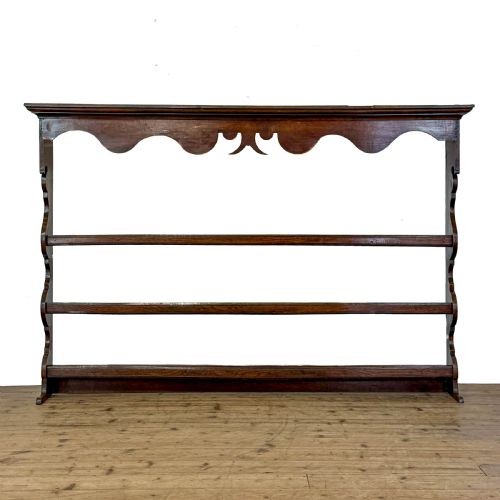
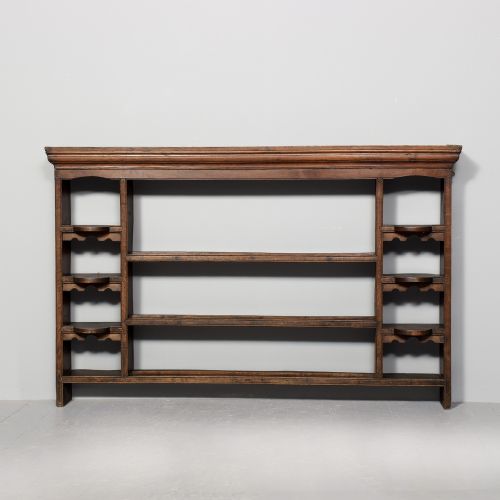

Country Wooden Plate Rack
These country wooden plate racks bring honest kitchen storage and display to a wall, showing the grain and patina of hard-wearing domestic timber.
Country Wooden Plate Rack
A country wooden plate rack serves to hold tableware upright against a wall, keeping everyday crockery within arm's reach in a working kitchen or dining room. When searching for a country wooden plate rack, buyers encounter a mix of wall-mounted shelves, separate dresser racks, and complete dressers featuring integrated display tiers.
The pieces listed span domestic workshops and regional vernacular furniture traditions, predominantly built from solid timbers. Most examples follow English, Welsh, Irish, or French country styles, reflecting local kitchen storage needs from the eighteenth century onwards.
How they were made
Carpenters built these racks primarily from native hardwoods and softwoods like oak, pine, elm, and walnut, often selecting timber for utility and local availability. Planks were joined with simple carpentry methods, featuring pegged joints, backboards, and channeled plate rails designed to stop round dishes from sliding forward.
Surface finishes depend on the original function and subsequent care, ranging from bare waxed wood and honey-toned patinas to old layers of paint. Brass or iron fixings and hooks occasionally appear for hanging utensils, while architectural details such as moulded cornices or columns distinguish more ambitious provincial pieces.
Some antique racks still show faint circular ghosts in the wood where centuries of heavy pewter plates once rested.
What varies in quality
The distinction between standard utility furniture and superior examples lies in the choice of timber and the harmony of proportion. Racks constructed from deeply grained oak or richly patinated pine with crisp mouldings show greater craftsmanship than basic utilitarian versions.
The integrity of the structure and the depth of surface patina dictate desirability. Pieces retaining their original mounting points, undisturbed backboards, and untouched wax or paint layers carry more integrity than heavily restored examples.
The Country Wooden Plate Rack Glossary
- Delft rack
- A wall-mounted or dresser-top wooden shelf designed specifically to display ceramic plates and platters upright. These racks feature narrow ledges and retaining rails to keep dishes secure.
- Pot board
- A lower open shelf built into the base of a dresser, traditionally used for storing heavy pots and pans off a flagged kitchen floor. This feature appears on heavier country kitchen furniture.
- Vernacular furniture
- Domestic items made by local country joiners and provincial workshops rather than urban cabinetmakers. These pieces prioritize local utility and traditional regional styles over fashionable metropolitan trends.
- Patina
- The surface sheen and colour developed over decades of handling, cleaning, and exposure to light. A deep patina indicates age and regular use rather than modern chemical distressing.
- Two-part dresser
- A large kitchen furniture piece comprising a lower base cabinet or sideboard and a removable upper plate rack. The sections separate for transport and placement against a kitchen wall.
Country Wooden Plate Rack: Frequently Asked Questions
How do I hang a heavy wooden plate rack safely?
These racks hold heavy ceramic plates, which adds substantial weight to the overall structure once loaded. Secure the back frame directly into wall studs or masonry using appropriate heavy-duty fixings rather than relying solely on plasterboard.
Distribute heavier platters toward the lower tiers to keep the centre of gravity low. Professional installation is advisable for older pieces lacking modern mounting brackets.
Are these plate racks meant for walls or dressers?
The selection includes both independent wall-mounted racks and upper sections originally designed to sit atop a base dresser. Wall-mounted versions feature hanging points or screw holes through the backboards for direct attachment.
Standalone rack tops can often be hung on a wall independently if weight and structural stability permit. Check the back construction to confirm whether it was built for hanging or resting on a counter.
How do I clean and care for old country wood?
Maintain waxed surfaces by dusting with a dry, soft cloth and applying a traditional beeswax paste sparingly when the timber looks dry. Avoid modern liquid polishes and silicone sprays, which build up residue and soften old finishes.
Keep wooden racks away from direct heat sources and damp kitchen zones to prevent the timber from warping or splitting. Gentle care preserves the historical surface and natural sheen.
How can I tell an eighteenth-century rack from a later copy?
Examine the timber boards at the back and sides for hand-tool marks, pit-sawing striations, and irregular thicknesses. Eighteenth-century country pieces utilise hand-forged iron nails, pegged mortise and tenon joints, and timbers showing genuine shrinkage.
Later reproductions often display uniform machine milling, standardised modern screws, and artificial distressing. Comparing the backboards and underside joinery usually reveals the true age of the piece.