
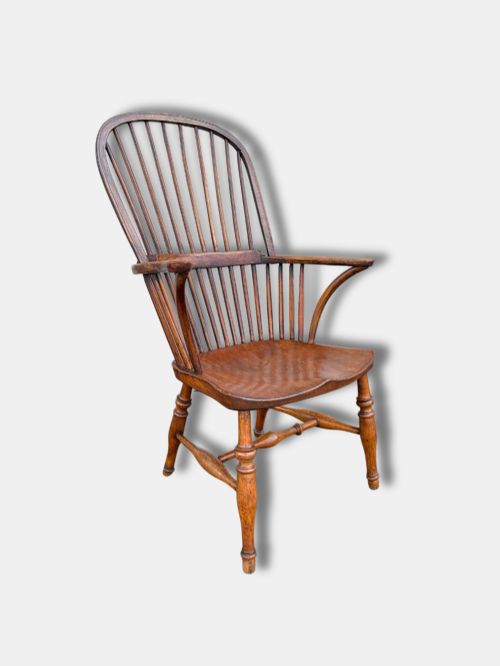


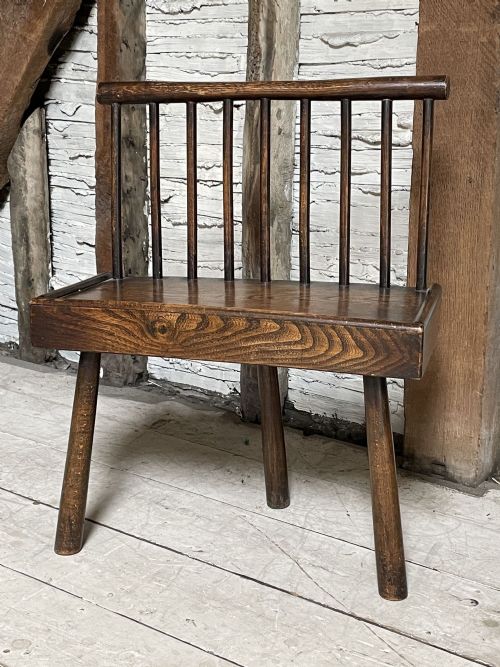

Country Stickback Chair
A country stickback chair is a sturdy vernacular seat built for farmhouse and kitchen use, offering honest timber construction and enduring charm.
Country Stickback Chair
When you search for country stickback chair, you encounter practical vernacular seating shaped by local tradition rather than strict court fashions. These pieces include kitchen armchairs, dining chairs, farmhouse seating, and small child variants.
You are most likely to meet elm-seated armchairs and side chairs dating from the eighteenth century through to the late nineteenth century. Makers built these seats for daily utility, employing simple wooden spindles and solid timber boards.
The regional variations draw upon English country traditions, embracing forms from the Georgian vernacular to Victorian farmhouse styles. Each example reflects the practical needs of rural homes, kitchens, and dairies.
How they were made
Craftsmen built these chairs by combining contrasting native timbers, typically pairing sturdy elm for the shaped seats with ash or beech for the bent spindles and legs. Some select pieces feature yew wood or simulated rosewood finishes.
Turned components and steam-bent uprights formed the signature stick backs, secured firmly into thick wooden seats without complex joinery. Simple hand tools and local woodturning lathes shaped every structural part.
Child versions appear alongside full-sized armchairs, proving that farmhouse chores started remarkably early.
What varies in quality
The standard of a country stickback chair rests upon the balance of its proportions and the character of the timber used in its construction. Well-figured elm seats and elegantly turned legs distinguish finer examples from plain utility seating.
The integrity of the spindle joints and the depth of the seat shaping also separate superior regional pieces from simpler provincial work. Original surface patination adds further distinction to the best-preserved specimens.
Fred Walker Rockley
The Country Stickback Chair Glossary
- Stickback
- A chair design featuring slender turned wooden spindles socketed directly into the seat and top rail. This construction provides robust support with minimal materials.
- Windsor
- A traditional wooden chair featuring a solid carved seat into which the legs and back sticks are wedged. These chairs often incorporate bentwood bows or comb pieces.
- Vernacular
- Everyday objects made by local tradesmen following regional traditions rather than formal architectural patterns. These pieces prioritise functional utility above ornament.
- Elm
- A tough, interlocking timber commonly selected for chair seats because it resists splitting under heavy downward pressure. Its distinct grain patterns add visual depth.
Country Stickback Chair: Frequently Asked Questions
What is a country stickback chair?
A country stickback chair is a traditional wooden seat featuring turned spindles fitted into a solid timber board. These chairs served everyday domestic purposes in rural homes and farmhouses.
Craftsmen utilised locally available woods like elm, ash, and beech to build durable seating for kitchens and dining spaces.
How were these chairs used?
These chairs served mainly as practical seating around farmhouse kitchen tables and hearths. Their robust construction suited daily labour and constant family use.
Smaller child versions provided sturdy seating for younger household members, matching the larger armchairs in design.
How do I live with one?
Placing a stickback chair in a hallway, kitchen, or living space introduces authentic rustic texture to an interior. Their simple silhouettes complement both traditional and modern rooms.
Maintain the timber by keeping the chair away from direct heat sources and applying appropriate natural waxes to protect the surface.
How do I date these chairs?
Dating relies upon examining the timber wear, tool marks, construction methods, and overall regional style. Earlier pieces from the eighteenth century often display broader proportions and deeper seat saddling.
Nineteenth-century examples frequently show finer mechanical turning on the legs and upright spindles while retaining traditional joinery.