

Country Stick Chair
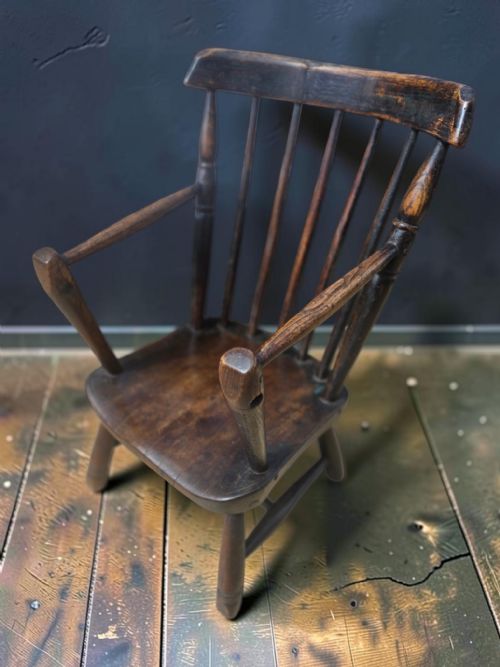
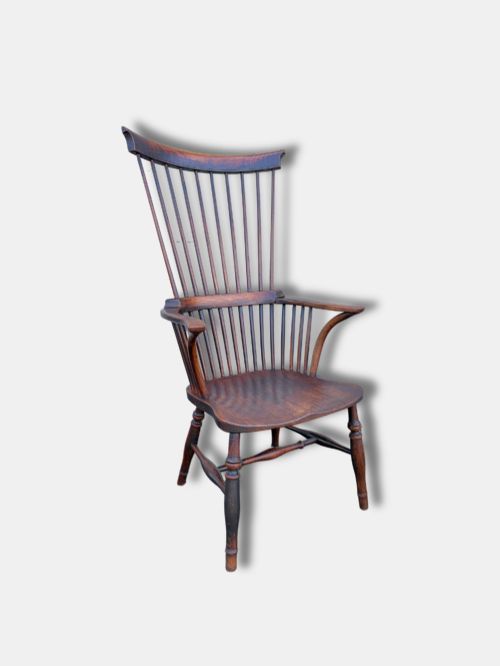
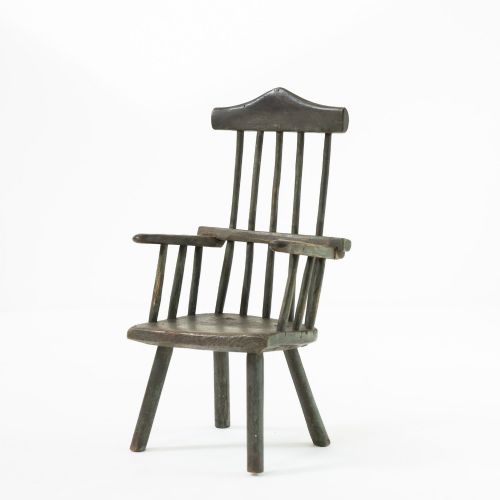
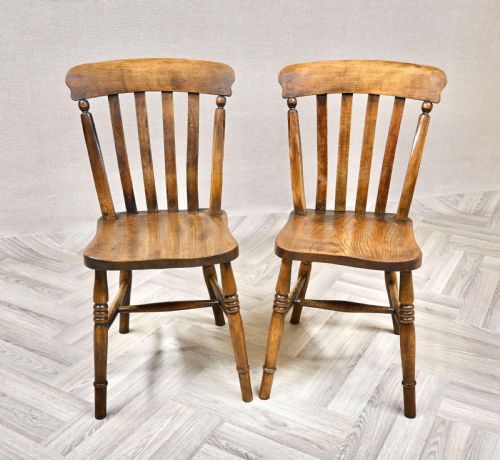
A country stick chair is a vernacular seat of turned spindles and solid timber, built for utility and everyday endurance.
Country Stick Chair
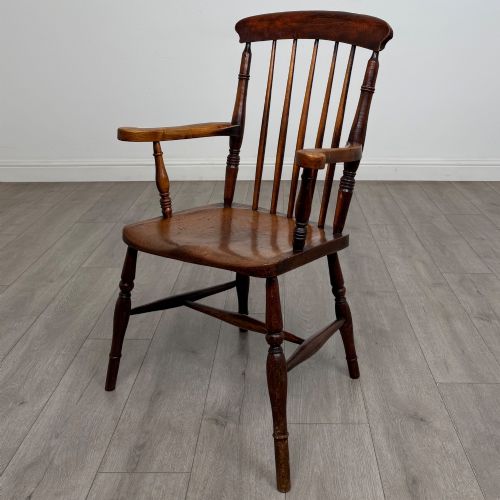
A country stick chair represents the practical domestic seating of English rural life, spanning periods from the eighteenth century through the Victorian era and into the twentieth. Buyers seek these pieces for their honest construction and integration of local timber traditions.
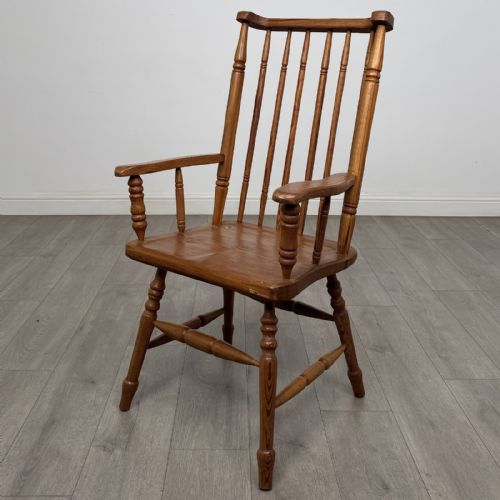
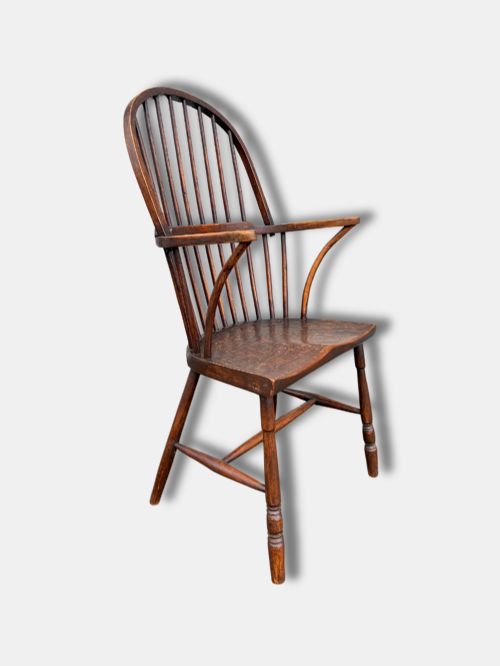
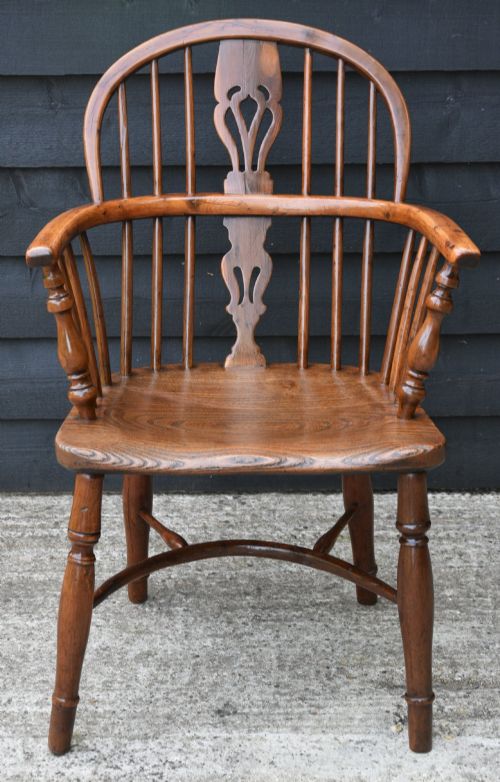
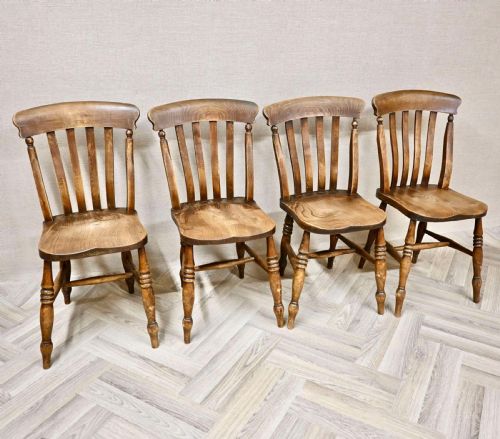
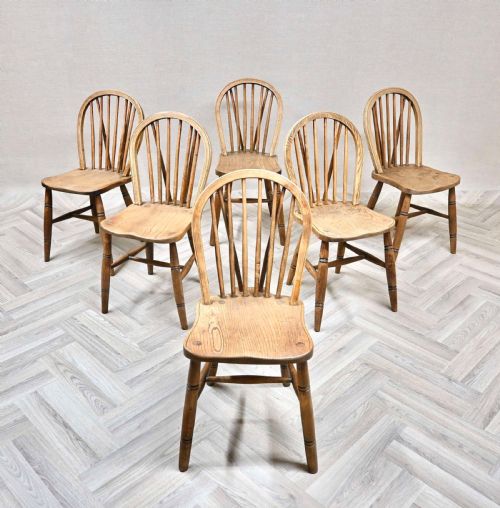
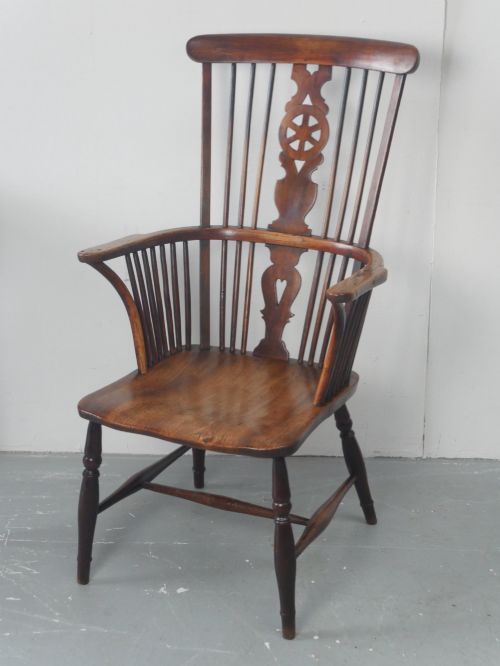
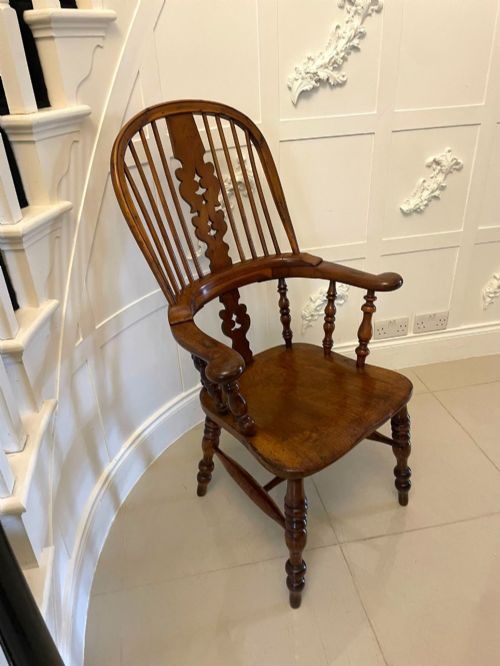
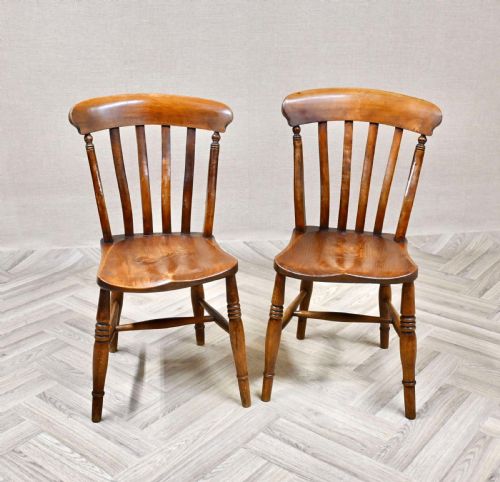
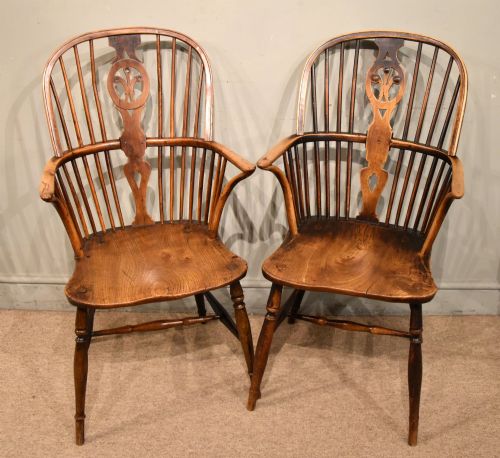
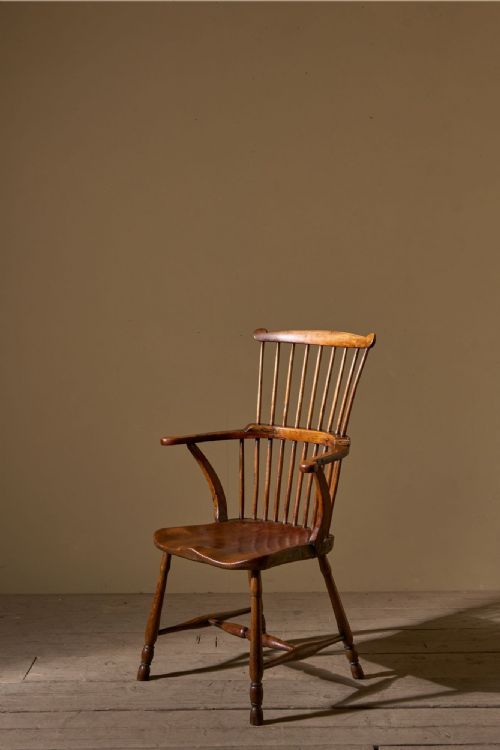
The forms on this page include hoop-back, comb-back, and lath-back armchairs alongside kitchen dining sets and children's armchairs. Examples originate from regional workshops including the Thames Valley, High Wycombe, Wales, Scotland, the West Country, and Ireland.
How they were made
Maker-joiners utilised mixed woods chosen for specific structural roles, combining elm for carved solid seats with ash or beech for resilient spindles and steam-bent hoops. Yew, fruitwood, oak, and laburnum appear frequently, selected from local timber stocks.
Parts were shaped using pole lathes and drawknives before being joined through bored holes in the seat slab, often secured with wedges. Surfaces frequently show original brown paint or the warm patina of bare timber polished through use.
Makers occasionally recycled mismatched farmhouse spares into harlequin dining sets that gathered at the table despite divergent origins.
What varies in quality
Proportion and the harmonious balance of bentwood hoops against turned legs dictate the visual strength of a piece. Finer examples display carefully tapered spindles and generous saddle seats shaped from a single heavy plank of elm.
The integrity of early joinery, the retention of original surface finishes such as early brown paint, and the choice of desirable timbers like yew separate standard vernacular seating from exceptional regional output.
The Country Stick Chair Glossary
- Hoop back
- A continuous bentwood bow forming the backrest and arms of a chair, socketed directly into the solid wooden seat.
- Comb back
- A Windsor chair variation where vertical spindles rise through a low horizontal arm-rail to support a raised headrest resembling a traditional hair comb.
- Crinoline stretcher
- An arched underframe connecting the legs of a Windsor chair to provide lateral stability, named after the shape of nineteenth-century undergarments.
- Thames Valley
- A recognised regional style of chairmaking known for the use of yew wood, figured elm, and refined crinoline stretchers.
- Vernacular
- Objects built by regional craftsmen following local traditions rather than strict urban academic patterns.
Country Stick Chair: Frequently Asked Questions
What is a stick back chair?
A stick back chair is a form of wooden seating where turned or shaved spindles are tenoned directly into a solid wooden seat slab.
These chairs rely on simple structural geometry rather than heavy upholstery, making them durable items for farmhouse kitchens and everyday domestic use.
How do I date an old Windsor chair?
Dating relies on observing construction methods, timber choices, and regional design traits. Eighteenth-century models often feature comb backs and ash construction, while Victorian examples frequently use beech and elm in matching sets.
Examination of the seat underside reveals tool marks and wear patterns that indicate the age of the piece.
Are these chairs comfortable for daily use?
Solid elm seats are sculpted with subtle hollows designed to distribute weight comfortably without padding. Their supportive high or low backs encourage upright posture during dining or fireside sitting.
Placing them in daily rotation requires no special treatment beyond standard care for historic timber furniture.
Why are different woods mixed in one chair?
Country makers selected specific timbers for the physical properties each wood provided. Elm was chosen for seats because it resists splitting when nailed or bored, while flexible ash and resilient yew suited steam-bent hoops and slender turned spindles.