
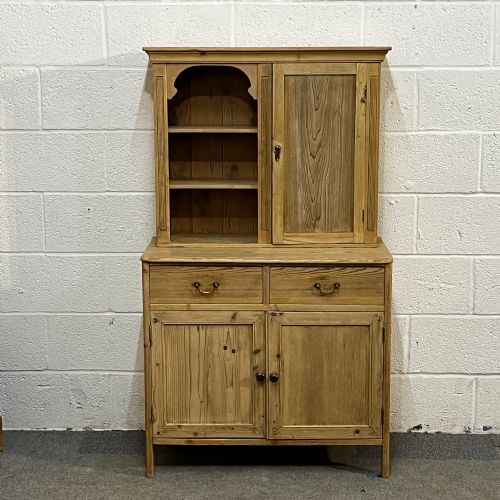
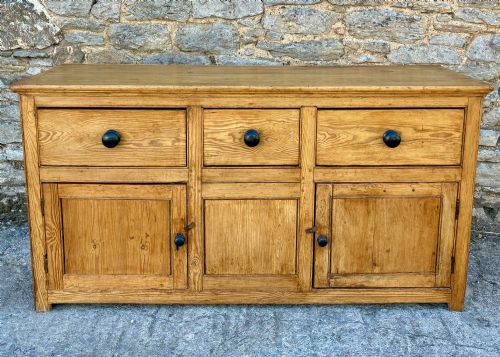
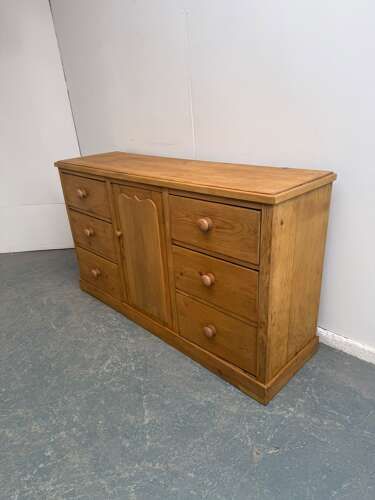
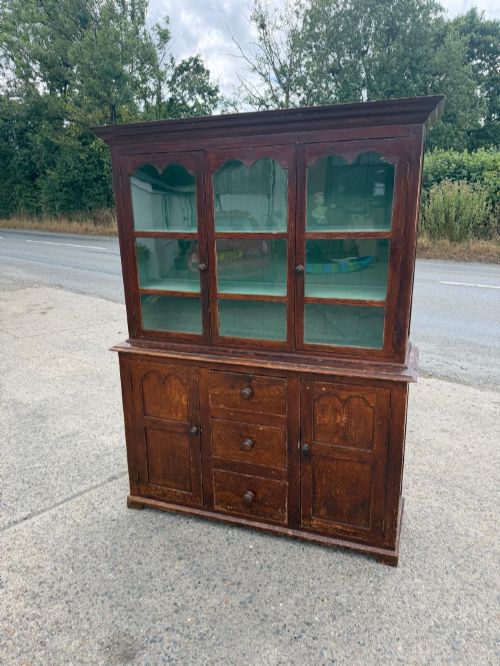
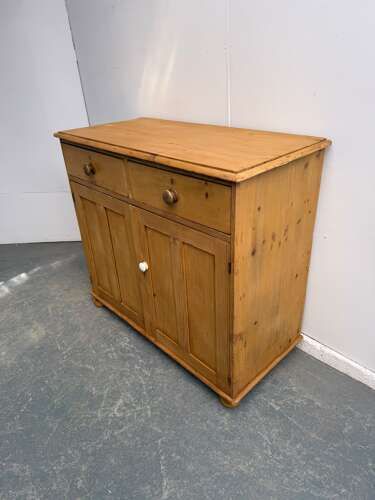
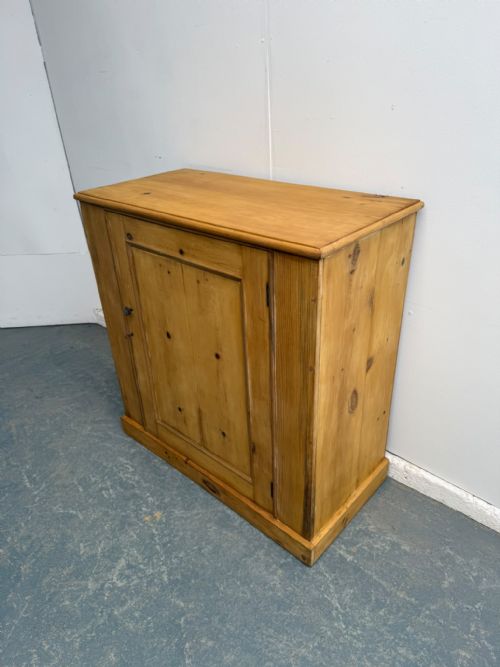
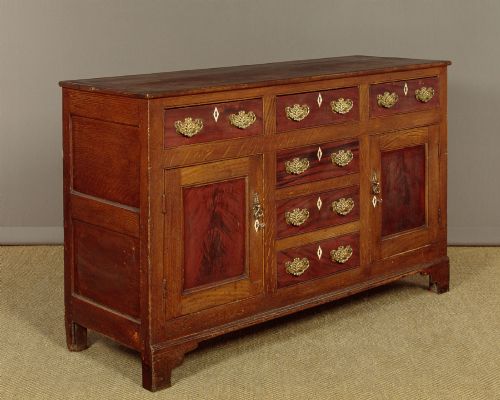
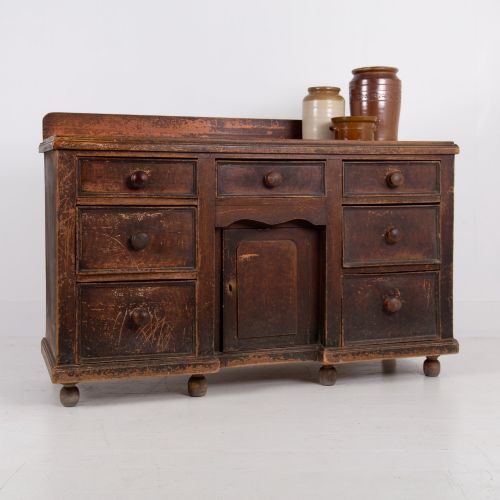
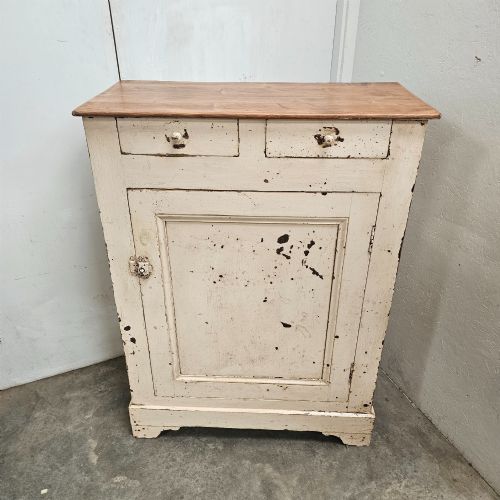
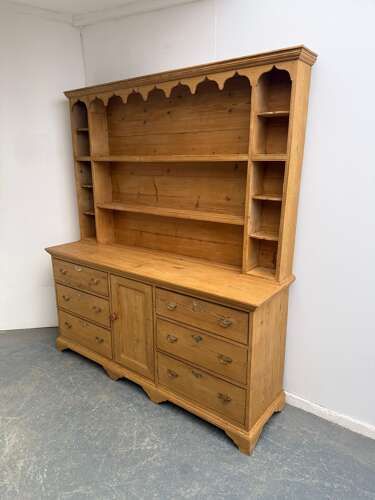

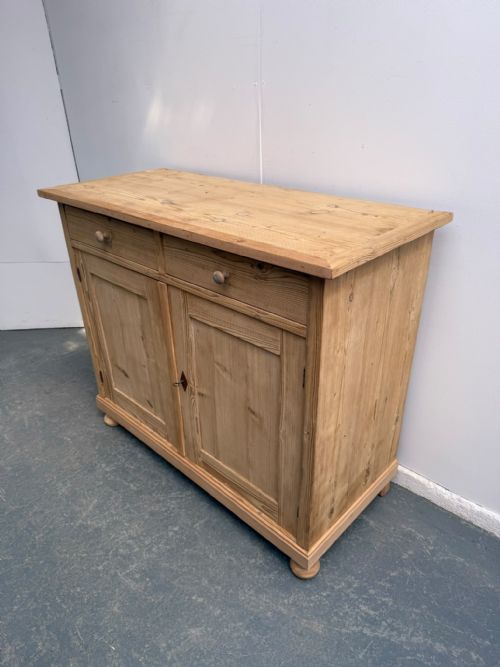
Country Pine Sideboard Cabinet
Country pine sideboard cabinet pieces are robust domestic storage units built from softwood, offering practical utility and rustic character for everyday interiors.
Country Pine Sideboard Cabinet
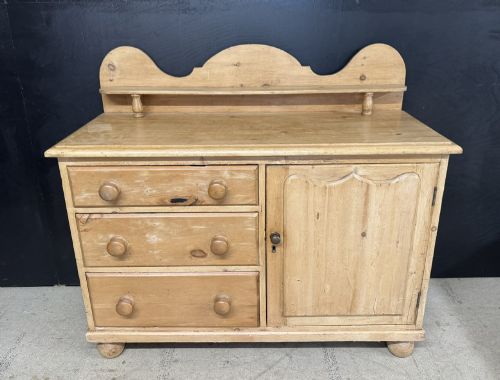
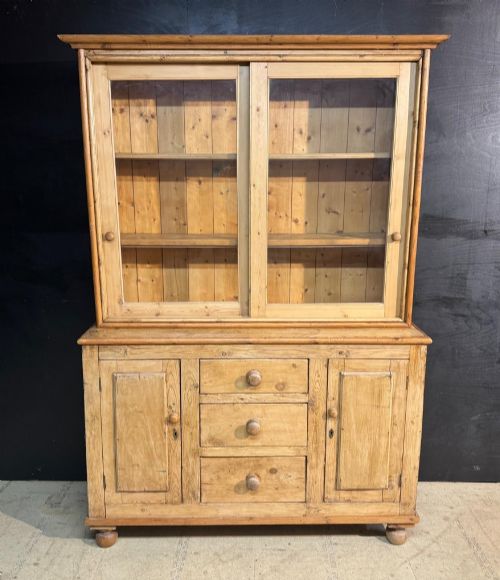
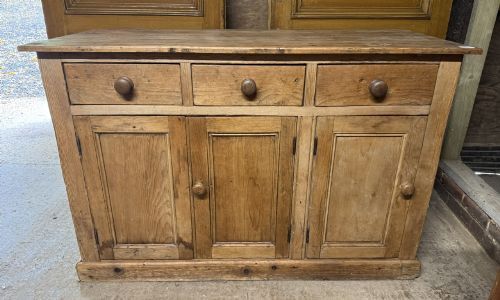
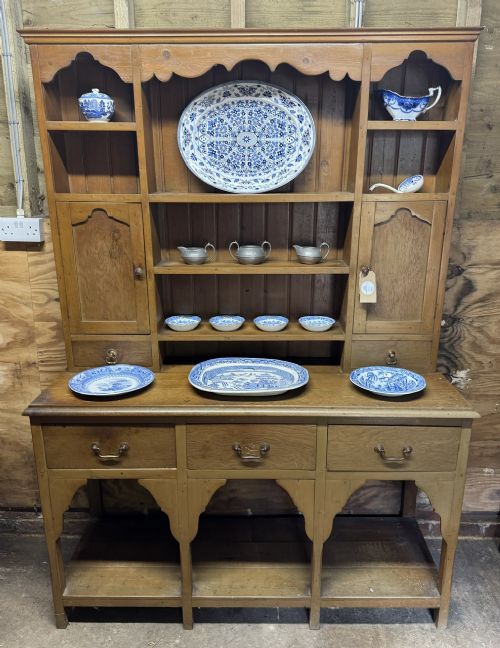
A country pine sideboard cabinet serves as a functional storage anchor in kitchens, dining rooms and halls, combining surface display space with enclosed shelving or drawers. Buyers seeking a country pine sideboard cabinet will encounter variations ranging from low dresser bases and tall kitchen dressers to glazed cabinets and confituriers.
The pieces originating across these listings span the nineteenth century, the Victorian era, the Edwardian period and the Georgian era, incorporating regional styles such as English country, Welsh, Scandinavian country and French provincial. Simple proportions, panelled doors and sturdy framing define the dominant forms.
Makers utilised local softwood timbers to construct hard-wearing furniture for domestic service, resulting in items that transitioned from working farmhouses and schools into modern living spaces. The selection includes both unpainted waxed timber and surfaces retaining original historic paint finishes.
Evaluating the Pieces
Quality separates along the lines of proportion, originality of surface, and structural integrity. Pieces retaining untouched original paint or early wax patinas hold distinct character compared to those stripped or repeatedly coated.
Fine construction shows in balanced drawer arrangements, well-fitted doors, and minimal timber replacement over decades of domestic use. Regional details and well-preserved hardware contribute further to the distinction between standard utility items and finer vernacular examples.
Listings feature pine alongside brass, paint, iron, glass, ceramic and bone across nineteenth century and Victorian periods.
The Country Pine Sideboard Cabinet Glossary
- Dresser Base
- A low sideboard or table fitted with drawers and often lower cupboards, traditionally used for food preparation and serving. It forms the foundation of many kitchen storage layouts.
- Confiturier
- A French jam cupboard designed for storing preserves and provisions, typically featuring a compact single door configuration. These small cabinets fit neatly into dining spaces.
- Patina
- The surface sheen and colour acquired by timber through age, handling and waxing over generations. Original patinas show authentic wear without harsh modern stripping.
- Chiffonier
- A small sideboard or low cabinet equipped with drawers and enclosed lower shelves, popular during the nineteenth and early twentieth centuries. It provides versatile storage for smaller rooms.
Country Pine Sideboard Cabinet: Frequently Asked Questions
How do I clean a waxed pine sideboard?
Maintain waxed pine surfaces by dusting with a dry cloth and applying natural beeswax periodically to nourish the timber. Avoid using harsh chemical cleaners that strip the historic finish.
Keep the cabinet away from direct heat sources and strong sunlight to prevent the softwood from drying out or splitting over time.
What is the difference between a dresser base and a sideboard?
A dresser base typically originates from a kitchen or pantry context, featuring deep drawers and cupboards designed for heavy domestic utility. Sideboards often display slightly more formal proportions intended for dining rooms.
Both pieces provide flat top surfaces and enclosed lower storage, though regional naming conventions frequently overlap depending on local workshop traditions.
How do I date an antique pine cabinet?
Dating relies on construction methods, hardware types, timber characteristics and overall style markers such as Victorian or Georgian proportions. Hand-cut joints, original brass or iron pulls, and handwritten makers' marks offer reliable chronological clues.
Comparing the piece to documented regional vernacular designs helps narrow the manufacturing period.