




Country Pine Shelving
Country pine shelving brings honest utility and warmth to a room, offering simple storage built from characterful softwood.
Country Pine Shelving
Country pine shelving encompasses open bookcases, wall racks, and alcove cupboards designed for practical household storage. These pieces bridge several eras, drawing from Georgian, Victorian, and Edwardian traditions alongside continental provincial styles.
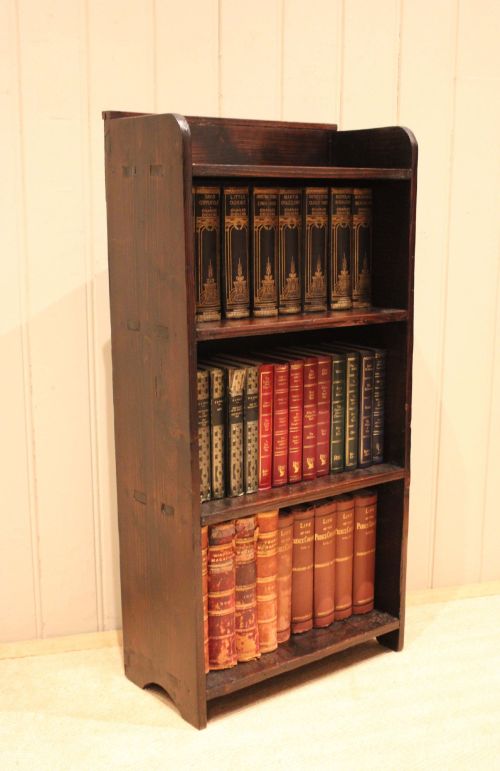
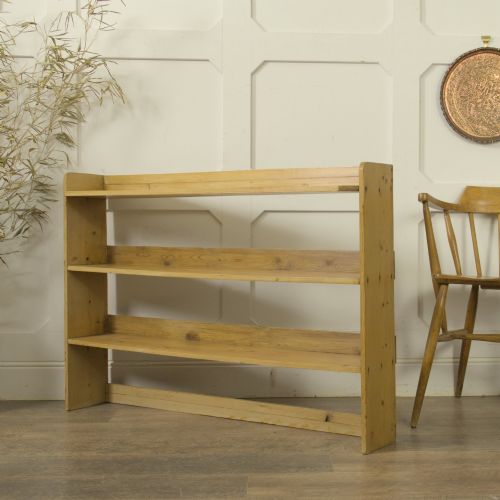
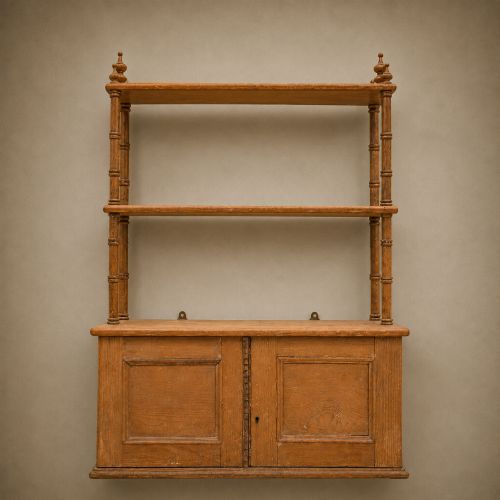
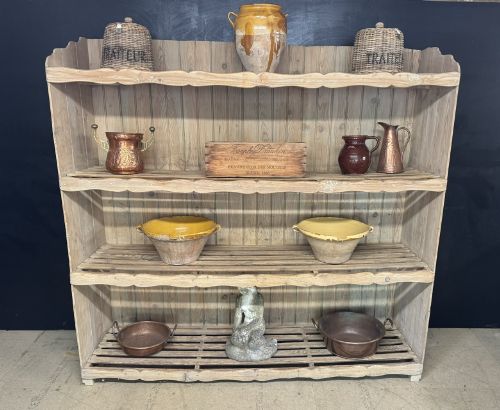
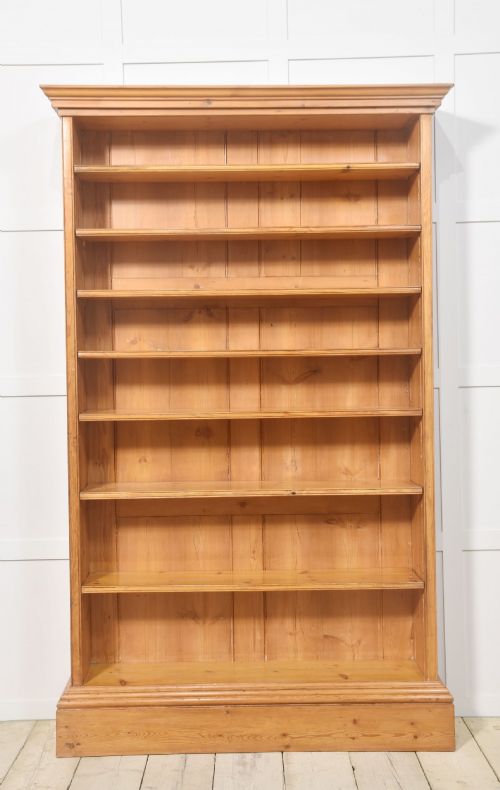
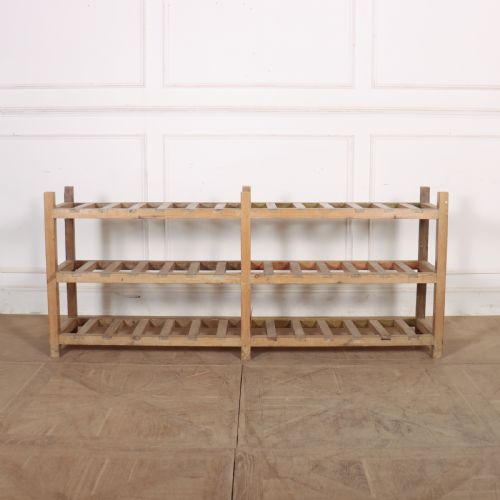
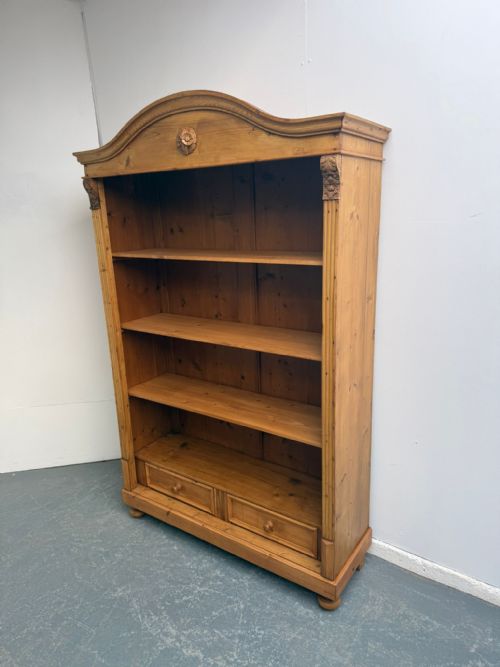
The version most commonly met on this page is the open bookcase, often rendered in rustic pine with simple side panels and fixed or adjustable shelves. Wall-hung variations and corner cabinets also appear frequently, reflecting domestic needs from across the nineteenth and early twentieth centuries.
Materials and Construction
Makers utilised native and imported softwoods, primarily pine and deal timber, chosen for workability and abundance rather than ostentation. Boards were joined simply, often relying on traditional housing joints for shelves and straightforward panel construction for backing.
Surfaces were frequently left bare to age naturally, but many pieces received historical coats of paint, distemper, or wax finishes. Iron fittings such as strap hinges, brackets, and hooks supplied the structural support necessary for daily domestic use.
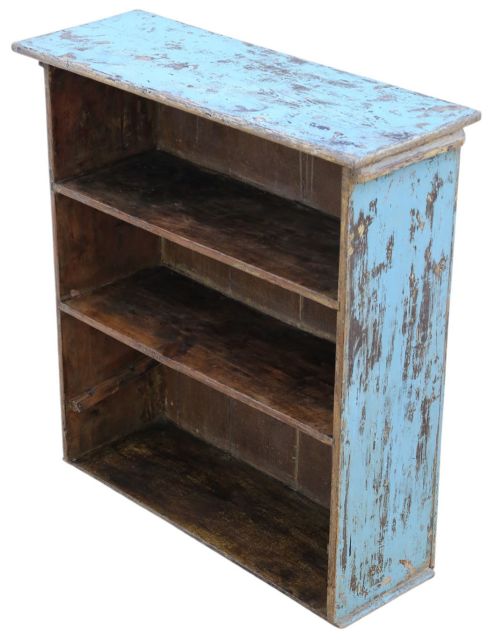
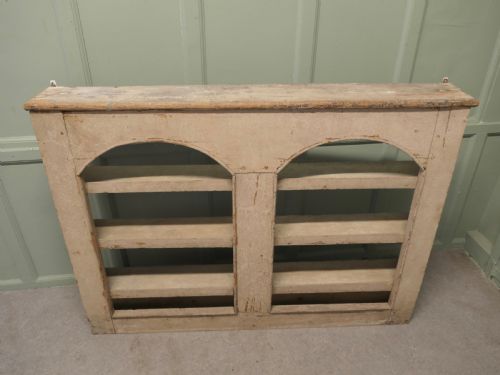
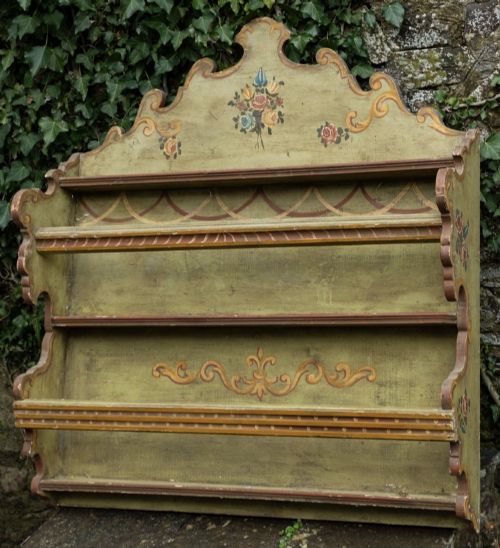
Several pieces bear layers of old distemper paint, having survived generations of kitchen steam, parlour dust, and shifting domestic tastes.
Distinctions in Quality
Quality in country pine shelving rests on the integrity of the timber selection and the thoughtfulness of the proportions. Heavier deal boards and sound structural joints separate robust utility pieces from more fragile or hastily assembled examples.
The character of the surface finish plays a major role, distinguishing pieces with original layered paint or deep wax patination from those stripped down to raw wood. Minor signs of historic wear, tool marks, and authentic hardware enhance the integrity of the piece.
The Country Pine Shelving Glossary
- Deal wood
- A traditional British term for softwood timber, typically fir or pine, widely used in utilitarian furniture making.
- Distemper
- A water-based paint medium using chalk and pigment, frequently found flaking softly on older provincial pieces.
- Alcove shelving
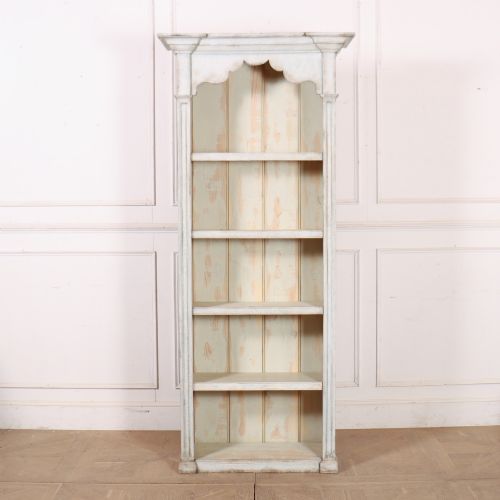
- Fitted or freestanding units shaped specifically to occupy recessed wall spaces within a room.
- Knockdown
- Furniture constructed to be easily dismantled into panels and sections for transport or relocation.
- Patina
- The surface sheen and colour acquired through decades of handling, polishing, and natural ageing.
Country Pine Shelving: Frequently Asked Questions
How do I date country pine shelving?
Dating relies on observing construction methods, such as hand-cut nails, timber dimensions, and backboards, alongside any historical surface treatments. Georgian and early nineteenth-century examples often display wider boards and hand-planed surfaces.
Later Victorian and Edwardian pieces tend to show more standardised milling and machine-cut elements. Comparing the hardware and general wear helps narrow the era further.
Are these shelves suitable for heavy books?
Most open bookcases and wall shelves built from solid deal or pine possess sufficient strength for everyday book storage. Adjustable shelf systems found on later Victorian pieces offer flexibility for varying volumes.
Wall-hung units require secure fixing to solid masonry or studs to bear substantial weight safely. Inspecting the bracket fixings and shelf thickness clarifies load capacity.
Should I wax or paint bare pine?
Applying wax nourishes dry timber and develops a warm surface sheen over time. Leaving the wood bare preserves a raw, rustic aesthetic favoured in country interiors.
Painting with traditional distemper or chalk-based paints mirrors historical finishes seen on provincial European furniture. Personal preference and the existing interior guide the choice.
What is the difference between deal and pine?
Deal is a historic trade term specifically denoting softwood timber cut from pine or fir trees. In practical terms, furniture described as deal wood shares the same botanical family as pine.
Both materials weather similarly, developing comparable patinas and structural characteristics over the decades. The terms often appear interchangeably in older listings.