

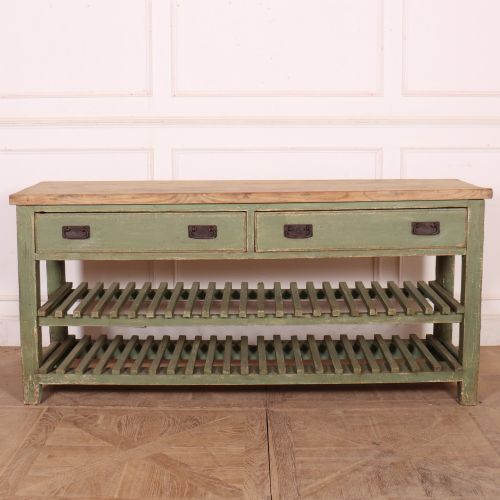
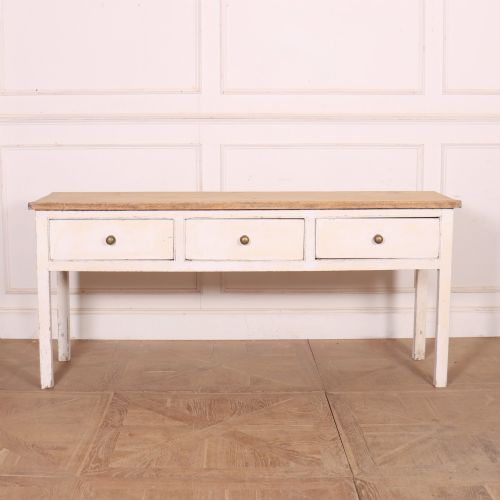
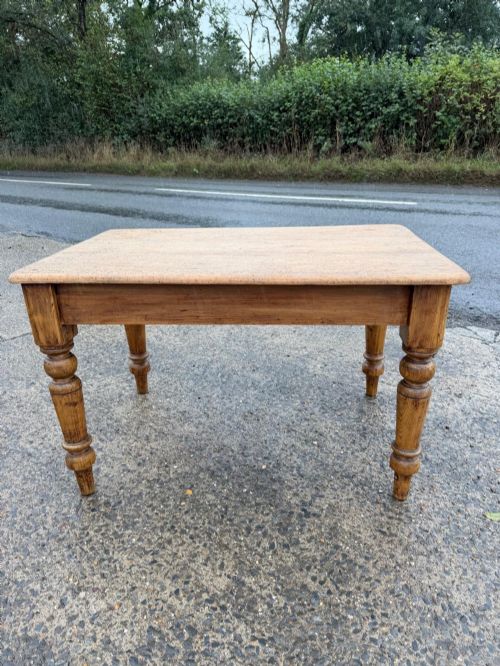
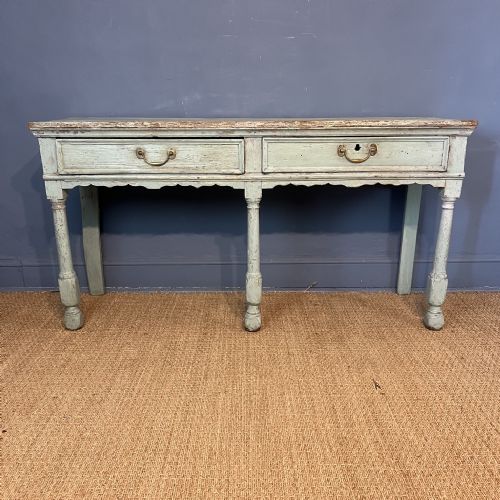

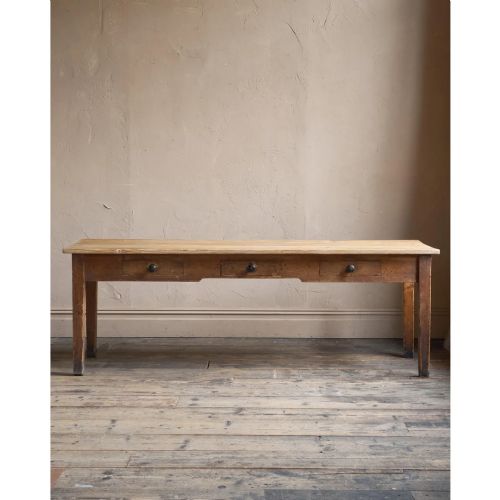
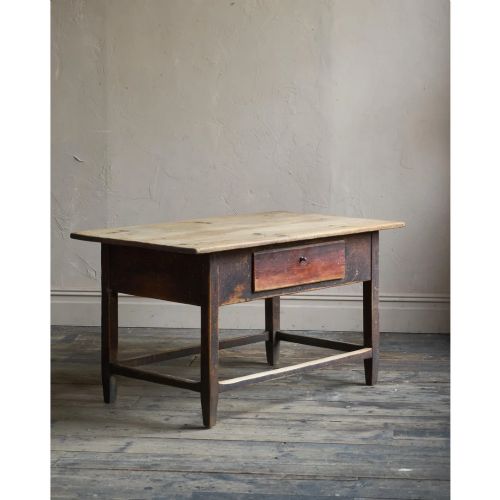
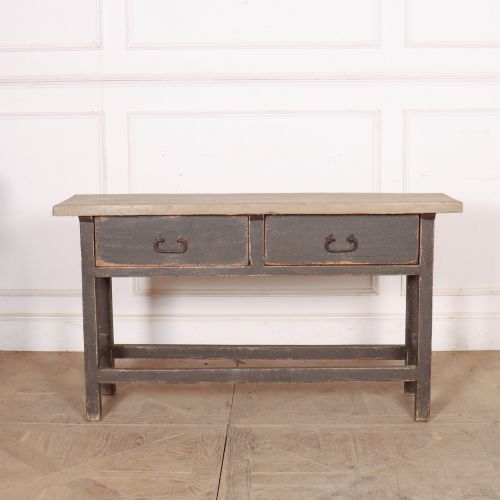
Country Pine Console Table
A country pine console table brings honest utility and warmth to a room, offering practical surface space rooted in everyday domestic history.
Country Pine Console Table
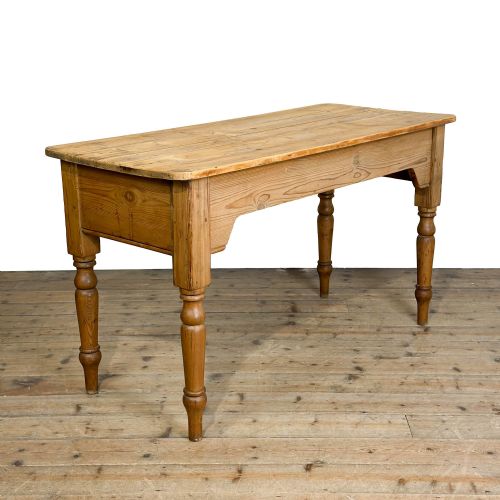
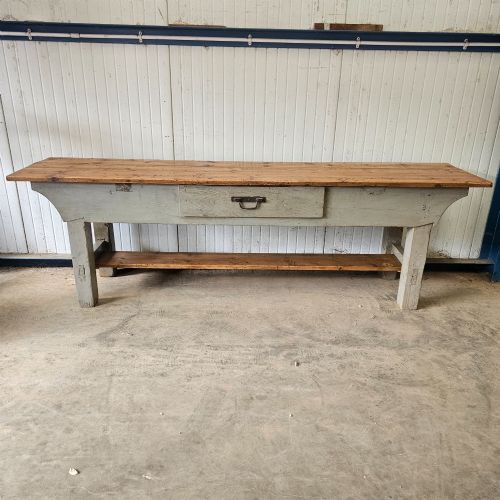
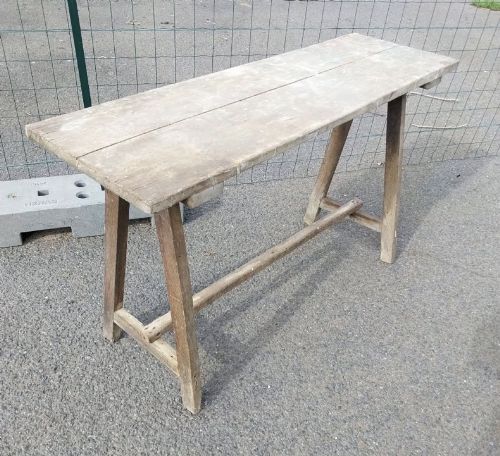
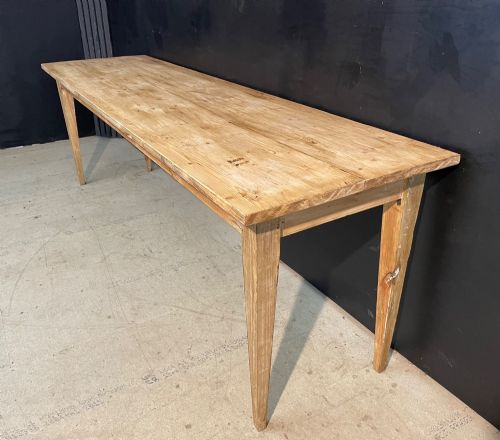
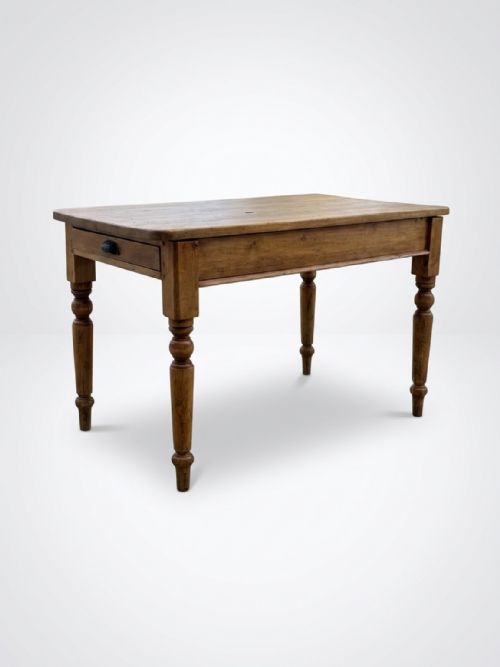
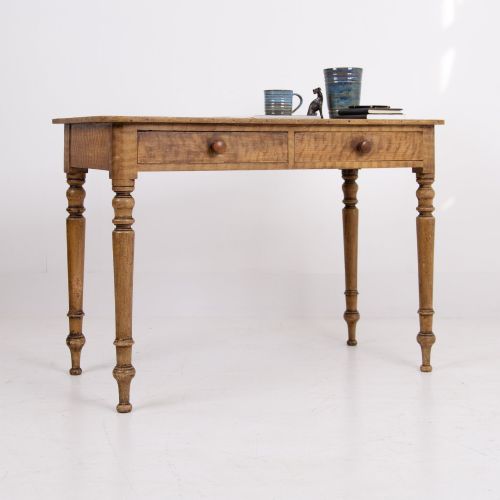
A country pine console table serves as a sturdy surface for narrow hallways, living rooms, and kitchens, drawing on utilitarian forms built for daily service. These pieces frequently manifest as side tables, servers, dresser bases, and washstands originating across English, French, Swedish, and Italian domestic traditions.
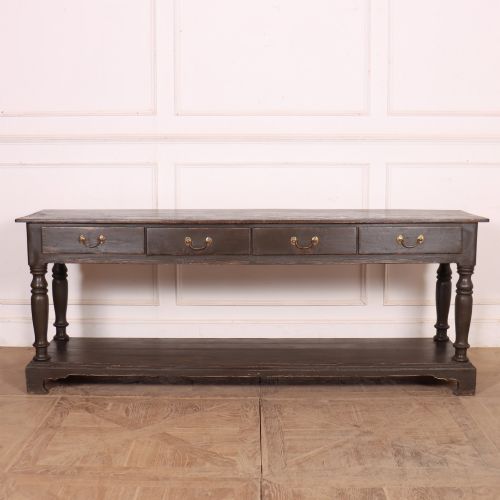
The most common examples encountered on this page date from the nineteenth century and the Victorian era, alongside Georgian, Edwardian, and early twentieth-century pieces. They appear in varying formats, from simple single-drawer designs to scrub-top kitchen tables and potboard dresser bases fitted with lower shelves.
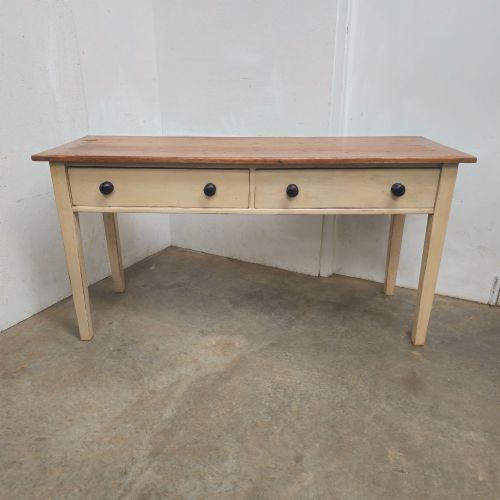
Proportions tend to be functional rather than grand, designed to fit narrow passageways or working kitchen spaces. Buyers will find both bare timber finishes and pieces retaining original paint, scumble, or dairy finishes applied decades ago.
Materials and Construction
Construction relies primarily on pine and pitch pine, occasionally paired with secondary timbers like sycamore, assembled to withstand heavy household tasks. Joinery prioritises durability, often utilising straightforward pegged joints, dovetails for drawer construction, and box stretchers for additional rigidity.
Surface treatments range from scrubbed natural wood to layered painted finishes, brass hardware, and metal details. Many surviving items retain traces of original paint or scumble glazing applied to mimic more expensive hardwoods or to seal the softwood surfaces.
Country Pine Console Table Retail Price Guide 2026
Typical asking prices for country pine console table among the pieces listed under this phrase on Sellingantiques today, from the lower quarter to the upper quarter. They describe what is for sale here now, not the wider market.
The inventory encompasses diverse utilitarian forms, including side tables, washstands, dresser bases, serving tables, and dairy tables.
Judging the Build
Quality in these utility tables rests upon the integrity of the timber and the honesty of the surface rather than elaborate decoration. Pieces retaining their original paint, undisturbed scrub-tops, and authentic brass or wooden fixtures command greater respect among collectors.
Structural soundness marks the distinction between a robust survivor and a compromised piece. Well-joined frames, original drawer bottoms, and minimal timber replacement ensure the table continues to function reliably in a modern home.
The Country Pine Console Table Glossary
- Scumble
- A decorative paint technique involving translucent glazes dragged or brushed over a base coat to simulate grain. It appears frequently on nineteenth-century surfaces.
- Potboard Dresser Base
- A heavy base cabinet featuring an open lower shelf traditionally used for storing pots and pans. This form underpins many rustic dining and serving arrangements.
- Scrubs
- Unpainted wooden tabletops cleaned repeatedly with water and scrubbing brushes, leaving a pale, textured grain. This finish develops naturally through decades of kitchen use.
- Frieze
- The horizontal band situated directly beneath the tabletop, often housing one or more drawers. Examining this section reveals how the legs join the upper frame.
- Pitch Pine
- A dense, resinous variety of pine prized for its durability and prominent grain patterns. It was frequently utilised for heavy-use furniture during the nineteenth century.
Country Pine Console Table: Frequently Asked Questions
How do I style a country pine console table?
Position the table against a hallway or living room wall to anchor the space with its warm timber tones. Layer the surface with ceramic lamps, stacked books, or everyday objects that complement its utilitarian origins.
Allow the piece to contrast cleanly against neutral walls, or let its original painted finish pick up accent colours within the room. Because these tables are relatively shallow, they fit easily into transitional spaces without blocking household traffic.
Were these tables originally used in kitchens?
Many examples began their lives as dairy tables, scullery workstations, or farmhouse prep tables where food preparation took place. Their sturdy construction was designed to endure daily chopping, kneading, and washing.
Other variations served as hall tables, writing desks, or washstands in bedrooms before finding new roles in contemporary homes as display consoles.
How should I clean a painted pine surface?
Dust the surface regularly with a dry, soft cloth to prevent dirt from settling into the old paint layers. Avoid harsh chemical cleaners, alcohol-based wipes, or excessive water, which can lift historic finishes.
If the paintwork is dry or fragile, a light application of microcrystalline wax can help protect the pigment without altering its matte appearance.
How do I date an antique pine table?
Examine the construction methods, tool marks visible on the underside, and the type of fixings used in the frame. Hand-cut dovetails, handmade nails, and timber shrinkage patterns typically indicate earlier nineteenth or eighteenth-century origin.
Surface wear also provides clues, as decades of scrubbing and polishing leave distinct patinations that modern reproductions struggle to replicate accurately.