

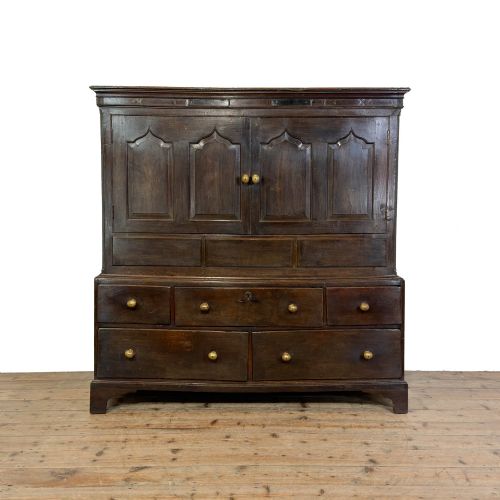
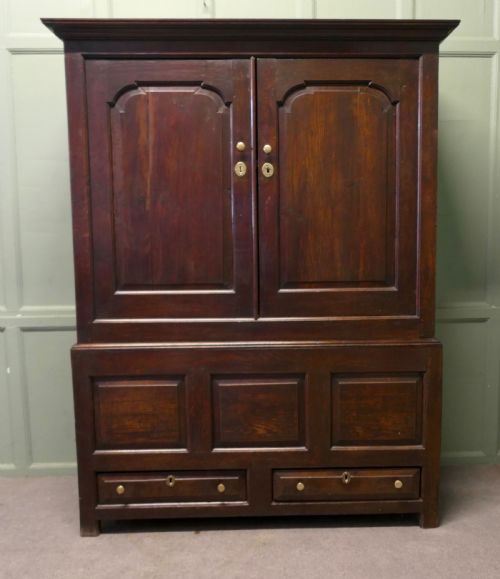
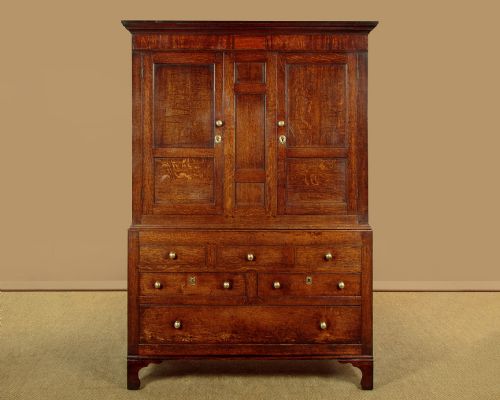
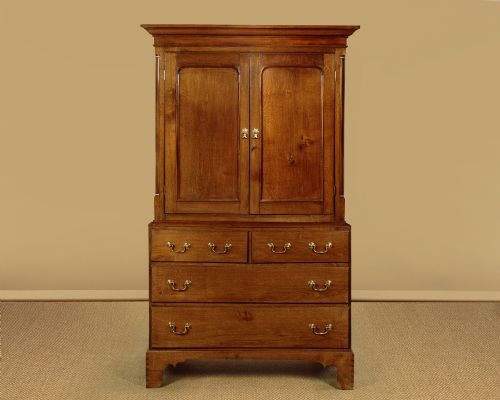


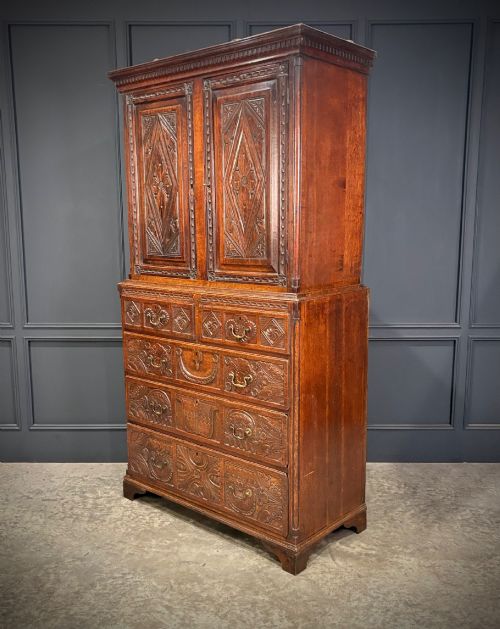


Country Oak Storage Press
A country oak storage press offers substantial vernacular utility, combining deep regional character with sturdy timber construction for everyday household storage.
Country Oak Storage Press
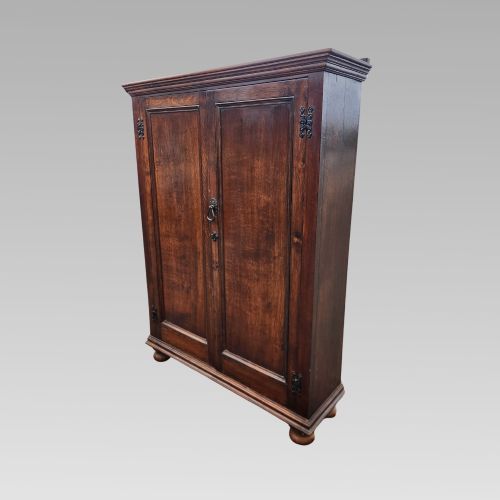
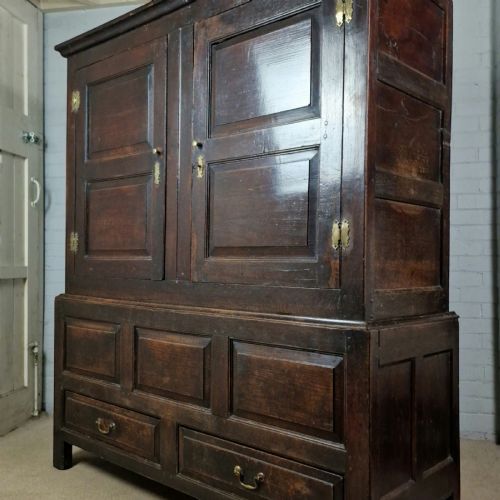
A country oak storage press represents a diverse group of vernacular domestic furniture designed for holding linens, clothes, and provisions. These pieces span from the late seventeenth century through the nineteenth century, encompassing regional English, Welsh, and French provincial traditions.
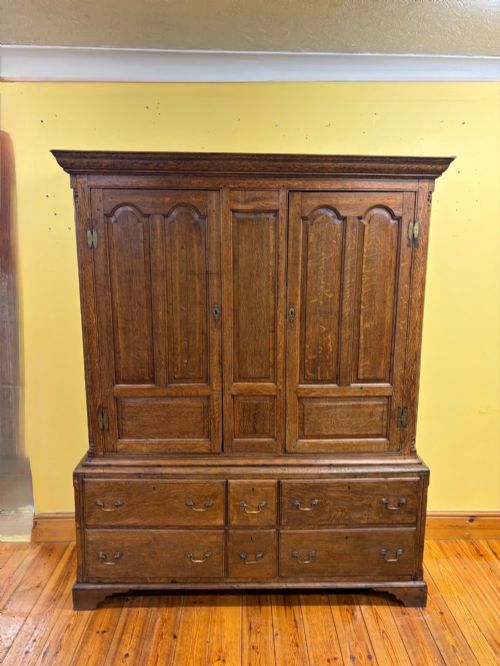
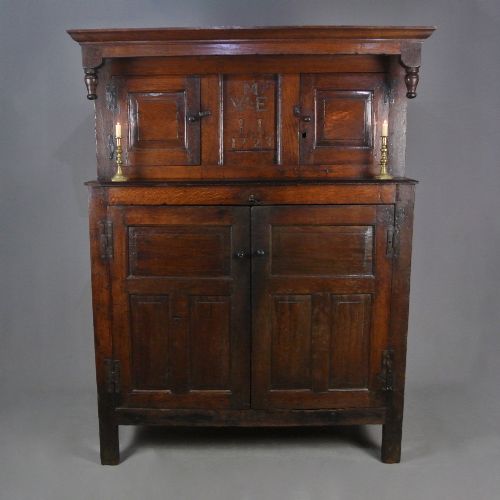
Buyers exploring this category most frequently encounter housekeeper cupboards, livery cupboards, court cupboards, and low linen presses. These forms typically display robust proportions and practical internal shelving or hanging space suited to traditional domestic needs.
Geographic variations shape the appearance of these presses, from Welsh vernacular pieces to English country examples and French provincial armoires. Each regional style utilises local craftsmanship traditions, resulting in distinctive panel configurations and architectural details.
What varies in quality
Quality diverges significantly based on the integrity of the timber and the sophistication of the regional joinery. Pieces retaining original blacksmith hardware and uncompromised structural surfaces command greater appreciation among collectors.
The refinement of carved detailing and the proportion of the architectural facade distinguish standard utility pieces from exceptional vernacular examples. The balance between practical storage function and regional stylistic expression dictates the standing of each individual press.
Country Oak Storage Press Retail Price Guide 2026
Typical asking prices for country oak storage press among the pieces listed under this phrase on Sellingantiques today, from the lower quarter to the upper quarter. They describe what is for sale here now, not the wider market.
Listings feature periods spanning from the seventeenth century through the nineteenth century, predominantly constructed from solid oak with brass and iron hardware.
The Country Oak Storage Press Glossary
- Livery cupboard
- A traditional storage piece originally used for keeping food and provisions ventilated in domestic settings. These cupboards often feature turned spindles or pierced ventilation panels.
- Housekeeper cupboard
- A large utilitarian storage cabinet designed for domestic linen and household stores. They typically combine upper cupboard doors with lower drawers or shelving units.
- Court cupboard
- An antique two-stage cabinet style originating in the sixteenth and seventeenth centuries. The upper section is frequently recessed or supported by carved columns.
- Deuddarn
- A traditional Welsh two-tier cupboard used for domestic storage. These pieces form a distinct category within regional vernacular furniture.
- Marquetry inlay
- A decorative technique applying fitted pieces of contrasting wood veneer to create surface patterns. This ornamentation appears on select refined storage pieces.
Country Oak Storage Press: Frequently Asked Questions
What is a country oak storage press used for?
These presses were historically utilised in large country houses and farmhouses for storing household linens, clothing, and dry goods.
Today, they function as substantial freestanding wardrobes or linen cupboards within modern domestic interiors.
How do I identify a Georgian oak press?
Georgian examples typically display balanced proportions, restrained architectural mouldings, and field panel doors characteristic of eighteenth-century design.
They often incorporate bracket feet or plinth bases alongside traditional brass or iron hardware.
What distinguishes a Welsh vernacular cupboard?
Welsh regional pieces often feature distinct local construction methods, simpler carved decoration, and robust proportions suited to rural domestic life.
Specific regional variations include designated tack cupboards and traditional deuddarn forms.
Are these cupboards suitable for modern bedrooms?
Their deep internal compartments and sturdy shelving provide practical storage capacity for contemporary clothing and household items.
Placing them requires careful measurement of ceiling height and floor space due to their imposing seventeenth and eighteenth-century proportions.