

Country Ladderback
Country ladderback chairs are robust vernacular seats built from native timbers with horizontal rung backs, offering enduring utility and straightforward rustic charm.
Country Ladderback
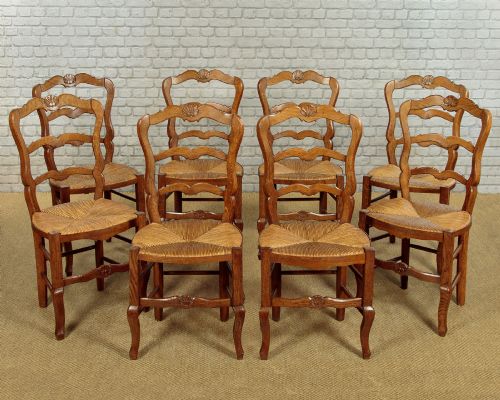
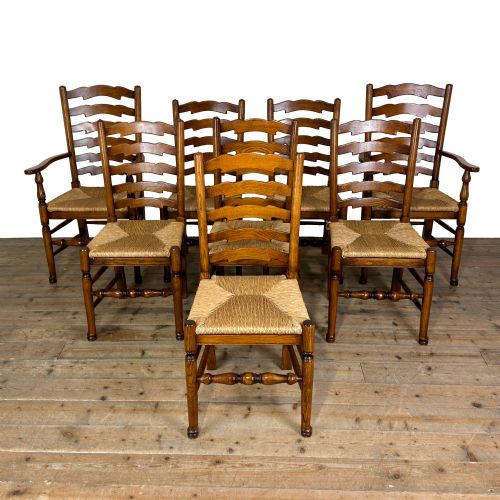
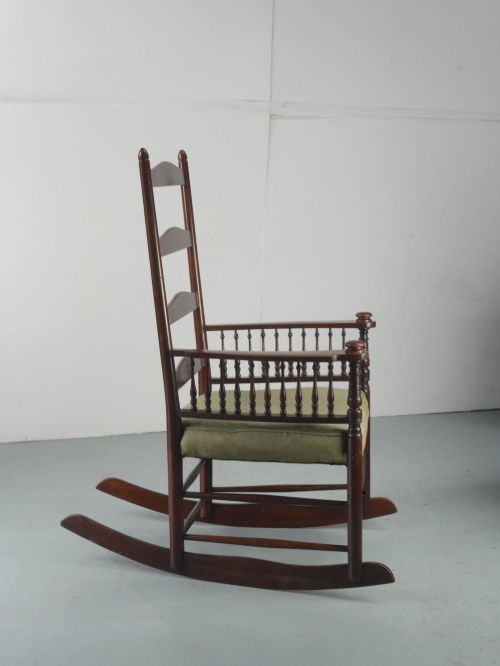
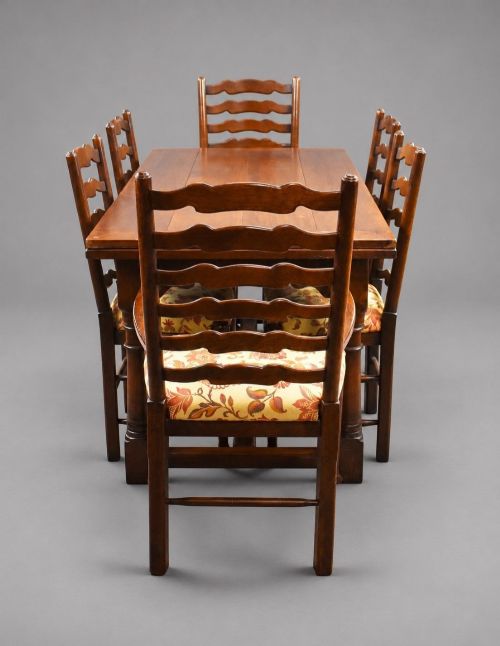
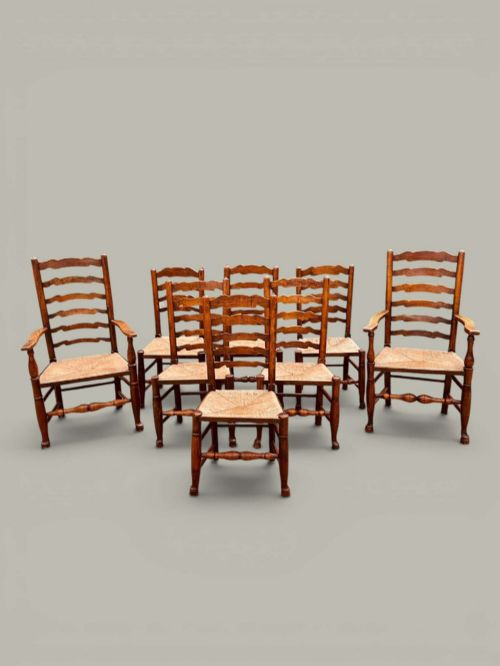
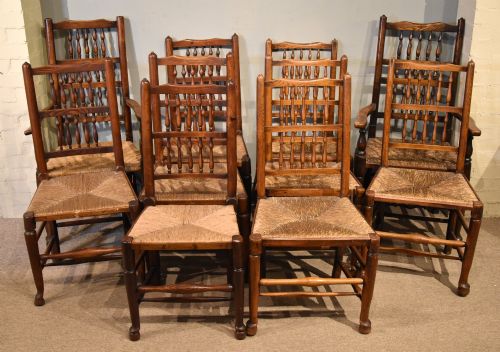
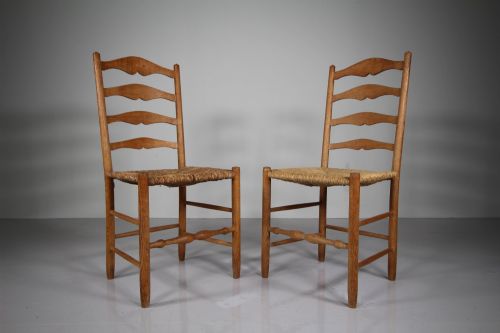
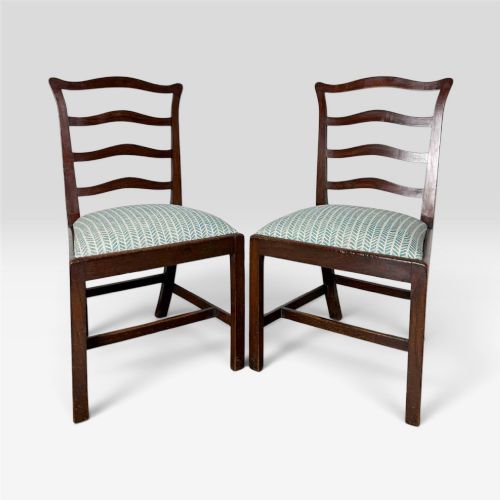
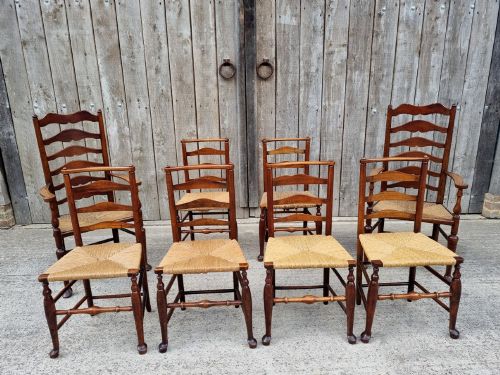
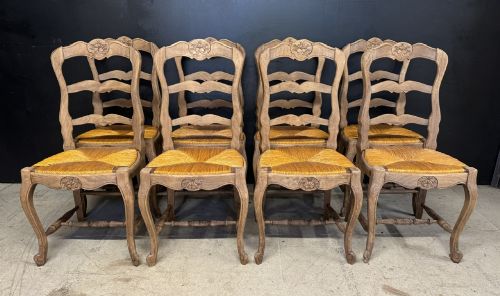
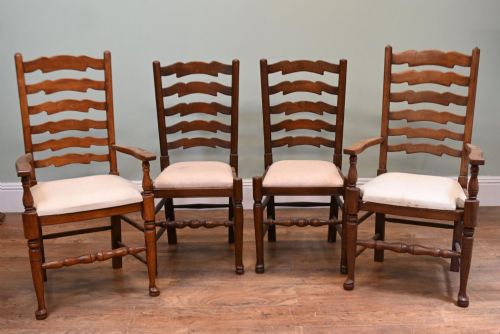
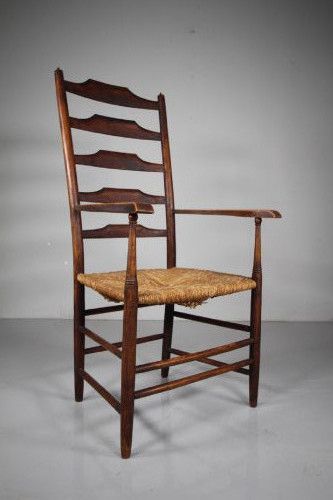
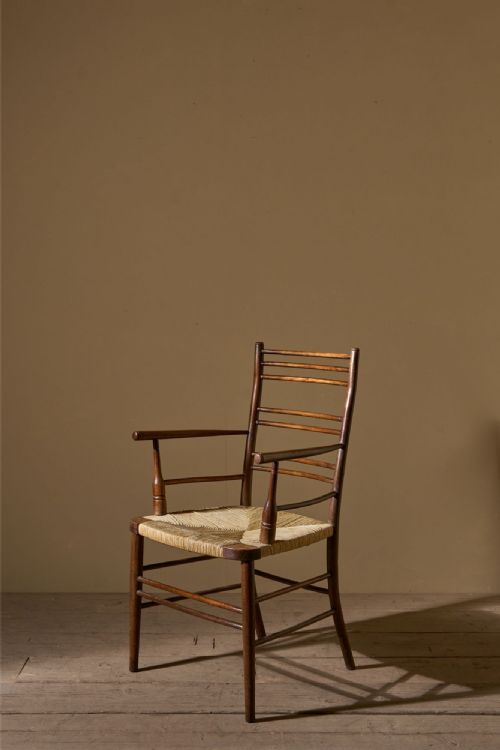
Country ladderback chairs combine domestic utility with regional tradition, spanning formats from single side chairs to large dining sets, carvers, and rocking chairs. Buyers searching for country ladderback examples encounter pieces originating predominantly from nineteenth-century workshops, alongside Georgian and early twentieth-century interpretations.
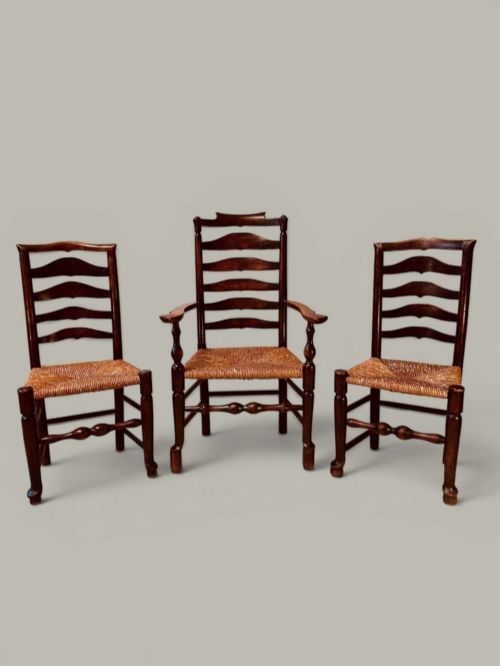
The predominant forms found here include dining sets in oak, elm, ash, and beech, often accompanied by rush seats or woven súgán straw. Regional variations such as Lancashire, Cheshire, and Dales designs appear regularly alongside French provincial and Arts and Crafts examples.
Materials and Construction
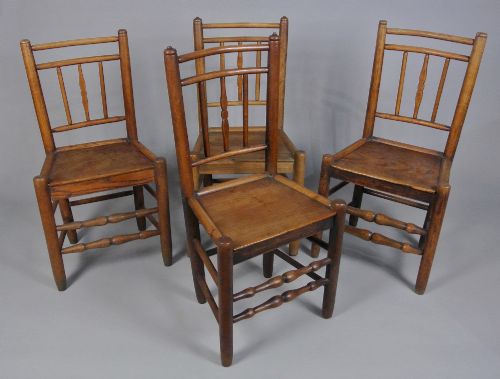
Local hardwoods including oak, elm, ash, beech, and mahogany form the structural framework of these chairs, shaped through traditional turning and bending techniques. Carpenters utilised native woods because of their local availability and tensile strength.
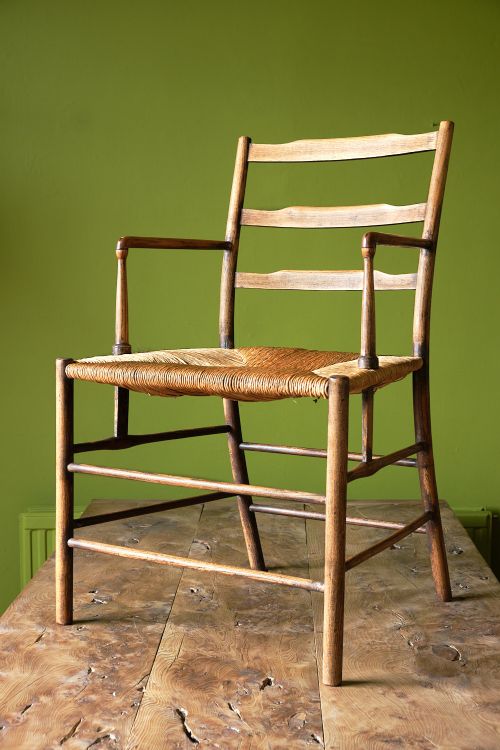
Seats utilise natural rush, plaited straw, or woven tapestry material, laced tightly around the seat rails to distribute weight evenly. Finishes range from bare turned timber to original painted surfaces and polished mahogany.
Country Ladderback Retail Price Guide 2026
Typical asking prices for country ladderback among the pieces listed under this phrase on Sellingantiques today, from the lower quarter to the upper quarter. They describe what is for sale here now, not the wider market.
Several high chairs and child-sized rocking chairs survive, proving that past generations started their rustic seating habits very early indeed.
Standards of Manufacture
Quality rests in the integrity of the timber selection and the precision of the joinery connecting the rungs to the upright posts. Superior examples maintain tight, original joints without excessive replacement timber.
The finesse of the ladder rungs themselves - whether straight, shaped, or wavy - differentiates basic utility seating from finer vernacular work. Original surface patination and intact rush or straw seating elevate the standing of a piece significantly.
Philip Clissett·Edward Gardener·Liberty and Co
The Country Ladderback Glossary
- Ladderback
- A chair style characterised by horizontal wooden slats or rungs set between the rear upright posts. This design provides ergonomic back support while simplifying the construction process for regional joiners.
- Rush seat
- A seating surface woven from dried marsh rushes twisted into cords. It provides a resilient and flexible platform that conforms comfortably to the sitter over time.
- Carver
- An armchair, traditionally placed at the head of a dining table or utilised as a substantial fireside seat. These chairs feature integral armrests attached to the front legs and upper uprights.
- Súgán
- An Irish term for twisted straw, used to plait traditional chair seats. This material gives a distinct rustic texture and durable surface.
- Vernacular
- Objects designed and built by local craftsmen using traditional regional methods rather than high-style academic architectural plans. These pieces reflect local material availability and practical domestic needs.
Country Ladderback: Frequently Asked Questions
How do I identify a regional style?
Regional attribution relies on specific turning details, timber choices, and local traditions such as those found in Lancashire or Cheshire pieces.
Comparing rung profiles and upright post shapes helps clarify the geographic origin of an individual chair.
Are rush seats durable for daily use?
Traditional rush seats withstand regular daily seating remarkably well if kept away from excessive moisture and damp environments.
Maintenance involves treating the dried plant fibres with care to prevent snapping or premature wear over decades of household dining.
Can I mix different chairs around a table?
Combining various country ladderback chairs creates an authentic vernacular dining arrangement typical of historic farmhouse interiors.
Matching approximate seat heights and timber tones ensures visual harmony while embracing the diverse origins of individual pieces.
What does original finish mean?
An original finish indicates that the timber retains its historic surface patination, wax, or early paint layers without modern stripping.
Preserved surfaces show authentic signs of age and handling that collectors value above chemically refinished timber.